Kirjojen hintavertailu. Mukana 11 468 950 kirjaa ja 12 kauppaa.

Kirjahaku

Etsi kirjoja tekijän nimen, kirjan nimen tai ISBN:n perusteella.

252 tulosta hakusanalla Tomoko Kojima

Die Öffentlichkeiten der Erziehung

Die Öffentlichkeiten der Erziehung

Tomoko Kojima

Springer vs
2015
nidottu
?Die Öffentlichkeit der Erziehung wird zumeist im Spannungsfeld zwischen Staatlichkeit und Privatheit betrachtet. Tomoko Kojima greift in ihrer interdisziplinär, auch international vergleichend angelegten Studie die kontroversen Auffassungen und Ordnungsschemata öffentlich institutionalisierter Erziehung entlang ihres Strukturwandels auf. Mit einer historischen Rekonstruktion systematisiert die Studie das Verhältnis zwischen Struktur und Semantik der Öffentlichkeit und eröffnet dabei einen neuen Zugang zu dem Bezugsproblem der öffentlich verantworteten Erziehung, der sich von antagonistischen Positionen unabhängig macht.
Globalisierung und lokale Bildungsorganisation

Globalisierung und lokale Bildungsorganisation

Tomoko Kojima

Springer Fachmedien Wiesbaden
2024
nidottu
Die qualitative Vergleichsstudie beschäftigt sich mit der Frage, wie sich die lokale Bildungsorganisation gegenwärtig hinsichtlich der Globalisierung und der Präsenz der Privatschulen mit internationalem Profil verändert. Betrachtet werden exemplarische Fälle in zwei global cities, Frankfurt/Rhein-Main und Tokyo. Dabei werden unterschiedliche Formen international ausgerichteter Privatschulen sowie ihre Differenzierung von bzw. Identifikation mit dem lokalen Bildungskontext aufgezeigt. Die damit einhergehende Überschreitung von Grenzen im nationalstaatlichen Erziehungssystem und deren Folgen werden semantisch aus der Governance-Perspektive sowie aus systemtheoretischer Sicht regional kontrastierend diskutiert.
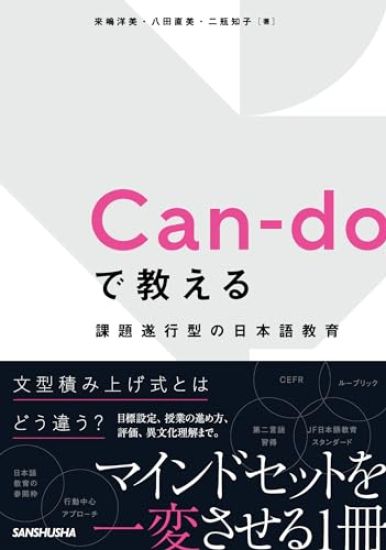
Can-Do in Japanese Language Education: Developing Competence in Accomplishing Tasks

Can-Do in Japanese Language Education: Developing Competence in Accomplishing Tasks

Hiromi Kijima; Naomi Hatta; Tomoko Nihei

Sanshusha Publishing
2024
nidottu
This book explores "task-based Japanese language education," which sets learning goals based on "Can-do" statements. It provides a detailed explanation of its underlying principles, lesson structure, assessment methods, and approaches to intercultural understanding. Using examples from beginner-level classes, the book offers practical insights into effective Japanese language instruction.
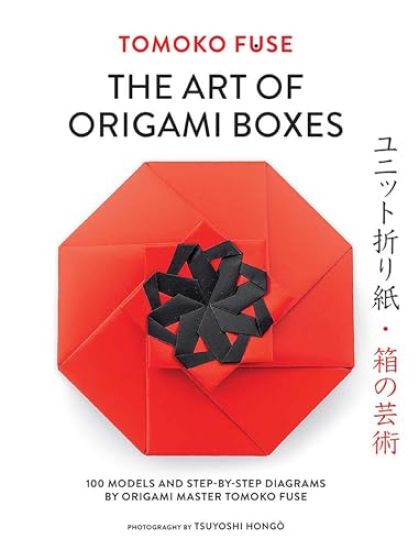
The Art of Origami Boxes: 100 Models and Step-By-Step Diagrams by Origami Master Tomoko Fuse
Celebrate the joy of creation and giving through the ancient art of paper folding with origami master Tomoko Fuse. Transform a simple sheet of paper into handmade expressions of three-dimensional art. This collection offers intermediate and advanced origami enthusiasts 100 models and over 2,000 diagrams of box designs, from triangular and square to pentagonal, hexagonal, and octagonal. Add accessories such as handles, dividers, and decorative lids for a creative flair. Gift recipients will treasure the craftsmanship of these delightful gift box designs that combine beauty and functionality.
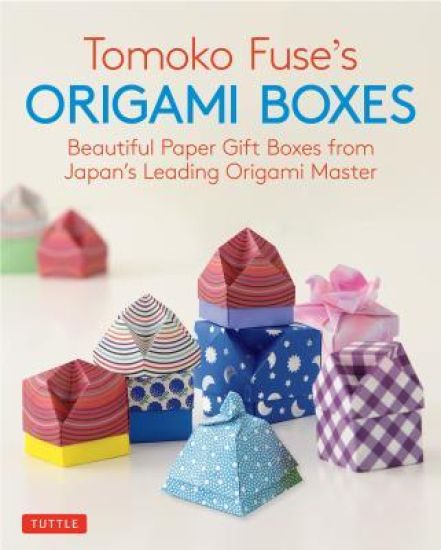
Tomoko Fuse's Origami Boxes

Tomoko Fuse's Origami Boxes

Tomoko Fuse

Tuttle Publishing
2018
nidottu
With this origami folding book, learn how to create original gift boxes that are as beautiful as the treasures they hold!Considered the most famous living origami master, Tomoko Fuse is known for her expertise in modular origami and box-folding. The more than 30 origami projects in this book range from beginner to more advanced, and ensure you'll always have a special way to give a gift. The simple flat box, or tato, is an excellent introduction to the art of origami for beginners and allows readers to "start small," then build to more intricate pieces like the Hexagonal Box and Octagonal Flower Box (Mukuge).Handmade paper boxes are an expression of origami crafts at their very best. Experiment with different thicknesses, textures, and origami paper designs for a true one-of-a-kind presentation. The projects are divided into 3 sections: Simple Boxes from Square Sheets, Modular Boxes from Multiple Square Sheets and Modular Boxes from Rectangular Sheets.Step-by-step instructions and diagrams guide you from start to finish as you create: Simple flat boxes--rectangular, triangular, hexagonal and more Pyramid-shaped boxes and different ways of finishing them off Modular box tops that look amazing Window-topped boxes for nesting a special gift Box tops with flourishes from flat to spiraled Easy liners for boxes of all shapes and sizes And a lot moreOrigami box folding is a relaxing and satisfying craft for all levels of expertise and--with a little practice and this easy origami book--gift-giving will never be the same.
Tomoko Takes the Lead (The Derby Daredevils Book #3)
Book 3 in this highly illustrated middle-grade series stars shy Tomoko and finds the team at roller derby summer camp in nearby Dallas School’s out, and the Derby Daredevils are excited to spend all summer tearing up the track. But, the coaches have something special planned: the Austin league is heading to Dallas for a week of roller derby sleepaway camp! Tomoko could not be more excited—she loves roller derby and her team. Plus, she’s been going camping with her uncle every summer since she can remember. She’s got all the gear and the skills she needs for two weeks in the great outdoors. But roller derby camp isn’t in the great outdoors. It’s in the middle of the city. And it means meeting a bunch of new kids, which isn’t exactly a strength for shy, introverted Tomoko. Disappointed, she puts her head down and skates hard until the team gets lost in the middle of Dallas—without a grown-up or a cell phone to guide them back to camp. Tomoko uses her wilderness skills and navigational know-how to lead them home and her calm demeanor to keep everyone feeling safe.
Tomoko Takes the Lead (The Derby Daredevils Book #3)
Book #3 in this highly lllustrated middle-grade series stars shy Tomoko and finds the team at roller derby sleepaway camp in nearby Dallas, Texas—now in paperback! School’s out, and the Derby Daredevils are excited to spend all summer tearing up the track. But, the coaches have something super special planned: the Austin league is heading to Dallas for a week of roller derby sleepaway camp! Tomoko could not be more excited—she loves roller derby and her team. Plus, she’s been going camping with her uncle every summer since she can remember. She’s got all the gear and the skills she needs for two weeks in the great outdoors.But roller derby camp isn’t in the great outdoors. It’s in the middle of the city. And it means meeting a bunch of new kids, which isn’t exactly a strength for shy, introverted Tomoko. Disappointed, she puts her head down and skates hard until the team gets lost in the middle of Dallas—without a grown-up or a cell phone to guide them back to camp. Tomoko uses her wilderness skills and navigational know-how to lead them home and her calm demeanor to keep everyone feeling safe.
Tomoko Kawai: Intimacy of Paradise

Tomoko Kawai: Intimacy of Paradise

Verlag Fur Moderne Kunst
2022
sidottu
A Japanese photographer's meditation on the alienated spaces we build for animals"Over several years of photographing zoos in Germany and Japan I gradually became aware of a sense of incongruity and confusion. I began to realize that I had not previously had a way of thinking that framed animals and humans in a mutually confrontational relationship. It was as if I was being discovered as a human being and suddenly a division appeared that I had not consciously anticipated. " - Tomoko KawaiTomoko Kawai is a Japanese artist based in Berlin. In the series of photographs, "Intimacy of Paradise", she unleashes the modern illusion of animality, and as she captures zoos and environments in which animals and plants are staged, she brings us to thresholds in this illusion. The more the imitative efforts are perfected, the further they withdraw from the reality of the manifold animal spheres. These photographs are a disconnection from animals and nature that arises from a human-centered approach and a collision that gives rise to a split within humanity. In the contradictory human ambivalence, Kawai is searching for a way to reconnect with the natural world.
Tomoko Fuse's Origami Art

Tomoko Fuse's Origami Art

Tomoko Fuse

Tuttle Publishing
2020
sidottu
Tomoko Fuse has been one of the world's premier origami artists for more than 35 years. This beautifully photographed book examines the three-dimensional geometric designs she is famous for.Fuse, often referred to as "the queen of origami," discovered the art of folding paper at just seven years old. She has come a long way since then, having had her work highlighted in exhibitions around the world, including Paris Origami (Carrousel du Louvre, 1998), On Paper (Crafts Council London, 2002) and her solo show Yorokobi (Bauhaus Dessau, 2004).In addition to teaching, folding and writing, she also collaborated with designer Denis Guidone for Milan Design Week 2018 and was a featured artist in Nova's episode "The Origami Revolution" (February, 2017).An artistic anthology of her most impressive work, Tomoko Fuse's Origami Art can serve multiple purposes: as inspiration for an experienced origami folder; as a truly impressive coffee table book for the artistically-minded; or as a push for intermediate folders to try their hand at modular origami models.
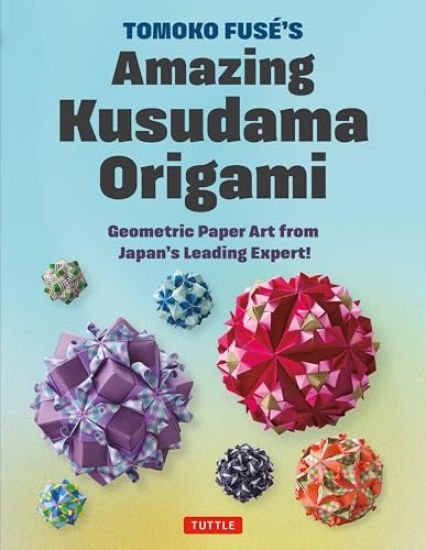
Tomoko Fuse's Amazing Kusudama Origami

Tomoko Fuse's Amazing Kusudama Origami

Tomoko Fuse; Tomokoá Fuse

TUTTLE PUBLISHING
2026
nidottu
"Tomoko Fuse is considered a living master of modular and practical origami." —The New York Times This incredible book by Tomoko Fuse, Japan's most famous living origami artist, shows you how to create dozens of amazing geometric kusudama spheres using many small paper squares that are folded then locked together (without the use of glue or tape) by the tension of the paper itself! She provides detailed step-by-step instructions for more than 40 wonderfully decorative models, including: The skeletal Amaryllis and Unity models, whose delicate frames are filled with voids and openings The chunky Slash and Patchwork models, with their robust construction and strong lines The Twist Flower and Tornado—stylish models incorporating triangular color schemes Exquisitely frilly models, such as the Pomegranate and Iris, bristling with decorative flourishes The visually striking Spica and Dandelion, boasting spiky zig-zag cone-encrusted surfaces And so many more! Tomoko Fuse's Amazing Kusudama Origami features over 650 folding diagrams with easy-to-follow instructions and photos showing you how to create each geometric model!
In Search of Dreamtime

In Search of Dreamtime

Tomoko Masuzawa

University of Chicago Press
1993
sidottu
In this work of discourse analysis, Tomoko Masuzawa observes that the modern study of religion is peculiarly ambivalent toward the question of origin. Today's historians of religion maintain that they have abandoned speculative quests for the origin of religion; at the same time, they allege that concepts of absolute beginnings are fundamental to religion itself. By renouncing the desire for origins that they claim religious peoples embrace, historians can vicariously participate in the forbidden quest without forfeiting the authority of their objectivist position. This ambivalence of contemporary scholars echoes their ambivalence toward the ancestral "giants" of the discipline: Durkheim, Muller, and Freud. Masuzawa shows that the speculations of these three men on the origins of religion render the very notion of time and history problematic, and contain powerful instruments for dislodging the position of "Western man" as the keeper of knowledge. Her critical rereading of these forefathers is framed by a compelling discussion of the postmodernist subversion of absolute origins in the works of Walter Benjamin and Rosalind Krauss, and a comparison of Mircea Eliade and Nancy Munn's accounts of the Australian aboriginal "dream-time."
In Search of Dreamtime

In Search of Dreamtime

Tomoko Masuzawa

University of Chicago Press
1993
nidottu
In this work of discourse analysis, Tomoko Masuzawa observes that the modern study of religion is peculiarly ambivalent toward the question of origin. Today's historians of religion maintain that they have abandoned speculative quests for the origin of religion; at the same time, they allege that concepts of absolute beginnings are fundamental to religion itself. By renouncing the desire for origins that they claim religious peoples embrace, historians can vicariously participate in the forbidden quest without forfeiting the authority of their objectivist position. This ambivalence of contemporary scholars echoes their ambivalence toward the ancestral "giants" of the discipline: Durkheim, Muller, and Freud. Masuzawa shows that the speculations of these three men on the origins of religion render the very notion of time and history problematic, and contain powerful instruments for dislodging the position of "Western man" as the keeper of knowledge. Her critical rereading of these forefathers is framed by a compelling discussion of the postmodernist subversion of absolute origins in the works of Walter Benjamin and Rosalind Krauss, and a comparison of Mircea Eliade and Nancy Munn's accounts of the Australian aboriginal "dream-time."
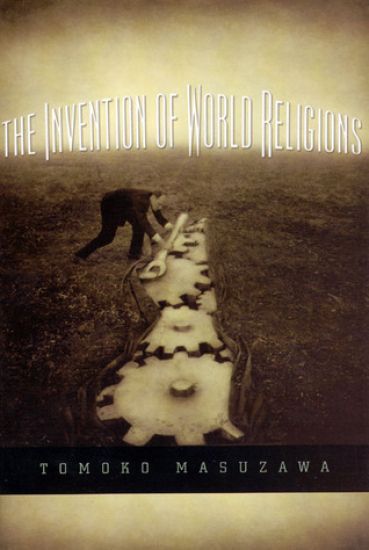
The Invention of World Religions

The Invention of World Religions

Tomoko Masuzawa

University of Chicago Press
2005
nidottu
The idea of "world religions" expresses a vague commitment to multiculture alism. Not merely a descriptive concept, "world religions" is also a particular ethos, a pluralist ideology, a logic of classification, and a form of knowledge that has shaped the study of religion and infiltrated ordinary language. In this ambitious study, Tomoko Masuzawa examines the emergence of "world religions" in modern European thought through a close reading of a variety of sources as early as the seventeenth century. Devoting particular attention to the relation between the comparative study of language and the nascent science of religion, she demonstrates how new classifications of language and race caused Buddhism and Islam to gain special significance as these religions came to be seen in opposing terms - Aryan on one hand and Semitic on the other. Masuzawa also explores the complex relation of "world religions" to Protestant theology, from the hierarchical ordering of religions typical of the Christian supremacists of the nineteenth century, to the aspirations of early twentieth-century theologian Ernst Troeltsch, who embraced the pluralist logic of "world religions" and by so doing sought to reclaim the universalist destiny of European modernity.
Internationalizing the Pacific

Internationalizing the Pacific

Tomoko Akami

Routledge
2001
sidottu
The Institute of Pacific Relations was a pioneering intellectual-political organization that shaped public knowledge and both elite and popular discourse throughout the Asia-Pacific region and beyond during the inter-war years. Inspired by Wilsonian internationalism after the 1919 formation of the League of Nations, it grew to become an international and national non-governmental think-tank providing expertise on Asia and the Pacific. This book investigates post-League Wilsonian internationalism with respect to two critical issues: the nation state and the conception of the Asia-Pacific region; both issues broach a range of contentious subjects including colonialism, orientalism, racism and war. Akami's study of the Institute of Pacific Relations offers insight into the formation of the dominant ideologies and institutions of regional and international politics in the Pacific during the inter-war years, and provides an interesting perspective on Japan's relations with countries including the USA and Australia.
Amazing Origami Boxes: 20 Origami Models with Instructions and Diagrams
Simple but unique, an origami box represents the thoughts and feelings of its maker. Between the pleasure of paperfolding and the satisfaction of having a handmade item to use (or give ), the box forms a positive association for the maker (and between the giver and recipient). In this guide, origami master Tomoko Fuse presents 20 original designs for origami boxes -- some simple, others more complex, all made from a single sheet of paper. Beautiful, full-color photographs accompany step-by-step instructions and diagrams for a splendid variety of completely functional boxes. They range from conventional square and rectangular shapes to those in the form of a bird, a basket, a cat's head, a flower, and other shapes. By varying the type of paper and color combinations, folders can create an endless variety of effects. Suitable for origami enthusiasts of all skill levels, this guide promises hours of creative joy.
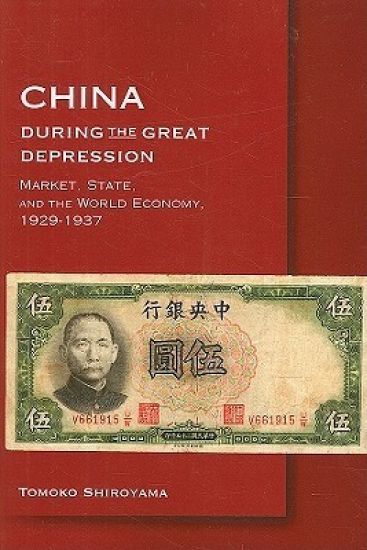
China during the Great Depression

China during the Great Depression

Tomoko Shiroyama

Harvard University, Asia Center
2009
nidottu
The Great Depression was a global phenomenon: every economy linked to international financial and commodity markets suffered. The aim of this book is not merely to show that China could not escape the consequences of drastic declines in financial flows and trade but also to offer a new perspective for understanding modern Chinese history. The Great Depression was a watershed in modern China. China was the only country on the silver standard in an international monetary system dominated by the gold standard. Fluctuations in international silver prices undermined China’s monetary system and destabilized its economy. In response to severe deflation, the state shifted its position toward the market from laissez faire to committed intervention. Establishing a new monetary system, with a different foreign-exchange standard, required deliberate government management; ultimately the process of economic recovery and monetary change politicized the entire Chinese economy. By analyzing the impact of the slump and the process of recovery, this book examines the transformation of state-market relations in light of the linkages between the Chinese and the world economy.
Tama in Japanese Myth

Tama in Japanese Myth

Tomoko Iwasawa

University Press of America
2011
nidottu
Tama in Japanese Myth attempts to elucidate Japanese religious experiences by presenting a new interpretation of the oldest existing text of Japanese myth, the Kojiki. Informed by phenomenological hermeneutics, Iwasawa shows that the concept of tama lies at the core of Japanese religious experiences. Tama is often compared to spirit and soul in Western philosophy and religion and especially to the German concept of Geist. Tama develops in ways that do not assume a dichotomy between the ideational and the sensible, which is precisely the dichotomy informing Western theism and the Platonic tradition of metaphysics. Iwasawa argues that the Western concept of God, far from explaining all possible connections between the human and the divine, is less than satisfactory for analyzing Japanese religious experiences. Iwasawa proceeds by examining the Japanese notion of tama as an inquiry into the origin of values wholly unaffected by the Western idea of a moral God.
Tama in Japanese Myth

Tama in Japanese Myth

Tomoko Iwasawa

University Press of America
2011
sidottu
Tama in Japanese Myth attempts to elucidate Japanese religious experiences by presenting a new interpretation of the oldest existing text of Japanese myth, the Kojiki. Informed by phenomenological hermeneutics, Iwasawa shows that the concept of tama lies at the core of Japanese religious experiences. Tama is often compared to spirit and soul in Western philosophy and religion and especially to the German concept of Geist. Tama develops in ways that do not assume a dichotomy between the ideational and the sensible, which is precisely the dichotomy informing Western theism and the Platonic tradition of metaphysics. Iwasawa argues that the Western concept of God, far from explaining all possible connections between the human and the divine, is less than satisfactory for analyzing Japanese religious experiences. Iwasawa proceeds by examining the Japanese notion of tama as an inquiry into the origin of values wholly unaffected by the Western idea of a moral God.
Sandakan Brothel No.8

Sandakan Brothel No.8

Tomoko Yamazaki; Karen F. Colligan-Taylor

Routledge
1998
sidottu
This is a pioneering work on "karayuki-san", impoverished Japanese women sent abroad to work as prostitutes from the 1860s to the 1920s. The narrative follows the life of one such prostitute, Osaki, who is persuaded as a child of ten to accept cleaning work in Sandakan, North Borneo, and then forced to work as a prostitute in a Japanese brothel, one of the many such brothels that were established throughout Asia in conjunction with the expansion of Japanese business interests. Yamazaki views Osaki as the embodiment of the suffering experienced by all Japanese women, who have long been oppressed under the dual yoke of class and gender. This tale provides the historical and anthropological context for understanding the sexual exploitation of Asian women before and during the Pacific War and for the growing flesh trade in Southeast Asia and Japan today. Young women are being brought to Japan with the same false promises that enticed Osaki to Borneo 80 years ago. Yamazaki Tomoko, who herself endured many economic and social hardships during and after the war, has devoted her life to documenting the history of the exchange of women between Japan and other Asian countries since 1868. She has worked directly with "karayuki-san", military comfort women, war orphans, repatriates, women sent as picture brides to China and Manchuria, Asian women who have wed into Japanese farming communities, and Japanese women married to other Asians in Japan.