
Kirjahaku
Etsi kirjoja tekijän nimen, kirjan nimen tai ISBN:n perusteella.
1000 tulosta hakusanalla Tony C. Cutajar

This adventure story is built on a historical fact which happened when a serious earthquake hit Malta in 1693. Two young friends were helping in the rebuilding of Mdina cathedral when they come across a jar full of gold coins hidden in the ground. The Grand Master of the Order and the Archpriest of the cathedral both claim the treasure. One of the two friends keeps some of the coins, tries to sell them and finds himself in a lot of trouble. The friendship of the other young man with a nobleman's son changes his life altogether and leads him to an intimacy with his sister.

This is a love story built on the popular Maltese legend which centres around the old castle known as Kastell Zamitellu in the quiet village of Mgarr. A law student is fascinated by the beauty of Lucija and seeks to marry her, but her father wants a very rich man as his son-in-law. He devises a plan with an old Sicilian count who is found repugnant by Lucija. On her wedding day the bride is nowhere to be found and there follows a great alarm. Months later, she appears in a vision dressed as a nun and reveals what had happened to her and how she had died.

This could very well have been a love story between a Moslem Princess and a professed Knight of St. John of Jerusalem. But it is a love story between three brother knights, the Princess and a little statue of Our Lady of Liesse. A great devotion that developed miraculously in an Egyptian dungeon, moved on mysteriously to France and the Holy Land and thence to Malta.

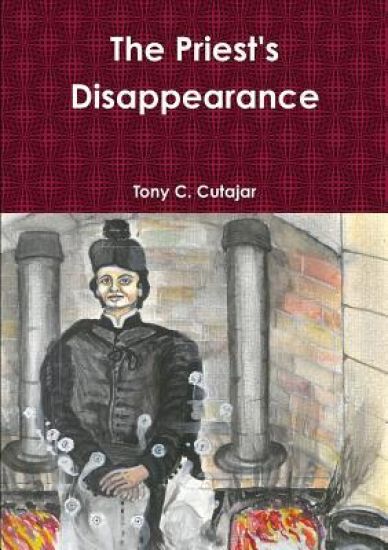
Baron Gauci had a son, who became a priest, and who was his only heir to his inheritance. So long as he lived, the Baron s sisters could never inherit his wealth. Many a time they begged their brother to allow his son to leave Mdina and spend a few days with them at Birgu. Finally, he accepted their apparently sincere invitation and sent his son to stay with them. After a week, the Baron had no news of his son and he went to find out for himself. His sisters told him that they hadn t seen him for a long time. The Baron concluded that they had killed him to ensure that they would come into his inheritance on his death. To punish them for their evil design he left his wealth to the Mdina cathedral. Rumour soon spread that the young priest had been pushed into the oven and burnt alive.

A well-to-do newcomer arrives at the poor village. Nobody could believe it that he was the brother of the long-lost sister Vincenza who was always known as _ensa the witch. She was blamed for the death of a young man and was called to appear before the Inquisitor. But instead, she sought sanctuary and eventually committed suicide. The newcomer wanted to make up for his sister s bad name by becoming the protector and provider of the first priest and the first notary in the village.

Praise for Case Studies in Performance Management "With this book, Tony Adkins has made an important contribution to the body of knowledge of managerial accounting." --From the Foreword by Gary Cokins, lead strategist, Business Performance Management Solutions group with SAS Institute and internationally recognized expert in advanced cost management and performance improvement systems "If you want to achieve direction, traction, and speed in business, Case Studies in Performance Management: A Guide from the Experts is a must-read . . . jam-packed with golden nuggets you can put to work immediately." --Jason Jennings, bestselling author of Think Big, Act Small, Less Is More and It's Not the Big That Eat the Small . . . It's the Fast That Eat the Slow "Tony has the insight found only from actual implementations of ABC/PM.Using this as lens, he has brought the collective experience of experts into focus." --Mohan Nair, author of Essentials of Balanced Scorecard and Activity-Based Information Systems "Tony Adkins has lived the life of a true ABC/PM road warrior. His collection of case studies reaches beyond the theory to capture the harsh reality of what it takes to successfully implement performance management. A must-read for anyone wise enough to learn from those who have gone before." --Chris M. Pieper, CEO, FormRouter, Inc. (former founder and CEO of ABC Technologies) "Everyone who reads this book will gain a solid appreciation of the substance and value of performance management in varied industry settings and applications." --Dr. Peter B. B. Turney, President and Chief Executive Officer of Cost Technology, Inc. and author of Common Cents If you're looking for a way to dramatically improve your company's performance and get back its competitive edge, Case Studies in Performance Management: A Guide from the Experts will show you how other businesses, driven to remain competitive by changes in their industries, learned to work smarter using ABC/PM in today's tough business environment. Noteworthy commentary from experts in the field including Ashok Vadgama and Alan Stratton helps you understand ABC/PM and how to execute its sound strategies in your own business.
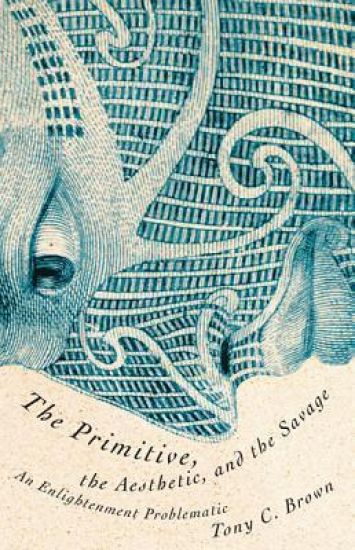
The Primitive, the Aesthetic, and the Savage
Tony C. Brown
University of Minnesota Press
2012
nidottu
Tony C. Brown examines “the inescapable yet infinitely troubling figure of the not-quite-nothing” in Enlightenment attempts to think about the aesthetic and the savage. The various texts Brown considers-including the writings of Addison, Rousseau, Kant, and Defoe-turn to exotic figures in order to delimit the aesthetic, and to aesthetics in order to comprehend the savage.In his intriguing exploration Brown discovers that the primitive introduces into the aesthetic and the savage an element that proves necessary yet difficult to conceive. At its most profound, Brown explains, this element engenders a loss of confidence in one’s ability to understand the human’s relation to itself and to the world. That loss of confidence-what Brown refers to as a breach in anthropological security-traces to an inability to maintain a sense of self in the face of the New World. Demonstrating the impact of the primitive on the aesthetic and the savage, he shows how the eighteenth-century writers he focuses on struggle to define the human’s place in the world. As Brown explains, these authors go back again and again to “exotic” examples from the New World-such as Indian burial mounds and Maori tattooing practice-making them so ubiquitous that they come to underwrite, even produce, philosophy and aesthetics.


Escaping Self Idolatry: How Churches of Christ are finding their way into the future.
Tony C. Branch
Createspace Independent Publishing Platform
2014
nidottu

A pathbreaking new genealogy of statelessness Just as the modern state and the citizenship associated with it are commonly thought of as a European invention, so too is citizenship’s negation in the form of twentieth-century diaspora and statelessness. Statelessness sets forth a new genealogy, suggesting that Europe first encountered mass statelessness neither inside its own borders nor during the twentieth century, as Hannah Arendt so influentially claimed, but outside of itself-in the New World, several hundred years earlier.Through close readings of political philosophers from Hobbes to Rousseau to Kant, Tony C. Brown argues that statelessness became a central problem for political thought early on, with far-reaching implications for thinking both on the state and on being human. What Europeans thought they saw among the “savages” of the Americas was life without political order, life less than human. Lacking almost everything those deemed clearly human had achieved, the stateless existed in a radically precarious, almost inhuman privation.And yet this existence also raised the unsettling possibility that state-based existence may not be inevitable, necessary, or even ideal. This possibility, as Brown shows, prompts the response-as defensive as it was aggressive-that we call Enlightenment political philosophy, which arguably still orders much thinking on being stateless today, including our discourses concerning migrants and Indigenous peoples.

A pathbreaking new genealogy of statelessness Just as the modern state and the citizenship associated with it are commonly thought of as a European invention, so too is citizenship’s negation in the form of twentieth-century diaspora and statelessness. Statelessness sets forth a new genealogy, suggesting that Europe first encountered mass statelessness neither inside its own borders nor during the twentieth century, as Hannah Arendt so influentially claimed, but outside of itself-in the New World, several hundred years earlier.Through close readings of political philosophers from Hobbes to Rousseau to Kant, Tony C. Brown argues that statelessness became a central problem for political thought early on, with far-reaching implications for thinking both on the state and on being human. What Europeans thought they saw among the “savages” of the Americas was life without political order, life less than human. Lacking almost everything those deemed clearly human had achieved, the stateless existed in a radically precarious, almost inhuman privation.And yet this existence also raised the unsettling possibility that state-based existence may not be inevitable, necessary, or even ideal. This possibility, as Brown shows, prompts the response-as defensive as it was aggressive-that we call Enlightenment political philosophy, which arguably still orders much thinking on being stateless today, including our discourses concerning migrants and Indigenous peoples.

The Path to Being a Better ManMany modern men are consumed by anger, frustration, aggression, and fear. We are unable to connect effectively as a spouse, a father, a friend, and even a leader. We push people away, lash out at those we love the most, and keep our inner struggles to ourselves. This disjunction from the outside world poisons our relationships and threatens our ability to find true fulfillment. But there is a path to a better version of the modern man. By confronting the inner challenges that inform our outward behaviors, we can reshape ourselves. With help and courage, we can set off on a new journey toward better relationships, more honest and effective communication, and an overall better life.Tony C. Daloisio harnesses over thirty years of professional experience as a practicing psychologist and researcher, as well as his own personal journey, to illuminate the road to a well lived life. The path-and the journeyman-will never be perfect, but the journey itself will lead to lasting positive change for ourselves and for our loved ones.

Pretty!Pretty!Serial Killer Princess Be a Good Burger
Tony C Anderson
Trafford Publishing
2021
pokkari
Two short storys collected. Vicky is a seven yr old serial killer princess and Misty is a toddler who lets a children's book go to her head.

The Primitive, the Aesthetic, and the Savage
Brown Tony C.
University of Minnesota Press
2012
sidottu
Tony C. Brown examines “the inescapable yet infinitely troubling figure of the not-quite-nothing” in Enlightenment attempts to think about the aesthetic and the savage. The various texts Brown considers—including the writings of Addison, Rousseau, Kant, and Defoe—turn to exotic figures in order to delimit the aesthetic, and to aesthetics in order to comprehend the savage.In his intriguing exploration Brown discovers that the primitive introduces into the aesthetic and the savage an element that proves necessary yet difficult to conceive. At its most profound, Brown explains, this element engenders a loss of confidence in one’s ability to understand the human’s relation to itself and to the world. That loss of confidence—what Brown refers to as a breach in anthropological security—traces to an inability to maintain a sense of self in the face of the New World. Demonstrating the impact of the primitive on the aesthetic and the savage, he shows how the eighteenth-century writers he focuses on struggle to define the human’s place in the world. As Brown explains, these authors go back again and again to “exotic” examples from the New World—such as Indian burial mounds and Maori tattooing practice—making them so ubiquitous that they come to underwrite, even produce, philosophy and aesthetics.