Suomen kattavin kirjojen hintavertailu

Kirjahaku

Etsi kirjoja tekijän nimen, kirjan nimen tai ISBN:n perusteella.

1000 tulosta hakusanalla Toril Moi

Toril Moi leser A.O. Vinje

Toril Moi leser A.O. Vinje

Toril Moi

Nasjonalbiblioteket
2018
nidottu
Språkpioner, forfattar og bladfyk. «Den fyrste moderne journalisten», blei han kalla, og han står bak nokre av dei store høgdepunkta i den norske nasjonallitteraturen. Aasmund Olavsson Vinje blir ofte trekt fram som ein føregangsmann. Kva spor har han faktisk sett etter seg? I Ferdaminni fraa Sumaren 1860 skildrar han ferda si gjennom store delar av innlandet med humor, vidd og realisme. Professor Toril Moi har lese Vinje for fyrste gong og vandra i lag med han gjennom Eidsvoll, Gudbrandsdalen og Trøndelag. Kva fortel Vinje oss omdet norske? Kjenner vi oss framleis att i folket og landet han skriv om?
What is a Woman?

What is a Woman?

Toril Moi

Oxford University Press
2001
nidottu
This challenge to the dominant trends in contemporary feminist and cultural thought, arguing for a feminism of freedom inspired by Simone de Beauvoir's "The Second Sex", brings together Moi's work on Freud and Bourdieu, and her studies of desire and knowledge in literature.
Henrik Ibsen and the Birth of Modernism

Henrik Ibsen and the Birth of Modernism

Toril Moi

Oxford University Press
2008
nidottu
Henrik Ibsen (1828-1906) is the founder of modern theater, and his plays are performed all over the world. Yet in spite of his unquestioned status as a classic of the stage, Ibsen is often dismissed as a boring old realist, whose plays are of interest only because they remain the gateway to modern theater. In Henrik Ibsen and the Birth of Modernism, Toril Moi makes a powerful case not just for Ibsen's modernity, but also for his modernism. Henrik Ibsen and the Birth of Modernism situates Ibsen in his cultural context, emphasizes his position as a Norwegian in European culture, and shows how important painting and other visual arts were for his aesthetic education. The book rewrites literary history, reminding modern readers that idealism was the dominant aesthetic paradigm of the nineteenth century. Modernism was born in the ruins of idealism, Moi argues, thus challenging traditional theories of the opposition between realism and modernism. By reading Ibsen's modernist plays as investigations of the fate of love in an age of skepticism, Moi shows why Ibsen still matters to us. In this book, Ibsen's plays are showed to be profoundly concerned by theater and theatricality, both on stage and in everyday life. Ibsen's unsettling explorations of women, men, and marriage here emerge as chronicles of the tension between skepticism and the everyday, and between critique and utopia in modernity. This radical new account places Ibsen in his rightful place alongside Baudelaire, Flaubert, and Manet as a founder of European modernism.
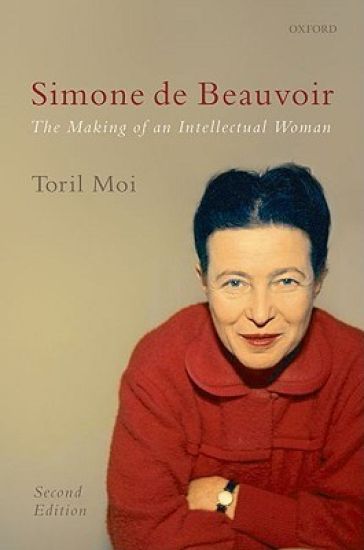
Simone de Beauvoir

Simone de Beauvoir

Toril Moi

Oxford University Press
2008
sidottu
In Simone de Beauvoir: The Making of an Intellectual Woman Toril Moi shows how Simone de Beauvoir became Simone de Beauvoir, the leading feminist thinker and emblematic intellectual woman of the twentieth century. Blending biography with literary criticism, feminist theory, and historical and social analysis, this book provides a completely original analysis of Beauvoir's education and formation as an intellectual. In The Second Sex, Beauvoir shows that we constantly make something of what the world tries to make of us. By reconstructing the social and political world in which Beauvoir became the author of The Second Sex, and by showing how Beauvoir reacted to the pressures of that world, Moi applies Beauvoir's ideas to Beauvoir's own life. Ranging from an investigation of French educational institutions to reflections on the relationship between freedom and flirtation, this book uncovers the conflicts and difficulties of an intellectual woman in the middle of the twentieth century. Through her analysis of Beauvoir's life and work Moi shows how difficult it was - and still is - for women to be taken seriously as intellectuals. Two major chapters on The Second Sex provide a theoretical and a political analysis of that epochal text. The last chapter turns to Beauvoir's love life, her depressions and her fear of ageing. In a major new introduction, Moi discusses Beauvoir's letters to her lovers Jacques-Laurent Bost and Nelson Algren, as well as her recently published student diaries from 1926-27.
Simone de Beauvoir

Simone de Beauvoir

Toril Moi

Oxford University Press
2009
nidottu
In Simone de Beauvoir: The Making of an Intellectual Woman Toril Moi shows how Simone de Beauvoir became Simone de Beauvoir, the leading feminist thinker and emblematic intellectual woman of the twentieth century. Blending biography with literary criticism, feminist theory, and historical and social analysis, this book provides a completely original analysis of Beauvoir's education and formation as an intellectual. In The Second Sex, Beauvoir shows that we constantly make something of what the world tries to make of us. By reconstructing the social and political world in which Beauvoir became the author of The Second Sex, and by showing how Beauvoir reacted to the pressures of that world, Moi applies Beauvoir's ideas to Beauvoir's own life. Ranging from an investigation of French educational institutions to reflections on the relationship between freedom and flirtation, this book uncovers the conflicts and difficulties of an intellectual woman in the middle of the twentieth century. Through her analysis of Beauvoir's life and work Moi shows how difficult it was - and still is - for women to be taken seriously as intellectuals. Two major chapters on The Second Sex provide a theoretical and a political analysis of that epochal text. The last chapter turns to Beauvoir's love life, her depressions and her fear of ageing. In a major new introduction, Moi discusses Beauvoir's letters to her lovers Jacques-Laurent Bost and Nelson Algren, as well as her recently published student diaries from 1926/27.
Sex, Gender, and the Body

Sex, Gender, and the Body

Toril Moi

Oxford University Press
2005
nidottu
This affordable, compact edition, designed specially for use in university courses, consists of two of the most celebrated essays from Toril Moi's highly-acclaimed What Is a Woman? What is a woman? Does it make sense to think of a woman as the combination of sex and gender? Is 'I am a woman' the same kind of declaration as 'I am a man'? What does it mean to speak 'as a woman'? In these essays Moi rethinks the contribution of Simone de Beauvoir to feminist theory, and shows that The Second Sex, properly read, offers inspiring solutions to urgent contemporary problems. By suggesting that we think of the body as a situation, the first essay offers a serious challenge to dominant poststructuralist theories of sex and gender. The second essay investigates the place of the personal in theory. What is the status of references to personal experiences, or to one's person (one's race, sex, sexuality, ethnicity, nationality) in theoretical debates? Both essays provide, in vivid and compelling detail, a third way for feminism, beyond the current stalemate between essentialism and constructionism. This is a major and truly original contribution to feminist theory.
Revolution of the Ordinary

Revolution of the Ordinary

Toril Moi

University of Chicago Press
2017
nidottu
This radically original book argues for the power of ordinary language philosophy a tradition inaugurated by Ludwig Wittgenstein and J. L. Austin, and extended by Stanley Cavell to transform literary studies. In engaging and lucid prose, Toril Moi demonstrates this philosophy's unique ability to lay bare the connections between words and the world, dispel the notion of literature as a monolithic concept, and teach readers how to learn from a literary text. Moi first introduces Wittgenstein's vision of language and theory, which refuses to reduce language to a matter of naming or representation, considers theory's desire for generality doomed to failure, and brings out the philosophical power of the particular case. Contrasting ordinary language philosophy with dominant strands of Saussurean and post-Saussurean thought, she highlights the former's originality, critical power, and potential for creative use. Finally, she challenges the belief that good critics always read below the surface, proposing instead an innovative view of texts as expression and action, and of reading as an act of acknowledgment. Intervening in cutting-edge debates while bringing Wittgenstein, Austin, and Cavell to new readers, Revolution of the Ordinary will appeal beyond literary studies to anyone looking for a philosophically serious account of why words matter.
Sexual/Textual Politics

Sexual/Textual Politics

Toril Moi

Routledge
2002
sidottu
What are the political implications of a feminist critical practice? How do the problems of the literary text relate to the priorities and perspectives of feminist politics as a whole?Sexual/Textual Politics addresses these fundamental questions and examines the strengths and limitations of the two main strands in feminist criticism, the Anglo-American and the French, paying particular attention to the works of Cixous, Irigaray and Kristeva. In the years since publication this book has rightly attained the status of a classic. Written for readers with little knowledge of the subject, Sexual/Textual Politics nevertheless makes its own intervention into key debates, arguing provocatively for a commitedly political and theoretical criticism as against merely textual or apolitical approaches.With a new afterword in this edition, Sexual/Textual Politics is a must-read for all those interested in feminist literary theory.
Sexual/Textual Politics

Sexual/Textual Politics

Toril Moi

Routledge
2002
nidottu
What are the political implications of a feminist critical practice? How do the problems of the literary text relate to the priorities and perspectives of feminist politics as a whole?Sexual/Textual Politics addresses these fundamental questions and examines the strengths and limitations of the two main strands in feminist criticism, the Anglo-American and the French, paying particular attention to the works of Cixous, Irigaray and Kristeva. In the years since publication this book has rightly attained the status of a classic. Written for readers with little knowledge of the subject, Sexual/Textual Politics nevertheless makes its own intervention into key debates, arguing provocatively for a commitedly political and theoretical criticism as against merely textual or apolitical approaches.With a new afterword in this edition, Sexual/Textual Politics is a must-read for all those interested in feminist literary theory.
Språk og oppmerksomhet

Språk og oppmerksomhet

Toril Moi

Aschehoug
2024
nidottu
Toril Mois essay «Språk og oppmerksomhet» fra 2013 viser hvorfor sjelløs språkbruk og et fremmedgjort forhold til språket er farlig, både for den enkelte og for demokratiet. Språket kan vise oss virkeligheten, men bare dersom vi utvikler evnen til oppmerksomhet. Å finne ord er å lære å se. Å lære å se er å finne ord. Til grunn for våre moralske vurderinger og vår forståelse av verden må vi anlegge det Iris Murdoch kaller «et rettferdig og kjærlig blikk». Gjennom diskusjoner av litteratur fra Henrik Ibsen til Vigdis Hjorth og med et blikk på rettsaken mot massemorderen fra 22. juli, spør Moi hvordan vi kan uttrykke det vanskelige ved virkeligheten.
På jakt etter Norge

På jakt etter Norge

Toril Moi

Gyldendal
2025
sidottu
På jakt etter Norge: Reiseskildringer fra 1950-tallet er nyskapende forskning skrevet for et bredt publikum. Prosjektet er både historisk og personlig, for i sin utforskning av kultur og liv i Norge bruker Toril Moi seg selv som eksempel. Resultatet er ikke en memoar eller en selvbiografi, men en reiseskildring fra tiårets kulturliv. I sin reise gjennom arkivene fant Moi fram til filmregissøren Edith Carlmar og forfatterne Aimée Sommerfelt, Agnar Mykle, Jens Bjørneboe, Torborg Nedreaas, Ebba Haslund, Alfred Hauge, Sigbjørn Hølmebakk og Kjell Askildsen. Hun skriver om kjærlighet, sex, abort, husarbeid, kvinnesyn, kristendom og eksistensialisme, om målsak og riksmålskamp, om kultursnobberi og vanlige folk. Ikke minst skriver hun om norskhet, norske væremåter og norsk identitet.
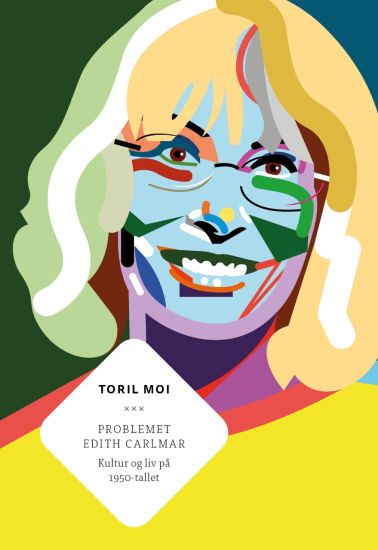
Problemet Edith Carlmar

Problemet Edith Carlmar

Toril Moi

Nasjonalbiblioteket
2020
nidottu
«Egentlig krever vi at pionerkvinnen ikke bare skal bryte barrierer, men i tillegg overgå sine mannlige kolleger» Edith Carlmar var Norges første kvinnelige filmregissør. Gjennom 1950-tallet produserte hun flere filmer som gjorde stor suksess i sin samtid. Disse har siden blitt stemplet som B-filmer, og Carlmar er i ferd med å bli glemt. Har hun blitt dømt for hardt, og på hvilket grunnlag? Toril Moi drøfter filmene og reflekterer rundt filmkunst og filmhåndverk, kultursnobberi og urimelige forventninger. Dette essayet er del av en foredragsserie om kultur og liv i 1950-tallets Norge. På jakt etter forståelse av landet og tiåret hun selv ble født i, undersøker Toril Moi kulturuttrykk fra perioden. Prosjektet er både personlig og historisk. Uten å forstå Norge kan hun heller ikke forstå seg selv.
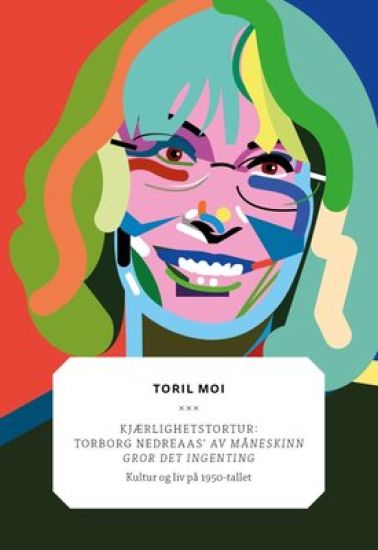
Kjærlighetstortur

Kjærlighetstortur

Toril Moi

Nasjonalbiblioteket
2020
nidottu
«Hva er det med "Av måneskinn" som er så smertefullt for meg, et jentebarn født på 1950-tallet?» I Torborg Nedreaas' forfatterskap er kvinners samfunnsvilkår en tilbakevendende tematikk. Forfatterens politiske engasjement og skarpe stemme engasjerte norske lesere på 1950-tallet. Men klarte hun å skrive seg fri fra samtidens kvinnesyn og kjærlighetsmyte? Nedreaas' "Av måneskinn gror det ingenting" fra 1947 omtales ofte som Norges første abortroman. Toril Moi leser den som et uhyrlig skremmebilde av en kvinneskjebne i et kvinnefiendtlig samfunn, der kjærligheten fører til et liv i smerte og underkastelse. Dette essayet er del av en foredragsserie om kultur og liv i 1950-tallets Norge. På jakt etter forståelse av landet og tiåret hun selv ble født i, undersøker Toril Moi kulturuttrykk fra perioden. Prosjektet er både personlig og historisk. Uten å forstå Norge kan hun heller ikke forstå seg selv.
Et stykke Norge: Mykle og Bjørneboe

Et stykke Norge: Mykle og Bjørneboe

Toril Moi

Nasjonalbiblioteket
2020
nidottu
«Når det gjelder sex og kjønn, kvinner og menn, framstår 1950-tallet som et fremmed kontinent.» «Denne bok er et stykke Norge», skriver Agnar Mykle i romanen Lasso rundt fru Luna fra 1954. Fortsettelsen, Sangen om den røde rubin, kom to år etter. I 1955 ga Jens Bjørneboe ut Jonas. Samlet tegner de kanoniserte og beryktede bøkene opp et bilde av den norske kulturen på 1950-tallet. Mykle og Bjørneboe utfordret flere av samtidens konvensjoner, samtidig som de befestet andre. For hvilken plass har kvinner i det mannssamfunnet bøkene gir innblikk i? Dette essayet er del av en foredragsserie om kultur og liv i 1950-tallets Norge. På jakt etter forståelse av landet og tiåret hun selv ble født i, undersøker Toril Moi kulturuttrykk fra perioden. Prosjektet er både personlig og historisk. Uten å forstå Norge kan hun heller ikke forstå seg selv.
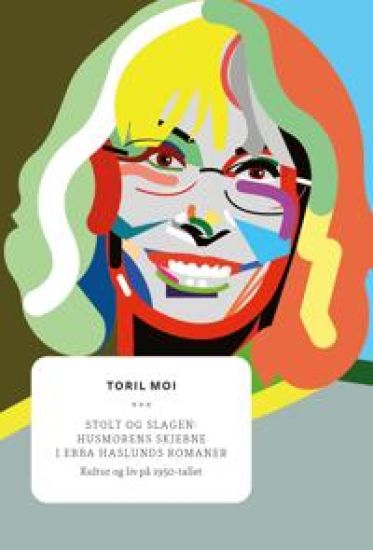
Stolt og slagen

Stolt og slagen

Toril Moi

Nasjonalbiblioteket
2021
nidottu
«Da jeg var ung på 1970-tallet, var det ingenting som skremte meg mer enn tanken på å bli husmor.» I etterkrigslitteraturen er Ebba Haslund husmorens dikter. Hun skriver inspirert om husarbeidets gleder, men viser oss også husmorens bitterhet og frustrasjon. Toril Moi reflekterer over en vesentlig historisk erfaring som Haslund gir form til, nemlig hvordan det opplevdes for en generasjon av kvinner som var.husmødre på 1950-tallet, at arbeidet de stolt viet sine liv til, plutselig på 1970-tallet ble definert som uvesentlig og.kvinneundertrykkende. Dette essayet er en del av en foredragsserie om kultur og liv i 1950-tallets Norge. På jakt etter forståelse av landet og tiåret hun selv ble født i, undersøker Toril Moi kulturuttrykk fra perioden. Prosjektet er både personlig og historisk. Uten å forstå Norge kan hun ikke forstå seg selv.
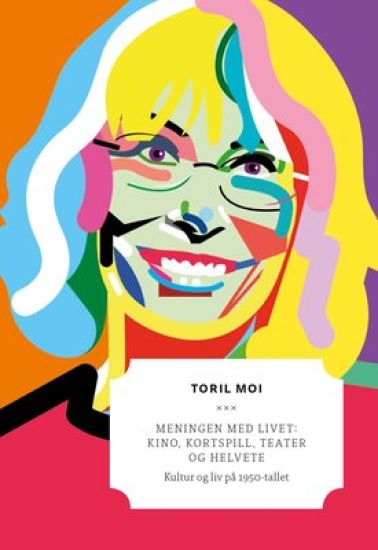
Meningen med livet

Meningen med livet

Toril Moi

Nasjonalbiblioteket
2023
nidottu
«Hvordan kunne en hel nasjon bli opptatt av noe så esoterisk som helvetes plass i luthersk teologi?» Toril Moi vokste opp på det pietistiske Sørvestlandet på 1950-tallet. Helvetesdebatten blusset opp samtidig som eksistensialismen gjorde sitt inntog i Norge. Tiden var opptatt av meningen med livet, autentisitet, og det eksistensielle valget. Hvilke spor satte tidsånden i litteraturen fra perioden, og i Moi selv? For å finne svar leser hun Alfred Hauge, Sigbjørn Hølmebakk og Kjell Askildsen, som alle kom fra religiøse miljøer på Sørvestlandet. Dette essayet er en del av en foredragsserie om kultur og liv i 1950-tallets Norge. På jakt etter forståelse av landet og tiåret hun selv ble født i, undersøker Toril Moi kulturuttrykk fra perioden. Prosjektet er både personlig og historisk. Uten å forstå Norge kan hun heller ikke forstå seg selv.
Om norskhet

Om norskhet

Toril Moi

Nasjonalbiblioteket
2023
nidottu
«Jeg vokste opp i et land der det nasjonale var en helt uproblematisk verdi.» I den veiløse bygda Matre, der Toril Moi vokste opp på 1950-tallet, var det ingen som bekymret seg over hva det norske besto i. At alle i Matre var norske var jo helt selvfølgelig. Men landet og nasjonalfølelsen var i en brytningstid. I denne boka utforsker hun norsk identitet i kjølvannet av andre verdenskrig. Essayet handler om norskhet og norskhetens andre, om skjebnen til de norske jødene under krigen, om norske væremåter, og om hvordan det komplekse begrepet identitet brukes i dagens debatter. Dette essayet er siste del av foredragsserien om kultur og liv i 1950-tallets Norge. På jakt etter forståelse av landet og tiåret hun selv ble født i, undersøker Toril Moi kulturuttrykk fra perioden. Prosjektet er både personlig og historisk. Uten å forstå Norge kan hun heller ikke forstå seg selv.
Språk och uppmärksamhet

Språk och uppmärksamhet

Toril Moi

Bokförlaget Faethon
2017
nidottu
Vilka är läsningens och språkets etiska konsekvenser? Hur bör man läsa och vad sker med oss som läsare om vi uppmärksamt ägnar oss åt texter? Dessa är några av de frågor som den norska litteraturvetaren och feministen Toril Moi ställer i "Språk och uppmärksamhet". Boken skrevs ursprungligen till en serie som skulle uppmärksamma införandet av kvinnlig rösträtt i Norge. Moi fokuserar på de etiska konsekvenserna av uppmärksamhet. Läsningen kan ge oss en förståelse av världen, fördjupa vår kunskap om värden och få oss att agera. Genom läsningar av Henrik Ibsen, Simone Weil och Iris Murdoch analyserar Moi hur läsningen kan fylla oss med verklighet. Hon närmar sig också frågan genom att sitta med på rättegången mot Anders Behring Breivik efter morden på Utøya eller att skriva om Förintelseöverlevaren Ruth Klüger närmar sig Moi även hur språket påverkar människans etiska handlingar, hur det vittnar om de världsbilder vi har och vilka förklaringsmodeller som ställs upp för historiens grymheter. Resultatet är en tät essä som både uppmanar och tvingar läsaren att reflektera över sin egen läspraktik och dess etiska konsekvenser.
Character

Character

Amanda Anderson; Rita Felski; Toril Moi

University of Chicago Press
2019
sidottu
Over the last few decades, character-based criticism has been seen as either naive or obsolete. But now questions of character are attracting renewed interest. Making the case for a broad-based revision of our understanding of character, Character rethinks these questions from the ground up. Is it really necessary to remind literary critics that characters are made up of words? Must we forbid identification with characters? Does character-discussion force critics to embrace humanism and outmoded theories of the subject? Across three chapters, leading scholars Amanda Anderson, Rita Felski, and Toril Moi reimagine and renew literary studies by engaging in a conversation about character. Moi returns to the fundamental theoretical assumptions that convinced literary scholars to stop doing character-criticism, and shows that they cannot hold. Felski turns to the question of identification and draws out its diverse strands, as well as its persistence in academic criticism. Anderson shows that character-criticism illuminates both the moral life of characters, and our understanding of literary form. In offering new perspectives on the question of fictional character, this thought-provoking book makes an important intervention in literary studies.