Kirjojen hintavertailu. Mukana 11 627 373 kirjaa ja 12 kauppaa.

Kirjahaku

Etsi kirjoja tekijän nimen, kirjan nimen tai ISBN:n perusteella.

49 tulosta hakusanalla Toshimasa Yasukata

Lessing's Philosophy of Religion and the German Enlightenment

Lessing's Philosophy of Religion and the German Enlightenment

Toshimasa Yasukata

Oxford University Press Inc
2003
sidottu
Gotthold Ephraim Lessing (1729-81) stands as a key figure in German intellectual history, a bridge joining Luther, Leibniz, and German idealism. Despite his well-recognized importance in the history of thought, Lessing as theologian or philosopher of religion remains an enigmatic figure. Scholars refer to the "riddle" or "mystery" of Lessing, a mystery that has proved intractable because of his reticence on the subject of the final conclusions of his intellectual project. Toshimasa Yasukata seeks to unravel this mystery. Based on intensive study of the entire corpus of Lessing's philosophical and theological writings as well as the extensive secondary literature, Yasukata's work takes us into the systematic core of Lessing's thought. From his penetrating and sophisticated analysis of Lessing's developing position on Christianity and reason, there emerges a fresh image of Lessing as a creative modern mind, who is both shaped by and gives shape to the Christian heritage. The first comprehensive study in English of Lessing's theological and philosophical thought, this book will appeal to all those interested in the history of modern theology, as well as specialists in the Enlightenment and the German romantic movement.
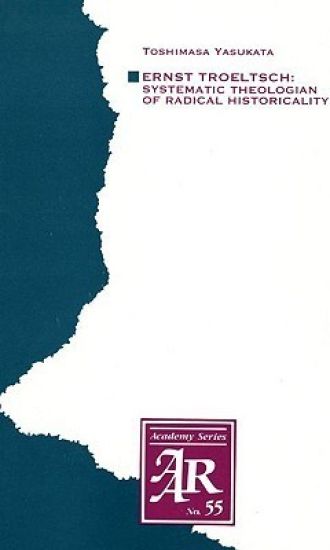
Ernst Troeltsch

Ernst Troeltsch

Toshimasa Yasukata

Oxford University Press Inc
1983
nidottu
Toshimasa Yasukata offers a detailed study and interpretation of the German theologian Ernst Troeltsch, discerning a systematic unity in his thought. Despite the obvious diversity of his interests and published works, Troeltsch is shown to be thoroughly consistent in exploring the possibility of establishing normative values in the face of the relativizing efforts of history. In his closing remarks, Yasukata suggests the wide-ranging significance of Troeltsch's work for the future of theology.
Toshimasa Kikuchi

Toshimasa Kikuchi

Sophie Makariou

Galerie Mingei
2021
sidottu
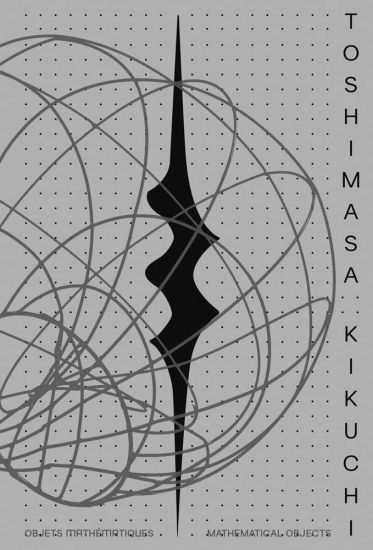
The work of the Japanese sculptor Toshimasa Kikuchi (born in 1979) is somehow bewilderingly obvious. Trained in the restoration of Buddhist statues, mastering to perfection the techniques of classical Japanese statuary, he carves pure forms in wood - geometric, hydrodynamic or figurative. His scientific repertory is of all time (mathematics, engineering, natural history), but his preferred materials and techniques are firmly grounded in tradition (Japanese hinoki cypress, urushi lacquer, kinpaku gold leaf). The installation he presents for his Carte Blanche at the musee Guimet in Paris, brings together a series of slender sculptures in lacquered wood of mathematical objects, in the tradition of the celebrated photographs that Man Ray took of them. These abstract forms, hanging from the ceiling like mobiles or laid on the floor like devotional objects, take shape through a virtuosity and craftsmanship seldom found in contemporary art. The book is lavishly illustrated by the Japanese photographer Tadayuki Minamoto, who was able to capture the magnificence of the mathematical abstraction of the works of Kikuchi; by photographs and paintings by Man Ray; and with fascinating mathematical objects from the Institut Henri Poincare, Paris, photographed by the French photographer Bertrand Michau. It is essential reading for lovers of surrealism and of the early years of twentieth-century abstraction as well as for all who are intrigued by the close relationship between art and mathematics.
Modern Derivatization Methods for Separation Science

Modern Derivatization Methods for Separation Science

Toshimasa Toyo'oka

John Wiley Sons Inc
1998
sidottu
Includes new derivatizing reagents not covered in similar book by Blau and Halket (Wiley 1993) and not found in any other books to date. A field of increasing importance and significance in separation science. Concentrates on synthesis of derivatives for HPLC and Capillary Electrophoresis, techniques of great interest in the pharmaceutical field.
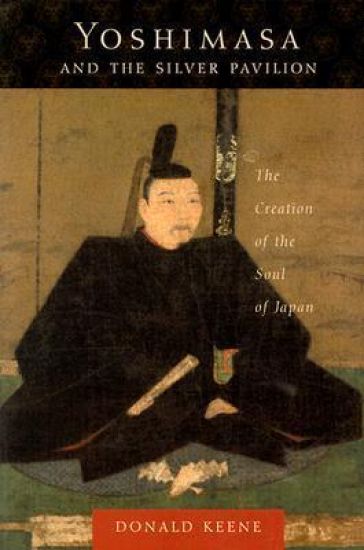
Yoshimasa and the Silver Pavilion

Yoshimasa and the Silver Pavilion

Donald Keene

Columbia University Press
2003
sidottu
Yoshimasa may have been the worst shogun ever to rule Japan. He was a failure as a soldier, incompetent at dealing with state business, and dominated by his wife. But his influence on the cultural life of Japan was unparalleled. According to Donald Keene, Yoshimasa was the only shogun to leave a lasting heritage for the entire Japanese people. Today Yoshimasa is remembered primarily as the builder of the Temple of the Silver Pavilion and as the ruler at the time of the Onin War (1467-1477), after which the authority of the shogun all but disappeared. Unable to control the daimyos-provincial military governors-he abandoned politics and devoted himself to the quest for beauty. It was then, after Yoshimasa resigned as shogun and made his home in the mountain retreat now known as the Silver Pavilion, that his aesthetic taste came to define that of the Japanese: the no theater flourished, Japanese gardens were developed, and the tea ceremony had its origins in a small room at the Silver Pavilion. Flower arrangement, ink painting, and shoin-zukuri architecture began or became of major importance under Yoshimasa. Poets introduced their often barely literate warlord-hosts to the literary masterpieces of the past and taught them how to compose poetry. Even the most barbarous warlord came to want the trappings of culture that would enable him to feel like a civilized man. Yoshimasa and the Silver Pavilion gives this long-neglected but critical period in Japanese history the thorough treatment it deserves.
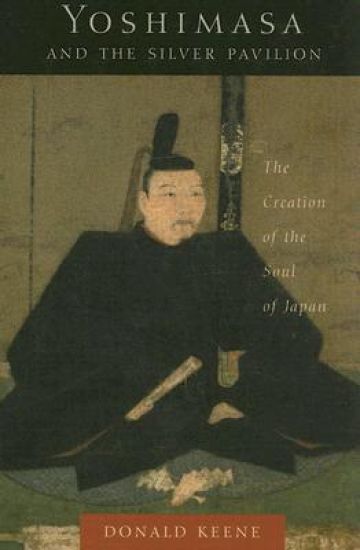
Yoshimasa and the Silver Pavilion

Yoshimasa and the Silver Pavilion

Donald Keene

Columbia University Press
2006
pokkari
Yoshimasa may have been the worst shogun ever to rule Japan. He was a failure as a soldier, incompetent at dealing with state business, and dominated by his wife. But his influence on the cultural life of Japan was unparalleled. According to Donald Keene, Yoshimasa was the only shogun to leave a lasting heritage for the entire Japanese people. Today Yoshimasa is remembered primarily as the builder of the Temple of the Silver Pavilion and as the ruler at the time of the Onin War (1467-1477), after which the authority of the shogun all but disappeared. Unable to control the daimyos-provincial military governors-he abandoned politics and devoted himself to the quest for beauty. It was then, after Yoshimasa resigned as shogun and made his home in the mountain retreat now known as the Silver Pavilion, that his aesthetic taste came to define that of the Japanese: the no theater flourished, Japanese gardens were developed, and the tea ceremony had its origins in a small room at the Silver Pavilion. Flower arrangement, ink painting, and shoin-zukuri architecture began or became of major importance under Yoshimasa. Poets introduced their often barely literate warlord-hosts to the literary masterpieces of the past and taught them how to compose poetry. Even the most barbarous warlord came to want the trappings of culture that would enable him to feel like a civilized man. Yoshimasa and the Silver Pavilion gives this long-neglected but critical period in Japanese history the thorough treatment it deserves.
Pharmacogenomics of Human Drug Transporters

Pharmacogenomics of Human Drug Transporters

Toshihisa Ishikawa; Richard B. Kim; Jörg König

John Wiley Sons Inc
2013
sidottu
Sets the foundation for safer, more effective drug therapies With this book as their guide, readers will discover how to apply our current understanding of the pharmacogenomics of drug transporters to advance their own drug discovery and development efforts. In particular, the book explains how new findings in the field now enable researchers to more accurately predict drug interactions and adverse drug reactions. Moreover, it sets the foundation for the development of drug therapies that are tailored to an individual patient's genetics. Pharmacogenomics of Human Drug Transporters serves as a comprehensive guide to how transporters regulate the absorption, distribution, and elimination of drugs in the body as well as how an individual's genome affects those processes. The book's eighteen chapters have been authored by a team of leading pioneers in the field. Based on their own laboratory and clinical experience as well as a thorough review of the literature, these authors explore all facets of drug transporter pharmacogenomics, including: Individual drug transporters and transporter families and their clinical significancePrinciples of altered drug transport in drug?drug interactions, pharmacotherapy, and personalized medicineEmerging new technologies for rapid detection of genetic polymorphismsClinical aspects of genetic polymorphisms in major drug transporter genesFuture research directions of drug transporter pharmacogenomics and the prospect of individualized medicine Pharmacogenomics of Human Drug Transporters opens the door to new drug discovery and development breakthroughs leading to safer and more effective customized drug therapies.The book is recommended for pharmaceutical scientists, biochemists, pharmacologists, clinicians, and genetics and genomics researchers.
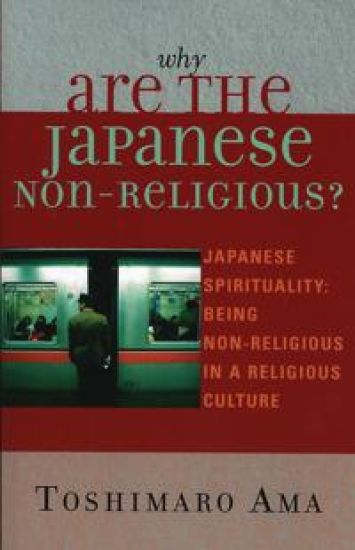
Why Are the Japanese Non-Religious?

Why Are the Japanese Non-Religious?

Toshimaro Ama

University Press of America
2004
nidottu
Why Are the Japanese Non-Religious?: Japanese Spirituality: Being Non-Religious in a Religious Culture, translated here for the first time in English, was first published in Japan in 1996. It has also been translated into Korean and German. Author Toshimaro Ama examines the concept of mushukyo, or lack of specific religious beliefs. According to Ama, the Japanese generally lack an understanding of or desire to commit to a particular organized religion, oftentimes fusing Shinto, Christianity, and Buddhism into a hybrid form of spirituality. The book classifies Japanese religion into "revealed," or organized (i.e. Buddhism or Confucianism), and "natural," or folklore based. It explains how folklore and culture have been integrated into the Japanese religious mind, examines governmental influence over the development of Japanese religion, and introduces several attempts to restore authentic spirituality. The book, which has sold more than 100,000 copies, is widely popular among students of Japanese culture and ethnicity as well as lay readers desiring to learn more about Japanese religious identity.
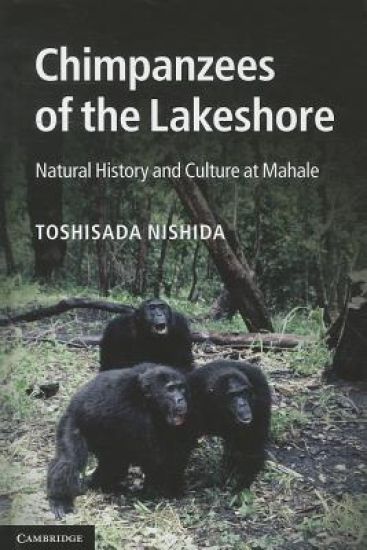
Chimpanzees of the Lakeshore

Chimpanzees of the Lakeshore

Toshisada Nishida

Cambridge University Press
2011
sidottu
Chimpanzees are humanity's closest living relations and are of enduring interest to a range of sciences, from anthropology to zoology. In the West, many know of the pioneering work of Jane Goodall, whose studies of these apes at Gombe in Tanzania are justly famous. Less well-known, but equally important, are the studies carried out by Toshisada Nishida on the eastern shore of Lake Tanganyika. Comparison between the two sites yields both notable similarities and startling contrasts. Nishida has written a comprehensive synthesis of his work on the behaviour and ecology of the chimpanzees of the Mahale Mountains. With topics ranging from individual development to population-specific behavioural patterns, it reveals the complexity of social life, from male struggles for dominant status to female travails in raising offspring. Richly illustrated, the author blends anecdotes with powerful data to explore the fascinating world of the chimpanzees of the lakeshore.
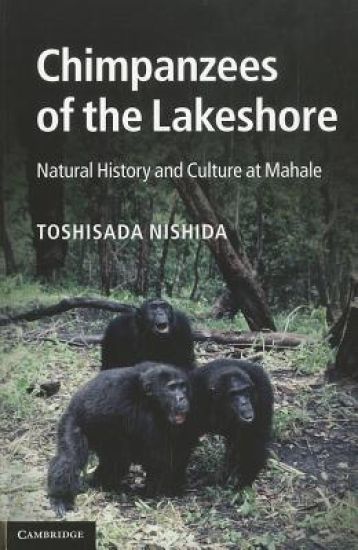
Chimpanzees of the Lakeshore

Chimpanzees of the Lakeshore

Toshisada Nishida

Cambridge University Press
2011
pokkari
Chimpanzees are humanity's closest living relations and are of enduring interest to a range of sciences, from anthropology to zoology. In the West, many know of the pioneering work of Jane Goodall, whose studies of these apes at Gombe in Tanzania are justly famous. Less well-known, but equally important, are the studies carried out by Toshisada Nishida on the eastern shore of Lake Tanganyika. Comparison between the two sites yields both notable similarities and startling contrasts. Nishida has written a comprehensive synthesis of his work on the behaviour and ecology of the chimpanzees of the Mahale Mountains. With topics ranging from individual development to population-specific behavioural patterns, it reveals the complexity of social life, from male struggles for dominant status to female travails in raising offspring. Richly illustrated, the author blends anecdotes with powerful data to explore the fascinating world of the chimpanzees of the lakeshore.