Kirjojen hintavertailu. Mukana 11 244 527 kirjaa ja 12 kauppaa.

Kirjahaku

Etsi kirjoja tekijän nimen, kirjan nimen tai ISBN:n perusteella.

1000 tulosta hakusanalla Trace B Steyaert

A Travers l'Isthme de Panama: Tracé Interocéanique de L. N. B. Wyse Et A. Reclus
A travers l'isthme de Panama: Trace interoceanique de L. N. B. Wyse et A. Reclus / Louis VerbruggheDate de l'edition originale: 1879Ce livre est la reproduction fidele d'une oeuvre publiee avant 1920 et fait partie d'une collection de livres reimprimes a la demande editee par Hachette Livre, dans le cadre d'un partenariat avec la Bibliotheque nationale de France, offrant l'opportunite d'acceder a des ouvrages anciens et souvent rares issus des fonds patrimoniaux de la BnF.Les oeuvres faisant partie de cette collection ont ete numerisees par la BnF et sont presentes sur Gallica, sa bibliotheque numerique.En entreprenant de redonner vie a ces ouvrages au travers d'une collection de livres reimprimes a la demande, nous leur donnons la possibilite de rencontrer un public elargi et participons a la transmission de connaissances et de savoirs parfois difficilement accessibles.Nous avons cherche a concilier la reproduction fidele d'un livre ancien a partir de sa version numerisee avec le souci d'un confort de lecture optimal. Nous esperons que les ouvrages de cette nouvelle collection vous apporteront entiere satisfaction.Pour plus d'informations, rendez-vous sur www.hachettebnf.frhttp: //gallica.bnf.fr/ark: /12148/bpt6k5400855p
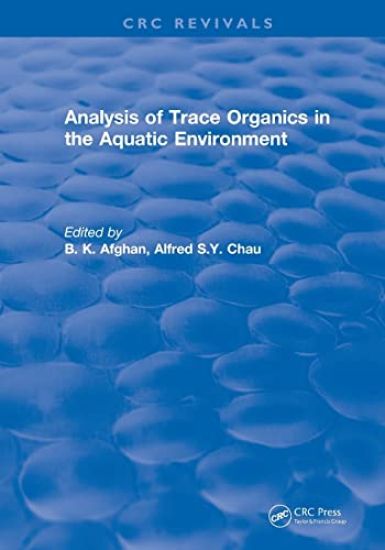
Analysis of Trace Organics in the Aquatic Environment

Analysis of Trace Organics in the Aquatic Environment

B. K. Afghan; Alfred S.Y. Chau

CRC Press
2017
sidottu
A supplement to previous books edited by Afgan and Chau, this publication covers the practical aspects of analytical methodology for trace organics. The book reviews the published work on the occurance, distribution, fate, effect, and environmental impact of specific classes of compounds. Essential background information emphasizing practical aspects of various methods with respect to advantages and disadvantages of the published methods is also discussed.
Analysis of Trace Organics in the Aquatic Environment

Analysis of Trace Organics in the Aquatic Environment

B. K. Afghan; Alfred S.Y. Chau

CRC Press
2019
nidottu
The book reviews the published work on the occurance, distribution, fate, effect, and environmental impact of specific classes of compounds. Essential background information emphasizing practical aspects of various methods with respect to advantages and disadvantages of the published methods is also discussed.
Trace Elements from Soil to Human

Trace Elements from Soil to Human

Alina Kabata-Pendias; Arun B. Mukherjee

Springer-Verlag Berlin and Heidelberg GmbH Co. K
2007
sidottu
The understanding of fundamental principles and phenomena that control the tra- fer of trace elements in soil-plant-human chain can contribute to the protection of the environment and human health. Many books, articles, and reports have already - scribed both fundamental and/or detail problems related to these topics. The intention of the authors is to provide up-to-date and selected interdisciplinary data for the concise presentation of existing knowledge on trace element transfer in the food chain, from soil to human. To accomplish this, the inclusion of appropriate data has been necessary. This book inevitably leaves publications of many investi- tors’ uncited. The authors regret that such approach was necessary. This volume is composed of two parts. Part I – Biogeochemistry of the Human - vironment – presents fundamental information on biogeochemical properties of en- ronmental compartments (soil, water, air, plants, humans) concerning trace elements. Part II – Biogeochemistry of Trace Elements – provides detailed data of the behavior and the occurrence of trace elements in the environment. There is a close relationship in the biogeochemical behavior between elements and their position in the Periodic System. Therefore, the format of this book follows the elemental sequences of the contemporary Periodic Table. The book provides data on the production usage, and on the occurrence of trace elements in soils, waters, air, plants, and humans (animals). Environmental stress, and biological functions of these elements are widely discussed.
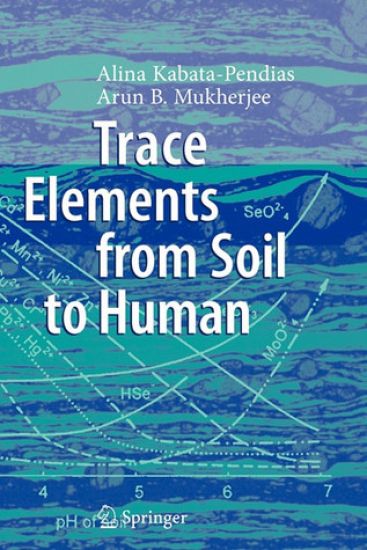
Trace Elements from Soil to Human

Trace Elements from Soil to Human

Alina Kabata-Pendias; Arun B. Mukherjee

Springer-Verlag Berlin and Heidelberg GmbH Co. K
2010
nidottu
The understanding of fundamental principles and phenomena that control the tra- fer of trace elements in soil-plant-human chain can contribute to the protection of the environment and human health. Many books, articles, and reports have already - scribed both fundamental and/or detail problems related to these topics. The intention of the authors is to provide up-to-date and selected interdisciplinary data for the concise presentation of existing knowledge on trace element transfer in the food chain, from soil to human. To accomplish this, the inclusion of appropriate data has been necessary. This book inevitably leaves publications of many investi- tors’ uncited. The authors regret that such approach was necessary. This volume is composed of two parts. Part I – Biogeochemistry of the Human - vironment – presents fundamental information on biogeochemical properties of en- ronmental compartments (soil, water, air, plants, humans) concerning trace elements. Part II – Biogeochemistry of Trace Elements – provides detailed data of the behavior and the occurrence of trace elements in the environment. There is a close relationship in the biogeochemical behavior between elements and their position in the Periodic System. Therefore, the format of this book follows the elemental sequences of the contemporary Periodic Table. The book provides data on the production usage, and on the occurrence of trace elements in soils, waters, air, plants, and humans (animals). Environmental stress, and biological functions of these elements are widely discussed.
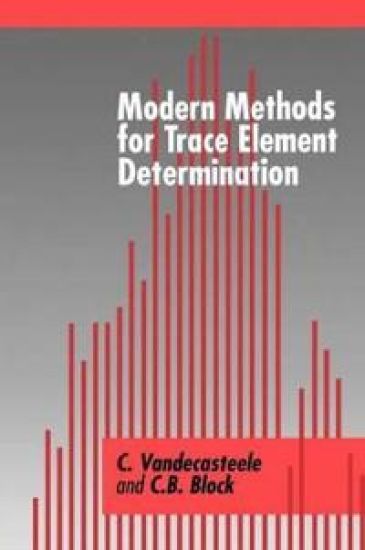
Modern Methods for Trace Element Determination

Modern Methods for Trace Element Determination

C. Vandecasteele; C. B. Block

John Wiley Sons Inc
1997
nidottu
Describes the theory, apparatus, performance and usage of modern methods for trace element determination, atomic absorption, emission, fluorescence and mass spectroscopies, x-ray techniques and activation analysis. Attention is given to sample preparation, current calibration procedures and to methods for trace element speciation. Contains in-depth information on relatively new techniques such as ICP-MS and PIXE. All methods are illustrated with authentic examples from the ever-expanding fields of environmental and biological analysis of high purity materials.
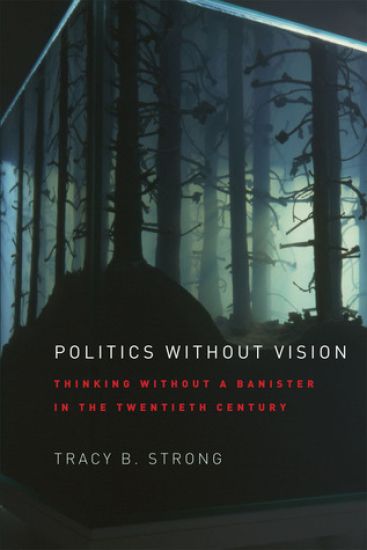
Politics without Vision

Politics without Vision

Tracy B. Strong

University of Chicago Press
2013
nidottu
From Plato through the nineteenth century, the West could draw on comprehensive political visions to guide government and society. Now, for the first time in more than two thousand years, Tracy B. Strong contends, we have lost our foundational supports. In the words of Hannah Arendt, the state of political thought in the twentieth and twenty-first centuries has left us effectively "thinking without a banister." Politics without Vision takes up the thought of seven influential thinkers, each of whom attempted to construct a political solution to this problem. Nietzsche, Weber, Freud, Lenin, Schmitt, Heidegger, and Arendt. None of these theorists were liberals nor, excepting possibly Arendt, were they democrats - and some might even be said to have served as handmaidens to totalitarianism. And all to a greater or lesser extent shared the common conviction that the practices of liberalism are inadequate to the demands and stresses of the present time. In examining their thought, Strong acknowledges the political evil that some of their ideas served to foster but argues that these were not the only paths their explorations could have taken. By uncovering the turning points in their thought - and the paths not taken - Strong strives to develop a political theory that can avoid, and perhaps help explain, the mistakes of the past while furthering the democratic impulse.
Learning One's Native Tongue

Learning One's Native Tongue

Tracy B Strong

University of Chicago Press
2019
sidottu
Citizenship is much more than the right to vote. It is a collection of political capacities constantly up for debate. From Socrates to contemporary American politics, the question of what it means to be an authentic citizen is an inherently political one. With Learning One's Native Tongue, Tracy B. Strong explores the development of the concept of American citizenship and what it means to belong to this country, starting with the Puritans in the seventeenth century and continuing to the present day. He examines the conflicts over the meaning of citizenship means in the writings and speeches of prominent thinkers and leaders ranging from John Winthrop and Roger Williams to Thomas Jefferson, Nathaniel Hawthorne, Abraham Lincoln, Frederick Douglass, and Franklin Roosevelt, among many others who have participated in these important cultural and political debates. The criteria that define what being a citizen entails change over time and in response to historical developments, and they are thus also often the source of controversy and conflict, as with voting rights for women and African Americans. Strong looks closely at these conflicts and the ensuing changes in the conception of citizenship, paying attention to what difference each change makes and what each particular conception entails socially and politically.
Learning One's Native Tongue

Learning One's Native Tongue

Tracy B Strong

University of Chicago Press
2019
pokkari
Citizenship is much more than the right to vote. It is a collection of political capacities constantly up for debate. From Socrates to contemporary American politics, the question of what it means to be an authentic citizen is an inherently political one. With Learning One's Native Tongue, Tracy B. Strong explores the development of the concept of American citizenship and what it means to belong to this country, starting with the Puritans in the seventeenth century and continuing to the present day. He examines the conflicts over the meaning of citizenship means in the writings and speeches of prominent thinkers and leaders ranging from John Winthrop and Roger Williams to Thomas Jefferson, Nathaniel Hawthorne, Abraham Lincoln, Frederick Douglass, and Franklin Roosevelt, among many others who have participated in these important cultural and political debates. The criteria that define what being a citizen entails change over time and in response to historical developments, and they are thus also often the source of controversy and conflict, as with voting rights for women and African Americans. Strong looks closely at these conflicts and the ensuing changes in the conception of citizenship, paying attention to what difference each change makes and what each particular conception entails socially and politically.
Politics without Vision

Politics without Vision

Tracy B. Strong

University of Chicago Press
2012
sidottu
From Plato through the nineteenth century, the West could draw on comprehensive political visions to guide government and society. Now, for the first time in more than two thousand years, Tracy B. Strong contends, we have lost our foundational supports. In the words of Hannah Arendt, the state of political thought in the twentieth and twenty-first centuries has left us effectively "thinking without a banister." "Politics without Vision" takes up the work of seven influential thinkers, each of whom attempted to construct a political solution to this problem: Nietzsche, Weber, Freud, Lenin, Schmitt, Heidegger, and Arendt. None of these theorists were liberals nor, excepting possibly Arendt, were they democrats-and some might even be said to have served as handmaidens to totalitarianism. And all to a greater or lesser extent shared the common conviction that the institutions and practices of liberalism are inadequate to the demands and stresses of the present time. In examining their thought, Strong acknowledges the political evil that some of their ideas served to foster but argues that these were not necessarily the only paths their explorations could have taken. By uncovering the turning points in their thought - and the paths not taken - Strong strives to develop a political theory that can avoid, and perhaps help explain, the mistakes of the past while furthering the democratic impulse. Confronting the widespread belief that political thought is on the decline, Strong puts forth a brilliant and provocative counterargument that in fact it has endured - without the benefit of outside support. A compelling rendering of contemporary political theory, "Politics without Vision" is sure to provoke discussion among scholars in many fields.
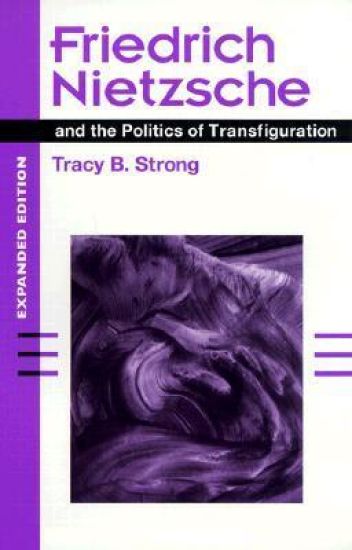
Friedrich Nietzsche and the Politics of Transfiguration (expanded ed.)
Friedrich Nietzsche and the Politics of Transfiguration provides a comprehensive analysis of the politics that are implicit and explicit in Nietzsche's work. Tracy B. Strong's discussion shows that Nietzsche's writings are of a piece and have as their common goal a politics of transfiguration: a politics that seeks radical change in how human beings live and act in the modern Western world. This edition includes a new introduction that demonstrates how the styles of Nietzsche's writings expand our notions of democratic politics and democratic understanding.
Jean-Jacques Rousseau

Jean-Jacques Rousseau

Tracy B. Strong

Rowman Littlefield Publishers
2002
nidottu
Rousseau is most often read either as a theorist of individual authenticity or as a communitarian. In this book, he is neither. Instead, Rousseau is understood as a theorist of the common person. In Strong's understanding, Rousseau's use of 'common' always refers both to that which is common and to that which is ordinary, vulgar, everyday. For Strong, Rousseau resonates with Kant, Hegel, and Marx, but he is more modern like Emerson, Nietzsche, Eittegenstein, and Heidegger. Rousseau's democratic individual is an ordinary self, paradoxically multiple and not singular. In the course of exploring this contention, Strong examines Rousseau's fear of authorship (though not of authority), his understanding of the human, his attempt to overcome the scandal that relativism posed for politics, and the political importance of sexuality.