

Kirjahaku
Etsi kirjoja tekijän nimen, kirjan nimen tai ISBN:n perusteella.
1000 tulosta hakusanalla Tracey Gene

On the night of Christmas Eve, the first baby girl was born to Mr. and Mrs. Claus. For all that don't know, Mr. and Mrs. Claus maintain their secret as the Snow Family in the human world. Chris lives an ordinary life like all children in The World, dreams big, and believes in herself that anything is possible. The week before Christmas, she learns about her family identity and their magical gift, and she is asked to become The Next Santa Claus.

From Our Generation to Yours
Tracey Glenn; Ryan Glenn; Tracey and Ryan Glenn
Independently Published
2017
pokkari
To Your Generation From Ours
Tracey Glenn; Ryan Glenn; Tracey and Ryan Glenn
Independently Published
2017
pokkari


Tracé Général Des Courbes Circulaires, Elliptiques Et Paraboliques de Raccordement Pour
Jacquet
Hachette Livre - BNF
2017
pokkari
Trace general des courbes circulaires, elliptiques et paraboliques de raccordement pour chemins de fer, routes... tables nouvelles et completes, precedees d'une introduction... par A. Jacquet, ...Date de l'edition originale: 1866Ce livre est la reproduction fidele d'une oeuvre publiee avant 1920 et fait partie d'une collection de livres reimprimes a la demande editee par Hachette Livre, dans le cadre d'un partenariat avec la Bibliotheque nationale de France, offrant l'opportunite d'acceder a des ouvrages anciens et souvent rares issus des fonds patrimoniaux de la BnF.Les oeuvres faisant partie de cette collection ont ete numerisees par la BnF et sont presentes sur Gallica, sa bibliotheque numerique.En entreprenant de redonner vie a ces ouvrages au travers d'une collection de livres reimprimes a la demande, nous leur donnons la possibilite de rencontrer un public elargi et participons a la transmission de connaissances et de savoirs parfois difficilement accessibles.Nous avons cherche a concilier la reproduction fidele d'un livre ancien a partir de sa version numerisee avec le souci d'un confort de lecture optimal. Nous esperons que les ouvrages de cette nouvelle collection vous apporteront entiere satisfaction.Pour plus d'informations, rendez-vous sur www.hachettebnf.fr
Planche À Tracer Générale de l'Installation Du Tres-Cher Frère Louis-Philippe-Joseph d'Orléans
Collectif
Hachette Livre - BNF
2019
pokkari

Mémoire Contre Le Changement Du Point de Départ Et Du Tracé Général Du Chemin de Fer
Alexandre Ducourneau
Hachette Livre - BNF
2016
pokkari
Memoire contre le changement du point de depart et du trace general du chemin de fer entre Bordeaux et La Teste / signe Alex. Ducourneau]Date de l'edition originale: 1838Appartient a l'ensemble documentaire: Aquit1Ce livre est la reproduction fidele d'une oeuvre publiee avant 1920 et fait partie d'une collection de livres reimprimes a la demande editee par Hachette Livre, dans le cadre d'un partenariat avec la Bibliotheque nationale de France, offrant l'opportunite d'acceder a des ouvrages anciens et souvent rares issus des fonds patrimoniaux de la BnF.Les oeuvres faisant partie de cette collection ont ete numerisees par la BnF et sont presentes sur Gallica, sa bibliotheque numerique.En entreprenant de redonner vie a ces ouvrages au travers d'une collection de livres reimprimes a la demande, nous leur donnons la possibilite de rencontrer un public elargi et participons a la transmission de connaissances et de savoirs parfois difficilement accessibles.Nous avons cherche a concilier la reproduction fidele d'un livre ancien a partir de sa version numerisee avec le souci d'un confort de lecture optimal. Nous esperons que les ouvrages de cette nouvelle collection vous apporteront entiere satisfaction.Pour plus d'informations, rendez-vous sur www.hachettebnf.fr
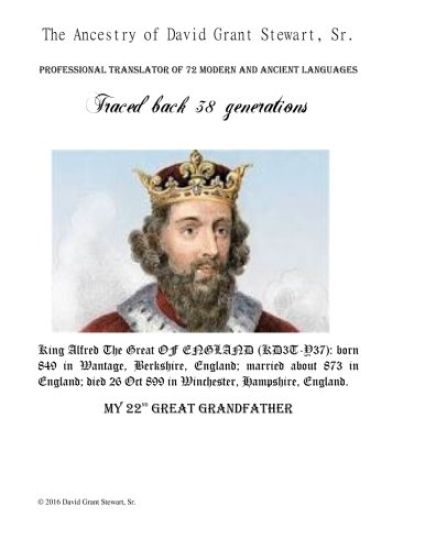
The Ancestry of David Grant Stewart, Sr.: Traced back 38 generations
David Grant Stewart Sr
Createspace Independent Publishing Platform
2016
nidottu
Vapor Generation Techniques for Trace Element Analysis
Elsevier - Health Sciences Division
2022
nidottu
Vapor Generation Techniques for Trace Element Analysis: Fundamental Aspects provides an overview and discussion of the fundamental aspects governing derivatization reactions of trace-level elements for analytical purposes. Vapor generation techniques coupled with atomic or mass spectrometry have been employed for over 50 years, but their popularity has dramatically increased in recent years, especially as alternative vapor generation approaches have been developed. This book bridges the knowledge gap of the derivatization mechanisms that yield volatile compounds and provides an update on recent developments in vapor generation techniques used for the determination and speciation of trace elements by atomic optical and mass spectrometry. It will serve as a comprehensive, single-source overview of recent developments, providing readers with an understanding of the correct implementation—and limitations—of applying vapor generation techniques to everyday analytical problems facing the trace element analyst.

Generating Traces in the History of the World
Luigi Giussani; Stefano Alberto; Javier Prades
McGill-Queen's University Press
2010
sidottu
Generating Traces in the History of the World is a synthesis of Monsignor Luigi Giussani's reflection on the Christian experience. His exploration of Christianity as an unforeseen and unforeseeable event in which the mystery became a man reveals how, by acknowledging this fact, an individual is simultaneously able to use reason and be moved by affection.
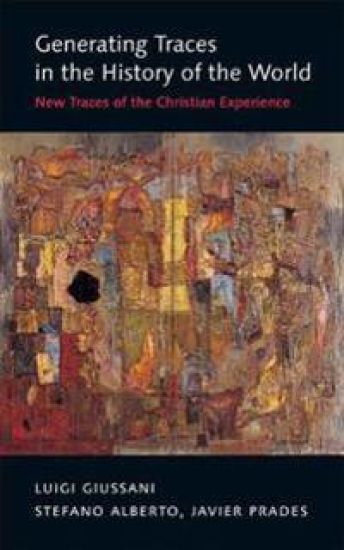
Generating Traces in the History of the World
Luigi Giussani; Stefano Alberto; Javier Prades
McGill-Queen's University Press
2010
nidottu
Generating Traces in the History of the World is a synthesis of Monsignor Luigi Giussani's reflection on the Christian experience. His exploration of Christianity as an unforeseen and unforeseeable event in which the mystery became a man reveals how, by acknowledging this fact, an individual is simultaneously able to use reason and be moved by affection.

PREMIERE PARTIE: DERRIDA LECTEUR DE HUSSERL : . . . . . . . . . . . 7 1. 1. L'EIDOSET LE TEMPS . . . . . . . . . . . . . . . . . . . . . . . . . . . . . . . . . . . . . . . . . . . . . . . . . . . . . . . . . . . . . . . . . . . . . . . . . 9 1. Le probleme de la genese: Ie temps et la verite . . . . . . . . . . . . . . . . . . . . . . . . . . . . . . . . . . . . . . . . . . . . 11 2. L'etre a toujours deja commence: geneses phenomenologique, ontologique, empirique . . . . . . . . . . . . . . . . . . . . . . . . . . . . . . . . . . . . . . . . . . . . . . . . . . . . . . . . . . . . . . . . . . . . . . . . . . . . . . . . . . . . . . . . . . . . . 16 3. La teleologie transcendantale et sa crise empirique : l'eidos Europe . . . . . . . . . . . . . . . . . . . . . . . . . . . . . . . . . . . . . . . . . . . . . . . . . . . . . . . . . . . . . . . . . . . . . . . . . . . . . . . . . . . . . . 29 1. 2. L'ABSOLU EST LE PASSAGE . . . . . . . . . . . . . . . . . . . . . . . . . . . . . . . . . . . . . . . . . . . . . . . . . . . . . . . . . . . . 39 1. Reactivation de l'origine : la question en retour . . . . . . . . . . . . . . . . . . . . . . . . . . . . . . . . . . . . . . . . . . . 40 2. La verite ne peut vivre qu'a condition de survivre . . . . . . . . . . . . . . . . . . . . . . . . . . . . . . . . . . . . . . . 45 3. L'ecriture et Ie sens transcendantal de la mort . . . . . . . . . . . . . . . . . . . . . . . . . . . . . . . . . . . . . . . . . . . . . . 47 4. La crise de l'histoire : Ie fait, l'eidos et la faute . . . . . . . . . . . . . . . . . . . . . . . . . . . . . . . . . . . . . . . . . . . . 51 1. 3. L'OUBLI ET LA MEMOIRE (DE L'IDEALITE) . . . . . . . . . . . . . . . . . . . . . . . . . . . . . . . . 57 1. La difference n'habite que Ie langage . . . . . . . . .. . . . . . . . . . . . . . . . . . . . . . . . . . . . . . . . . . . . . . . . . . . . . . . . . . 62 2. Memoire et oubli de I'idealite. . . . . . . . . . . . . . . . . . . . . . . . . . . . . . . . . . . . . . . . . . . . . . . . . . . . . . . . . . . . . . . . . . . . . . . 68 3. L'epoche et Ie discours solitaire de l'fune . . . . . . . . . . . . . . . . . . . . . . . . . . . . . . . . . . . . . . . . . . . . . . . . . . . . . 75 4. Intuition originaire et signification . . . . . . . . . . . . . . . . . . . . . . . . . . . . . . . . . . . . . . . . . . . . . . . . . . . . . . . . . . . . . . . 79 5. La duree de l'Augenblick : Ie monde dans Ie temps . . . . . . . . . . . . . . . . . . . . . . . . . . . . . . . . . . . . . . 83 6. Widersinnigkeit et Sinnlosigkeit : (Idealite de la Bedeutung et non-intuition) . . . . . . . . . . . . . . . . . . . . . . . . . . . . . . . . . . . . . . . . . . 92 DEUXIEME PARTIE: DERRIDA DEVANT HEIDEGGER : . . . . . . . . . . . 99 2. 1. L'ETRE NE SE RASSEMBLE PAS . . . . . . . . . . . . . . . . . . . . . . . . . . . . . . . . . . . . . . . . . . . . . . . . . . . . 101 1. De I'epoque de la representation . . . . . . . . . . . . . . . . . . . . . . . . . . . . . . . . . . . . . . . . . . . . . . . . . . . . . . . . . . . . . . . . . 101 2. Des envois . . . . . . . . . . . . . . . . . . . . . . . . . . . . . . . . . . . . . . . . . . . . . . . . . . . . . . . . . . . . . . . . . . . . . . . . . . . . . . . . . . . . . . . . . . . . . . . . . . 111 3. Le paradoxe de I'origine chez Heidegger . . . . . . . . . . . . . . . . . . . . . . . . . . . . . . . . . . . . . . . . . . . . . . . . . . . 126 2. 2. D'OU NOUS VIENT L' AVENIR ? . . . . . . . . . . . . . . . . . . . . . . . . . . . . . . . . . . . . . . . . . . . . . . . . . . . . 133 1. Temporalite et historialite originaires . . . . . . . . . . . . . . . . . . . . . . . . . . . . . . . . . . . . . . . . . . . . . . . . . . . . . . . . . 133 2. Genese et origine du temps . . . . . . . . . . . . . . . . . . . . . . . . . . . . . . . . . . . . . . . . . . . . . . . . . . . . . . . . . . . . . . . . . . . . . . . . 143 2. 3. LA VIE DU DASEIN . . . . . . . . . . . . . . . . . . . . . . . . . . . . . . . . . . . . . . . . . . . . . . . . . . . . . . . . . . . . . . . . . . . . . . . . . . . 165 1. Le Dasein ne passe pas . . . . . : . . . . . . . . . . . . . . . . . . . . . . . . . . . . . . . . . . . . . . . . . . . . . . . . . . . . . . . . . . . . . . . . . . . . . . . . 166 2. Ma mort est-elle possible ? . . . . . . . . . . . . . . . . . . . . . . . . . . . . . . . . . . . . . . . . . . . . . . . . . . . . . . . . . . . . . . . . . . . . . . . . 179 4 CONCLUSIONS . . . . . . . . . . . . . . . . . . . . . . . . . . . . . . . . . . . . . . . . . . . . . . . . . . . . . . . . . . . . . . . . . . . . . . . . . . . . . . . . . . . . . . . . . . . . . . . . . . . . . 205 1 . . . . . . . . . . . . . . . . . . . . . . . . . . . . . . . . . . . . . . . . . . . . . . . . . . . . . . . . . . . . . . . . . . . . . . . . . . . . . . . . . . . . . . . . . . . . . . . . . . . . . . . . . . . . . . . . . . . . . . . . . . . . . . . . 205 2 . . . . . . . . . . . . . . . . . . . . . . . . . . . . . . . . . . . . . . . . . . . . . . . . . . . . . . . . . . . . . . . . . . . . . . . . . . . . . . . . . . . . . . . . . . . . . . . . . . . . . . . . . . . . . . . . . . . . . . . . . . . . . . . . 208 3 . . . . . . . . . . . . . . . . . . . . . . . . . . . . . . . . . . . . . . . . . . . . . . . . . . . . . . . . . . . . . . . . . . . . . . . . . . . . . . . . . . . . . . . . . .. . . . . . . . . . . . . . . . . . . . . . . . . . . . . . . . . . . . . . 214 4 . . . . . . . . . . . . . . . . . . . . . . . . . . . . . . . . . . . . . . . . . . . . . . . . . . . . . . . . . . . . . . . . . . . . . . . . . . . . . . . . . . . . . . . . . . . . . . . . . . . . . . . . . . . . . . . . . . . . . . . . . . . . . . . . 218 BIBLIOGRAPHIE . . . . . . . . . . . . . . . . . . . . . . . . . . . . . . . . . . . . . . . . . . . . . . . . . . . . . . . . . . . . . . . . . . . . . . . . . . . . . . . . . . . . . . . . . . . . . . . . .

American Genealogy: How to Trace Your American Family Tree
Jody Cummings; Howexpert Press
Createspace Independent Publishing Platform
2016
nidottu
Genealogy is increasingly popular these days. The popularity of the television show "Who Do You Think You Are" and the plethora of websites and books on the subject (this book included) attest to the popularity of understanding the present by uncovering the past. Just one hour of television viewing can bring you several commercials for Ancestry.com, and that's just one genealogy service. There are magazines, blogs, podcasts, and even degree programs about genealogy. Genealogy has become big business, worth over $1.6 billion - that's billion with a "b" - in 2012 alone. Why this sudden fascination with tracing our roots? Some people say it's because the modern world is in such a state of confusion and flux that the past, that golden realm where all of the bad things are over and everything has already happened, can see like a much safer place to put our attention. I actually think that in our drive to be more self-aware, we have discovered that to know who we are, we really need to know who we've been and where we come from. There is so much that can be learned from researching your family's past, not just about the people who came before you, but also about the world as it once was. A family tree is history writ small, showing the effects of larger events on individuals, and sometimes the influence of individuals on larger events. It's a personalized form of history, with a bit of old-fashioned detective work thrown in for good measure. It's a treasure hunt and a mental puzzle, and the thrill of discovering some new nugget of information is a very real thing. As you go back in time with your family names and dates, you'll make little stops in different eras of history, like a time traveler. Take each of these stops as opportunities to look out the windows of the house of the family that you're building. Let's say that you were born in 1969. You don't have any clear memories of that year, obviously. What was happening in your town that year? In your state? In your country? The year you were born was the end of the turbulent 1960s, a decade of change. The Vietnam War was being fought, and the conflict was being televised for the first time. Did you have relatives fighting at Khe Sanh? Did they come back? Was it your father? Your older brother? Was your cousin neighbor a hippie, while the rest of your family supported the government? Or was it the exact opposite? Look out the window at 1969. Try to get to know it, and understand how the history of that year colored who you became. Now look at your mother. Suppose that she was born in 1946. That was the year after World War II ended, at the start of the Baby Boom. She was born only months after the first nuclear weapon was detonated over Japan. Your mother was one of those children who were taught to duck and cover in the 1950s during the darkest days of the Cold War. How did that affect her outlook on life? Did she have uncles who went to war, or did her father fight? Where did she live? How many siblings did she have? Look at 1946 and get to know it. Do this process at every stop on your family tree, and you will find yourself building a truly epic generational saga. You don't have to be a Kennedy or a family in fiction to have dramatic stories in your family tree...and we're still only two generations into the line. About the ExpertJody Cummings is an amateur genealogist who has been researching her family tree for more than 13 years. She earned a B.A. in History, Spanish and Anthropology from the Michigan State University Honors College and has published several novels under the name J. A. Cummings. HowExpert publishes quick 'how to' guides on all topics from A to Z by everyday experts.
Trace-A-Story: Bible Genesis Part 1 (Manuscript Practice Book)
Angela M. Foster
Createspace Independent Publishing Platform
2017
nidottu
Trace-A-Story: Bible Genesis Part 2 (Manuscript Practice Book)
Angela M. Foster
Createspace Independent Publishing Platform
2017
nidottu
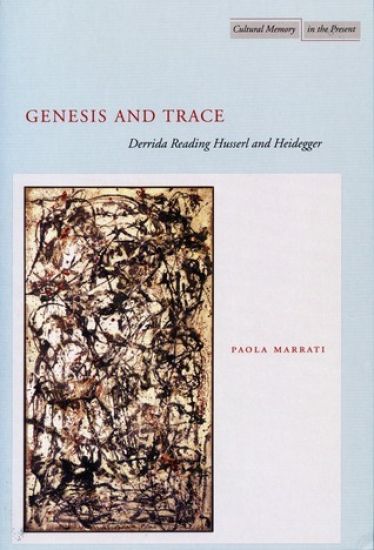
In this study, Paola Marrati approaches—in an extremely insightful, rigorous, and well-argued way—the question of the philosophical sources of Derrida's thought through a consideration of his reading of both Husserl and Heidegger. A central focus of the book is the analysis of the concepts of genesis and trace as they define Derrida's thinking of historicity, time, and subjectivity. Notions such as the contamination of the empirical and the transcendental, dissemination and writing, are explained as key categories establishing a guiding thread that runs through Derrida's early and later works. Whereas in his discussion of Husserl Derrida problematizes the relationship between the ideality of meaning and the singularity of its historical production, in his interpretation of Heidegger he challenges the very idea of the originary finitude of temporality. This book is essential reading not only for those interested in the philosophical roots of deconstruction, but for all those interested in the central questions of history and temporality, subjectivity and language, that pervade contemporary debates in cultural, literary, and visual theory alike.
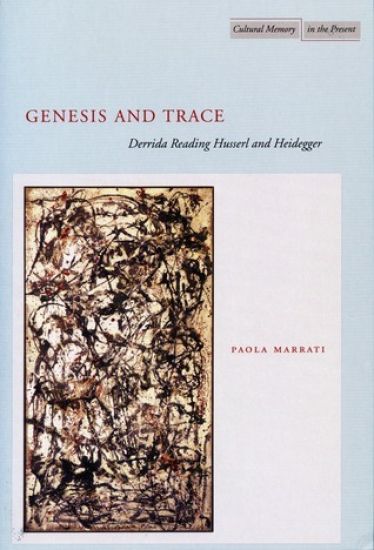
In this study, Paola Marrati approaches—in an extremely insightful, rigorous, and well-argued way—the question of the philosophical sources of Derrida's thought through a consideration of his reading of both Husserl and Heidegger. A central focus of the book is the analysis of the concepts of genesis and trace as they define Derrida's thinking of historicity, time, and subjectivity. Notions such as the contamination of the empirical and the transcendental, dissemination and writing, are explained as key categories establishing a guiding thread that runs through Derrida's early and later works. Whereas in his discussion of Husserl Derrida problematizes the relationship between the ideality of meaning and the singularity of its historical production, in his interpretation of Heidegger he challenges the very idea of the originary finitude of temporality. This book is essential reading not only for those interested in the philosophical roots of deconstruction, but for all those interested in the central questions of history and temporality, subjectivity and language, that pervade contemporary debates in cultural, literary, and visual theory alike.

Exposé Général Des Études Faites Pour Le Tracé Des Chemins De Fer De Paris En Belgique Et En Angleterre
Palala Press
2018
pokkari
This work has been selected by scholars as being culturally important, and is part of the knowledge base of civilization as we know it. This work was reproduced from the original artifact, and remains as true to the original work as possible. Therefore, you will see the original copyright references, library stamps (as most of these works have been housed in our most important libraries around the world), and other notations in the work.This work is in the public domain in the United States of America, and possibly other nations. Within the United States, you may freely copy and distribute this work, as no entity (individual or corporate) has a copyright on the body of the work.As a reproduction of a historical artifact, this work may contain missing or blurred pages, poor pictures, errant marks, etc. Scholars believe, and we concur, that this work is important enough to be preserved, reproduced, and made generally available to the public. We appreciate your support of the preservation process, and thank you for being an important part of keeping this knowledge alive and relevant.

Based on eighteen months of ethnographic research in a high school E.L.L. classroom, this study contributes to the fields of new literacies studies and critical pedagogy by showing how transnational Black youth theorize and negotiate intersections of racism, justice, and education. Drawing on a multidimensional approach for understanding how racism is reproduced and resisted across various domains of power, the author shows how two young men from Haiti theorize the U.N. and INGO occupation of post-earthquake Haiti; a disjuncture between how Africa and Haiti are (mis)known in the U.S. and students’ lived realities in their respective countries of origin; and finally, students’ analysis of structural racism in the U.S. through a Justice for Trayvon unit that was co-taught from March-May 2012, when Trayvon Martin, George Zimmerman, and Stand Your Ground became household names.The author concludes by suggesting that we move toward a “lessons against white supremacies” framework for critical pedagogy. This framework draws on centering counter–narratives and thinking through the notion of decolonial love to reframe everyday classroom praxis. Culturally informed, antiracist pedagogies must begin with students’ theoretical work and experiential knowledge. Such an approach transforms classrooms into spaces for students to not only interrogate racism but also create (counter) texts that represent their subjectivities as young Black people in the 21st century.