Kirjojen hintavertailu. Mukana 11 342 296 kirjaa ja 12 kauppaa.

Kirjahaku

Etsi kirjoja tekijän nimen, kirjan nimen tai ISBN:n perusteella.

1000 tulosta hakusanalla Tracy B. (EDT) Strong

The Self and the Political Order

The Self and the Political Order

Tracy B. (EDT) Strong

New York University Press
1992
pokkari
From the immemorial humans have lived together in groups. What it means to be a human being has no other basis than the interactions that take place in these groups. Politics then is the shaping of the necessary fact of social interaction. This volume concerns itself with the role of the individual in this social and political order. Including selections from both classical writers such as Plato, and contemporary scholars such as George Kareb, Michael Sandel, and Donna Haraway, the work examines one of the most fundemental questions of human society: what part do individual desires and concerns play, and what part should they play, in political society? How can we negotiate the relation between individuals and society, between the will of one and the mandate of the multitude? Strong's lengthy introduction provides an excellent framework that serves to unify these semial writings.
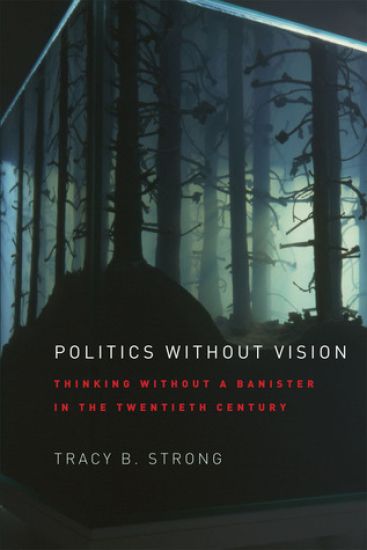
Politics without Vision

Politics without Vision

Tracy B. Strong

University of Chicago Press
2013
nidottu
From Plato through the nineteenth century, the West could draw on comprehensive political visions to guide government and society. Now, for the first time in more than two thousand years, Tracy B. Strong contends, we have lost our foundational supports. In the words of Hannah Arendt, the state of political thought in the twentieth and twenty-first centuries has left us effectively "thinking without a banister." Politics without Vision takes up the thought of seven influential thinkers, each of whom attempted to construct a political solution to this problem. Nietzsche, Weber, Freud, Lenin, Schmitt, Heidegger, and Arendt. None of these theorists were liberals nor, excepting possibly Arendt, were they democrats - and some might even be said to have served as handmaidens to totalitarianism. And all to a greater or lesser extent shared the common conviction that the practices of liberalism are inadequate to the demands and stresses of the present time. In examining their thought, Strong acknowledges the political evil that some of their ideas served to foster but argues that these were not the only paths their explorations could have taken. By uncovering the turning points in their thought - and the paths not taken - Strong strives to develop a political theory that can avoid, and perhaps help explain, the mistakes of the past while furthering the democratic impulse.
Learning One's Native Tongue

Learning One's Native Tongue

Tracy B Strong

University of Chicago Press
2019
sidottu
Citizenship is much more than the right to vote. It is a collection of political capacities constantly up for debate. From Socrates to contemporary American politics, the question of what it means to be an authentic citizen is an inherently political one. With Learning One's Native Tongue, Tracy B. Strong explores the development of the concept of American citizenship and what it means to belong to this country, starting with the Puritans in the seventeenth century and continuing to the present day. He examines the conflicts over the meaning of citizenship means in the writings and speeches of prominent thinkers and leaders ranging from John Winthrop and Roger Williams to Thomas Jefferson, Nathaniel Hawthorne, Abraham Lincoln, Frederick Douglass, and Franklin Roosevelt, among many others who have participated in these important cultural and political debates. The criteria that define what being a citizen entails change over time and in response to historical developments, and they are thus also often the source of controversy and conflict, as with voting rights for women and African Americans. Strong looks closely at these conflicts and the ensuing changes in the conception of citizenship, paying attention to what difference each change makes and what each particular conception entails socially and politically.
Learning One's Native Tongue

Learning One's Native Tongue

Tracy B Strong

University of Chicago Press
2019
pokkari
Citizenship is much more than the right to vote. It is a collection of political capacities constantly up for debate. From Socrates to contemporary American politics, the question of what it means to be an authentic citizen is an inherently political one. With Learning One's Native Tongue, Tracy B. Strong explores the development of the concept of American citizenship and what it means to belong to this country, starting with the Puritans in the seventeenth century and continuing to the present day. He examines the conflicts over the meaning of citizenship means in the writings and speeches of prominent thinkers and leaders ranging from John Winthrop and Roger Williams to Thomas Jefferson, Nathaniel Hawthorne, Abraham Lincoln, Frederick Douglass, and Franklin Roosevelt, among many others who have participated in these important cultural and political debates. The criteria that define what being a citizen entails change over time and in response to historical developments, and they are thus also often the source of controversy and conflict, as with voting rights for women and African Americans. Strong looks closely at these conflicts and the ensuing changes in the conception of citizenship, paying attention to what difference each change makes and what each particular conception entails socially and politically.
Politics without Vision

Politics without Vision

Tracy B. Strong

University of Chicago Press
2012
sidottu
From Plato through the nineteenth century, the West could draw on comprehensive political visions to guide government and society. Now, for the first time in more than two thousand years, Tracy B. Strong contends, we have lost our foundational supports. In the words of Hannah Arendt, the state of political thought in the twentieth and twenty-first centuries has left us effectively "thinking without a banister." "Politics without Vision" takes up the work of seven influential thinkers, each of whom attempted to construct a political solution to this problem: Nietzsche, Weber, Freud, Lenin, Schmitt, Heidegger, and Arendt. None of these theorists were liberals nor, excepting possibly Arendt, were they democrats-and some might even be said to have served as handmaidens to totalitarianism. And all to a greater or lesser extent shared the common conviction that the institutions and practices of liberalism are inadequate to the demands and stresses of the present time. In examining their thought, Strong acknowledges the political evil that some of their ideas served to foster but argues that these were not necessarily the only paths their explorations could have taken. By uncovering the turning points in their thought - and the paths not taken - Strong strives to develop a political theory that can avoid, and perhaps help explain, the mistakes of the past while furthering the democratic impulse. Confronting the widespread belief that political thought is on the decline, Strong puts forth a brilliant and provocative counterargument that in fact it has endured - without the benefit of outside support. A compelling rendering of contemporary political theory, "Politics without Vision" is sure to provoke discussion among scholars in many fields.
Friedrich Nietzsche and the Politics of Transfiguration (expanded ed.)
Friedrich Nietzsche and the Politics of Transfiguration provides a comprehensive analysis of the politics that are implicit and explicit in Nietzsche's work. Tracy B. Strong's discussion shows that Nietzsche's writings are of a piece and have as their common goal a politics of transfiguration: a politics that seeks radical change in how human beings live and act in the modern Western world. This edition includes a new introduction that demonstrates how the styles of Nietzsche's writings expand our notions of democratic politics and democratic understanding.
Jean-Jacques Rousseau

Jean-Jacques Rousseau

Tracy B. Strong

Rowman Littlefield Publishers
2002
nidottu
Rousseau is most often read either as a theorist of individual authenticity or as a communitarian. In this book, he is neither. Instead, Rousseau is understood as a theorist of the common person. In Strong's understanding, Rousseau's use of 'common' always refers both to that which is common and to that which is ordinary, vulgar, everyday. For Strong, Rousseau resonates with Kant, Hegel, and Marx, but he is more modern like Emerson, Nietzsche, Eittegenstein, and Heidegger. Rousseau's democratic individual is an ordinary self, paradoxically multiple and not singular. In the course of exploring this contention, Strong examines Rousseau's fear of authorship (though not of authority), his understanding of the human, his attempt to overcome the scandal that relativism posed for politics, and the political importance of sexuality.
Jean-Jacques Rousseau

Jean-Jacques Rousseau

Strong Tracy B.

SAGE Publications Inc
1994
sidottu
This book examines the philosophy of Rousseau and its contribution to our understanding of modernity. Strong notes that Rousseau has been associated with almost every school of thought and political movement of Western modernity - why is it that he has been read so divergently? The author suggests that Rousseau `gives us...our language for politics and personhood...Rousseau is not the whole story of modernity, but he is, in ways that others around and before him were not, modern.'
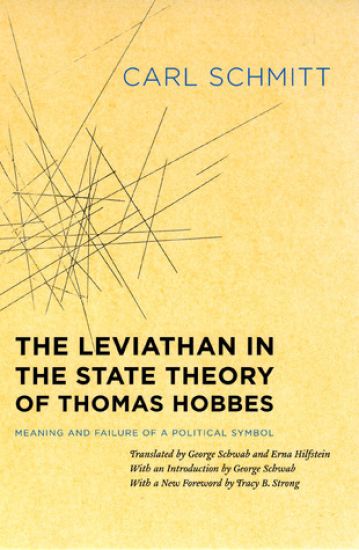
The Leviathan in the State Theory of Thomas Hobbes

The Leviathan in the State Theory of Thomas Hobbes

Carl Schmitt; Tracy B. Strong

University of Chicago Press
2008
nidottu
One of the most significant political philosophers of the twentieth century, Carl Schmitt is a deeply controversial figure who has been labeled both a Nazi sympathizer and a modern-day Thomas Hobbes. First published in 1938, "The Leviathan in the State Theory of Thomas Hobbes" used the Enlightenment philosopher's enduring symbol of the protective Leviathan to address the nature of modern statehood. A work that predicted the demise of the Third Reich and that still holds relevance in today's security-obsessed society, this volume will be essential reading for students and scholars of political science.
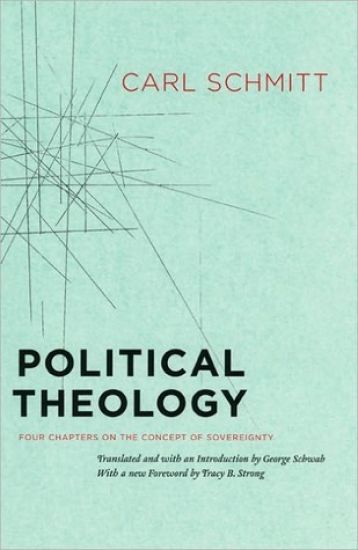
Political Theology – Four Chapters on the Concept of Sovereignty

Political Theology – Four Chapters on the Concept of Sovereignty

Carl Schmitt; George Schwab; Tracy B. Strong

University of Chicago Press
2006
nidottu
Written in the intense political and intellectual tumult of the early years of the Weimar Republic, "Political Theology" develops the distinctive theory of sovereignty that made Carl Schmitt one of the most significant and controversial political theorists of the twentieth century. Focusing on the relationships among political leadership, the norms of the legal order, and the state of political emergency, Schmitt argues in "Political Theology" that legal order ultimately rests upon the decisions of the sovereign. According to Schmitt, only the sovereign can meet the needs of an "exceptional" time and transcend legal order so that order can then be reestablished. Convinced that the state is governed by the ever-present possibility of conflict, Schmitt theorizes that the state exists only to maintain its integrity in order to ensure order and stability. Suggesting that all concepts of modern political thought are secularized theological concepts, Schmitt concludes "Political Theology" with a critique of liberalism and its attempt to depoliticize political thought by avoiding fundamental political decisions.
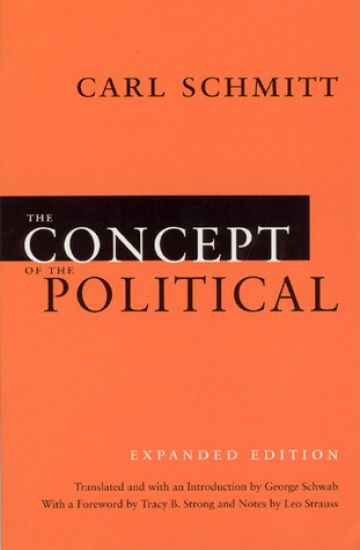
The Concept of the Political – Expanded Edition

The Concept of the Political – Expanded Edition

Carl Schmitt; George Schwab; Tracy B. Strong; Leo Strauss

University of Chicago Press
2007
nidottu
In this, his most influential work, legal theorist and political philosopher Carl Schmitt argues that liberalism's basis in individual rights cannot provide a reasonable justification for sacrificing one-self for the state - a critique as cogent today as when it first appeared. George Schwab's introduction to his translation of the 1932 German edition highlights Schmitt's intellectual journey through the turbulent period of German history leading to the Hitlerian one-party state. In addition to analysis by Leo Strauss and a foreword by Tracy B. Strong placing Schmitt's work into contemporary context, this expanded edition also includes a translation of Schmitt's 1929 lecture "The Age of Neutralizations and Depoliticizations," which the author himself added to the 1932 edition of the book. An essential update of a modern classic, "The Concept of the Political, Expanded Edition" belongs on the bookshelf of anyone interested in political theory or philosophy.
The Phenomenology of Everyday Life

The Phenomenology of Everyday Life

Howard R. Pollio; Tracy B. Henley; Craig J. Thompson

Cambridge University Press
2006
pokkari
The Phenomenology of Everyday Life presents results from a rigorous qualitative approach to the psychological study of everyday human activities and experiences. This book does not replace scientific observation with humanistic analysis, but provides an additional perspective on significant human questions. The qualitative approach this book employs is grounded in the philosophical traditions of existentialism and phenomenology, which use dialogue as their major method of inquiry. These traditions are especially well adapted to encompass and describe human events and activities. In addition, such events can be properly investigated only on the basis of a method sensitive enough to articulate the nuances of human experience and reflection. In this latter regard, it is important to note that insights deriving from literature and the humanities are equally revealing of the human world as those from experimental psychology, biology or medicine.
The Phenomenology of Everyday Life

The Phenomenology of Everyday Life

Howard R. Pollio; Tracy B. Henley; Craig J. Thompson

Cambridge University Press
1997
sidottu
The Phenomenology of Everyday Life presents results from a rigorous qualitative approach to the psychological study of everyday human activities and experiences. This book does not replace scientific observation with humanistic analysis, but provides an additional perspective on significant human questions. The qualitative approach this book employs is grounded in the philosophical traditions of existentialism and phenomenology, which use dialogue as their major method of inquiry. These traditions are especially well adapted to encompass and describe human events and activities. In addition, such events can be properly investigated only on the basis of a method sensitive enough to articulate the nuances of human experience and reflection. In this latter regard, it is important to note that insights deriving from literature and the humanities are equally revealing of the human world as those from experimental psychology, biology, or medicine.
Reflections on the Principles of Psychology

Reflections on the Principles of Psychology

Michael G. Johnson; Tracy B. Henley

Psychology Press
1990
nidottu
This important volume looks back to 1890 and -- 100 years later -- asks some of the same questions William James was asking in his Principles of Psychology. In so doing, it reviews our progress toward their solutions. Among the contemporary concerns of 1990 that the editors consider are: the nature of the self and the will, conscious experience, associationism, the basic acts of cognition, and the nature of perception. Their findings: Although the developments in each of these areas during the last 100 years have been monumental, James' views as presented in the Principles still remain viable and provocative. To provide a context for understanding James, some chapters are devoted primarily to recent scholarship about James himself -- focusing on the time the Principles was written, relevant intellectual influences, and considerations of his understanding of this "new" science of psychology. The balance of this volume is devoted to specific topics of particular interest to James. One critical theme woven into almost every chapter is the tension between the role of experience (or phenomenological data) within a scientific psychology, and the viability of a materialistic (or biologically reductive) account of mental life. Written for professionals, practitioners, and students of psychology -- in all disciplines.
Reflections on the Principles of Psychology

Reflections on the Principles of Psychology

Michael G. Johnson; Tracy B. Henley

Psychology Press Ltd
2017
sidottu
This important volume looks back to 1890 and -- 100 years later -- asks some of the same questions William James was asking in his Principles of Psychology. In so doing, it reviews our progress toward their solutions. Among the contemporary concerns of 1990 that the editors consider are: the nature of the self and the will, conscious experience, associationism, the basic acts of cognition, and the nature of perception. Their findings: Although the developments in each of these areas during the last 100 years have been monumental, James' views as presented in the Principles still remain viable and provocative. To provide a context for understanding James, some chapters are devoted primarily to recent scholarship about James himself -- focusing on the time the Principles was written, relevant intellectual influences, and considerations of his understanding of this "new" science of psychology. The balance of this volume is devoted to specific topics of particular interest to James. One critical theme woven into almost every chapter is the tension between the role of experience (or phenomenological data) within a scientific psychology, and the viability of a materialistic (or biologically reductive) account of mental life. Written for professionals, practitioners, and students of psychology -- in all disciplines.