

Kirjahaku
Etsi kirjoja tekijän nimen, kirjan nimen tai ISBN:n perusteella.
1000 tulosta hakusanalla Tracy L Shaler


Though the number of women elected to the U.S. state legislatures has grown substantially in the last forty years, researchers still struggle to connect women's presence in the legislature to public policy outcomes that affect women. One reason for this struggle is that we lack a complete understanding of how political parties modify the relationship between women legislators' interests in representing women and the creation of public policies affecting women. In How Women Represent Women: Political Parties, Gender and Representation in the State Legislatures, Tracy L. Osborn examines the two avenues through which political parties fundamentally affect the ways in which partisan women legislators pursue women's issues policies. She argues that political parties structure representation in two ways. First, women's party identities shape the types of policy alternatives they offer to solve women's policy problems. Second, parties organize the legislative process by holding majority control, to varying degrees, over agenda setting and policy creation, promoting some women legislators' policy proposals over others. Osborn tests these two avenues of influence by comparing partisan women's legislative behavior toward the creation of women's issues policies across different party environments in the U.S. state legislatures. She uses original election, sponsorship, and roll call data in nearly all ninety-nine state legislative chambers in 1999-2000. She concludes that Republican and Democratic women offer different solutions to women's policy problems based on their party identities. Depending on which party controls the legislative process and how strongly they do so, this party control promotes one set of partisan policy alternatives over the other. Thus, political parties determine which women's issues policies become law. Ultimately, this book demonstrates how essential parties are to understanding how women elected to public office translate their interest in women's issues into substantive public policy.

"Democracy has to be born anew every generation, and education is its midwife," wrote John Dewey in his classic work The School and Society. In School, Society, and State, Tracy Steffes places that idea at the center of her exploration of the connections between public school reform in the early twentieth century and American political development from 1890 to 1940. American public schooling, Steffes shows, was not merely another reform project of the Progressive Era, but a central one. She addresses why Americans invested in public education and explains how an array of reformers subtly transformed schooling into a tool of social governance to address the consequences of industrialization and urbanization. By extending the reach of schools, broadening their mandate, and expanding their authority over the well-being of children, the state assumed a defining role in the education and in the lives of American families. In School, Society, and State, Steffes returns the state to the study of the history of education and brings the schools back into our discussion of state power during a pivotal moment in American political development.

"Democracy has to be born anew every generation, and education is its midwife," wrote John Dewey in his classic work "The School and Society". In "School, Society, and State", Tracy L. Steffes places that idea at the center of her exploration of the connections between public school reform in the early twentieth century and American political development from 1890 to 1940. American public schooling, Steffes shows, was not merely another reform project of the Progressive Era, but a central one. She addresses why Americans invested in public education and explains how an array of reformers subtly transformed schooling into a tool of social governance to address the consequences of industrialization and urbanization. By extending the reach of schools, broadening their mandate, and expanding their authority over the well-being of children, the state assumed a defining role in the education - and in the lives - of American families. In "School, Society, and State", Steffes returns the state to the study of the history of education and brings the schools back into our discussion of state power during a pivotal moment in American political development.

How inequality was forged, fought over, and forgotten through public policy in metropolitan Chicago. As in many American metropolitan areas, inequality in Chicagoland is visible in its neighborhoods. These inequalities are not inevitable, however. They have been constructed and deepened by public policies around housing, schooling, taxation, and local governance, including hidden state government policies. In Structuring Inequality, historian Tracy L. Steffes shows how metropolitan inequality in Chicagoland was structured, contested, and naturalized over time even as reformers tried to change it through school desegregation, affordable housing, and property tax reform. While these efforts had modest successes in the city and the suburbs, reformers faced significant resistance and counter-mobilization from affluent suburbanites, real estate developers, and other defenders of the status quo who defended inequality and reshaped the policy conversation about it. Grounded in comprehensive archival research and policy analysis, Structuring Inequality examines the history of Chicagoland’s established systems of inequality and provides perspective on the inequality we live with today.

How inequality was forged, fought over, and forgotten through public policy in metropolitan Chicago. As in many American metropolitan areas, inequality in Chicagoland is visible in its neighborhoods. These inequalities are not inevitable, however. They have been constructed and deepened by public policies around housing, schooling, taxation, and local governance, including hidden state government policies. In Structuring Inequality, historian Tracy L. Steffes shows how metropolitan inequality in Chicagoland was structured, contested, and naturalized over time even as reformers tried to change it through school desegregation, affordable housing, and property tax reform. While these efforts had modest successes in the city and the suburbs, reformers faced significant resistance and counter-mobilization from affluent suburbanites, real estate developers, and other defenders of the status quo who defended inequality and reshaped the policy conversation about it. Grounded in comprehensive archival research and policy analysis, Structuring Inequality examines the history of Chicagoland’s established systems of inequality and provides perspective on the inequality we live with today.


Every day, print and online trade magazines and news sources tout developments in online advertising, branding, and marketing. Seismic shifts in the industry—like major advertisers setting up shop in Second Life and other alternate realities—have forced marketers and advertisers, ready or not, to employ new advertising models. But the potholes for advertisers using Web 2.0 are many, and missteps by companies that don't understand the new rules of the game guarantee lost time and money ill spent. Advertising 2.0 ensures that readers understand the advertising options possible in the Web 2.0 environment, provides examples of companies using these options, and offers guidelines for their application.Advertising 2.0 goes way beyond running banner ads on Web sites and explores the rapidly burgeoning world of social media marketing. Among other things, expert Tracy L. Tuten covers viral marketing, doing online research, advertising within online games, and leveraging online opinions to increase sales or grow a brand. She also describes—way out on the leading edge and sure to turn conventional advertising on its head—how smart marketers let consumers generate ad content for products and brands. While the trade press frequently publishes news of companies using innovative communications techniques, there are hardly any books telling people how to take the plunge into the newest forms of advertising. Advertising 2.0 presents the current state of online advertising, and best practices for using techniques like consumer-generated advertising, social networking, online product reviews, viral video, Second Life, alternate reality games, and more. It also includes case studies and examples of successes and mistakes. Companies and brands featured include Nine Inch Nails, Audi, 42 Entertainment, MySpace, YouTube, Dogster, Vodaphone, Leo Burnett, and others. Best, each method described includes guidelines for getting the most out of the technique, thereby letting advertisers cut through the clutter to touch the hearts of customers worldwide.

Full of valuable tips, techniques, illustrative real-world examples, exhibits, and best practices, this handy and concise paperback will help you stay up to date on the newest thinking, strategies, developments, and technologies in corporate fraud. Essentials of Corporate Fraud provides an introductory look at fraud and the kinds of fraud that can occur in various areas of a company.

A fraud investigation is aimed at examining evidence to determine if a fraud occurred, how it happened, who was involved, and how much money was lost. Investigations occur in cases ranging from embezzlement, to falsification of financial statements, to suspicious insurance claims. Expert Fraud Investigation: A Step-by-Step Guide provides all the tools to conduct a fraud investigation, detailing when and how to investigate. This guide takes the professional from the point of opening an investigation, selecting a team, gathering data, and through the entire investigation process. Business executives, auditors, and security professionals will benefit from this book, and companies will find this a useful tool for fighting fraud within their own organizations.

Fractals of God: A Psychologist's Near-Death Experience and Journeys into the Mystical
Tracy L. Andersen; Kathy J. Forti
Rinnovo Press
2014
nidottu
A Journey into the Mysteries of Divine Creation...From one woman's near-death experience, comes an astounding story that explores the depths of man's beginnings and the very blueprint of creation. Clinical psychologist, Dr. Kathy Forti, shares how in 2003 her heart stopped and she was helped to return to Earth by multi-dimensional beings of light whose goal is to bring healing to our world. With this new guidance, she journeyed into the realm of physics and sacred geometry, and learned how key mathematical information affects the consciousness of the cells. Dr. Forti's mystical experiences will forever alter your concepts about life, healing, and man's true potential for evolutionary change. This revealing and insightful story speaks to the very essence of our soul's purpose - to find a greater connection to the God Source in all living things.Early Praise for Fractals of God..."Fractals of God is a treasure story, not just about what happened to Kathy, but what she found waiting for her inside her own soul." - P.M.H. Atwater, author of Near-Death Experiences: The Rest of the Story, Future Memory, Children of the fifth World, and We Live Forever."This book is a must for anyone who desires an inspirational read about how to overcome obstacles, see the bigger picture, and learn how to trust in their own inner wisdom against a multitude of odds. It's an incredible adventure which goes deeply into Kathy's journey of contact with inter-dimensional beings, who desire to assist the human race to lift the veil of human suffering." - Tracy Latz, M.D. & Marion Ross, Ph.D. (The Shift Doctors), authors of Shift: 12 Keys to Shift Your Life and Shift: A Woman's Guide to Transformation.


As a former female FBI Special Agent (SA), Tracy worked and lived on the "inside" of the Bureau for nine years - finding that the FBI is a master at public propaganda. Things are not what they seem. Charged to defend against those intending harm - she found much of the harm within the FBI walls. When she brought truth to light, the FBI used antics and deceptions to derail a successful career. God Is Bigger Than Your FBI gives a detailed account of the difficult SA selection, training, job requirements and what happened to a wide-eyed, patriotic, intelligent young woman full of hope and the desire to make a difference. Though we often question difficulties in life, God is in control and He has a plan. He is bigger than any challenge or hardship we will ever know and He will be there in your FBI - Faith Building Incident.

Behavior Charts and Beyond: Simple hand-made charts that work.
Tracy L. Milanese
Tracy L. Milanese
2012
nidottu

"Paul Wilson and Tracy Carbone have penned a winner. The suspense is razor sharp and the characters masterfully drawn. Paul Wilson is at the top of the game, and Tracy Carbone is a welcome addition to the genre. You'll love The Proteus Cure." - Michael Palmer, NY Times best selling author of Political SuicideIn medical ethics, the line between right and wrong is often blurred. Who is to decide what is for the good of humanity? Changing the world. One person at a time... That is the mission statement of Tethys Hospital, run by Dr. Bill Gilchrist and his deformed sister, Abra. VG723, their revolutionary stem-cell-based therapy, appears to be capable of doing just that for the cancer patients who come to Tethys. VG723 is often their last hope. But if they match the protocol, they're virtually guaranteed a cure. Dr. Sheila Takamura, a young, dedicated oncologist, is proud to be involved in the clinical trials. Once the FDA approves it for widespread use, VG723 will revolutionize cancer therapy. That is why she's alarmed when former patients return with bizarre syndromes. Yes, they're cancer free, but they're experiencing dramatic changes in their hair and skin and general appearance. When she investigates a possible link to the protocol, those patients start dying. As the body count grows, Sheila finds her own life in danger. She comes to suspect there might be a literal meaning behind the Tethys motto - but can she learn the truth in time to save herself and millions of others? "Wilson is one of the masters of the medical thriller." - Larry King

The Wellness Mindset: 5 Keys to Building Super Health
Tracy L. Kay
Kayholistics Publishing
2015
nidottu
- Do you want to break through to the best health of your life? - Do you want to gain the confidence to handle any health challenge? If you said yes to either of these questions, The Wellness Mindset is for you. Tracy Kay has walked the walk. She knows what it takes to go from ill health to super wellness. The Wellness Mindset is an easy-to-read road map that will teach you simple-to-implement, effective strategies to build incredible health. You will learn: - What to do every day to safeguard and maintain your health - What to do NOW if you are ill to greatly increase your chances of regaining your health

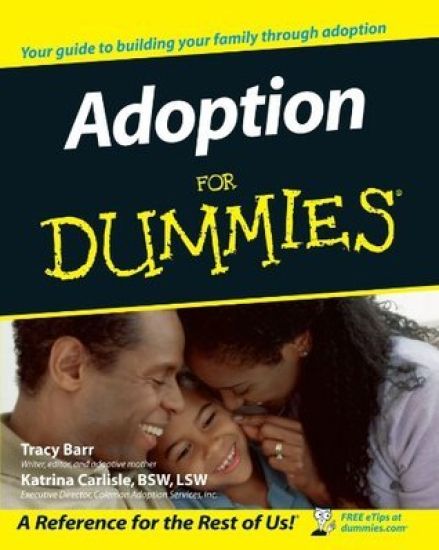
You hear all sorts of things said or implied about adoption. Some information comes from people who know a lot about it, while some comes from people who don’t know anything about it but make assumptions anyway. Some comes from people whose experiences have been good; some from those whose experiences have been bad. The result? Enough conflicting information to make your head spin. So when everyone has an opinion and most of the books on the market deal with specific aspects on adoption or particular types of adoptions, where do you turn to for reliable information? Start with Adoption For Dummies. The great thing about this guide is that you decide where to start and what to read. It’s a reference you can jump into and out of at will. Just head to the table of contents or the index to find the information you want. Each part of Adoption For Dummies covers a particular aspect of adoption, including: *Answering the basic adoption questions – How much does it cost? Who’s involved? How long does it take? What do I need to know that I don’t know to ask? And more. *Getting started – and figuring out what steps you have to take. *Dealing with birthmothers and birthfathers – and why, even though they may not be part of your life, they’re still important to you. *Confronting the issues adoptive families face – issues from sharing the adoption story with your child, to answering your child's questions about his birthparents, to handling rude family members who treat your child differently than her cousins. *Finding help – from books, resources, and support groups. No adoption book – at least no adoption book that you can carry around without a hydraulic lift – can tell you everything there is to know about adoption. What Adoption For Dummies tells you is what you need to know, all in an easy-to-use reference.