
Kirjahaku
Etsi kirjoja tekijän nimen, kirjan nimen tai ISBN:n perusteella.
1000 tulosta hakusanalla Ulrike Greweling


Ulrike - Eine Erz hlung ist ein unver nderter, hochwertiger Nachdruck der Originalausgabe. Hansebooks ist Herausgeber von Literatur zu unterschiedlichen Themengebieten wie Forschung und Wissenschaft, Reisen und Expeditionen, Kochen und Ern hrung, Medizin und weiteren Genres. Der Schwerpunkt des Verlages liegt auf dem Erhalt historischer Literatur. Viele Werke historischer Schriftsteller und Wissenschaftler sind heute nur noch als Antiquit ten erh ltlich. Hansebooks verlegt diese B cher neu und tr gt damit zum Erhalt selten gewordener Literatur und historischem Wissen auch f r die Zukunft bei.

Ulrike: Eine Erz hlung, wurde w hrend der gesamten Menschheitsgeschichte als bedeutendes Werk angesehen, und um sicherzustellen, dass dieses Werk niemals verloren geht, haben wir Schritte unternommen, um seine Erhaltung zu gew hrleisten, indem wir dieses Buch in einem zeitgem en Format f r aktuelle und zuk nftige Generationen neu herausgeben. Dieses gesamte Buch wurde neu abgetippt, neu gestaltet und neu formatiert. Da diese B cher nicht aus gescannten Kopien bestehen, ist der Text lesbar und klar.
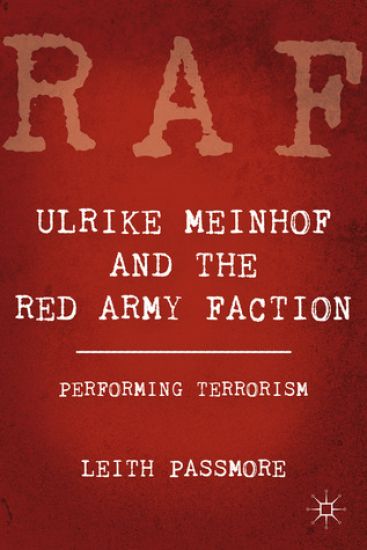
With a communicative approach to the phenomenon of terrorism and new archival sources, the book documents Meinhof's journalism and terrorism (1959-1976) and challenges many of the established narratives that have calcified around the story of Meinhof and the history of Germany's most infamous terrorist group.

Since 1974, German filmmaker Ulrike Ottinger has created a substantial body of films that explore a world of difference defined by the tension and transfer between settled and nomadic ways of life. In many of her films, including Exile Shanghai, an experimental documentary about the Jews of Shanghai, and Joan of Arc of Mongolia, in which passengers on the Trans-Siberian Express are abducted by Mongolian bandits, she also probes the encounter with the other, whether exotic or simply unpredictable. In Ulrike Ottinger Laurence A. Rickels offers a series of sensitive and original analyses of Ottinger’s films, as well as her more recent photographic artworks, situated within a dazzling thought experiment centered on the history of art cinema through the turn of the twenty-first century. In addition to commemorating the death of a once-vital art form, this book also affirms Ottinger’s defiantly optimistic turn toward the documentary film as a means of mediating present clashes between tradition and modernity, between the local and the global. Widely regarded as a singular and provocative talent, Ottinger’s conspicuous absence from critical discourse is, for Rickels, symptomatic of the art cinema’s demise. Incorporating interviews he conducted with Ottinger and illustrated with stunning examples from her photographic oeuvre, this book takes up the challenges posed by Ottinger’s filmography to interrogate, ultimately, the very practice-and possibility-of art cinema today. Laurence A. Rickels is professor of German and comparative literature at the University of California, Santa Barbara, and the author of several books, including The Case of California, The Vampire Lectures, and the three-volume Nazi Psychoanalysis (all published by Minnesota). He is a recognized art writer whose reflections on contemporary visual art appear regularly in numerous exhibition catalogues as well as in Artforum, artUS, and Flash Art.

With a communicative approach to the phenomenon of terrorism and new archival sources, the book documents Meinhof's journalism and terrorism (1959-1976) and challenges many of the established narratives that have calcified around the story of Meinhof and the history of Germany's most infamous terrorist group.


First specialized study of Meinhof and the RAF in English, focusing on their use of language to justify extreme violence. In 1970 Ulrike Meinhof abandoned a career as a political journalist to join the Red Army Faction; captured as a terrorist along with other members of the group in 1972, she died an unexplained death in a high-security prison in 1976. A charismatic spokesperson for the RAF, she has often come near to being idealized as a freedom fighter, despite her use of extreme violence. In an effort to understand how terrorism takes root, Sarah Colvin seeks a dispassionate view of Meinhof and a period when West Germany was declaring its own "war on terror." Ulrike Meinhof always remained a writer, and this book focuses on the role of language in her development and that of the RAF: how Meinhof came to justify violence to the point of murder, creating an identity for the RAF as resistance fighters in an imagined state of war that was reinforced by the state's adoption of what Andreas Musolff has called "war terminology."But its all-powerful identity as a fighting group eroded the RAF's empathy with other human beings -- even those it once claimed to be "fighting for." It became a closed unit, self-justifying and immobilized by its own convictionthat everything it did must be right. This is the first specialized study of Meinhof and the RAF in English -- which is remarkable given the current interest in the topic in both Europe and the U.S. Sarah Colvin is Professor and Eudo C. Mason Chair of the German Department at the University of Edinburgh, UK.
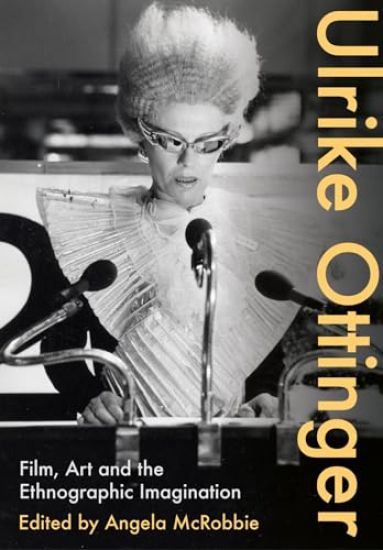
Ulrike Ottinger
INTELLECT
2024
sidottu
The first English language scholarly collection of articles on the leading Berlin based German artist and film-maker Ulrike Ottinger. The articles engage with the full range of the works, from the early Berlin feature films of the 1970s and .'80s to the ethnographic documentaries also including the art exhibitions, photography shows, installations, and artist books. The book brings together feminist film theorists with art historians and cultural theorists, each with a distinctive and detailed perspective on the queer fabulist genres of Ottinger now in her 80s.
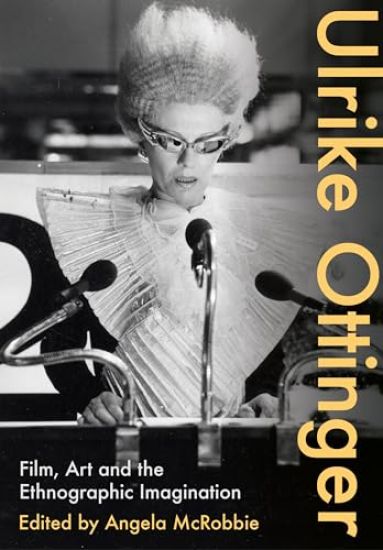
Ulrike Ottinger
INTELLECT
2024
nidottu
The first English language scholarly collection of articles on the leading Berlin based German artist and film-maker Ulrike Ottinger. The articles engage with the full range of the works, from the early Berlin feature films of the 1970s and .'80s to the ethnographic documentaries also including the art exhibitions, photography shows, installations, and artist books. The book brings together feminist film theorists with art historians and cultural theorists, each with a distinctive and detailed perspective on the queer fabulist genres of Ottinger now in her 80s.
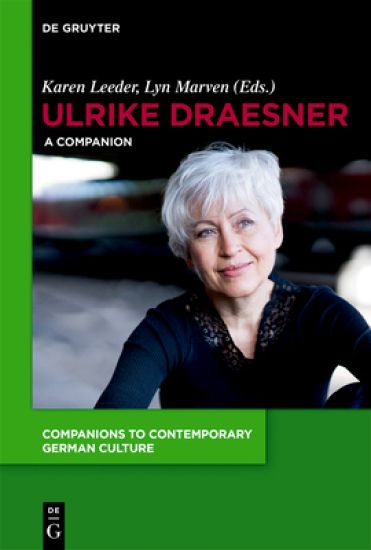
Ulrike Draesner
De Gruyter
2022
isokokoinen pokkari
Ulrike Draesner is a prize-winning writer of novels, short stories, critical essays and poetry, and one of the foremost authors in Germany today. While a number of volumes have been published in German on her work, the current Companion offers the first volume on Draesner in English, capitalising on the interest in her work in Germany and further afield. Introducing Draesner’s major novels and short stories, poetry collections and essays, as well as giving an overview of existing research focusing on migration, memory, science, gender and bodily experience, chapters by international scholars in this volume also break new ground by focussing on visual culture, poetology, nature, the posthuman and Draesner’s reception of English literature and medieval culture. A comprehensive bibliography, commissioned interview and original writing by Draesner make the volume a valuable research tool for scholars and students. This will become essential reading for all those interested in Draesner, women’s writing, literature and history, and contemporary German prose and poetry.

Ulrike Meinhof und ihre Sprache. Instrumentalisierung und Funktionalisierung von Worten
Diana Ingeborg Klein
Grin Publishing
2010
pokkari
Studienarbeit aus dem Jahr 2008 im Fachbereich Germanistik - Linguistik, Note: 1,3, Ruprecht-Karls-Universit t Heidelberg (Germanistisches Seminar), Veranstaltung: Deutsche Sprachgeschichte des 20. Jahrhunderts, Sprache: Deutsch, Abstract: Unfassbar, dass Ulrike Meinhof, eine der angesehensten Journalistinnen der 60er Jahre, pl tzlich ihre berufliche T tigkeit aufgab und ihre beiden T chter zur cklie , um in den Untergrund zu gehen. Zun chst arbeitete sie von 1959 bis 1969 f r die linke Zeitschrift konkret, bei der sie von 1961 bis 1964 Chefredeakteurin war und mit dessen Herausgeber, Klaus Rainer R hl, sie von 1961 bis 1967 verheiratet war und zwei T chter hatte. In dieser Zeit wurde sie zu einer Symbolfigur der deutschen Linken. Sie nahm an zahlreichen ffentlichen Veranstaltungen und Demonstrationen teil, bis sie 1970 Gr ndungsmitglied und F hrungsperson der Roten Armee Fraktion (RAF) wurde, deren ideologisches Konzept sie ma geblich mitverfasste. Aufgrund ihrer journalistischen T tigkeit stellte Sprache f r Meinhof stets ein wichtiges Medium dar, derer sie sich sowohl in ihrer Zeit als Journalistin als auch w hrend ihrer terroristischen T tigkeit bediente. Die vorliegende Arbeit besch ftigt sich mit der Sprache Ulrike Meinhofs und will dabei die Instrumentalisierung und Funktionalisierung ihrer Worte in den Stationen als Journalistin und als Terroristin herausarbeiten. Hierzu gilt vorweg zu sagen, dass Sprache nicht nur das wichtigste Ausdrucksmittel darstellt, welches menschliches Denken und Handeln vermittelt, sondern auch Abbild der Wirklichkeit ist. Da Worte also im Mittelpunkt des Interesses dieses Beitrags stehen, k nnen anhand der Meinhof-Texte einerseits Aussagen ber die damaligen gesellschaftspolitischen Verh ltnisse getroffen werden und andererseits m ssen historische Fakten ebenso in die sprachliche Analyse einflie en, um einzelne u erungen in den richtigen Kontext einordnen zu k nnen. Ausgangspunkt bietet dabei weniger eine Corpusf lle als vi
Ulrike Meinhof. Realhistorische Person vs. Interpretation und Verarbeitung in fiktionaler Literatur
Isabella Caldart
Grin Publishing
2013
pokkari

Ulrike Meinhof. Der Weg einer Journalistin in den Terrorismus
Alexander Krüger
Grin Publishing
2015
pokkari

Ulrike Meinhofs Entwicklung von der Pazifistin zur Terroristin
Katrin Heiserholt
GRIN Verlag
2017
nidottu