Kirjojen hintavertailu. Mukana 11 244 527 kirjaa ja 12 kauppaa.

Kirjahaku

Etsi kirjoja tekijän nimen, kirjan nimen tai ISBN:n perusteella.

671 tulosta hakusanalla Umberto Eco

Umberto Eco

Umberto Eco

Michael Caesar

JOHN WILEY AND SONS LTD
1999
nidottu
A comprehensive introduction to the work and thought of Umberto Eco. It retraces the development of Eco's thought and its impact on literary studies, aesthetics, philosophy and semiotics, and discusses Eco's attempts to synthesize a general theory of signification and communication.
Apocalípticos E Integrados / Apocalypse Postponed: Essays by Umberto Eco
Una colecci n de ensayos magistrales sobre la cultura de masas. En estos ensayos magistrales, en los que analiza la estructura del mal gusto, la lectura de c mics, el mito de Superman, la canci n de consumo, el papel de los medios audiovisuales como instrumento de informaci n o el influjo de la televisi n en el mundo actual, Umberto Eco se plantea el problema central de la doble postura ante la cultura de masas: la de los apocal pticos, que ven en ella el signo de una ca da irrecuperable, y la de los integrados, que creen de forma optimista que estamos viviendo una magn fica generalizaci n del marco cultural. Publicados originalmente en 1964, estos textos «l cidos, persuasivos e ingeniosos de un autor realmente particular, sustancial, brillante y muy divertido (Kirkus Reviews) componen un libro ic nico y visionario que marc nuestra poca y que a d a de hoy contin a siendo una obra de referencia. ENGLISH DESCRIPTION An erudite and witty collection of Umberto Eco's essays on mass culture. In these masterful essays, in which he analyzes mass culture's ugly tastes, the reading of comics, the myth of Superman, consumer's likes and dislikes, the role of mass media as an information tool, and television's influence in today's world, Umberto Eco raises the main problem with the two different viewpoints facing mass culture today: that of those with an apocalyptic view, who see it all as a sign of an irrevocable demise, and that of those with a more positive outlook, who optimistically believe that we are living the magnificent generalization of a cultural framework. Originally published in 1964, these texts that are "lucid, persuasive, and artfully illustrated essays, by an author who is substantial, lucid, humane, and a great deal of fun" (Kirkus Reviews) make up an iconic and visionary book that marked our times and one that continues to be a work of reference in today's world.
Umberto Eco and the Open Text

Umberto Eco and the Open Text

Peter Bondanella

Cambridge University Press
2005
pokkari
Umberto Eco is Italy's most famous living intellectual, known among academics for his literary and cultural theories, and to an enormous international audience through his novels, The Name of the Rose, Foucault's Pendulum and The Island of the Day Before. Umberto Eco and the Open Text is the first comprehensive study in English of Eco's work. In clear and accessible language, Peter Bondanella considers not only Eco's most famous texts, but also many occasional essays not yet translated into English. Tracing Eco's intellectual development from early studies in medieval aesthetics to seminal works on popular culture, postmodern fiction, and semiotic theory, he shows how Eco's own fiction grows out of his literary and cultural theories. Bondanella cites all texts in English, and provides a full bibliography of works by and about Eco.
Umberto Eco and the Open Text

Umberto Eco and the Open Text

Peter Bondanella

Cambridge University Press
1997
sidottu
Umberto Eco is Italy’s most famous living intellectual, known among academics for his literary and cultural theories, and to an enormous international audience through his novels, The Name of the Rose, Foucault’s Pendulum and The Island of the Day Before. Umberto Eco and the Open Text is the first comprehensive study in English of Eco’s work. In clear and accessible language, Peter Bondanella considers not only Eco’s most famous texts, but also many occasional essays not yet translated into English. Tracing Eco’s intellectual development from early studies in medieval aesthetics to seminal works on popular culture, postmodern fiction, and semiotic theory, he shows how Eco’s own fiction grows out of his literary and cultural theories. Bondanella cites all texts in English, and provides a full bibliography of works by and about Eco.
Umberto Eco in His Own Words
Hitherto, there has been no book that attempted to sum up the breadth of Umberto Eco’s work and it importance for the study of semiotics, communication and cognition. There have been anthologies and overviews of Eco’s work within Eco Studies; sometimes, works in semiotics have used aspects of Eco’s work. Yet, thus far, there has been no overview of the work of Eco in the breadth of semiotics. This volume is a contribution to both semiotics and Eco studies. The 40 scholars who participate in the volume come from a variety of disciplines but have all chosen to work with a favorite quotation from Eco that they find particularly illustrative of the issues that his work raises. Some of the scholars have worked exegetically placing the quotation within a tradition, others have determined the (epistemic) value of the quotation and offered a critique, while still others have seen the quotation as a starting point for conceptual developments within a field of application. However, each article within this volume points toward the relevance of Eco -- for contemporary studies concerning semiotics, communication and cognition.
Umberto Eco, The Da Vinci Code, and the Intellectual in the Age of Popular Culture
This book provides a philosophical overview of Umberto Eco's historical and cultural development as a unique, internationally recognized public intellectual who communicates his ideas to both an academic and a popular audience. It describes Eco’s intellectual development from his childhood during World War II and student involvement as a Catholic youth activist and scholar of the Middle Ages, to his early writings on the "openness" of modern works such as Joyce's Finnegans Wake. Merrell also explores Eco’s pioneering role in semiotics and his later career as a novelist.
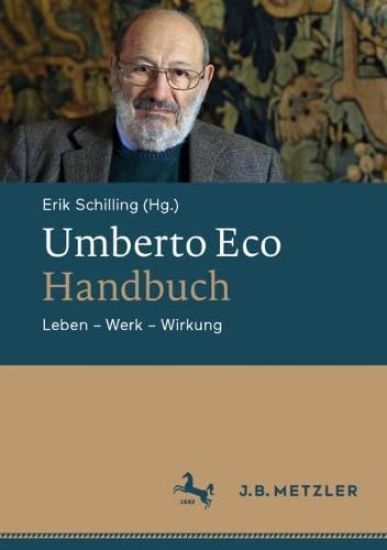
Umberto Eco-Handbuch

Umberto Eco-Handbuch

Springer-Verlag Berlin and Heidelberg GmbH Co. KG
2021
sidottu
Umberto Eco war einer der wichtigsten Intellektuellen des 20. Jahrhunderts. Mit Der Name der Rose wurde er einem Weltpublikum bekannt, danach blieb er mit sechs weiteren Romanen sowie zahllosen Essays, Interviews und Zeitschriftenkolumnen präsent. Einen Namen gemacht hatte sich Eco jedoch bereits mit theoretischen Texten, u.a. seinem kontrovers diskutierten Offenen Kunstwerk sowie seinen Schriften zur Semiotik. Auch als Schriftsteller blieb Eco zeitlebens Literatur- und Kulturtheoretiker; bei kaum einem weiteren Autor des 20. Jahrhunderts ist das theoretische und literarische Schaffen ähnlich stark verknüpft. Das Umberto Eco-Handbuch bietet einen Wegweiser in alle Aspekte von Ecos vielfältigem Wirken. Dazu bietet es einerseits Übersichtskapitel zu allen theoretischen und literarischen Schriften Ecos, andererseits systematische Beiträge, die vielfältige Querbezüge aufzeigen, etwa zwischen Geschichte und Gegenwart, Semiotik und Kriminalroman, historischem Erzählen und Postmoderne.
Umberto Ecos Erzähltheorie - 'Lector in Fabula' und 'Sei passeggiate nei boschi narrativi' im Vergleich
Studienarbeit aus dem Jahr 2001 im Fachbereich Romanistik - Italienische u. Sardische Sprache, Literatur, Landeskunde, Note: 1,7, Friedrich-Alexander-Universit t Erlangen-N rnberg, Sprache: Deutsch, Abstract: 1979 erschien Umberto Ecos, Lector in fabula', eine theoretische Abhandlung ber Textsemiotik mit dem Schwerpunkt auf der Rolle des Lesers. 13 Jahre sp ter hielt Eco die sogenannten, Norton Lectures' an der Harvard University, die sich in Hinblick auf allgemeine Erz hltheorien ebenfalls mit der Rolle des Lesers besch ftigten. Diese sechs Vorlesungen sind 1994 in schriftlicher Form mit dem Titel, Sei passeggiate nei boschi narrativi' (im Folgendem abgek rzt mit, Sei passeggiate', d. Verf.) erschienen. Eco verweist in den Vorlesungen mehrere Male auf, Lector in fabula' und greift darin entwickelte Konzepte auf. Es stellt sich nun die Frage, inwiefern die Ideen Ecos aus, Lector in fabula' in die, Sei passeggiate' Einzug gefunden haben und ob sich eine gewisse Weiterentwicklung der fr heren Konzepte feststellen l t. Dieser Frage wird im Folgendem nachgegangen. Es wird darauf hingewiesen, da der Focus dieser Untersuchung von den, Sei passeggiate' ausgeht und auf ihre Wurzeln in, Lector in fabula' gerichtet ist. Das hei t, da die Ideen aus, Lector in fabula', die nicht in die, Sei passeggiate' eingegangen sind, hier keine Erw hnung finden werden.
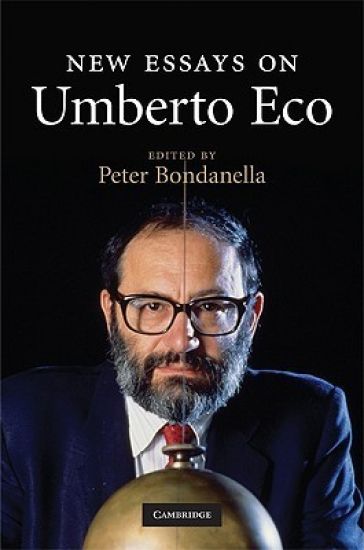
New Essays on Umberto Eco

New Essays on Umberto Eco

Cambridge University Press
2013
pokkari
There is a wealth of critical commentary on Umberto Eco in scholarly books and articles; this collection provides thought-provoking insights into topics that have attracted a great deal of attention in the past without repeating many of the arguments found in earlier publications on Eco. Representing the most active scholars writing on Eco from a variety of disciplinary perspectives, the international panel of authors provides sophisticated engagement with Eco's contributions to a wide range of academic disciplines (semiotics, popular culture, linguistics, aesthetics, philosophy, medieval studies) as well as his literary production of five important novels. From the impact of the detective genre on Eco's literary work to his place as a major medievalist, New Essays on Umberto Eco covers a variety of subjects of interest not only to a wide audience interested in Eco's fiction, but also to the serious student delving into Eco's more esoteric writings.
New Essays on Umberto Eco

New Essays on Umberto Eco

Cambridge University Press
2009
sidottu
There is a wealth of critical commentary on Umberto Eco in scholarly books and articles; this collection provides thought-provoking insights into topics that have attracted a great deal of attention in the past without repeating many of the arguments found in earlier publications on Eco. Representing the most active scholars writing on Eco from a variety of disciplinary perspectives, the international panel of authors provides sophisticated engagement with Eco's contributions to a wide range of academic disciplines (semiotics, popular culture, linguistics, aesthetics, philosophy, medieval studies) as well as his literary production of five important novels. From the impact of the detective genre on Eco's literary work to his place as a major medievalist, New Essays on Umberto Eco covers a variety of subjects of interest not only to a wide audience interested in Eco's fiction, but also to the serious student delving into Eco's more esoteric writings.
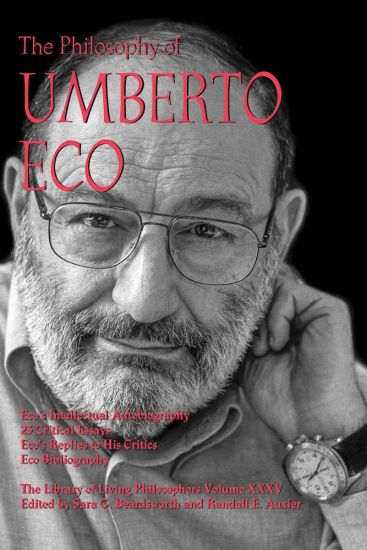
The Philosophy of Umberto Eco

The Philosophy of Umberto Eco

Open Court Publishing Co ,U.S.
2017
sidottu
The Philosophy of Umberto Eco stands out in the Library of Living Philosophers series as the volume on the most interdisciplinary scholar hitherto and probably the most widely translated. The Italian philosopher’s name and works are well known in the humanities, both his philosophical and literary works being translated into fifteen or more languages. Eco is a founder of modern semiotics and widely known for his work in the philosophy of language and aesthetics. He is also a leading figure in the emergence of postmodern literature, and is associated with cultural and mass communication studies. His writings cover topics such as advertising, television, and children’s literature as well as philosophical questions bearing on truth, reality, cognition, language, and literature. The critical essays in this volume cover the full range of this output. This book has wide appeal not only because of its interdisciplinary nature but also because of Eco’s famous ?high and low” approach, which is deeply scholarly in conception and very accessible in outcome. The short essay ?Why Philosophy?” included in the volume is exemplary in this regard: it will appeal to scholars for its wit and to high school students for its intelligibility.