Kirjojen hintavertailu. Mukana 11 627 220 kirjaa ja 12 kauppaa.

Kirjahaku

Etsi kirjoja tekijän nimen, kirjan nimen tai ISBN:n perusteella.

267 tulosta hakusanalla Usmc Command and Staff College

USMC Relocation to Guam: Political Pressure and Poor Planning to Blame for an Ill-Postured U.S. Military in the Pacific
The 2006 U.S.-Japan Roadmap for Realignment Implementation which provides for the consolidation of Ill MEF on Okinawa and the subsequent relocation of approximately 8,000 Marines and Sailors from Okinawa to Guam has created a difficult political situation, a challenging operational scenario, and extreme logistical challenge that ill-postures the United States. Currently, internal politics within Japan has caused infighting that could threaten the entire FRF relocation and place the United States in an awkward position of pulling out of the international agreement. Placing HQ elements separate from the subordinate units is a key concern in respect to C2. The most controversial issue is the availabletraining space for appropriate MAGTF on Guam that satisfies pre-deployment training requirements that is in serious doubt. Complaints from a minor segment of Japanese society must be ignored and the entire Roadmap for Realignmentmust be scrapped and renewal of negotiations for a realignment agreement that puts common sense approaches to defense posture in the Pacific.
General Francis Marion The Swamp Fox and Marine Corps War Fighting Doctrine

General Francis Marion The Swamp Fox and Marine Corps War Fighting Doctrine

Usmc Command and Staff College

Createspace Independent Publishing Platform
2014
nidottu
I have been interested in Francis Marion, the Swamp Fox of the Revolution, ever since reading of his exploits as a young boy. I was living in Africa at the time, the son of missionaries, and when I was roaming the Namibian veldt with my Bushman buddy hunting for small game, I would pretend to be the Swamp Fox. In many places along the Okavango River, which separates Angola from Namibia, the terrain is strikingly similar to the description of General Marion's hideout in the South Carolina swamps. We would build little forts on the swampy banks of the river. There we would retreat and eat the fish we had caught or small game we had killed, all the while pretending to fight our imaginary foes.The Patriot, a recent movie starring Mel Gibson as the Swamp Fox, rekindled my youthful interest in Francis Marion and the American Revolution. I thought it would be interesting to compare the Marine Corps' warfighting philosophy, as described in Marine Corps Doctrinal Publication One (MCDP 1), Warfighting, with Francis Marion's style of warfare against the British and Loyalists in the American Revolutionary War.
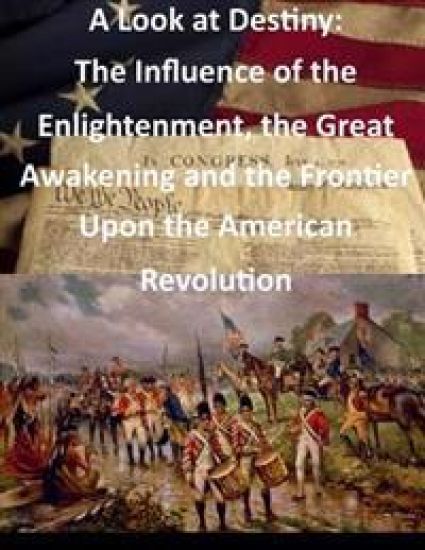
Destiny: The Influence of The Enlightenment, The Great Awakening and the Frontier

Destiny: The Influence of The Enlightenment, The Great Awakening and the Frontier

Usmc Command and Staff College

Createspace Independent Publishing Platform
2014
nidottu
The Enlightenment, the Great Awakening, and the frontier were tremendouslystrong forces in influencing the American Revolution. Acting in concert, these forces made a Revolution inevitable. The Enlightenment directly influenced revolutionary thoughts. Ideas of natural rights, sensibility, and equality stemmed from enlightened thought. The Great Awakening and religious revivals of the mid- eighteenth century brought hope and salvation to the commoner. This evangelical style religion upset the formal churches and institutions and undermined existing church authority. The frontier offered vast, seemingly unlimited resources, a chance for adventurous Americans to survive often harsh journeys and developed a character that is uniquely American.
Shared Blame (Inertial Leadership, Indiscipline, and Horse Blinders): The Failure of the "Other" Confederate Cavalry Brigades During the Gettysburg Ca
The Confederate Cavalry that remained with the main body of the Army of Northern Virginia during the initial days of the Gettysburg Campaign failed to assume Stuart's eastern flank reconnaissance and security mission when he was unable to perform it. Evidence shows that there is shared responsibility for this failure among commanders at the brigade, division, corps, and army levels. Much of the blame of their failure to perform reconnaissance and security is placed on the Confederate Cavalry Commander, J. E. B. Stuart. What is often overlooked are the actions of thecavalry formations that remained with General R. E. Lee. This force of four brigades had the opportunity to fill the gap left by Stuart and could have provided Lee with the reconnaissance, security, and intelligence he needed. This paper examines the performance of those cavalry formations and studies why they did not, or could not, assume Stuart's mission on the eastern flank. Conclusions are that the following contributed to this failure: 1) Leadership and Initiative, 2) Capabilities of the Cavalry, 3) Command and Control and Staff Organizations, 4) Attitude of the Army of Northern Virginia and the Cavalry.
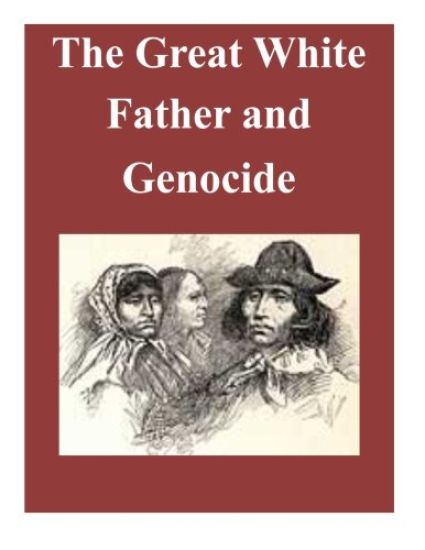
The Great White Father and Genocide

The Great White Father and Genocide

Usmc Command and Staff College

Createspace Independent Publishing Platform
2014
nidottu
This book examines the genesis of the term genocide, presents the widely accepted formal definition, and illustrates examples of the characteristics of genocide. As an illustration for better understanding, this book examines the relationship between the United States of America and the Cherokee Indian Nation in their struggle first for sovereignty and then their attempt at assimilation. Though the book leads the reader through injustices dealt to the Cherokee Indian, it ultimately explains why genocide is not the applicable term to use to describe the natural progression of civilized culture.The United States is the world's only remaining superpower. Because of this, the eyes of the world constantly examine this country's actions and evaluate their merit. In order to remain in positive light military operations, as an extension of government policy, must be executed by military leadership that understands genocide, can recognize the patterns that can result in genocidal activities and how they can impact the mission. Armed with the understanding of genocide and how foreign countries view the United States, military commanders can better articulate the purpose of their operations in order to project the best possible message to the world audience and remain disassociated from the negative connotations associated with accusations of genocidal activities.
Citizen Warrior: Major General Joshua Lawence Chanberlain A Study in Command Leadership

Citizen Warrior: Major General Joshua Lawence Chanberlain A Study in Command Leadership

Usmc Command and Staff College

Createspace Independent Publishing Platform
2014
nidottu
Joshua Chamberlains superior command leadership, imaginative planning, and aggressive conduct during the Civil War provide a powerful example of exceptional combat leadership. After studying the descriptions laid down by Clausewitz and then studying the decisions and actions of Joshua Chamberlain in the events in which he was involved during the Civil War, Joshua Chamberlain as a general would qualify for the title of "genius." Joshua Chamberlain's genius residing in his outlook on management and leadership also tended toward the pragmatic. Far from being influenced primarily by irrelevant and high-flown notions based upon "book learning", he learned through study and application, as well as by working with mentoring associates, to put theory into practice the discarded those approaches which proves non-useful and carefully preserved those precepts and practices which had been successfully applied in both military and civilian settings
Moral Courage or Heresy: The Benefits and Pitfalls of Military Leaders Speaking Out

Moral Courage or Heresy: The Benefits and Pitfalls of Military Leaders Speaking Out

Usmc Command and Staff College

Createspace Independent Publishing Platform
2015
nidottu
Military leaders who allow their experience and loyalty to their oath guide their actionswhen speaking out in the proper forums for or against policies, strategies, or ideals can positivelyaffect the welfare of the troops in the field and build a bridge with civilian leadership and thecivilian population.
Redskins in Bluecoats: A Strategic and Cultural Analysis of Gneral George Crook's Use of Apache Scouts in the Second Apache Campaign, 1882-18
General George Crook's initial experiences in Native American warfare were so profound that they shaped him in a wayvery much unlike his contemporary officers. During General George Crook's Second Apache Campaign (1882-1886), his unique approach to the use of Apache scouts and his culturally sensitive leadership were so misunderstood by hiscontemporaries that it eventually led to his resignation of command and the imprisonment of all Chiricahua Apachescouts who faithfully served the US Army following General Nelson Miles' successful completion of the Apachecampaign. General Crook displayed the right balance of warrior determination and humanitarian awareness in hisleadership of the Arizona Territory. He was the right man, in the right place, at the right time. General Crook'seffectiveness as a war fighter and his cultural awareness in handling a successful counterinsurgency and pacificationprogram provide lessons that are relevant to contemporary professional military officers engaged in twenty-first centuryoperations
Light Armored Reconnaissance: Misunderstood and Underemployed in Deep Operations

Light Armored Reconnaissance: Misunderstood and Underemployed in Deep Operations

Usmc Command and Staff College

Createspace Independent Publishing Platform
2015
nidottu
This paper is designed to explain the capabilities of the LAR battalion, and how it can be used to operate for anextended period behind enemy lines or in denied enemy territory in order to shape the battlefield for commanders. Itbegins with the Marine Corps' acquisition of the LAV platform, covers the various initial concepts of employment, thendiscusses the current organization of the battalion, followed by a description of the current doctrine. The paper thendescribes the deployments and combat operations of LAR units, discusses the origins of modern operational maneuvergroups, details LAR's role in testing a concept of deep maneuver during Operation DEEP STRIKE, and discusses theemployment of LAR as a deep maneuver element in Iraq and Afghanistan. It concludes with a future concept ofemployment in irregular warfare offering a way forward for the LAR community to realize its maximum potential andadvocate to break away from unimaginative, and doctrineally incorrect, modes of employment while still maintain a solidI grounding in providing its supported commander a tactically and operationally mobile reconnaissance asset.
Improving Shaping Efforts in Africa's Maghreb and Sahel

Improving Shaping Efforts in Africa's Maghreb and Sahel

Usmc Command and Staff College

Createspace Independent Publishing Platform
2015
nidottu
Shaping efforts In the Maghreb and Sahel are extensive and commendable but lack appropriate interagency synchronization and an appropriate balance between the development and defense approaches. In order to achieve greater success in this critical region of Africa, the United States must adapt to the asymmetric environment, empower the DoS to lead and execute foreign policy, decrease the perceived militarization of foreign policy, and adjust within DoDto address the likely challenges of today and tomorrow.
Gettysburg: A Study of Lee's Command Effectiveness, 1863

Gettysburg: A Study of Lee's Command Effectiveness, 1863

Usmc Command and Staff College

Createspace Independent Publishing Platform
2015
nidottu
This paper is an historical analysis of the effectiveness of General Lee's command during the .Battle of Gettysburg: The argument is made and defended that General Lee's effectiveness of command during the Battle of Gettysburg wasreduced because of the absence of two of his trusted subordinates and his interaction with other senior leaders in theArmy of North.em Virginia. This paper examines the period from the Battle of Chancellorsviile to the BattlE? of Gettysburg,186 . The life of General Lee is discussed briefly' up t111 the Battle of Gettysburg, along with t e topics: Lee's TrustedSubordinates, 'Chancellorsville, Lee's reorganization of the Army of Northern Virginia, Gettysburg, lee's Effectiveness atGettysburg, and finally the Conclusion. The Conclusion provides a summary as well as discussing lessons to belearned
Just War and Preemption: The Just War Tradition and its Impact on Preemptive Acts

Just War and Preemption: The Just War Tradition and its Impact on Preemptive Acts

Usmc Command and Staff College

Createspace Independent Publishing Platform
2015
nidottu
The post-Cold War era presented to the nations of the world the opportunity toexperience peace in a way that had not been enjoyed for decades, if not centuries. However, since the end of the Cold War there have been a significant number of smaller conflicts, genocides, ethnic cleansings, and regional battles. The September 11, 2001, attacks against targets in the United States brought the strife to the US in an unexpected way.Since that day, there has been a significant level of US military activity in the world, and plenty of debate over how to do it. One of the most interesting aspects of the debate is over the "preemptive war" that was started in Iraq. While this thesis is not specifically about Operation Iraqi Freedom, it is a catalyst, of sorts, for studying the subject of the Just War Tradition and itsinfluence on preemptive military activities.
The Falaise Pocket. World War II Allied Encriclement of the German Armies. Failure or Success of the Allied

The Falaise Pocket. World War II Allied Encriclement of the German Armies. Failure or Success of the Allied

Usmc Command and Staff College

Createspace Independent Publishing Platform
2014
nidottu
By August 1944, the Allies had broken out of the Normandy beachhead and were rapidly exploiting a breakthrough in the German lines. In early August, Hitler ordered a heavy single pronged attack to the west to cut off the US forces to the south. Bradley recognized this as an opportunity to encircle the German Army in France. By turning Patton's Third Army, in the south, north towards Argentan, Bradleyformed the lower jaw of a pincer movement while Montgomery ordered Crerar's FirstCanadian Army south to push towards Falaise to form the upper jaw. Connecting the Allied armies between Falaise and Argentan would completely surround the German army.To the north, Montgomery's forces struggled to push south against the Germandefensive line. Patton's Third Army, in concert with the XIX Tactical Air Command, was making extremely rapid progress. Late on the 12th of August, Bradley stopped Patton's forces from moving north of Argentan. The decision to stop Third Army's movement north allowed many German personnel to escape from the Falaise pocket. The failure of the Allied forces to close the Falaise Gap was the result of lack of communication directly linked to the type of personalities of the commanders.
'The Red-Legged Devils' - Brooklyn's Best Regiment

'The Red-Legged Devils' - Brooklyn's Best Regiment

Usmc Command and Staff College

Createspace Independent Publishing Platform
2014
nidottu
The Fourteenth Brooklyn was a superb warfighting organization.. Five factors, when taken collectively, made the Fourteenth Regiment a superior combat unit. The Brooklyn communities exerted extraordinary force on the men to fight. As a militia unit, the soldiers had a close relationship to the rest of the community. The support from the citizen created a heightened sense of Espirit d' Corps in the regiment. The existing soldiers and the newer recruits were of the highest caliber, facilitating an easy transition from "citizen" to "soldier". As individuals and as a unit the soldiers strove for technical and tactical proficiency. The men fought for the honor of the regiment. The regiment took on a spirit like quality that in return for the men submission to it, returned to the men courage in trying times.The same traits that empowered the Fourteenth exist today, if we are wise enough to heed them. The Fourteenth Regiment is worthy of further study by today's warriors.
Primordial Violence: German War on the Soviet Partisans

Primordial Violence: German War on the Soviet Partisans

Usmc Command and Staff College

Createspace Independent Publishing Platform
2014
nidottu
Clausewitz offers his paradoxical trinity as a viable framework for analyzing theinherent complexities of warfare. The three interdependent, dynamic aspects of the trinity must be balanced against each other if a successful plan for war is to prevail. Additionally, Clausewitz addresses the dynamics of insurgencies and counter insurgencies. With these two analytical frameworks, an examination of a specific campaign becomes plausible.The German war on the Soviet partisans in the occupied territories of the Eastern Front from 1941-1944 reflected the interplay of the trinity. Primordial violence was imbued in the German people as a result of National Socialist indoctrination. The play of chance and probability reflected the largely successful active and passive measures employed by the German armed forces behind the German front. The element of subordination wasmanifested in the pernicious Nazi occupation policies that inevitably dictated the conduct of the armed forces.As a result of Hitler's imbalanced, irrational eastern strategy and subsequent war on the partisans, primordial violence, enmity, and hatred superseded the other two legs of the trinity. Hitler's unlimited political and military objectives ultimately were incompatible with the German Army's ability to pragmatically prosecute the eastern war and pacify the population that supported the partisan resistance.