Kirjojen hintavertailu. Mukana 11 244 527 kirjaa ja 12 kauppaa.

Kirjahaku

Etsi kirjoja tekijän nimen, kirjan nimen tai ISBN:n perusteella.

1000 tulosta hakusanalla Vasile Minea

Heating and Cooling with Ground-Source Heat Pumps in Cold and Moderate Climates
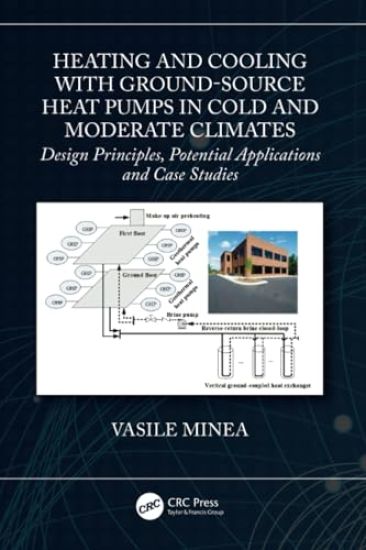
Heating and Cooling with Ground-Source Heat Pumps in Cold and Moderate Climates: Design Principles, Potential Applications and Case Studies focuses on applications and cases studies of ground-source heat pumps in moderate and cold climates. It details technical aspects (such as materials, thermal fluid carriers and pumping, and drilling/trenching technologies), as well as the most common and uncommon application fields for basic system configurations. The principles of system integrations and applications in moderate and cold climates (such as hybrid, solar-assisted, thermo-syphon, foundation, mines, snow melting, district heating and cooling ground-source heat pump systems, etc.) are also presented, each followed by case studies. Based on the author's more than 30 years of technical experience Discusses ground-source heat pump technologies that can be successfully applied in moderate and cold climates Presents several case studies, including successful energy results, as well as the main lessons learned This work is aimed at designers of HVAC systems, as well as geological, mechanical, and chemical engineers implementing environmentally-friendly heating and cooling technologies for buildings.
Heating and Cooling with Ground-Source Heat Pumps in Cold and Moderate Climates
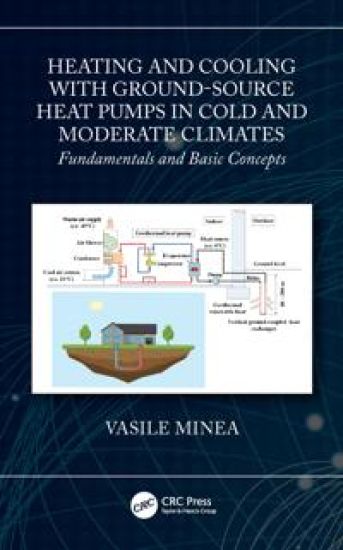
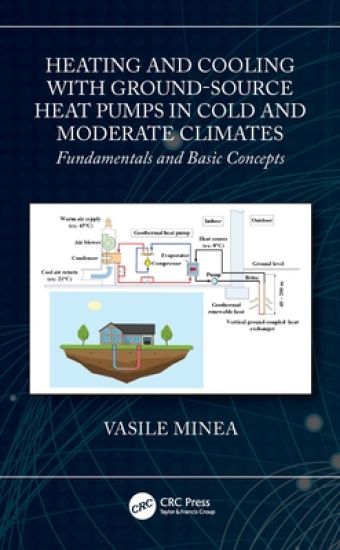
Heating and Cooling with Ground-Source Heat Pumps in Cold and Moderate Climates: Fundamentals and Basic Concepts covers fundamentals and design principles of vertical and horizontal indirect and direct expansion closed-loop, as well as ground and surface-water ground-source heat pump systems. It explains the thermodynamic aspects of mechanical and thermochemical compression cycles of geothermal heat pumps, and describes the energetic, economic, and environmental aspects associated with the use of ground-source heat pump systems for heating and cooling residential and commercial/institutional buildings in moderate and cold climates. Based on the author's more than 30 years of technical experience Focuses on ground-source heat pump technologies that can be successfully applied in moderate and cold climates Discusses technical aspects as well as the most common and uncommon application fields of basic system configurations This work is aimed at designers of HVAC systems, as well as geological, mechanical, and chemical engineers implementing environmentally-friendly heating and cooling technologies for buildings.
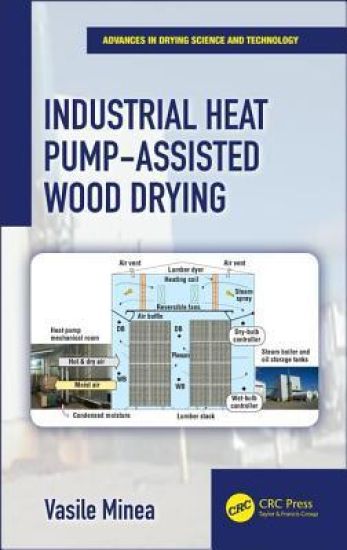
Industrial Heat Pump-Assisted Wood Drying
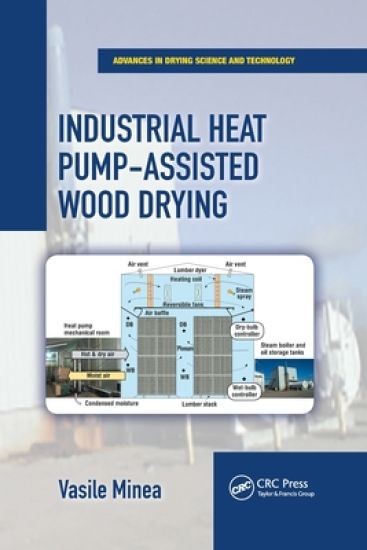
This book discusses conventional as well as unconventional wood drying technologies. It covers fundamental thermophysical and energetic aspects and integrates two complex thermodynamic systems, conventional kilns and heat pumps, aimed at improving the energy performance of dryers and the final quality of dried lumber. It discusses advanced components, kiln energy requirements, modeling, and software and emphasizes dryer/heat pump optimum coupling, control, and energy efficiency. Problems are included in most chapters as practical, numerical examples for process and system/components calculation and design. The book presents promising advancements and R&D challenges and future requirements.
Heating and Cooling with Ground-Source Heat Pumps in Cold and Moderate Climates
Heating and Cooling with Ground-Source Heat Pumps in Cold and Moderate Climates: Fundamentals and Basic Concepts covers fundamentals and design principles of vertical and horizontal indirect and direct expansion closed-loop, as well as ground and surface-water ground-source heat pump systems. It explains the thermodynamic aspects of mechanical and thermochemical compression cycles of geothermal heat pumps, and describes the energetic, economic, and environmental aspects associated with the use of ground-source heat pump systems for heating and cooling residential and commercial/institutional buildings in moderate and cold climates. Based on the author's more than 30 years of technical experience Focuses on ground-source heat pump technologies that can be successfully applied in moderate and cold climates Discusses technical aspects as well as the most common and uncommon application fields of basic system configurations This work is aimed at designers of HVAC systems, as well as geological, mechanical, and chemical engineers implementing environmentally-friendly heating and cooling technologies for buildings.
Heating and Cooling with Ground-Source Heat Pumps in Cold and Moderate Climates
Heating and Cooling with Ground-Source Heat Pumps in Cold and Moderate Climates: Design Principles, Potential Applications and Case Studies focuses on applications and cases studies of ground-source heat pumps in moderate and cold climates. It details technical aspects (such as materials, thermal fluid carriers and pumping, and drilling/trenching technologies), as well as the most common and uncommon application fields for basic system configurations. The principles of system integrations and applications in moderate and cold climates (such as hybrid, solar-assisted, thermo-syphon, foundation, mines, snow melting, district heating and cooling ground-source heat pump systems, etc.) are also presented, each followed by case studies. Based on the author's more than 30 years of technical experience Discusses ground-source heat pump technologies that can be successfully applied in moderate and cold climates Presents several case studies, including successful energy results, as well as the main lessons learned This work is aimed at designers of HVAC systems, as well as geological, mechanical, and chemical engineers implementing environmentally-friendly heating and cooling technologies for buildings.
Heating and Cooling with Ground-Source Heat Pumps in Moderate and Cold Climates, Two-Volume Set
Heating and Cooling with Ground-Source Heat Pumps in Moderate and Cold Climates, Two-Volume Set focuses on the use of very low-temperature geothermal energy for heating and cooling residential, institutional, and industrial buildings, and aims to increase the design community’s awareness and knowledge of the benefits, design, and installation requirements of commercial/institutional building ground-source heat pumps (GSHP). This set helps readers assess applicability, select a GSHP system type, and estimate building thermal load to ensure proper size for ground-source subsystems, appropriate brine and groundwater flow rates, and apt design of building closed-loops with distributed or central geothermal heat pumps. The first volume addresses fundamentals and design principles of vertical and horizontal indirect and direct expansion closed-loop, as well as ground- and surface-water ground-source heat pump systems. It explains the thermodynamic aspects of mechanical and thermochemical compression cycles of geothermal heat pumps, as well as the energetic, economic, and environmental aspects associated with the use of ground-source heat pump systems for heating and cooling residential and commercial/institutional buildings in moderate and cold climates. The second volume focuses on applications and cases studies of ground-source heat pumps in moderate and cold climates. It details technical aspects, as well as the most common and uncommon application fields of basic system configurations. The principles of system integrations and applications in moderate and cold climates are also presented, each followed by case studies. This comprehensive work is aimed at designers of HVAC systems, as well as geological, mechanical, and chemical engineers implementing environmentally-friendly heating and cooling technologies for buildings.
Heat Recovery with Commercial, Institutional, and Industrial Heat Pumps
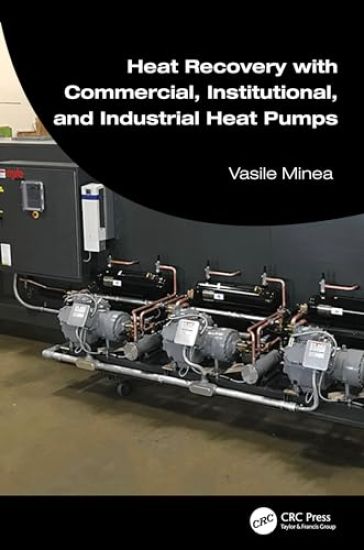
Heat Recovery with Commercial, Institutional, and Industrial Heat Pumps presents the basic concepts and thermodynamic behavior of mechanical vapor compression and recompression. It covers both ammonia water absorption and compression/resorption heat pumps.Including theoretical and practical approaches, the book features numerous solved exercises based on real thermodynamic and climatic parameters and case studies with takeaways from on-site experiences to help the reader better identify the advantages and limitations of each heat pumping technology. The book discusses future implementations of heat recovery heat pump technologies that are among the most energy-efficient and environmentally friendly techniques.This book will interest graduate students studying HVAC, thermal systems, and heat pumps. It will also benefit professionals working with heat pumps, industrial process engineers, manufacturers, and research and design personnel.
Industrial Heat Pump-Assisted Wood Drying
This book discusses conventional as well as unconventional wood drying technologies. It covers fundamental thermophysical and energetic aspects and integrates two complex thermodynamic systems, conventional kilns and heat pumps, aimed at improving the energy performance of dryers and the final quality of dried lumber. It discusses advanced components, kiln energy requirements, modeling, and software and emphasizes dryer/heat pump optimum coupling, control, and energy efficiency. Problems are included in most chapters as practical, numerical examples for process and system/components calculation and design. The book presents promising advancements and R&D challenges and future requirements.
Heat Pump-Assisted Dryers

Heat Pump-Assisted Dryers

Vasile Minea

TAYLOR FRANCIS LTD
2026
sidottu
Heat Pump-Assisted Dryers: Optimum Sizing, Design, and Operation Rules identifies the ideal sizing, operation, and control strategies for hot air convective bath driers coupled with air-to-air mechanical vapor compression heat pumps. It evaluates the energy requirements, most efficient operation and control methods, drying performances, and environmental issues and considerations. Covering the physical drying process of porous solid materials (fruits, vegetables, and wood), the book discusses heat conduction and moisture migration. It investigates the optimal coupling of thermodynamic systems, examining unproved drying techniques and combining solar energy and heat pump-assisted dryers. Future R&D needs, including advanced drying technologies, low GWP refrigerants, and process integration, are also explored. This book will interest professionals working with heat pumps, industrial process engineers, manufacturers, and academic researchers studying advances in drying technologies and processes.
Drehzahlregelung von Mischmaschinen in der Lebensmittelindustrie

Drehzahlregelung von Mischmaschinen in der Lebensmittelindustrie

Mihnea Glodeanu; Cristian Vasile; Ion & Alexandru Ioan Saracin

Verlag Unser Wissen
2023
pokkari
Die in der Lebensmittelindustrie eingesetzten Mischmaschinen dienen der bertragung mechanischer Energie von den dynamischen Elementen der Maschine auf das Mischmedium. Weltweit werden Mischmaschinen mit Asynchronmotoren und statischen Spannungs- und Frequenzumrichtern betrieben, was die M glichkeit der Anpassung der Arbeitsparameter an die Erfordernisse des technologischen Prozesses gew hrleistet. Moderne Mischmaschinen sind mit einem Spannungs-/Frequenzwandler ausgestattet, der es erm glicht, die Drehzahl des Elektromotors in einem weiten Drehzahlbereich zu ver ndern. Das Vorhandensein des CTF-Wandlers erm glicht die nderung der Drehgeschwindigkeit der Mischarme. In Anbetracht der Notwendigkeit, einen variablen Drehzahlbereich der Mischvorrichtungen zu erhalten, ist die Regulierung der Drehzahl des Antriebsmotors ein besonders wichtiger Fall beim Betrieb einer Mischmaschine. Die Simulation des elektromechanischen Antriebssystems wird durch die Anwendung des MATLAB-Dienstprogramms und der Erweiterungen von Simulink-Sim Power Systems wesentlich erleichtert. Der mathematische Ansatz, der auf mathematischen Modellen und einer anschlie enden numerischen Simulation basiert, f hrt zu einem wesentlich geringeren finanziellen Aufwand als experimentelle Ans tze.