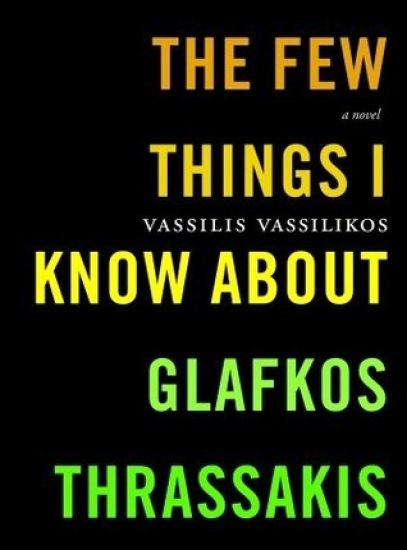
"By turns moving and scathingly satirical . . . Vassilikos has been so rarely translated into English; one can only hope this complex, multilayered novel will change that."--Mary Park, "The New York Times Book Review"A brilliant work of the imagination as well as an inspiring commentary on writing, the story follows a biographer's investigation into the life and works of a famous, yet highly mysterious, deceased Greek writer, Glafkos Thrassakis. At the crossroads where magic realism and political fiction meet, Vassilis Vassilikos's buoyant literary imagination successfully defies narrative structural conventions and common fiction grounds.Vassilis Vassilikos is Greece's most acclaimed novelist. His most famous novel, "Z," has been translated into 32 languages.
A progressive parliamentary deputy is scheduled to appear at a political rally. Meanwhile, local political bosses plot his assassination. Thugs are recruited to disrupt the rally. Rumors begin to spread. But the forces already set in motion are irresistible. Z is the story of a crime, a time, a place, and people transformed by events. Z was published in Greece in 1966, and banned there one year later. It is based on an actual political assassination in 1963 in Salonika. The victim was Gregory Lambrakis, a socialist legislator and outspoken critic of the government. But Lambrakis's killers could not have anticipated the public response. His funeral became a political event; by the time the cortege reached Athens, 400,000 people were following the coffin in silence. In the nation's capital, the letter Z suddenly appeared on walls, sidewalks, posters--everywhere. Z stands for the Greek verb zei, -he lives.-
Vassilis Alexakis: Exorciser l’exil est le premier ouvrage critique consacré à l’œuvre littéraire de l’auteur grec d’expression française Vassilis Alexakis, lauréat du prix Médicis en 1995 et du Grand prix du roman de l’Académie française en 2007. Les schémas de dépossessions culturelles, de quêtes linguistiques, de crises identitaires et de déplacements géographiques propres aux écrits d’Alexakis y sont analysés selon trois axes (autofictionnel, linguistique et spatial) dans les œuvres publiées entre 1974 et 2007 afin de révéler une esthétique du déplacement qui permet à l’auteur de se libérer progressivement de la problématique de l’exil. Cette étude critique s’adresse particulièrement à ceux qui s’intéressent aux écrits contemporains en langue française, aux études littéraires francophones, au bilinguisme littéraire ou à l’autotraduction. L’ouvrage comporte un entretien exclusif avec l’auteur effectué en janvier 2010 à Athènes.
Thermal Solar Desalination: Methods and Systems presents numerous thermal seawater desalination technologies varying from the very simple, easy to construct and operate solar stills, to the more advance membrane and indirect distillation methods. All types of solar thermal desalination technologies are presented in detail to enable readers to comprehend the subject, from design details to enabling further research to be carried out in this area. The various units used in desalination are outlined, along with diagrams of all detailed working principles of desalination methods and systems. The authors consider the economic aspects of these processes, demonstrating successful implementation of desalination units suitable for areas where supplies of fresh water in natural ways is limited or non-existent.
Across the EU, services are the cornerstone of the modern economy, accounting for over 70% of national GDPs and over 90% of new jobs created. Fostering trade in services has, accordingly, become central to the EU's vision for developing the internal market. Yet regulating services and their international trade is notoriously complex, and controversial. For years the EU's efforts were limited to sector-specific regulation in key areas, until the adoption of the general Services Directive in 2006. Since then, confronted by the limited success of traditional legal intervention, the EU's attentions have shifted to alternative forms of regulation. This book looks back on the historical development of services law, discusses the nature of impediments to trade in services in the EU, and explains the basic rules and principles applicable to such trade. It also examines the recent development of alternative regulatory methods, such as networking, the use of common standards, private regulation, self-regulation, open methods of coordination, and administrative cooperation. Taking a broad perspective and placing services regulation within its economic context, the author offers a thorough evaluation of current regulatory methods alongside the alternative methods which could be deployed. The book is the first to provide an overview of the regulation of services in the EU.
With the terrorist attacks of September 11, 2001, the United States' long war on communism was replaced by a perpetual war on terror. The authors posit that this neo-imperialistic phase is but the latest development in a line of thought and action established after World War II. But, they say, 2005 is not 1945. Today, they argue, the United States uses its power to deplete the resources of the developing world, and to compel the rest of the world to remain dependent on American management of the global economy. Contending that this situation is ultimately untenable, they assert that the United States is entering a period of deep crisis. The best thing for American neo-imperialists to do to avert their worst nightmare—a strategic and economic alliance among Europe, Russia, China, and OPEC—would be to arrange for the orderly withdrawal of American power before it is too late for the human and environmental security of the world. When the Soviet Union collapsed in 1991, the Cold War slowly gave way to a new world order in which the United States was left as the lone superpower. But the organizing principle that would characterize the early 21st century was as yet unclear, until the terrorist attacks of September 11, 2001. Now it is clear that the long war on Communism has been replaced by a perpetual war on terror. Regardless of how long American troops remain in Iraq, and irrespective of further military actions, George W. Bush will continue to be a wartime president whose foreign policy is dominated by the Pentagon. And yet, the authors argue, this neo-imperialistic phase, with its emphasis on Eurasian oil supplies, is but the latest development in a line of thinking and acting in the world that was established by such men as Dean Acheson and Paul Nitze after World War II. But 2005 is not 1945, and the United States, despite Secretary of Defense Donald Rumsfeld and Vice President Dick Cheney's assertions, is not liberating Iraq and Afghanistan in the same way that U.S. forces liberated Germany and Japan; it is not reconstructing Iraq or the former Yugoslavia as it did when it rebuilt war torn western Europe with the Marshall Plan. The United States, with its thinly stretched military and deficit-laden economy, does not possess the means to do so today. Instead, the authors maintain, the United States is simply depleting the developing world's natural resources, compelling the rest of the developed world to remain dependent on American management of the global economy. This situation is ultimately untenable, the authors argue, and as a result, the United States is entering a period of deep crisis. The best thing for American neo-imperialists to do to avert their worst nightmare—a strategic and economic alliance among Europe, Russia, China, and OPEC—would be to arrange for the orderly withdrawal of American power before it is too late for the human and environmental security of the world as a whole.
Industrial production is one of the most basic human activities indispensable to the economic activity. Due to its complexity, production is not very well understood and modeled as opposed to traditional fields of inquiry such as physics. This book aims at enhancing rigorous understanding of a particular area of production, that of analysis and optimization of production lines and networks using discrete event models and simulation. To our knowledge, this is the first book treating this subject from the point of view mentioned above. We have arrived at the realization that discrete event models and simulation provide perhaps the best tools to model production lines and networks for a number of reasons. Analysis is precise but demands enormous computational resources, usually unavailable in practical situations. Brute force simulation is also precise but slow when quick decisions are to be made. Approximate analytical models are fast but often unreliable as far as accuracy is concerned. The approach of the book, on the other hand, combines speed and accuracy to an exceptional degree in most practical applications.
In the controversy over political correctness, the canon, and the curriculum, the role of Western tradition in a post-modern world is often debated. To clarify what is at stake, Vassilis Lambropoulos traces the ideology of European culture from the Reformation, focusing on a key element of Western tradition: the act of interpretation as a distinct practice of understanding and a civil right. Championed by Protestants insisting on independent interpretation of scripture, this ideal of autonomy ushered in the era of modernity with its essentialist philosophy of universal man and his aesthetic understanding of the world.Originally published in 1993.The Princeton Legacy Library uses the latest print-on-demand technology to again make available previously out-of-print books from the distinguished backlist of Princeton University Press. These editions preserve the original texts of these important books while presenting them in durable paperback and hardcover editions. The goal of the Princeton Legacy Library is to vastly increase access to the rich scholarly heritage found in the thousands of books published by Princeton University Press since its founding in 1905.
In the controversy over political correctness, the canon, and the curriculum, the role of Western tradition in a post-modern world is often debated. To clarify what is at stake, Vassilis Lambropoulos traces the ideology of European culture from the Reformation, focusing on a key element of Western tradition: the act of interpretation as a distinct practice of understanding and a civil right. Championed by Protestants insisting on independent interpretation of scripture, this ideal of autonomy ushered in the era of modernity with its essentialist philosophy of universal man and his aesthetic understanding of the world.Originally published in 1993.The Princeton Legacy Library uses the latest print-on-demand technology to again make available previously out-of-print books from the distinguished backlist of Princeton University Press. These editions preserve the original texts of these important books while presenting them in durable paperback and hardcover editions. The goal of the Princeton Legacy Library is to vastly increase access to the rich scholarly heritage found in the thousands of books published by Princeton University Press since its founding in 1905.
This book examines how the practices of criticism establish a particular domain of knowledge, the truth of literature. As a discussion of the ideology and politics of literary knowledge, it concentrates on constitutive elements of its production: the intertextuality of writing, the mediatedness of understanding, the formative role of reading expectations, the enabling presence of relevant literacy, the conditioning horizon of expectations, and the economic character of axiology. The main argument advanced is that criticism, by constructing literature as an ethnic heritage and communal treasure, participated in the invention of a national identity necessary for the legitimization of the modern state. Case studies have been selected from the highly relevant area of contemporary Greek criticism. Microscopic investigations of its dominant sites, mechanisms, and discourses reveal that the field emerged in response to concrete political needs and provided the state with a literary tradition as proof of its national composition, purity, continuity, and autonomy. The construction and canonization of texts as art works invariably employed, as a measure of aesthetic (and ultimately moral) merit, the Greekness of the literary sign. The book, as a genealogical approach to the neglected national role of literature, should be of interest to specialists in literary theory, comparative literature, Greek studies, and cultural studies. Originally published in 1988. The Princeton Legacy Library uses the latest print-on-demand technology to again make available previously out-of-print books from the distinguished backlist of Princeton University Press. These editions preserve the original texts of these important books while presenting them in durable paperback and hardcover editions. The goal of the Princeton Legacy Library is to vastly increase access to the rich scholarly heritage found in the thousands of books published by Princeton University Press since its founding in 1905.
This book examines how the practices of criticism establish a particular domain of knowledge, the truth of literature. As a discussion of the ideology and politics of literary knowledge, it concentrates on constitutive elements of its production: the intertextuality of writing, the mediatedness of understanding, the formative role of reading expectations, the enabling presence of relevant literacy, the conditioning horizon of expectations, and the economic character of axiology. The main argument advanced is that criticism, by constructing literature as an ethnic heritage and communal treasure, participated in the invention of a national identity necessary for the legitimization of the modern state. Case studies have been selected from the highly relevant area of contemporary Greek criticism. Microscopic investigations of its dominant sites, mechanisms, and discourses reveal that the field emerged in response to concrete political needs and provided the state with a literary tradition as proof of its national composition, purity, continuity, and autonomy. The construction and canonization of texts as art works invariably employed, as a measure of aesthetic (and ultimately moral) merit, the Greekness of the literary sign. The book, as a genealogical approach to the neglected national role of literature, should be of interest to specialists in literary theory, comparative literature, Greek studies, and cultural studies. Originally published in 1988. The Princeton Legacy Library uses the latest print-on-demand technology to again make available previously out-of-print books from the distinguished backlist of Princeton University Press. These editions preserve the original texts of these important books while presenting them in durable paperback and hardcover editions. The goal of the Princeton Legacy Library is to vastly increase access to the rich scholarly heritage found in the thousands of books published by Princeton University Press since its founding in 1905.
This radical series shows how Classical ideas and material have helped to shape the modern world. The interdisciplinary approach makes stimulating reading for all who welcome the challenge offered by new perspectives on Classical culture. Today we attribute a tragic quality to many things - works, experiences, values, events - but we forget how modern this idea is. This book traces the rise of the tragic idea from early Romanticism to late Modernism. Focusing on succinct, major statements, it maps one of the most absorbing philosophical conversations in modernity: the debate about the tragic meaning of life. This conversation has crossed geographical, linguistic, ideological and religious borders to bring thinkers together in an inquiry into the inner contradictions of liberty. While originally the tragic idea stood for the conflict of freedom and necessity, it gradually absorbed other irreconcilable dialectical collisions. It turned tragedy from a genre into a problem for ethics, aesthetics, criticism, classics, politics, anthropology and psychology, to name but a few. Scholars in these fields today will be fascinated to find human responsibility caught in the tragic web of modern dilemmas. Classicists in particular will be intrigued by the story of how, over the last two centuries, tragedy has acquired a second, parallel life away from the stage.
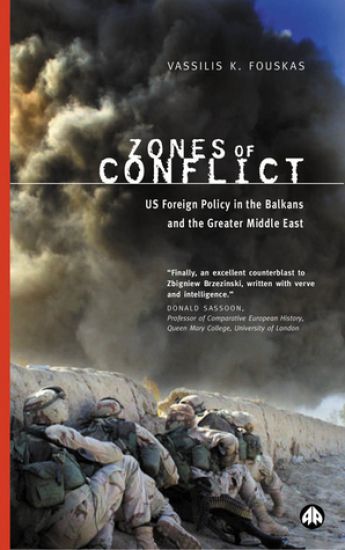
The US has major interests in the Balkans, the Greater Middle East and the Eurasian zone, which determine its political and military strategies in the region. What are these interests, and what strategies are used to ensure that they are maintained? Examining the balance of power between the US, the EU and key EU states, Vassilis Fouskas offers a critique of US foreign policy and its underlying motivations. Fouskas argues that the major US objectives include control over gas and oil producing zones; safe transportation of energy to Western markets at stable prices; and the elimination, but not destruction, of America's Eurasian competitors. He asserts that US foreign policy is therefore driven by the desire to maintain a strategic partnership with key EU states, while preventing the emergence of an alternative coalition in Eurasia capable of challenging US supremacy. How does the US manage its interests in Eurasia and what are the particular strategies the EU has elaborated so far to deal with America's supremacy? Has US foreign policy undergone a dramatic U-turn after the end of the Cold War or, for that matter, after September 11th? What are the roles of Germany, France, Britain and Turkey, and how do EU-Cyprus relations affect the balance of power? This book tackles these questions and argues that the emergence of a social democratic administration in Eurasia is a feasible alternative to American unilateralism.
Despite Washington's military supremacy, its economic foundations have been weakening since the Vietnam war – accelerated by the great recession and credit-rating downgrade – and its global authority dented by the quagmires in Iraq and Afghanistan. This book intervenes in the debates surrounding America's status as an empire. It analyses Immanuel Wallerstein and others who argue that the US is in decline, to those who maintain that it remains a robust superpower. By explaining how America's neo-imperial system of governance has been working since WWII, it links the US's domestic and foreign vulnerabilities. The Fall of the US Empire argues that the time has come to understand the US empire not by its power but by its systemic vulnerabilities of financialisation, resource depletion and environmental degradation.
This book provides a non-partisan approach to Cyprus that goes beyond the perceptions of ruling elites on the island and their NATO masters, which are historically responsible for the division of Cyprus today. Fouskas and Tackie argue that the rise to power of two left-wing parties on both sides of the Green Line means it is time to launch a serious political dialogue to initiate a post-imperial constitutional process. This is a feasible undertaking, not least because Cyprus is a member of the EU, but not a member of NATO. Short and accessible, this book aims to revive a debate in the spirit of Dervis Ali Kavatzoglou and Constantine Misiaoulis, popular symbols of a united, democratic and independent Cyprus.
The autonomous province of Vojvodina in Serbia is little-known in the English-speaking world, even though it is a territory of high significance for the development of Serbian national identity. Vojvodina’s multi-ethnic composition and historical experience has also encouraged the formation of a distinct regional identity. This book analyses the evolution of Vojvodina’s identity over time and the unique pattern of ethnic relations in the province. Although approximately 25 ethnic communities live in Vojvodina, it is by no means a divided society. Intercultural cohabitation has been a living reality in the province for centuries and this largely accounts for the lack of ethnic conflict. Vassilis Petsinis explores Vojvodina’s intercultural society and shows how this has facilitated the introduction of flexible and regionalized legal models for the management of ethnic relations in Serbia since the 2000s. He also discusses recent developments in the region, most notably the arrival of refugees from Syria and Iraq, and measures the impact that these changes have had on social stability and inter-group relations in the province.
Does religion positively affect well-being? What leads to fundamentalism? Do religious beliefs make us more moral? The Psychology of Religion explores the often contradictory ideas people have about religion and religious faiths, spirituality, fundamentalism, and atheism. The book examines whether we choose to be religious, or whether it is down to factors such as genes, environment, personality, cognition, and emotion. It analyses religion’s effects on morality, health, and social behavior and asks whether religion will survive in our modern society.Offering a balanced view, The Psychology of Religion shows that both religiosity and atheism have their own psychological costs and benefits, with some of them becoming more salient in certain environments.
Does religion positively affect well-being? What leads to fundamentalism? Do religious beliefs make us more moral? The Psychology of Religion explores the often contradictory ideas people have about religion and religious faiths, spirituality, fundamentalism, and atheism. The book examines whether we choose to be religious, or whether it is down to factors such as genes, environment, personality, cognition, and emotion. It analyses religion’s effects on morality, health, and social behavior and asks whether religion will survive in our modern society.Offering a balanced view, The Psychology of Religion shows that both religiosity and atheism have their own psychological costs and benefits, with some of them becoming more salient in certain environments.