Mechanics of Carbon Nanotubes: Fundamentals, Modeling and Safety draws on the latest academic research and nanotechnology applications to provide a comprehensive guide on the most recent developments in the science of carbon nanotubes. The fundamentals of nanomechanics and mechanical behavior of carbon nanotubes are presented in initial chapters, followed by more advanced topics such as the classification of carbon nanotubes, carbon nanotubes in nanocomposites, multiwall carbon nanotubes, and recent trends.This book provides a system for the classification of carbon nanotubes into 20 classes, aiding correct selection for various applications, and includes the Atomic Registry Matrix Analysis for nanoscale interfaces, essential for design involving friction or sliding. Parametric maps are included to help readers pick the correct model for a particular CNT geometry, in addition to a thorough examination of the effective thickness paradox and safety issues related to CNTs, such as toxicity at high aspect ratio.Mechanics of Carbon Nanotubes is essential reading for anyone involved in research or engineering that includes carbon nanotubes, be they students or seasoned professionals in the field. It is particularly useful to those working with applications in the areas of microelectronics, robotics, aerospace, composites, or prosthetics.
How to explain the mystery of fame? Many once well-known people who spent much of their lives at the core of historic events have fallen into oblivion since. The brilliant East Ukrainian poet and Soviet-era dissident Vasyl Stus (1938-85) became renowned only after his reburial in late Soviet Ukraine in 1989. What are the reasons for the widespread admiration for him in post-Soviet Ukrainian society? The exceptional beauty of his poetry? His stunning courage and selflessness as a Soviet dissident? The irreconcilability of his position as a human being? Or/and Vasyl Stus' ability to feel the pain of others as his own? Trying to answer these and other questions, the poet's son and literary scholar Dmytro Stus masterfully combines a cultural and biographical study with private recollections and observations of his father. The book offers a sometimes-paradoxical merger of genres mixing academic analysis with novelistic narration. It shows Vasyl Stus through the eyes of his son and researcher against the background of twentieth-century Ukrainian "belated" emergence as a nation-state. In 2007, the Ukrainian edition of this book won Ukraine's prestigious Shevchenko National Prize.
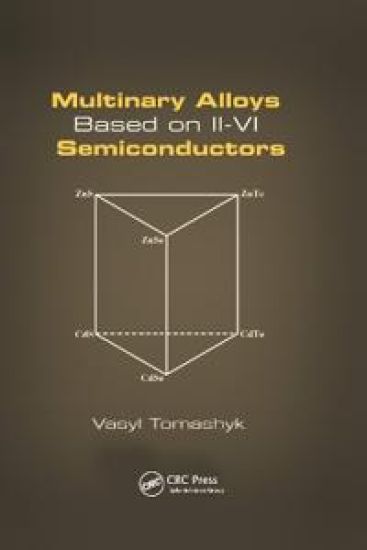
A companion volume to Ternary Alloys Based on II-VI Semiconductor Compounds (CRC Press, 2013) and Quaternary Alloys Based on II-VI Semiconductor Compounds (CRC Press, 2014), Multinary Alloys Based on II-VI Semiconductors provides up-to-date experimental and theoretical information on phase relations based on II-VI semiconductor systems with five or more components. Featuring detailed figures and extensive references, this book: Delivers a critical evaluation of many industrially important systems presented in the form of two-dimensional sections for the condensed phasesSummarizes the data from the last 15–20 years of literature on the study of organometallic compounds, which include zinc, cadmium, or mercury and sulfur, selenium, or telluriumClassifies all materials according to the periodic table groups of their constituent atoms, that is, possible combinations of Zn, Cd, and Hg with chalcogens S, Se, and Te and additional components in the order of their group numberSpecifies the diagram type, possible phase transformations and physical–chemical interaction of the components, methods of equilibrium investigation, thermodynamic characteristics, and methods for sample preparation in each multinary database descriptionMultinary Alloys Based on II-VI Semiconductors contains valuable material useful for obtaining nanoscale II-VI semiconductors and for preparing thin films of these semiconductor materials, as well as for exploring the biological and medicinal applications of organometallic compounds, and for identifying new compounds with necessary properties.
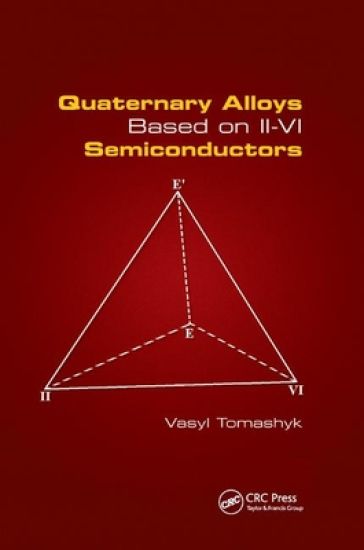
Doped by isovalent or heterovalent foreign impurities, II–VI semiconductor compounds enable control of optical and electronic properties, making them ideal in detectors, solar cells, and other precise device applications. Quaternary alloys allow a simultaneous adjustment of band gap and lattice constant, increasing radiant efficiency at a wide range of wavelengths.Quaternary Alloys Based on II–VI Semiconductors consolidates data pertaining to diagrams of quaternary systems based on these semiconductor compounds. The book illustrates up-to-date experimental and theoretical information about phase relations based on II–VI semiconductor systems with four components. It critically evaluates many industrially significant systems presented in two-dimensional sections for the condensed phases.The author classifies all materials according to the periodic groups of their constituent atoms and additional components in the order of their group number. Each quaternary database description contains brief information on the diagram type, possible phase transformations and physical–chemical interactions of the components, thermodynamic characteristics, and methods for equilibrium investigation and sample preparation. Most of the phase diagrams are in their original form. For those with varying published data, the text includes several versions for comparison.This book provides invaluable data for technologists and researchers involved in developing and manufacturing II–VI semiconductors at industrial and national laboratories. It is also suitable for phase relations researchers, inorganic chemists, and semiconductor physicists as well as graduate students in materials science and engineering.Check out the companion books: Ternary Alloys Based on II–VI Semiconductor Compounds and
III-V semiconductors have attracted considerable attention due to their applications in the fabrication of electronic and optoelectronic devices as light emitting diodes and solar cells. The electrical properties of these semiconductors can also be tuned by adding impurity atoms. Because of their wide application in various devices, the search for new semiconductor materials and the improvement of existing materials is an important field of study. Doping with impurities is a common method of modifying and diversifying the properties of physical and chemical semiconductors. This book covers all known information about phase relations in quaternary systems based on III-V semiconductors, providing he first systematic account of phase equilibria in quaternary systems based on III-V semiconductors and making research originally published in Russian accessible to the wider scientific community.Features:Contains up-to-date experimental and theoretical information Allows readers to synthesize semiconducting materials with predetermined propertiesDelivers a critical evaluation of many industrially important systems presented in the form of two-dimensional sections for the condensed phases
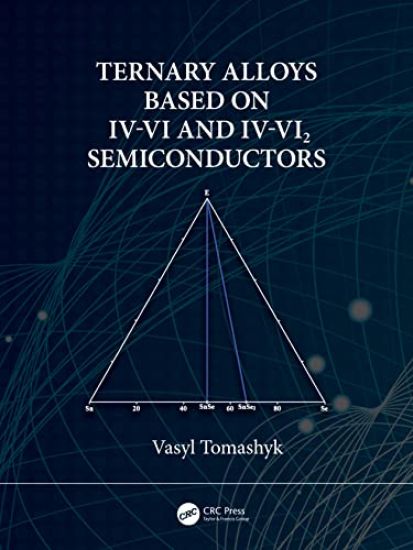
IV-VI and IV-VI2 semiconductors are among the most interesting materials in semiconductor physics. The electrical properties of these semiconductors can also be tuned by adding impurity atoms. These semiconductors either have already found use or are promising materials for infrared sensors and sources, thermoelectric elements, solar cells, memory elements, etc. The basic characteristics of these compounds, namely, narrow bandgap, high permittivity, relatively high radiation resistance, high mobility of charge carriers, and high bond ionicity, are unique among semiconductor substances. Because of their wide application in various devices, the search for new semiconductor materials and the improvement of existing materials is an important field of study. Doping with impurities is a common method of modifying and diversifying the properties of physical and chemical semiconductors. This book covers all known information about phase relations in ternary systems based on IV-VI and IV-VI2 semiconductors, providing the first systematic account of phase equilibria in ternary systems and making research originally published in Russia accessible to the wider scientific community. This book will be of interest to undergraduate and graduate students studying materials science, solid state chemistry, and engineering. It will also be relevant for researchers at industrial and national laboratories, in addition to phase diagram researchers, inorganic chemists, and solid-state physicists.FEATURES Provides up-to-date experimental and theoretical information Allows readers to synthesize semiconducting materials with predetermined properties Delivers a critical evaluation of many industrially important systems presented in the form of two-dimensional sections for the condensed phases
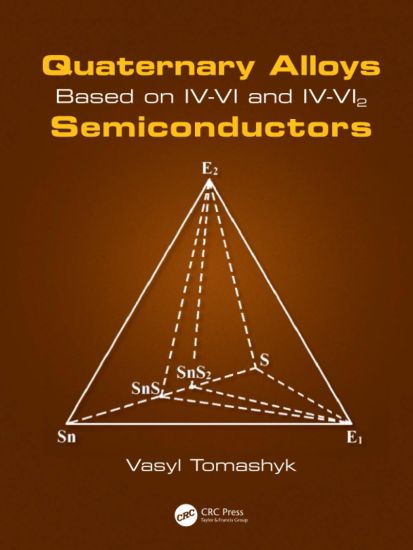
IV–VI and IV–VI2 semiconductors have attracted considerable attention due to their applications in the fabrication of electronic and optoelectronic devices as light-emitting diodes and solar cells. The electrical properties of these semiconductors can also be tuned by adding impurity atoms. Because of their wide application in various devices, the search for new semiconductor materials and the improvement of existing materials is an important field of study. Doping with impurities is a common method of modifying and diversifying the properties of physical and chemical semiconductors. This book covers all known information about phase relations in quaternary systems based on IV–VI and IV–VI2 semiconductors, providing the first systematic account of phase equilibria in quaternary systems based on IV–VI and IV–VI2 semiconductors and making research originally published in Ukrainian and Russian accessible to the wider scientific community. This book will be of interest to undergraduate and graduate students studying materials science, solid-state chemistry, and engineering. It will also be relevant for researchers at industrial and national laboratories, in addition to phase diagram researchers, inorganic chemists, and solid-state physicists.Key Features:Provides up-to-date experimental and theoretical informationA source of information for synthesizing semiconducting materials with predetermined propertiesDelivers a critical evaluation of many industrially important systems presented in the form of two-dimensional sections for the condensed phases
IV-VI and IV-VI2 semiconductors have attracted considerable attention due to their applications in the fabrication of electronic and optoelectronic devices as infrared lasers and detectors. The electrical properties of these semiconductors can also be tuned by adding impurity atoms. Because of their wide application in various devices, the search for new semiconductor materials and the improvement of existing materials is an important field of study. Doping with impurities is a common method of modifying and diversifying the properties of physical and chemical semiconductors. This book covers all known information about the phase relations in multinary systems based on IV-VI and IV-VI2 semiconductors, providing the first systematic account of phase equilibria in multinary systems based on IV-VI and IV-VI2 semiconductors and making research originally published in Ukrainian and Russian accessible to the wider scientific community. This book will be of interest to undergraduate and graduate students studying materials science, solid state chemistry, and engineering. It will also be relevant for researchers at industrial and national laboratories, in addition to researchers of phase equilibria, inorganic chemists, and solid state physicists.Key Features:Provides up-to-date experimental and theoretical informationAllows readers to synthesize semiconducting materials with predetermined propertiesDelivers a critical evaluation of many industrially important systems presented in the form of two-dimensional sections for the condensed phases
IV–VI and IV–VI2 semiconductors have attracted considerable attention due to their applications in the fabrication of electronic and optoelectronic devices as light-emitting diodes and solar cells. The electrical properties of these semiconductors can also be tuned by adding impurity atoms. Because of their wide application in various devices, the search for new semiconductor materials and the improvement of existing materials is an important field of study. Doping with impurities is a common method of modifying and diversifying the properties of physical and chemical semiconductors. This book covers all known information about phase relations in quaternary systems based on IV–VI and IV–VI2 semiconductors, providing the first systematic account of phase equilibria in quaternary systems based on IV–VI and IV–VI2 semiconductors and making research originally published in Ukrainian and Russian accessible to the wider scientific community. This book will be of interest to undergraduate and graduate students studying materials science, solid-state chemistry, and engineering. It will also be relevant for researchers at industrial and national laboratories, in addition to phase diagram researchers, inorganic chemists, and solid-state physicists.Key Features:Provides up-to-date experimental and theoretical informationA source of information for synthesizing semiconducting materials with predetermined propertiesDelivers a critical evaluation of many industrially important systems presented in the form of two-dimensional sections for the condensed phases
IV-VI and IV-VI2 semiconductors are among the most interesting materials in semiconductor physics. The electrical properties of these semiconductors can also be tuned by adding impurity atoms. These semiconductors either have already found use or are promising materials for infrared sensors and sources, thermoelectric elements, solar cells, memory elements, etc. The basic characteristics of these compounds, namely, narrow bandgap, high permittivity, relatively high radiation resistance, high mobility of charge carriers, and high bond ionicity, are unique among semiconductor substances. Because of their wide application in various devices, the search for new semiconductor materials and the improvement of existing materials is an important field of study. Doping with impurities is a common method of modifying and diversifying the properties of physical and chemical semiconductors. This book covers all known information about phase relations in ternary systems based on IV-VI and IV-VI2 semiconductors, providing the first systematic account of phase equilibria in ternary systems and making research originally published in Russia accessible to the wider scientific community. This book will be of interest to undergraduate and graduate students studying materials science, solid state chemistry, and engineering. It will also be relevant for researchers at industrial and national laboratories, in addition to phase diagram researchers, inorganic chemists, and solid-state physicists.FEATURES Provides up-to-date experimental and theoretical information Allows readers to synthesize semiconducting materials with predetermined properties Delivers a critical evaluation of many industrially important systems presented in the form of two-dimensional sections for the condensed phases
III-V semiconductors have attracted considerable attention due to their applications in the fabrication of electronic and optoelectronic devices as light emitting diodes and solar cells. The electrical properties of these semiconductors can also be tuned by adding impurity atoms. Because of their wide application in various devices, the search for new semiconductor materials and the improvement of existing materials is an important field of study. This book covers all known information about phase relations in multinary systems based on III-V semiconductors, providing the first systematic account of phase equilibria in multinary systems based on III-V semiconductors and making research originally published in Russian accessible to the wider scientific community.This book will be of interest to undergraduate and graduate students studying materials science, solid state chemistry, and engineering. It will also be relevant for researchers at industrial and national laboratories, in addition to phase diagram researchers, inorganic chemists, and solid state physicists.Features:Provides up-to-date experimental and theoretical informationAllows readers to synthesize semiconducting materials with predetermined propertiesDelivers a critical evaluation of many industrially important systems presented in the form of two-dimensional sections for the condensed phases
Doped by isovalent or heterovalent foreign impurities (F), II–VI semiconductor compounds enable control of optical and electronic properties, making them ideal in detectors, solar cells, and other precise device applications. For the reproducible manufacturing of the doped materials with predicted and desired properties, manufacturing technologists need knowledge of appropriate ternary system phase diagrams.A guide for technologists and researchers at industrial and national laboratories, Ternary Alloys Based on II-VI Semiconductor Compounds collects all available data on ternary II–VI–F semiconductor materials. It presents ternary phase diagrams for the systems and includes data about phase equilibriums on the cross sections. The book is also suitable for phase diagram researchers, inorganic chemists, and solid state physicists as well as students in materials science, engineering, physical chemistry, and physics. The authors classify all materials according to the periodic groups of their constituent atoms (i.e., possible combinations of Zn, Cd, and Hg with chalcogens S, Se, and Te) and additional components in the order of their group number. Each ternary system database description contains the diagram type, possible phase transformation and physical–chemical interaction of the components, equilibrium investigation methods, thermodynamic characteristics, and the sample preparation method. In some cases, the book illustrates the solid and liquid-phase equilibriums with vapor because of their importance to crystal growth using the vapor–liquid–solid technique. It also presents data on the homogeneity range as well as baric and temperature dependences of solubility impurities in the semiconductor lattice and the liquid phase.
III-V semiconductors have attracted considerable attention due to their applications in the fabrication of electronic and optoelectronic devices as light-emitting diodes and solar cells. Because of their wide applications in a variety of devices, the search for new semiconductor materials and the improvement of existing materials is an important field of study. This new book covers all known information about phase relations in ternary systems based on III-V semiconductors.This book will be of interest to undergraduate and graduate students studying materials science, solid state chemistry, and engineering. It will also be relevant for researchers at industrial and national laboratories, in addition to phase diagram researchers, inorganic chemists, and solid state physicists.
I'll tell you a story ... Philosophy for children is a collection of approximately 800 of Vasyl Sukhomlynsky's ethical tales for children and his reflections on values education, compiled by his daughter, Professor Olha Sukhomlynska. The book has been translated from Ukrainian.The ethical tales in this collection were written to support the values education program at the combined primary and secondary school in the village of Pavlysh, in central Ukraine, where Sukhomlynsky served as the principal from 1948 until his death in 1970. The stories also served as models for the children's own writing. The stories in this book are organised in sections, with each section having a theme and being introduced by reflections on values education relating to that theme.The inculcation of values was at the heart of Sukhomlynsky's holistic approach to education. He considered the development of humane qualities to be even more important than the development of intellectual or vocational skills. In one of the reflections in this book Sukhomlynsky writes: Children meet each other every day at school, in the corridors, in the classrooms. They look each other in the eye, share secrets, argue, enjoy each other's company, get upset, sometimes fight, nursing injuries great and small. Sometimes in our daily work we lose sight of the subtleties of these human relationships. Dear educators, do not forget that understanding these human relationships is your first responsibility. How each of your pupils views other human beings, what they discover in them, what they impart to others, and what remains in their hearts from others-this is a hundred times more important than whether or not they have completed today's homework.Sukhomlynsky believed that whatever vocation his students chose, their happiness would be determined to a large extent by their ability to harness their energies to creative ends and develop positive relationships with others. He also considered the development of strong character to be an area in which anyone could excel, regardless of their physical, intellectual or artistic abilities. In the moral sphere there were limitless opportunities for every individual to shine.The stories in this book cover a broad range of themes and are oriented towards varying ages, from preschoolers to young adults. The stories for very young children often feature animals, while those for senior students and adults may examine parenting issues and the development of positive relationships between teachers and students. The themes covered include: developing an appreciation of beauty, the development of empathy and love for others, respect for elders, developing a sense of duty, the nature of maturity, the role of parents, the development of a conscience, self-discipline and the modification of desires, hard work, generosity, kindness and cruelty, curiosity and the quest for knowledge, the role of teachers, the development of talent, acceptance of diversity, the role of tact and good manners, patriotism and self-sacrifice.As we read Sukhomlynsky's reflections and stories, we are prompted to examine our own values, and we gain fresh insights into the principles that govern our lives. Among the hundreds of little stories, there are many gems that will move us and that we will want to share with the children in our lives.
Vasily Sukhomlinsky's 'My Heart I Give to Children' describes Sukhomlinsky's ground-breaking work with thirty-one students in rural Ukraine, during an experimental preschool year and the subsequent four years of their primary schooling.