Ecopolitics is a study of environmental awareness - or non-awareness - in contemporary French theory. Arguing that it is now impossible not to think in an ecological way, Verena Andermatt Conley traces the roots of today's concern for the environment back to the intellectual climate of the late 50s and 60s.The author considers key texts by influential figures such as Michael Serres, Paul Virilio, Gilles Deleuze and Felix Guattari, Michel de Certeau, Hélène Cixous and Luce Irigaray. Ecopolitics rehabilitates some ecological components of French intellectual thought of the past thirty years, and reassesses French poststructural thinkers who explicitly deal with ecology in their work.
Ecopolitics is a study of environmental awareness - or non-awareness - in contemporary French theory. Arguing that it is now impossible not to think in an ecological way, Verena Andermatt Conley traces the roots of today's concern for the environment back to the intellectual climate of the late 50s and 60s.The author considers key texts by influential figures such as Michael Serres, Paul Virilio, Gilles Deleuze and Felix Guattari, Michel de Certeau, Hélène Cixous and Luce Irigaray. Ecopolitics rehabilitates some ecological components of French intellectual thought of the past thirty years, and reassesses French poststructural thinkers who explicitly deal with ecology in their work.
Born in Algeria in 1937, Hélène Cixous achieved world fame for her short stories, criticism, and fictionalized autobiography (Dedans, 1969). Her work quickly became controversial because it frankly tested a distinction between male and female writing. Her literary experiments and her conclusions make her one of the most stimulating and most elusive feminist theorists of our time. Verena Andermatt Conley, a professor of French and women's studies at Miami University, has written the first full-length study of Cixous in English. Looking at Cixous as writer, teacher, and theoretician, Conley takes up Cixous's ongoing exploration of the "feminine" as related to the "masculine"—words not to be equated with "woman" and "man"—and her search for a terminology less freighted with emotion and prejudgment. Conley has updated this paperback edition with a new preface, bibliography, and interview with Cixous conducted by the editors of Hors Cadre.
A lifelong city dweller, Verena Andermatt Conley had long harbored romantic ideals about the natural world and dreamed of a wilderness retreat for herself and her husband, Tom. When a sizable tract of land along the Vermillion River on the edge of Minnesota's Boundary Waters - complete with two primitive log cabins - became available, they jumped at the chance to own a piece of paradise.The War against the Beavers is a wry and funny account of two people's ten-year apprenticeship in backwoods living, from their arrival as literal babes in the woods to their education in the ways of nature as they face plagues of insects, fungus, storms, and droughts, and embark on a lengthy campaign to eradicate a colony of beavers that threatens the peace and beauty of their forest refuge. It is only the coming of a mechanized and much more menacing threat - bulldozers and other heavy machinery clear-cutting the woods - that restores perspective to the obsessed cabin dwellers.
A lifelong city dweller, Verena Andermatt Conley had long harbored romantic ideals about the natural world and dreamed of a wilderness retreat for herself and her husband, Tom. When a sizable tract of land along the Vermillion River on the edge of Minnesota's Boundary Waters - complete with two primitive log cabins - became available, they jumped at the chance to own a piece of paradise.The War against the Beavers is a wry and funny account of two people's ten-year apprenticeship in backwoods living, from their arrival as literal babes in the woods to their education in the ways of nature as they face plagues of insects, fungus, storms, and droughts, and embark on a lengthy campaign to eradicate a colony of beavers that threatens the peace and beauty of their forest refuge. It is only the coming of a mechanized and much more menacing threat - bulldozers and other heavy machinery clear-cutting the woods - that restores perspective to the obsessed cabin dwellers.
Litterature, politique et communisme: Lire Les Lettres francaises, 1942-1972 suit le rapport entre politique et culture a travers un hebdomadaire communiste de la Resistance a la Liberation, la Guerre froide, la Defense de la paix, la destalinisation, la montee des marxismes textuels dans les annees soixante et jusqu'aux evenements de 1968. Le livre traite des rapports changeants entre politique et arts dans la clandestinite, puis dans l'apres-guerre et la decolonisation. Il retrace les debats intellectuels et les grands proces de l'epqoue - de l'Affaire Henri Martin a celle des Rosenberg. Il fait revivre une histoire litteraire et culturelle passionnante qui est aujourd'hui largement oubliee.
Spatial Ecologies takes a new look at the “spatial turn” in French cultural and critical theory since 1968. Verena Andermatt Conley examines how Henri Lefebvre, Michel de Certeau, Jean Baudrillard, Marc Augé, Paul Virilio, Bruno Latour and Etienne Balibar reconsider the experience of space in the midst of considerable political and economic turmoil. The book considers why French critical theorists turned away from questions of time and looked instead toward questions of space. It asks what writing about space can tell us about life in late capitalism. Conley links this question to the problematic of habitality, taking us back to Heidegger and showing how it informs much of French theory. Building on the author's acclaimed earlier study Ecopolitics, Spatial Ecologies argues, through the voices of the authors taken up the eight chapters, for recognition of the virtue of spatial theory and its pragmatic applications in the global milieu. It will be required reading for scholars of literary and cultural theory, and twentieth- and twenty-first century French culture.
Spatial Ecologies takes a new look at the “spatial turn” in French cultural and critical theory since 1968. Verena Andermatt Conley examines how Henri Lefebvre, Michel de Certeau, Jean Baudrillard, Marc Augé, Paul Virilio, Bruno Latour and Etienne Balibar reconsider the experience of space in the midst of considerable political and economic turmoil. The book considers why French critical theorists turned away from questions of time and looked instead toward questions of space. It asks what writing about space can tell us about life in late capitalism. Conley links this question to the problematic of habitality, taking us back to Heidegger and showing how it informs much of French theory. Building on the author's acclaimed earlier study Ecopolitics, Spatial Ecologies argues, through the voices of the authors taken up the eight chapters, for recognition of the virtue of spatial theory and its pragmatic applications in the global milieu. It will be required reading for scholars of literary and cultural theory, and twentieth- and twenty-first century French culture.
Verena has been convalescing in a convent after a breakdown and is stabilising her mental state by assisting with the care of the elderly and orphaned children. The Mother Superior deems that an unhealthy relationship has developed with Verena's affection for the orphaned baby boy, Joshua. The Mother recommends that Verena leave the sanctuary of the convent and return to her rich stepfather's home. Verena's stepfather is influenced by Nivardia, a Gypsy Jewess who possesses psychic powers and holds the key to Verena's fate. Instead of returning home, Verena absconds from the convent and applies for a position as nanny to care for two young girls. The father of the girls is a young entrepreneur, Christopher Criscillo, who is estranged from his self-centred wife. Christopher has custody of the girls, but is emotionally beset by the desertion of the girls' mother, Melissa, due to his own abandonment by his mother when he was a child. Christopher compensates for a loveless void with sordid casual affairs. Verena's first meeting with Christopher is marred by the exit of a dishevelled casual tryst leaving the house in the early morning, just as Verena arrives for the job interview. Assuming that Verena is a nun, Christopher hires her without hesitation. Verena is na ve in the ways of the world and emotionally stunted. She is overwhelmed by her prospective employer's virility and outgoing charm, and in trepidation decides not to accept the position, but a chance phone call from Christopher's eldest daughter, who has been with her mother for the school holidays changes Verena's mind. The transition of Verena's naivety to sensual awareness is tempered by Christopher's determination to keep Verena's live-in position at an arms-length employer-employee relationship, as the welfare of his daughters is paramount. Kate, the eldest of Christopher's children is a bolshy teenager conflicted by her mother's maternal disinterest and the mistaken, but apparent romantic interest that Verena has for her beloved father. Kate is suspicious of Verena's loving attentions, but Christopher is in awe of Verena's mothering and house-keeping skills and is astounded by her gift to alleviate physical pain. Verena's misconceptions of sexual advances and childish comfort manoeuvres and Christopher's inept, but determined stand to keep their relationship as platonic as possible, is a bumbling mixture of comedic episodes intermixed with raw emotive catastrophes. Then an unexpected incident disrupts the blissfulness of the household. Christopher is disturbed when Verena re-lives a nightmare from her past life and the traumatic episode frightens his daughters. He threatens to dismiss her, as he fears for the girls' safety. Fearing banishment from the family she loves, Verena tearfully reveals her nefarious past and only then does Christopher understand and realize his true feelings for her. Distraught by her disconsolate detachment, he clumsily begs forgiveness. His reprieve ignites their romance. Troubled by Verena's unbelievable story, Christopher is determined to discover the truth and takes Verena against her will, to the convent where he confronts the Mother Superior. The diabolical event, which led to Verena's incarceration is revealed. The enigma of Nivardia's dark art collaboration with Verena's stepfather and Joshua's true identity is explained by the deathbed confession of the mysterious Dr Dastari. But unexpected events beyond Christopher's control threaten his business and Verena's past returns to haunt her. The crisis may well jeopardise the happy liaison that is developing between herself and Christopher. Only when those that she loves are in danger, does the numinous power of her gift reveal itself. Jousting with her satanic nemesis, Verena heroically saves Christopher's life, but she cannot use the gift to save herself. There is a happy ending.
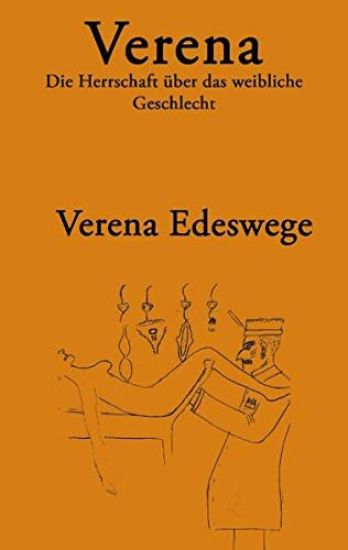
Diese Schrift behandelt die Situation des weiblichen Menschen in der vom Männlichen geprägten Gesellschaft, wie die Frau glaubt durch Vermännlichung ihr Frausein verwirklichen zu können. Dabei entledigt sie sich geistig ihrer weiblichen Geschlechtsorgane, und überlässt diese der vollkommenen Kontrolle durch die Herrengyn. So geschlechtlich entbunden, glaubt sie in der Männergesellschaft ihren Mann stellen zu müssen. Die Frau sieht nicht, dass sie sich entzweit, einerseits als Arbeitswesen zur Entlastung der Männer und andererseits als Sexualobjekt für die Männerwelt.
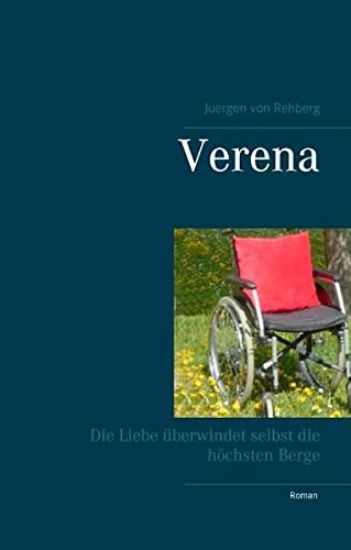
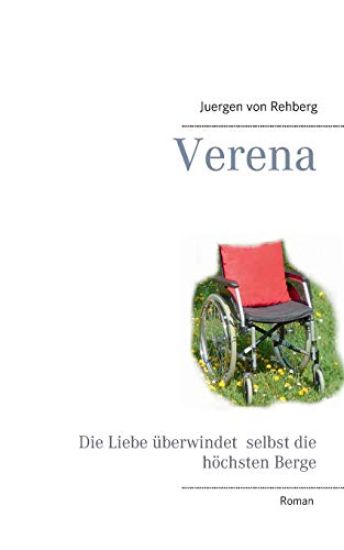
Eine junge Frau sitzt im Rollstuhl und lebt mit ihrer dementen Mutter zusammen. Sie findet die Liebe ihres Lebens in einem lteren Mann, den sie von fr her her kennt, und den sie nach 25 Jahren wieder trifft. Der Mann tut sich anf nglich schwer mit der Situation, aber die junge Frau hilft ihm dabei durch ihre unkomplizierte Art, wie sie mit ihrer Behinderung umgeht. Liebe und Humor sind dabei zwei wertvolle Helfer, damit die beiden Liebenden alle Hindernisse berwinden k nnen.
Dear Mr. Haven, -I am sorry to have rather bad news for you. My neighbour, Miss Raby, has had the misfortune to fall and hurt her spine, and Mr. Ferguson, our doctor, is afraid that she may have to lie up for some long time. She is not in much pain, but must be very quiet. She was anxious that you should be told. It was fortunate that I was at home when the accident happened, as her maids are not good in emergencies. Mr. Ferguson, who is exceptionally capable for a country place, will call in a specialist, but I fear there is no doubt about the seriousness of the injury and that her recovery will be a long business. Miss Raby is very brave and even smiling over it, but for anyone so active and so much interested in the life around her it will be a trial. She is hoping for one of her nieces, Mrs. Rossiter, to come directly.-I am, yours sincerely
Dear Mr. Haven, -I am sorry to have rather bad news for you. My neighbour, Miss Raby, has had the misfortune to fall and hurt her spine, and Mr. Ferguson, our doctor, is afraid that she may have to lie up for some long time. She is not in much pain, but must be very quiet. She was anxious that you should be told. It was fortunate that I was at home when the accident happened, as her maids are not good in emergencies. Mr. Ferguson, who is exceptionally capable for a country place, will call in a specialist, but I fear there is no doubt about the seriousness of the injury and that her recovery will be a long business. Miss Raby is very brave and even smiling over it, but for anyone so active and so much interested in the life around her it will be a trial. She is hoping for one of her nieces, Mrs. Rossiter, to come directly.-I am, yours sincerely