

Kirjahaku
Etsi kirjoja tekijän nimen, kirjan nimen tai ISBN:n perusteella.
1000 tulosta hakusanalla Vernon Curry


These 2012 articles from the Highland Drive Church of Christ Sunday Bulletin are uplighting, encouraging, and comforting. Vernon has based each article on Bible Scripture mixed with his experience as a minister, and it is his hope that the reader will be encouraged to search the truths of God's Word and better understand God's will for their life. I invite you to use these articles to help yourself and other to grow spiritually.

The Curry School of Education at the University of Virginia, 1905-2005
Eleanor Vernon Wilson
University of Virginia Press
2006
sidottu
In 1905, as the University of Virginia inaugurated him as its first president, the revered southern educator Edwin Anderson Alderman proposed an education school, despite the thriving existence of normal teachers' colleges, primarily female, throughout the state. John D. Rockefeller Sr. donated $100,000 in support, and the Curry Memorial School of Education was born. In the century since, the Curry School of Education has grown and solidified, struggled and diversified, and raised its expectations and its visibility. It has steered a dedicated course through the challenges of depression, war, student disaffection, and faculty debate by holding true to the visions of Jefferson and Alderman. Always attuned to and often leading the discussion about current educational theories, Curry School faculty, students, and graduates represent the evolution of American education during the twentieth century and into the twenty-first. From its original founding in 1905 to the visions it is now creating for the teachers and children of tomorrow, the Curry School of Education has a distinguished and significant history. In this centennial volume, Eleanor Vernon Wilson chronicles the decisions, responses, programs, initiatives, and accomplishments that together form the panoramic history of the Curry School of Education at the University of Virginia.

Main Currents in American Thought
Vernon Louis Parrington; David W. Levy
University of Oklahoma Press
1987
nidottu
When Parrington's Pulitzer Prize-winning history of American ideas was first published, Henry Seidel Canby wrote, This is a work of the first importance, lucid, comprehensive, accurate as sound scholarship should be, and also challenging, original in its thinking, shrewd, and sometimes brilliant. Alfred Kazin has called Main Currents in American Thought the most ambitious single effort of the Progressive mind to understand itself.In the Foreword to this new edition, David W. Levy argues that Parrington's intellectual survey will stand as a model for venturesome scholars for years to come. Readers and scholars of the rising generation may not follow Parrington's particular judgments or point of view, but it is hard to believe that they will not still be captivated and inspired by his sparkle, his breadth, his daring, and the ardor of his political commitment.Volume I, The Colonial Mind, 1620-1800, treats such influential figures as John Winthrop, Roger Williams, Samuel Sewall, Increase and Cotton Mather, Jonathan Edwards, Benjamin Franklin, Alexander Hamilton, John Adams, Tom Paine, and Thomas Jefferson.
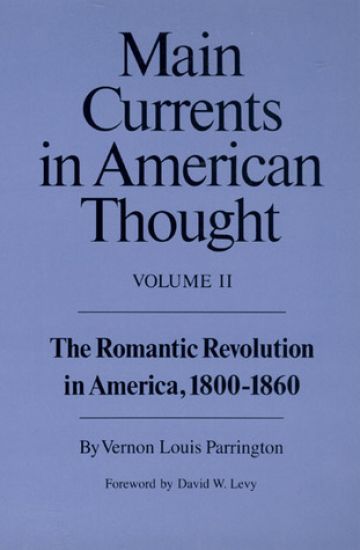
Main Currents in American Thought will stand as a model for venturesome scholars for years to come. Readers and scholars of the rising generation may not follow Parrington's particular judgments or point of view, but it is hard to believe that they will not still be captivated and inspired by his sparkle, his daring, and the ardor of his political commitment.In Volume II, The Romantic Revolution in America, 1800 - 1860, Parrington treats such influential figures as John Marshall, John C. Calhoun, Andrew Jackson, Abraham Lincoln, Washington Irving, James Fenimore Cooper, Herman Melville, Daniel Webster, Ralph Waldo Emerson, Henry David Thoreau, and Nathaniel Hawthorne

This work has been selected by scholars as being culturally important and is part of the knowledge base of civilization as we know it.This work is in the public domain in the United States of America, and possibly other nations. Within the United States, you may freely copy and distribute this work, as no entity (individual or corporate) has a copyright on the body of the work.Scholars believe, and we concur, that this work is important enough to be preserved, reproduced, and made generally available to the public. To ensure a quality reading experience, this work has been proofread and republished using a format that seamlessly blends the original graphical elements with text in an easy-to-read typeface.We appreciate your support of the preservation process, and thank you for being an important part of keeping this knowledge alive and relevant.

Vernon Pace was born into what was called "the scrabble-ass poor." "Vernon" is the true story of an Arizona family gradually dragging itself out of destitution during the later phases of the Great Depression. More specifically, it is a chronicle of a young boy's sometimes hilarious, sometimes sad, but always entertaining odyssey through the first ten years of his life. It's hard to imagine all that happened as Vernon and his family migrated back and forth between mining camps, towns, cities, and, of course, the Pace Ranch in Clay Springs. This entire story is told through the eyes of the seventy-two-year old grownup Vernon."Vernon" will appeal to both young and old. Youngsters will identify with, and be amused by, the timeless antics of an imaginative boy. The older generation will enjoy a trip down memory lane to days that have long since passed. Everyone will be captivated by this short but remarkable journey.


Vernon Fisher's bold and innovative multimedia work displays the openness, multiplicity, and decentralization that distinguishes postmodernism. Incorporating photography, painting, sculptural elements, found objects, and written language, Fisher's art contributed to the overthrow of monolithic modernism in the late 1970s and early 1980s and won him enduring acclaim nationally and internationally. Swept into the spotlight before he was forty, Fisher has since had over eighty one-person exhibitions, including installations at the Museum of Modern Art in New York City, the Hirshhorn Museum in Washington, D.C., and the Museum of Contemporary Art in Chicago. His work is now in the permanent collection of more than forty art museums.This volume is the first monograph on Vernon Fisher's work since 1989, and it presents the most comprehensive survey of his art from the early 1970s until 2009, with an emphasis on his mature work. It reproduces twenty suites of Fisher's work, including Hills Like White Elephants, Parallel Lines, Lost for Words, Brainiac, Movements Among the Dead, and Swimming Lesions. In her introduction, Frances Colpitt deftly situates Fisher's work in the context of postmodernism's radical transformation of art, tracing his affinities with artists such as Cy Twombly and Robert Rauschenberg. She also decodes recurring symbols and literary references in Fisher's art, showing how this "writerly" artist constructs narratives with multiple meanings and cultural allusions that defy reduction to a single storyline or definite ending. In an interview with Michael Auping, Fisher describes his creative process, especially how he uses "apparently random and disordered notations" to suggest the "tentative and fluid quality of the mind at work." Acknowledging that his art never reaches a conclusion, Fisher says, "I love the loopy and disconnected . . . for me, the disjunctive and inconclusive is what feels honest and real."

From the provocative writer and filmmaker Virginie Despentes comes volume one of her acclaimed trilogy of novels, Vernon Subutex--short-listed for the Man Booker International Prize and the basis for the TV series of the same name. But who is Vernon Subutex? Vernon Subutex was once the proprietor of Revolver, an infamous music shop in Paris, where his name was legend throughout Paris. By the 2000s, however, with the arrival of the internet and the decline in CD and vinyl sales, his shop is struggling, like so many others. When it closes, Subutex finds himself with nowhere to go and nothing to do. Before long, his savings are gone, and when the mysterious rock star who had been covering his rent suddenly drops dead of a drug overdose, Subutex finds himself launched on an epic saga of couch-surfing, boozing, and coke-snorting before finally winding up homeless. Just as he resigns himself to life as a panhandler, a throwaway comment he once made on Facebook takes the internet by storm. The word is out: Subutex is lugging around a bunch of VHS tapes shot by that same dead rock musician--his last recordings on this earth. Soon a crowd of wild characters, from screen writers to social media groupies, from porn stars to failed musicians to random misfits, are hot on Vernon's trail . . . but Vernon is none the wiser. "Virginie Despentes's Vernon Subutex trilogy is the zeitgeistiest thing I ever read. Everything about it is contemporary, right down to the fearless woman author who doesn't think of herself as a feminist and gives an impression at least in interviews of habitually killing rapists." --Nell Zink, Bustle, "The Best Books Of The 2010s"

Part social epic, part punk-rock thriller, writer/filmmaker Virginie Despentes's Vernon Subutex trilogy continues the Man Booker International Prize shortlisted sprawling tale of an ex-record shop clerk's celebrity fortunes and misfortunes. The basis for the TV show of the same name available on streaming. Rock star Alex Bleach might be dead, but he has a secret. It's a secret that concerns several people, but the only person who can unlock it is Vernon Subutex, former record shop proprietor turned homeless messiah and guru, last seen hallucinating and feverish on a bench. He has tapes of Alex that will shake the world. The hunt is on, and the wolves are closing in. Meanwhile, the cast of lovers and killers in Vernon's orbit is in violent disarray. A cha wants to know the truth behind the death of her mother, the porn star Vodka Satana. And if she finds the bastards responsible, she wants to make them pay, whatever C leste thinks of her plan. C leste wants A cha to get a grip and stop hanging around with Subutex's gang of disciples. The Hyena wants to find the Bleach tapes. She wants to untangle her complicated feelings about Ana s, her boss's assistant. And speaking of her boss, she does not want Laurent Dopalet to discover how badly she has double-crossed him. Big-shot producer Laurent Dopalet wants the Hyena to find and destroy the Bleach tapes. He wants to forget he ever knew Vodka Satana. He wants people to stop graffitiing his apartment with ludicrous allegations. Above all, he wants people to understand: NONE OF THIS IS HIS FAULT. "Virginie Despentes's Vernon Subutex trilogy is the zeitgeistiest thing I ever read." --Nell Zink, Bustle, "The Best Books of the 2010s"

Paris may burn, the world may crumble, but Vernon Subutex shall reign supreme --The final installment of writer/filmmaker Virginie Despentes's Man Booker International Prize shortlisted punk-rock trilogy. The basis for the TV series of the same name available on streaming. As storm clouds gather, portending a final reckoning, ersatz rave-cult leader Vernon Subutex decides to return to Paris. Even if it means leaving behind his disciples. He has to. He's got a dentist's appointment. Back in the city, he learns that an old friend from his days homeless on the Paris streets has died and left him half of a lottery win. But when Vernon returns to his commune with news of this windfall, it's not long before his disciples turn on each other. Such good fortune does not accord with the principles Vernon has handed down. Meanwhile, the monstrous film producer Laurent Dopalet is determined to make A cha and C leste pay for their attack on him, whatever it takes and whoever gets hurt. And, before long, the whole of Paris will be reeling in the wake of the terrorist atrocities of 2015 and 2016, and all the characters in this kaleidoscopic portrait of a city and era will be forced to confront one another one last time. In the wake of all this chaos and hate, the question will rise again: After all he's been through, who is Vernon Subutex? And the answer: He is the future. Virginie Despentes's epochal trilogy ends with Vernon Subutex 3--in fire, blood, and even forgiveness. But not everyone will survive to see the dawning of the golden age of Subutex.
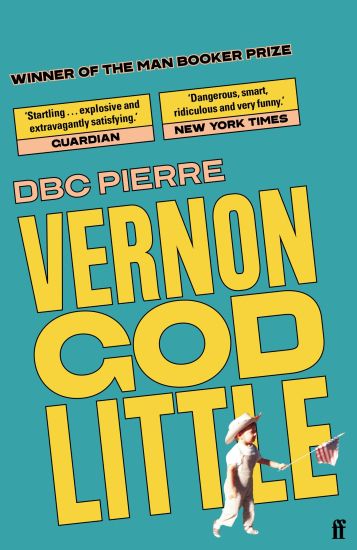
Winner of the 2003 Man Booker Prize. In the town jail of Martirio, Texas — under the terrifying care of the dynastic Gurie family, and wearing only his New Jack trainers and underpants — fifteen-year-old Vernon Little is in trouble. His friend has just blown away sixteen of his classmates before turning the gun on himself. And Vernon has become the focus of the whole town's need for vengeance, and the media's appetite for sensational content — true or not. When the tricky Mr. Lesdema arrives in town — with a covert mission to promote himself from TV repairman to crack CNN reporter — Vernon thinks he has an ally. In fact, Lesdema is a villain of Machiavellian proportions. Vernon soon realizes that in this modern world innocence is definitely no defense. One distasteful arrangement with old Mr. Deutschman and $300 later, Vernon is headed for the border, for freedom and Mexico, and a much-anticipated date with the nigh-mythical Taylor Figueroa. But Texas isn't finished with Vernon yet. Vital, riotously funny, and energetic, Vernon God Little puts lust for vengeance, materialism, and trial by media squarely in the dock. Vernon himself emerges as the lovable upholder of love, truth, and homespun wisdom in a world gone mad.

A Miraculous Journey: The Life of Vernon L. Bowlby
Vernon L. Bowlby
Mount Hood Publishing
2014
nidottu
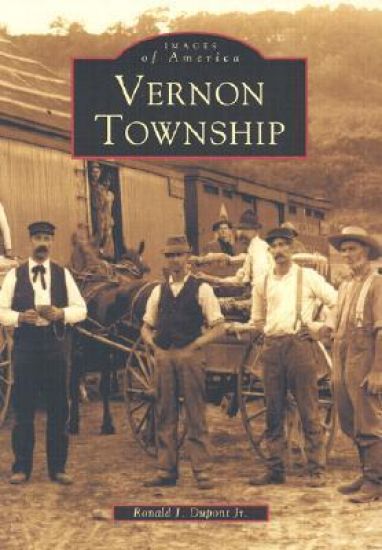
Vernon Township, located in the mountains of Sussex County, has grown from a town of farmsteads, mills, railroads, and schoolhouses to one of busy highways, lake communities, mountain resorts, and housing developments. Vernon's evolution from agriculture and industry to subdivisions and recreation, presented here in vivid historical photographs, will fascinate longtime residents, newcomers, and visitors alike. Vernon Township reveals a rare glimpse of the community in its early days.From Ice Age mastodons to Colonial taverns to the Playboy Club Hotel, Vernon Township covers the vast sweep of the community's rich and diverse heritage. This tour of Vernon's past includes antique images of homes, farms, stores, taverns, businesses, schools, churches, and industries. Also depicted are the evolution of local transportation from horse to train to automobile, notable past residents, and the growth of recreation from summer camps to fine hotels. Many of the unique historical views, some of which were reproduced from the original glass-plate negatives, have never before been published.

This book is the first full-scale exploration of the fiction of one of the most influential women writing in English in the late nineteenth and early twentieth centuries. While Lee’s work was well-admired in her own day, her fiction and her writings on aesthetics, ‘The Woman in Question’ and psychology appeared anachronistic to later twentieth-century audiences. The recent upsurge of interest in the culture of the fin de siècle and lesbian Modernist writing has assured Lee a well-deserved critical resurrection and this book explores her ground-breaking literary work in light of the turbulent friendships that she had with figures such as Oscar Wilde, H.G. Wells and Virginia Woolf. A belle-lettriste, a self-consciously Continental intellectual and a pacifist, Lee’s changing authorial masks doubly participate and anticipate the wider shift from Victorian earnestness to Modernist play marking British letters over the course of fifty years. Ultimately, however, Lee emerges as an increasingly isolated figure harried both by her attraction to other women and the incipient destruction of her beloved Europe in the ‘Great Game’ of Empire.

Genealogical Events from Newspapers for Crawford, Vernon and Grant Counties, Wisconsin, 1870-1901
Vernon D Erickson
Heritage Books
2013
pokkari
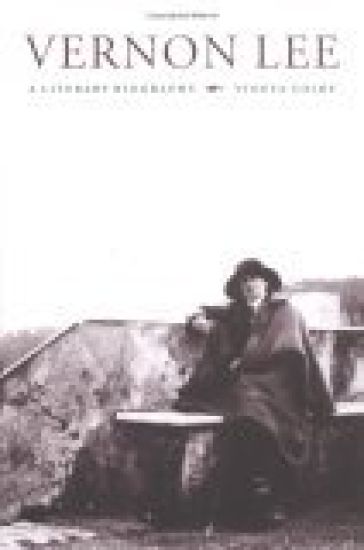
Vernon Lee, born Violet Paget in 1856 to English parents who lived on the continent, bridged two worlds and many cultures. She was a Victorian by birth but lived into the second quarter of the 20th century. Her chosen home was Itay, but she spent most part of every year in England where she published over the years an impressive number of books: novels, short stories, travel essays, studies of Italian art and music, psychological aesthetics and polemics. She was widely recognized as a woman of letters and moved freely in major literary and social circles, meeting and at time having close friendships with a huge number of the major writers and intellectuals of her time. Although she never committed herself to one programme of political activism, she was an advocate for feminism and social reform and during World War I was an ardent pacifist. In her last years she watched with dismay the emergence of fascism. This text recovers the crowded and intellectually eventful life from Vernon Lee's previously unpublished letters and journals, as well as from her books themselves. Vineta Colby also explores Lee's troubled personal life, from her childhood in an eccentric expatriate family to her several unhappy love affairs with women to her frank recognition that her work, brilliant as some of it was, remained unappreciated. Through it all, Vernon Lee clung to her faith in the life of the mind, and through Colby's engaging biographical narrative, she emerges today as a writer worthy of renewed attention and admiration.