Kirjahaku
Etsi kirjoja tekijän nimen, kirjan nimen tai ISBN:n perusteella.
1000 tulosta hakusanalla Veronica N. Nondabula



While giving a speech at her high school graduation, Faith, the class valedictorian, shares her childhood dreams, and the lessons that served as the foundation for her courage. Description In Spanish: Mientras daba el discurso en su graduaci n de secundaria, Faith, la alumna m s sobresaliente de su clase, comparte los sue os de su infancia y las lecciones que le sirvieron como base para su valent a.

While giving a speech at her high school graduation, Faith, the class valedictorian, shares her childhood dreams, and the lessons that served as the foundation for her courage.Description In Portuguese: Ao proferir o discurso na sua formatura do ensino m dio, Faith, a oradora da turma, fala sobre seus sonhos de inf ncia e as li es que serviram de base para sua coragem.


Educação ambiental para uma sociedade sustentável
Verônica N. C. Fonseca
Novas Edições Acadêmicas
2022
nidottu
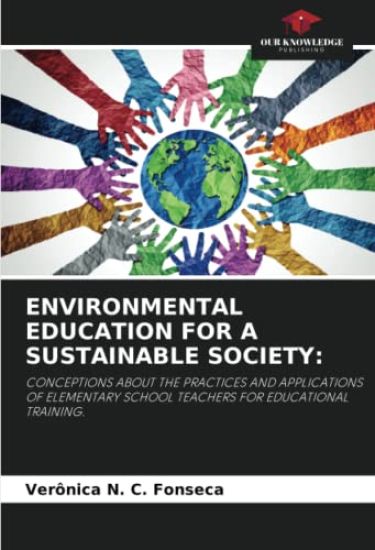
ENVIRONMENTAL EDUCATION FOR A SUSTAINABLE SOCIETY:
Verônica N. C. Fonseca
Our Knowledge Publishing
2022
nidottu

L'ÉDUCATION À L'ENVIRONNEMENT POUR UNE SOCIÉTÉ DURABLE :
Verônica N. C. Fonseca
Editions Notre Savoir
2022
nidottu
EDUCACIÓN AMBIENTAL PARA UNA SOCIEDAD SOSTENIBLE:
Verônica N. C. Fonseca
Ediciones Nuestro Conocimiento
2022
nidottu
EDUCAZIONE AMBIENTALE PER UNA SOCIETÀ SOSTENIBILE:
Verônica N. C. Fonseca
Edizioni Sapienza
2022
nidottu

Story(ing) Statistical Strategies using a Critical Race Feminista Quantitative Praxis
Nichole Margarita García; Verónica N. Vélez; Lindsay Pérez Huber
TAYLOR FRANCIS LTD
2026
nidottu
Story(ing) Statistical Strategies using a Critical Race Feminista Quantitative Praxis is a groundbreaking book that reimagines the relationship between storytelling, mathematics, and statistics. Grounded in Critical Race Theory and Chicana Feminist traditions, the text demonstrates how stories can animate numbers, challenging deficit narratives and reclaiming the mathematical wisdom and genius of Communities of Color. Through personal narratives, theoretical insights, and methodological innovations, the authors chart a pathway for transforming statistical practices into acts of resistance, remembrance, and care. Each chapter interweaves lived experiences of exclusion and resilience with critical frameworks such as racial realism, intersectionality, and cultural intuition. The book foregrounds how story(ing) numbers — treating data as narrative and action — opens possibilities for reclaiming mathematics as a communal, embodied, and justice-oriented practice. Case studies on educational pipelines, GIS mapping, and epistemic network analysis illustrate how computational tools can be repurposed to visualize inequities while honoring the dignity of marginalized communities. Ultimately, this work offers a praxis for engaging data in ways that resist invisibility, expose structural inequities, and advance equity, healing, and liberation. This book is written for scholars, graduate students, educators, and practitioners across education, sociology, ethnic studies, and data sciences. It will especially benefit those interested in critical methodologies, QuantCrit, Women of Color feminist theory, Chicana Feminist and approaches to research—providing tools to rethink how numbers and stories together can advance justice in education and beyond
Story(ing) Statistical Strategies using a Critical Race Feminista Quantitative Praxis
Nichole Margarita García; Verónica N. Vélez; Lindsay Pérez Huber
TAYLOR FRANCIS LTD
2026
sidottu
Story(ing) Statistical Strategies using a Critical Race Feminista Quantitative Praxis is a groundbreaking book that reimagines the relationship between storytelling, mathematics, and statistics. Grounded in Critical Race Theory and Chicana Feminist traditions, the text demonstrates how stories can animate numbers, challenging deficit narratives and reclaiming the mathematical wisdom and genius of Communities of Color. Through personal narratives, theoretical insights, and methodological innovations, the authors chart a pathway for transforming statistical practices into acts of resistance, remembrance, and care. Each chapter interweaves lived experiences of exclusion and resilience with critical frameworks such as racial realism, intersectionality, and cultural intuition. The book foregrounds how story(ing) numbers — treating data as narrative and action — opens possibilities for reclaiming mathematics as a communal, embodied, and justice-oriented practice. Case studies on educational pipelines, GIS mapping, and epistemic network analysis illustrate how computational tools can be repurposed to visualize inequities while honoring the dignity of marginalized communities. Ultimately, this work offers a praxis for engaging data in ways that resist invisibility, expose structural inequities, and advance equity, healing, and liberation. This book is written for scholars, graduate students, educators, and practitioners across education, sociology, ethnic studies, and data sciences. It will especially benefit those interested in critical methodologies, QuantCrit, Women of Color feminist theory, Chicana Feminist and approaches to research—providing tools to rethink how numbers and stories together can advance justice in education and beyond
Low Carb High Fat No Hunger Diet: Transformation Edition
Veronica Childs N. T.; Laura Childs
Createspace Independent Publishing Platform
2016
nidottu