

Kirjahaku
Etsi kirjoja tekijän nimen, kirjan nimen tai ISBN:n perusteella.
1000 tulosta hakusanalla Victor Perez Petit

Victor Falu Nelson, Petitioner, V. Pentecostal Church of God, Inc., M. I., Et Al. U.S. Supreme Court Transcript of Record with Supporting Pleadings
Rafael V Perez Marchand; Felix A Ramos-Caban
Gale, U.S. Supreme Court Records
2011
pokkari
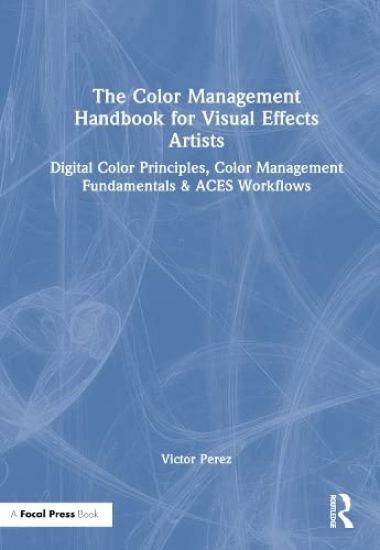
The Color Management Handbook for Visual Effects Artists
Victor Perez
TAYLOR FRANCIS LTD
2023
sidottu
Victor Perez brings together the research and expertise of world-leading color scientists to create a comprehensive guide for visual effects (VFX) artists in color management. This book explores the latest standards of high dynamic range (HDR) and Academy Color Encoding System (ACES) workflows, in an easily digestible and widely applicable resource. Its purpose is to make artists confident and familiar with Color Management and its science, to improve the quality of visual effects worldwide.Without assuming any previous knowledge, this self-contained book builds the reader’s understanding from the ground up, exploring all the elements of the color workflow at a scientific level. It covers how to set up a consistent pipeline in relation to other departments, inside and outside visual effects, from camera to screen, so everybody is aligned to the same standards, preserving color qualities and consistency while maintaining the artistic intent end to end. It also delves into all the integral concepts for color management, ranging from color theory to digital image fundamentals, and much more.This book is an invaluable resource for VFX students and professionals who want to be well informed about the latest HDR and ACES pipelines, as well as those at every level of production wishing to gain a deeper understanding of managing color in visual effects projects.

The Color Management Handbook for Visual Effects Artists
Victor Perez
TAYLOR FRANCIS LTD
2023
nidottu
Victor Perez brings together the research and expertise of world-leading color scientists to create a comprehensive guide for visual effects (VFX) artists in color management. This book explores the latest standards of high dynamic range (HDR) and Academy Color Encoding System (ACES) workflows, in an easily digestible and widely applicable resource. Its purpose is to make artists confident and familiar with Color Management and its science, to improve the quality of visual effects worldwide.Without assuming any previous knowledge, this self-contained book builds the reader’s understanding from the ground up, exploring all the elements of the color workflow at a scientific level. It covers how to set up a consistent pipeline in relation to other departments, inside and outside visual effects, from camera to screen, so everybody is aligned to the same standards, preserving color qualities and consistency while maintaining the artistic intent end to end. It also delves into all the integral concepts for color management, ranging from color theory to digital image fundamentals, and much more.This book is an invaluable resource for VFX students and professionals who want to be well informed about the latest HDR and ACES pipelines, as well as those at every level of production wishing to gain a deeper understanding of managing color in visual effects projects.





This book provides a rigorous, practice-led introduction to generative AI for screen-based media, combining foundational theory with applied workflows grounded in professional production environments. Written by an experienced visual effects supervisor and educator, the book offers an authoritative framework for understanding and responsibly adopting AI technologies within contemporary visual effects pipelines. It is structured around six core domains: computer-science fundamentals of artificial intelligence and machine learning, hardware and performance considerations, ethics and legal responsibilities, practical use of the open-source ComfyUI framework, professional integration with NUKE, and the broader ecosystem of community-driven tools and resources. Key concepts, including neural networks, diffusion models, latent space, ControlNets, and LoRAs, are explained from first principles and contextualised for creative practice. Particular attention is given to authorship, copyright, data provenance, and ethical use, ensuring readers can critically assess both the capabilities and limitations of generative systems. Intended for academic libraries, educators, researchers, and industry professionals, this book functions as both a teaching resource and a long-term reference. It supports curricula in visual effects, film production, digital media, and creative technologies, while also serving practitioners seeking a structured, open-source-oriented approach to integrating generative AI into professional workflows with technical clarity and ethical awareness.

This book provides a rigorous, practice-led introduction to generative AI for screen-based media, combining foundational theory with applied workflows grounded in professional production environments. Written by an experienced visual effects supervisor and educator, the book offers an authoritative framework for understanding and responsibly adopting AI technologies within contemporary visual effects pipelines. It is structured around six core domains: computer-science fundamentals of artificial intelligence and machine learning, hardware and performance considerations, ethics and legal responsibilities, practical use of the open-source ComfyUI framework, professional integration with NUKE, and the broader ecosystem of community-driven tools and resources. Key concepts, including neural networks, diffusion models, latent space, ControlNets, and LoRAs, are explained from first principles and contextualised for creative practice. Particular attention is given to authorship, copyright, data provenance, and ethical use, ensuring readers can critically assess both the capabilities and limitations of generative systems. Intended for academic libraries, educators, researchers, and industry professionals, this book functions as both a teaching resource and a long-term reference. It supports curricula in visual effects, film production, digital media, and creative technologies, while also serving practitioners seeking a structured, open-source-oriented approach to integrating generative AI into professional workflows with technical clarity and ethical awareness.

This book asserts the emergence of the fourth era of entrepreneurship, based on a brain-driven approach to the study, instruction, and practice of entrepreneurship. This paradigm shift stems from the need to incorporate appropriate neurotechnologies into the exploration and enhancement of entrepreneurial phenomena in order to best address the field's methodological challenges. The author explains why a paradigm shift is necessary in the field of entrepreneurship and provides the foundational guidelines for those interested in implementing it. Furthermore, a model of entrepreneurial enhancement is conceptualized and signalled as the ultimate goal of this new era. Scholars, practitioners, policymakers, and students interested in advancing entrepreneurship's contribution to academia, business, and society at large will benefit from this new era's multidisciplinary perspective and unique strengths.

This book asserts the emergence of the fourth era of entrepreneurship, based on a brain-driven approach to the study, instruction, and practice of entrepreneurship. This paradigm shift stems from the need to incorporate appropriate neurotechnologies into the exploration and enhancement of entrepreneurial phenomena in order to best address the field's methodological challenges. The author explains why a paradigm shift is necessary in the field of entrepreneurship and provides the foundational guidelines for those interested in implementing it. Furthermore, a model of entrepreneurial enhancement is conceptualized and signalled as the ultimate goal of this new era. Scholars, practitioners, policymakers, and students interested in advancing entrepreneurship's contribution to academia, business, and society at large will benefit from this new era's multidisciplinary perspective and unique strengths.

Las Construcciones Suspendidas En Español
Víctor Pérez Béjar
Peter Lang AG, Internationaler Verlag der Wissenschaften
2024
sidottu
Las construcciones suspendidas en espa ol son un grupo de patrones sint cticos provenientes de los per odos causales, condicionales, consecutivos y comparativos en los que la ap dosis o cl usula principal queda sustituida por un tonema final en anticadencia: como no me dijiste nada..., si te apetece un helado..., es un libro tan bueno... Suele haber consenso en que son construcciones completas, a pesar de su cierre en suspensi n, y con efectos de sentido diferenciados de sus correlatos bimembres. Sin embargo, las gram ticas basadas en la oraci n carecen de las herramientas de an lisis para describirlas completamente. Este estudio persigue lograr una descripci n exhaustiva del paradigma de construcciones suspendidas en espa ol y determinar de forma precisa sus constituyentes formales (tanto morfosint cticos como fon ticos) y sus valores discursivos que permiten integrarlas en una misma categor a y diferenciarlas de otras construcciones dentro de una sintaxis del discurso.

Conocer el tiempo es esencial para la coordinación de los diferentes actores de la sociedad del siglo XXI. Cada uno de nosotros va literalmente atado a un reloj por la muñeca y mirar la hora es un gesto interiorizado e inconsciente. El origen de esta necesidad se remonta a la aparición de los primeros relojes públicos en el siglo XIV, que eran objetos de prestigio y las ciudades competían entre sí por tener el más grande y vistoso. Como accesorio urbano, quedó ligado a la imagen de ciudad y del buen gobierno. Cargado de un complejo valor simbólico, el reloj se utilizo en metáforas de conceptos tan dispares como la 'vanitas', la mecánica del universo o la creación divina. En esta obra se desgrana la historia de los relojes castellanos más destacados desde la segunda mitad del siglo XIV en adelante, estudiando su construcción y los retos técnicos a los que se enfrentaban los relojeros. También se explica cómo cambió la forma de medir el tiempo a raíz de su la introducción así como su impacto cultural en la sociedad castellana.

Classification of Lipschitz Mappings
Torrey M. Gallagher; Víctor Pérez-García; Lukasz Piasecki
TAYLOR FRANCIS LTD
2025
sidottu
Classification of Lipschitz Mappings, Second Edition presents a systematic, self-contained treatment of a new classification of Lipschitz mappings and its applications, particularly to metric fixed point theory. Suitable for readers interested in nonlinear analysis, metric fixed point theory, differential equations, ergodic theory, and dynamical systems, the book requires only a basic background in functional analysis and topology, and should therefore be accessible to graduate students or advanced undergraduates, as well as to professionals looking for new topics in metric fixed point theory.In particular, the second edition contains results related to:Regulating the growth of the sequence of Lipschitz constants k(Tn)Ensuring good estimates for k0(T) and k8(T) Studying moving harmonic and geometric averages as well as generalized Fibonacci-type sequences and their application to provide a new algorithm for solving polynomials in the real case and in Banach algebrasClassifying mean isometries and mean contractionsGeneralizing Browder’s famous Demiclosedness PrincipleProviding some new results in metric fixed point theoryMinimal displacement and optimal retraction problems

Empresa Cárnica de Villa Clara
Yuniel Trujillo Suárez; Dagmara Quintero Silverio; Víctor Pérez Trujillo
Editorial Academica Espanola
2024
pokkari
Cuba realiza transformaciones como el proceso de ordenamiento monetario y cambiario. El mismo se basaba en la unificaci n monetaria y cambiaria, en la correcci n de precios relativos, en la eliminaci n de subsidios excesivos y gratuidades indebidas y en la transformaci n de la distribuci n de los ingresos de la poblaci n. Actualmente uno de los puntos cr ticos es el incremento sostenido de los precios, sobre todo en aquellos productos de primera necesidad. En correspondencia a lo anterior la presente investigaci n se focaliza en evaluar la estructura de los gastos y las normas de consumo en las fichas de precios como contribuci n a la toma de decisiones en esta materia, utilizando como caso de estudio la Empresa C rnica de Villa Clara. Para cumplir con el objetivo trazado se elabora y aplica una gu a de diagn stico, lo que permiti identificar aspectos relevantes que inciden en la formaci n de precios de la entidad objeto de estudio y en correspondencia a lo anterior se propone un conjunto de soluciones.

Empresa Cárnica de Villa Clara
Yuniel Trujillo Suárez; Dagmara Quintero Silverio; Víctor Pérez Trujillo
Edicoes Nosso Conhecimento
2025
pokkari

Villa Clara Meat Company
Yuniel Trujillo Suárez; Dagmara Quintero Silverio; Víctor Pérez Trujillo
Our Knowledge Publishing
2025
pokkari

Unternehmen Cárnica de Villa Clara
Yuniel Trujillo Suárez; Dagmara Quintero Silverio; Víctor Pérez Trujillo
Verlag Unser Wissen
2025
pokkari

Empresa Cárnica de Villa Clara
Yuniel Trujillo Suárez; Dagmara Quintero Silverio; Víctor Pérez Trujillo
Editions Notre Savoir
2025
pokkari