Kirjahaku
Etsi kirjoja tekijän nimen, kirjan nimen tai ISBN:n perusteella.
1000 tulosta hakusanalla Vinny R. Sastri
Plastics in Medical Devices: Properties, Requirements, and Applications, Third Edition provides a comprehensive overview on the main types of plastics used in medical device applications. The book focuses on the applications and properties that are most important in medical device design, such as chemical resistance, sterilization capability and biocompatibility. The roles of additives, stabilizers and fillers as well as the synthesis and production of polymers are covered and backed up with a wealth of data tables. The book also covers other key aspects in detail, including regulations, compliance, purchasing controls and supplier controls, and process validation. This updated edition has been thoroughly revised with regard to new plastic materials, applications and requirements. This is a valuable resource for engineers, scientists and managers involved in the design and manufacture of medical devices.
Plastics in Medical Devices is a comprehensive overview of the main types of plastics used in medical device applications. It focuses on the applications and properties that are most important in medical device design, such as chemical resistance, sterilization capability and biocompatibility. The roles of additives, stabilizers, and fillers as well as the synthesis and production of polymers are covered and backed up with a wealth of data tables. Since the first edition the rate of advancement of materials technology has been constantly increasing. In the new edition Dr. Sastri not only provides a thorough update of the first edition chapters with new information regarding new plastic materials, applications and new requirements, but also adds two chapters – one on market and regulatory aspects and supplier controls, and one on process validation. Both chapters meet an urgent need in the industry and make the book an all-encompassing reference not found anywhere else.
Modern Aspects of Rare Earths and their Complexes
Vinny R. Sastri; J.R. Perumareddi; V. Ramachandra Rao; G.V.S. Rayudu; J.-C. G. Bünzli
Elsevier Science Ltd
2003
sidottu
In order to use rare earths successfully in various applications, a good understanding of the chemistry of these elements is of paramount importance. Nearly three to four decades have passed since titles such as The Rare Earths edited by F.H. Spedding and A.H. Daane, The chemistry of the Rare Earth Elements by N.E. Topp and Complexes of the Rare Earths by S.P. Sinha were published. There have been many international conferences and symposia on rare earths, as well as the series of volumes entitled Handbook of Physics and Chemistry of Rare Earths edited by K.A. Gschneidner and L. Eyring. Thus, there is a need for a new title covering modern aspects of rare earth complexes along with the applications. The present title consists of twelve chapters. 1. Introduction2. General aspects3. Stability of complexes4. Lanthanide complexes5. Structural chemistry of lanthanide compounds6. Organometallic complexes7. Kinetics and mechanisms of rare earths complexation8. Spectroscopy of lanthanide complexes9. Photoelectron spectroscopy of rare earths10. Lanthanide NMR shift reagents11. Environmental ecological biological aspects12. Applications The authors studied in schools headed by pioneers in rare earth chemistry, have a combined experience of one hundred and fifty years in inorganic chemistry, rare earth complex chemistry, nuclear and radiochemistry of rare earths and supramolecular chemistry. The present monograph is a product of this rich experience.
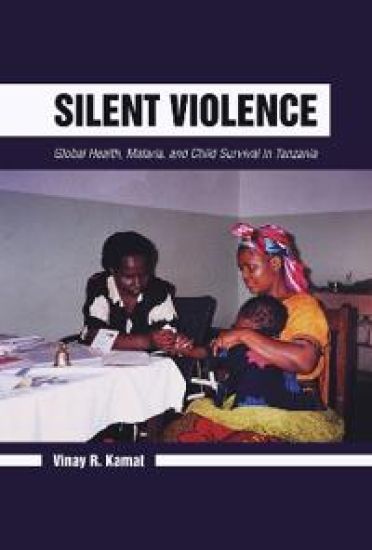
Silent Violence engages the harsh reality of malaria and its effects on marginalised communities in Tanzania. Vinay R. Kamat presents an ethnographic analysis of the shifting global discourses and practices surrounding malaria control and their impact on the people of Tanzania, especially mothers of children sickened by malaria. Malaria control, according to Kamat, has become increasingly medicalised, a trend that overemphasises biomedical and pharmaceutical interventions while neglecting the social, political, and economic conditions he maintains are central to Africa’s malaria problem. Kamat offers recent findings on global health governance, neoliberal economic and health policies, and their impact on local communities. Seeking to link wider social, economic, and political forces to local experiences of sickness and suffering, Kamat analyses the lived experiences and practices of people most seriously affected by malaria—infants and children. The persistence of childhood malaria is a form of structural violence, he contends, and the resultant social suffering in poor communities is closely tied to social inequalities. Silent Violence illustrates the evolving nature of local responses to the global discourse on malaria control. It advocates for the close study of disease treatment in poor communities as an integral component of global health funding. This ethnography combines a decade of fieldwork with critical review and a rare anthropological perspective on the limitations of the bureaucratic, technological, institutional, medical, and political practices that currently determine malaria interventions in Africa.
Global efforts to conserve nature and prevent biodiversity loss have intensified in response to planetary-scale challenges—nowhere more so than in coastal regions. Accordingly, international conservation organizations have increased their efforts to promote marine protected areas as one of the interventions to prevent biodiversity loss in global hotspots. Focusing on the human element of marine conservation and the extractive industry in Tanzania, this volume illuminates what happens when impoverished people living in underdeveloped regions of Africa are suddenly subjected to state-directed conservation and natural resource extraction projects, implemented in their landscapes of subsistence. In a Wounded Land draws on ethnographically rich case studies and vignettes collected over a ten-year period in several coastal villages on Tanzania’s southeastern border with Mozambique. In seven chapters, the book demonstrates how state power, processes of displacement and dispossession, forms of local resistance and acquiescence, environmental and social justice, and human well-being become interconnected. Written in lucid, accessible language, this is the first book that reveals the social implications of the co-presence of a marine park and a gas project at a time when internationally funded conservation initiatives and extraction projects among rural African populations are engendering rapid social transformation.
Herbal Irrigants
Kavitha A N; N Shubhashini; Vinay Chandra R
Lap Lambert Academic Publishing
2024
pokkari
Herbal irrigants refer to solutions derived from natural plant extracts that are used for irrigation in various medical and dental procedures, particularly in oral hygiene and endodontic therapy. These irrigants are often chosen for their perceived antimicrobial, anti-inflammatory, and analgesic properties, as well as their potential to minimize cytotoxicity compared to synthetic alternatives.Herbal medicines are becoming popular and employed in endodontics because they are mostly harmless when used correctly and can be dangerous if overused. Considering that they are beneficial and have few adverse effects, herbs can also be used in endodontic treatment techniques. Safety, ease of accessibility, longer shelf life, economic efficiency, and the absence of microbiological resistance thus far are the main benefits of herbal irrigants. Combining irrigants and using them sequentially will assist to meet all of the requirements for irrigation of the root canal, which will result in successful root canal therapy.
Pflanzliche Bewässerungsmittel
Kavitha A N; N Shubhashini; Vinay Chandra R
Verlag Unser Wissen
2024
pokkari
Pflanzliche Sp lmittel sind aus nat rlichen Pflanzenextrakten gewonnene L sungen, die bei verschiedenen medizinischen und zahnmedizinischen Verfahren, insbesondere bei der Mundhygiene und der endodontischen Therapie, zur Sp lung verwendet werden. Diese Sp lmittel werden h ufig aufgrund ihrer antimikrobiellen, entz ndungshemmenden und schmerzlindernden Eigenschaften sowie ihres Potenzials, die Zytotoxizit t im Vergleich zu synthetischen Alternativen zu minimieren, ausgew hlt. pflanzliche Arzneimittel werden in der Endodontie immer beliebter und eingesetzt, da sie bei richtiger Anwendung meist harmlos sind und bei berm igem Gebrauch gef hrlich sein k nnen. Da sie vorteilhaft sind und nur wenige unerw nschte Wirkungen haben, k nnen Kr uter auch bei endodontischen Behandlungstechniken eingesetzt werden. Sicherheit, leichte Zug nglichkeit, l ngere Haltbarkeit, wirtschaftliche Effizienz und das Fehlen mikrobiologischer Resistenzen sind bisher die Hauptvorteile pflanzlicher Sp lmittel. Die Kombination von Sp lmitteln und deren sequentielle Verwendung wird dazu beitragen, alle Anforderungen an die Sp lung des Wurzelkanals zu erf llen, was zu einer erfolgreichen Wurzelkanalbehandlung f hrenwird.
Irrigants À Base de Plantes
Kavitha A N; N Shubhashini; Vinay Chandra R
Editions Notre Savoir
2024
pokkari
Les irrigants base de plantes sont des solutions d riv es d'extraits naturels de plantes qui sont utilis es pour l'irrigation dans diverses proc dures m dicales et dentaires, en particulier pour l'hygi ne bucco-dentaire et la th rapie endodontique. Ces irrigants sont souvent choisis pour leurs propri t s antimicrobiennes, anti-inflammatoires et analg siques, ainsi que pour leur capacit minimiser la cytotoxicit par rapport aux alternatives synth tiques. Les plantes m dicinales sont de plus en plus populaires et employ es en endodontie car elles sont g n ralement inoffensives lorsqu'elles sont utilis es correctement et peuvent tre dangereuses si elles sont surutilis es. tant donn qu'elles sont b n fiques et qu'elles ont peu d'effets ind sirables, les plantes peuvent galement tre utilis es dans les techniques de traitement endodontique. La s curit , la facilit d'acc s, la dur e de conservation plus longue, la rentabilit et l'absence de r sistance microbiologique jusqu' pr sent sont les principaux avantages des irrigants base de plantes.Bien que les irrigants base de plantes puissent offrir certains avantages tels qu'une cytotoxicit r duite et des propri t s antimicrobiennes, des preuves scientifiques plus solides sont n cessaires pour soutenir leur g n ralisation.
Gli irriganti vegetali si riferiscono a soluzioni derivate da estratti vegetali naturali che vengono utilizzate per l'irrigazione in varie procedure mediche e odontoiatriche, in particolare nell'igiene orale e nella terapia endodontica. Questi irriganti sono spesso scelti per le loro propriet antimicrobiche, antinfiammatorie e analgesiche, nonch per il loro potenziale di ridurre al minimo la citotossicit rispetto alle alternative sintetiche. I farmaci a base di erbe stanno diventando popolari e utilizzati in endodonzia perch sono per lo pi innocui se usati correttamente, mentre possono essere pericolosi se usati in eccesso. Considerando che sono benefiche e hanno pochi effetti avversi, le erbe possono essere utilizzate anche nelle tecniche di trattamento endodontico. La sicurezza, la facilit di accesso, la maggiore durata di conservazione, l'efficienza economica e l'assenza di resistenza microbiologica sono i principali vantaggi degli irriganti a base di erbe. La combinazione di irriganti e il loro utilizzo in sequenza contribuir a soddisfare tutti i requisiti per l'irrigazione del canale radicolare, con conseguente successo della terapia canalare.Sebbene gli irriganti a base di erbe possano offrire alcuni vantaggi, come la ridotta citotossicit e le propriet antimicrobiche, sono necessarie prove scientifiche pi solide per supportarne la diffusione.
Irrigantes À Base de Plantas
Kavitha A N; N Shubhashini; Vinay Chandra R
Edicoes Nosso Conhecimento
2024
pokkari
Os irrigantes base de plantas referem-se a solu es derivadas de extractos naturais de plantas que s o utilizadas para irriga o em v rios procedimentos m dicos e dent rios, particularmente na higiene oral e na terapia endod ntica. Estes irrigantes s o muitas vezes escolhidos pelas suas propriedades antimicrobianas, anti-inflamat rias e analg sicas, bem como pelo seu potencial para minimizar a citotoxicidade em compara o com as alternativas sint ticas. Os medicamentos base de plantas est o a tornar-se populares e utilizados na endodontia porque s o, na sua maioria, inofensivos quando utilizados corretamente e podem ser perigosos se forem utilizados em excesso. Considerando que s o ben ficas e t m poucos efeitos adversos, as ervas tamb m podem ser utilizadas em t cnicas de tratamento endod ntico. A seguran a, a facilidade de acesso, o prazo de validade mais longo, a efici ncia econ mica e a aus ncia de resist ncia microbiol gica s o, at agora, os principais benef cios dos irrigantes base de plantas. A combina o de irrigantes e a sua utiliza o sequencial ajudar o a cumprir todos os requisitos para a irriga o do canal radicular, o que resultar numa terapia bem-sucedida do canal radicular.Embora os irrigantes base de plantas possam oferecer algumas vantagens, tais como uma citotoxicidade reduzida e propriedades antimicrobianas, s o necess rias provas cient ficas mais s lidas para apoiar a sua generaliza o.
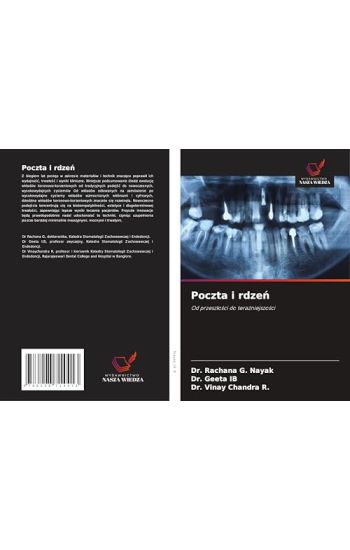
Post and Core
Rachana G Nayak; Geeta Ib; Vinay Chandra R
Lap Lambert Academic Publishing
2025
pokkari
post and core restorations have played a role in the rehabilitation of endodontically treated teeth. over the years, advancements in materials and techniques have significantly improved their performances, longevity, and clinical outcomes. This summary traces the evolution of post and core restorations from traditional approaches to modern, high performance systems From custom- cast posts to high performance fiber reinforced and digital post systems, the field of post and core restorations has evolved significantly. Modern approaches focus on biocompatibility, esthetics, and long-term durability, ensuring better patient outcomes. Future innovations will likely continue to refine these techniques, making restorations even more minimally invasive, strong and durable.
Publicación y núcleo
Rachana G. Nayak; Geeta Ib; Vinay Chandra R.
Ediciones Nuestro Conocimiento
2025
nidottu