Kirjojen hintavertailu. Mukana 11 213 693 kirjaa ja 12 kauppaa.

Kirjahaku

Etsi kirjoja tekijän nimen, kirjan nimen tai ISBN:n perusteella.

1000 tulosta hakusanalla Virgil Suarez

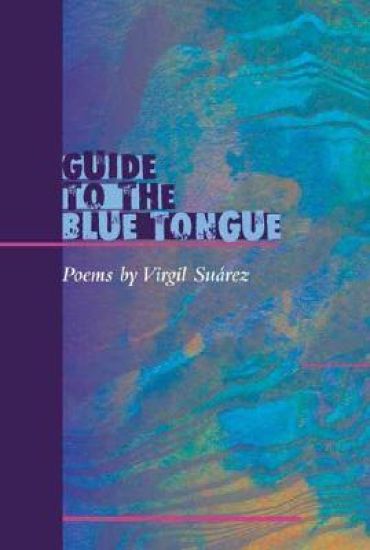
Guide to the Blue Tongue

Guide to the Blue Tongue

Virgil Suarez

University of Illinois Press
2002
nidottu
Shimmering with saturated color and heat, Guide to the Blue Tongue is an intoxicating sequence of memory poems about growing up in the tropics, threaded through the myth of Caliban from Shakespeare's The Tempest. Caliban is the monstrous native, in love with what he cannot possess, lost to his own sense of identity. In Virgil Suárez's vision, the island of Caliban's imprisonment merges with the island of Cuba, where the carboneros make charcoal and sell it door-to-door by the pound, young boxers crackle with caged energy, dock workers spill like ants out of the bellies of ships, and the rain falls in torrents on corrugated tin roofs. On this island of fire, the Marquis de Sade joins other historical figures to drink absinthe, and J. Edgar Hoover lingers over mojitos and a cigar at the Tropicana Night Club in Old Havana. Hovering behind the hotel shutters or half-concealed behind their masks, the old poets and prophets--Shakespeare, Tiresias, Pablo Neruda--are waiting to speak their passions. Out of this rich imaginative brew, Suárez evokes the mythical and historical landscape of Cuba and distills the "hollow, deep-thudded pangs" of exile's rootlessness, the immigrant's constant longing to be possessed by a sense of place. Steeped in a seductive, incantatory language of desire, Guide to the Blue Tongue gives entry to a place of blue possibility and daily undoing, where the sting of salt-fresh air is compounded by the ache of displacement and loss.
Palm Crows

Palm Crows

Virgil Suarez

University of Arizona Press
2001
nidottu
Hibiscus, banyan trees, and royal palms. Mango jam, white slices of sugarcane, and oxtail stew. Childhood games with fireflies and snail shells. These are images of a Cuba that many remember and others have never known, captured here in the powerful poems of Virgil Suarez. Born in Havana in the wake of the Cuban Revolution, Suarez is now one of more than a million Cubans living in the United States. In Palm Crows Suarez offers a compelling cancion of loss, longing, and memory as he explores the meaning of exile. In poems that range from playful and fantastic to elegiac and meditative, he writes about ?the in-betweenness of spirit? of those who have left their home and must try to forge a new one in the United States. Invoking water, song, earth, and darkness, he seeks to create his place in the world a place for his family and his spirit to call home. He constructs a slippery camouflage of animals: fish-beings, turtles, chupacabras, birds. As Suarez's poem-stories drift from one form and species to another, these creatures reincarnate and retell their lives to each other and to us. Like the crows of Hialeah, Virgil Suarez sings of exile, of absence, of captured cities, lost love, and claimed lives. Palm Crows shows us an almost mythical Cuba, offering a compelling testament both to the immigrant experience and to our own search for home.
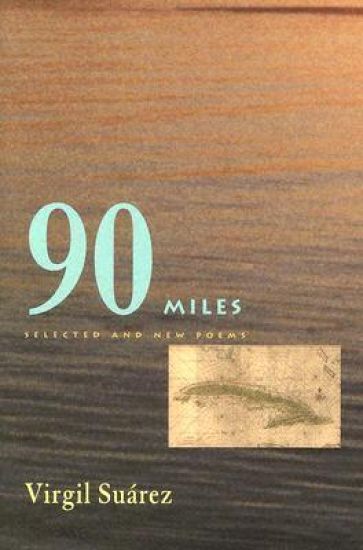
90 Miles

90 Miles

Virgil Suarez

University of Pittsburgh Press
2005
nidottu
Ninety miles separate Cuba and Key West, Florida. Crossing that distance, thousands of Cubans have lost their lives. For Cuban American poet Virgil Su\u00e1rez, that expanse of ocean represents the state of exile, which he has imaginatively bridged in over two decades of compelling poetry.\u0022Whatever isn't voiced in time drowns,\u0022 Su\u00e1rez writes in \u0022River Fable,\u0022 and the urgency to articulate the complex yearnings of the displaced marks all the poems collected here. 90 Miles contains the best work from Su\u00e1rez's six previous collections: You Come Singing, Garabato, In the Republic of Longing, Palm Crows, Banyan, and Guide to the Blue Tongue, as well as important new poems.At once meditative, confessional, and political, Su\u00e1rez's work displays the refracted nature of a life of exile spent in Cuba, Spain, and the United States. Connected through memory and desire, Caribbean palms wave over American junk mail. Cuban mangos rot on Miami hospital trays. William Shakespeare visits Havana. And the ones who left Cuba plant trees of reconciliation with the ones who stayed.Courageously prolific, Virgil Su\u00e1rez is one of the most important Latino writers of his generation.
The Painted Bunting's Last Molt

The Painted Bunting's Last Molt

Virgil Suarez

University of Pittsburgh Press
2020
nidottu
The Painted Bunting’s Last Molt explores fatherhood, parenting, and separation anxiety; and the ways in which time and memory are both a prison and a giver of joy. Fifteen years in the making, Virgil Suárez’s new collection uses his mother’s return to Cuba after 50 years of exile as a catalyst to muse on familial relationships, death, and the passing of time.
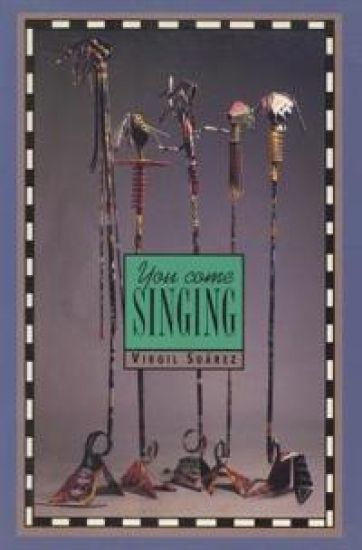
You Come Singing

You Come Singing

Virgil Suarez

Northwestern University Press
1998
nidottu
Virgil Suarez speaks with intimacy and urgency of a life lived as an outsider, a life filled with dislocation and alienation born of exile. He writes with great pathos and passion, often anger, but always with the good-natured humor of a troubadour and the keen eye of a fool for life, for love. These are high-octane, feverishly energized poems that cut to the bone and heart of memory and recollection, which for the poet stand as a testament to the preservation of family, friendship and a solitary quest for human dignity.
Virgil: Eclogues

Virgil: Eclogues

Virgil

Clarendon Press
1995
nidottu
Surprising though it may seem, this is the first full-scale scholarly commentary in English on Virgil's Eclogues. Written between about 42 and 35 BC, these ten short pastorals are among the best known poems in Latin literature. They have inspired numerous poets - Sidney, Ronsard, and others - and at the same time have held enduring fascination among scholars for their sophistaicated and allusive blend of Theocritean idyll and contemporary Roman history. Professor Clausen's commentary will provide a comprehensive guide to the poems and the considerable scholarship surrounding them, and should be indispensable to all serious students of Virgil's poetry. Special attention is paid throughout the commentary to the important question of Virgil's use of Theocritus and other Hellenistic poets, with translations provided of all Greek passages. There are many new and illuminating observations on Virgil's poetic style and vocabulary, often with reference to his Latin predecessors: Lucretius, Catullus and (virtually unnoticed by previous scholars) Plautus. A third feature of the commentary is a new examination of the plants and trees in the poems - both their exact identification and their significance. There are helpful introductions to each poem, as well as a comprehensive general introduction to the Eclogues as a whole, in which Professor Clausen discusses the nature of ancient pastoral poetry, the structure of the Eclogues, and the composition of a pastoral landscape by Virgil and Theocritus.
Virgil: Aeneid 10

Virgil: Aeneid 10

Virgil

Clarendon Press
1997
nidottu
Vergil's Aeneid was written in twelve books in the last years of the poet's life (29-19 BC). It was designed as a national epic of Rome and is one of the greatest poems of world literature. The tenth book, which contains some of the poem's most dramatic war-narrative, has been unjustly neglected by Vergilian scholars, and this is the first major commentary to deal exclusively with it. Its aim is to explain Vergil's text for the modern reader. A full introduction examines the literary aspects of Aeneid 10; the scholarly commentary assesses Vergil's skill as a Latin poet and his careful and original use of literary models (especially the Iliad of Homer). There is also some discussion of the major interpretational problems of the Aeneid raised in Book 10. The Latin text is reproduced from R.A.B. Mynors's edition in the Oxford Classical Texts series. A facing English translation makes the text accessible to those with no knowledge of Latin.
Virgil

Virgil

Philip Hardie

Oxford University Press
1998
pokkari
In this volume Philip Hardie provides an introduction to Virgil's three major works, a survey of changing critical approaches to the poems during the twentieth century, and a bibliographical guide for further study. A final section on style, language and metre offers a case-study in a close reading of a section of the Aeneid. The book communicates a sense of why reading Virgil matters and how the study of this author is always open to new ideas and fresh insights. No knowledge of Latin is presumed.
Virgil

Virgil

Slavitt David R.

YALE UNIVERSITY PRESS
1991
pokkari
Virgil is Publius Vergilius Maro (70 BC - 19 BC), classical Roman poet, author of Aeneid, Eclogues, and Georgics. Biographical and historical study includes analyses of his works and his profound influence on Medieval writers, including Dante. Slavitt provides new translations of Georgics and Eclogues. Hermes series on classical authors.
Virgil's Georgics

Virgil's Georgics

Virgil

Yale University Press
2007
pokkari
A masterful new verse translation of one of the greatest nature poems ever written. Virgil’s Georgics is a paean to the earth and all that grows and grazes there. It is an ancient work, yet one that speaks to our times as powerfully as it did to the poet’s. This unmatched translation presents the poem in an American idiom that is elegant and sensitive to the meaning and rhythm of the original. Janet Lembke brings a faithful version of Virgil’s celebratory poem to modern readers who are interested in classic literature and who relish reading about animals and gardens. The word georgics meansfarming. Virgil was born to a farming family, and his poem gives specific instructions to Italian farmers along with a passionate message to care for the land and for the crops and animals that it sustains. The Georgics is also a heartfelt cry for returning farmers and their families to land they had lost through a series of dispiriting political events. It is often considered the most technically accomplished and beautiful of all of Virgil’s work.
Virgil

Virgil

Routledge
1999
muu
Virgil:Critical Assessments collects eighty-four of the most important articles on Virgil published in the last hundred years, many of which remain the starting-points for modern scholarship and criticism. The set gathers together articles from a wide range of journals in English, as well as from the German and Italian traditions of Virgil studies, some in new translations, which would not otherwise be available.The selections are arranged under the following headings:* general articles, including a discussion of the influence of Lucretius' poetry on the Virgilian corpus* the Eclogues, containing critical interpretations of all ten of Virgil's bucolic poems, an exploration of the Greek sources and a discussion of the complex poetic structure of the Eclogues* the Georgics, incorporating an examination of the agricultural methods detailed in the poem, an exploration of the Augustan and Roman themes implicit in the poem and critical interpretations of all four books* the Aeneid, featuring a discussion of the similarities between Virgil's Aeneas and Homer's Achilles, an exploration of the epic genre and crucial recurring themes in the Aeneid, an examination of Virgilian similes and a study of the Homeric allusions of the poem.In volumes II-IV general studies on the works are followed by items on the individual poems and books.
Virgil: Selections from the Aeneid

Virgil: Selections from the Aeneid

Virgil

Cambridge University Press
1984
pokkari
Selections from Virgil’s epic poem which follows the fortunes of Aeneas after he escapes the sack of Troy. He struggles through countless difficulties to reach Italy where he wins in battle the right to found a settlement for his people - from this grew Rome and the Roman empire.
Virgil: Aeneid Book VIII

Virgil: Aeneid Book VIII

Virgil

Cambridge University Press
1976
pokkari
Book VIII is one of the most attractive and important books of Virgil's Aeneid. It includes the visit of Aaneas to the site of the future Rome, the story of Hercules and Cacus, the episode between Venus and Vulcan and the description of the great symbolic shield of Aeneas. Mr Gransden's introduction relates this book to the Aeneid as a whole considers the text in various aspects: the topography, Virgil's sense of history, his typology and symbolism, his literary style and his influence on subsequent vernacular poetry. The commentary discusses points of special interest and difficulty in interpretation, style and prosody and gives detailed explanation of the many allusions in Book VIII to customs, legends, traditions and historical events. This is primarily a textbook for university students and sixth-formers, but it also contains material which may be of interest to students of English and comparative literature.
Virgil: Eclogues

Virgil: Eclogues

Virgil

Cambridge University Press
1977
pokkari
Pastoral poetry was probably the creation of the Hellenistic poet Theocritus, and he was certainly its most distinguished exponent in Greek. Vergil not only transposed the spirit of Greek pastoral into an Italian setting, blending details from the life of his native countryside into the subsequent history of the genre. On publication the Eclogues won immediate acclaim and Vergil’s reputation as a major poet was established. In this edition Robert Coleman describes the earlier pastoral tradition, sets Vergil’s poems in historical perspective and evaluates the poet’s distinctive contribution to the genre. In the commentary difficulties of interpretation are elucidated. Theocritean influences are examined in detail and points of interest in the language, style and subject-matter discussed. This is the fullest edition of the Eclogues to have appeared in any language and the first in English since the end of the nineteenth century. It is intended primarily for university students and sixth-formers but will be valuable to anyone interested in Latin poetry and the development of the pastoral genre.
Virgil: Aeneid Book XII

Virgil: Aeneid Book XII

Virgil

Cambridge University Press
2012
sidottu
Book XII brings Virgil's Aeneid to a close, as the long-delayed single combat between Aeneas and Turnus ends with Turnus' death - a finale that many readers find more unsettling than triumphant. In this, the first detailed single-volume commentary on the book in any language, Professor Tarrant explores Virgil's complex portrayal of the opposing champions, his use and transformation of earlier poetry (Homer's in particular) and his shaping of the narrative in its final phases. In addition to the linguistic and thematic commentary, the volume contains a substantial introduction that discusses the larger literary and historical issues raised by the poem's conclusion; other sections include accounts of Virgil's metre, later treatments of the book's events in art and music, and the transmission of the text. The edition is designed for upper-level undergraduates and graduate students and will also be of interest to scholars of Latin literature.
Virgil: Aeneid Book XII

Virgil: Aeneid Book XII

Virgil

Cambridge University Press
2012
pokkari
Book XII brings Virgil's Aeneid to a close, as the long-delayed single combat between Aeneas and Turnus ends with Turnus' death - a finale that many readers find more unsettling than triumphant. In this, the first detailed single-volume commentary on the book in any language, Professor Tarrant explores Virgil's complex portrayal of the opposing champions, his use and transformation of earlier poetry (Homer's in particular) and his shaping of the narrative in its final phases. In addition to the linguistic and thematic commentary, the volume contains a substantial introduction that discusses the larger literary and historical issues raised by the poem's conclusion; other sections include accounts of Virgil's metre, later treatments of the book's events in art and music, and the transmission of the text. The edition is designed for upper-level undergraduates and graduate students and will also be of interest to scholars of Latin literature.
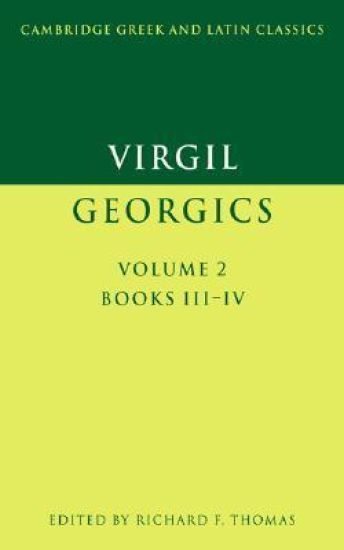
Virgil: Georgics: Volume 2, Books III-IV

Virgil: Georgics: Volume 2, Books III-IV

Virgil

Cambridge University Press
1988
pokkari
This volume, the second of two companion volumes which provide a detailed commentary, with text, on the whole of Virgil’s Georgics, is devoted to Books III and IV of the poem. Professor Thomas describes the Georgics as ‘perhaps the most difficult, certainly the most controversial, poem in Roman literature’. He presents the Georgics as the finished poem of Virgil’s mature years, approaching it not merely as a part of the tradition of didactic poetry, but rather as a work which confronts, behind its generic appearance, issues not essentially different from those which inform the Eclogues and Aeneid. His introduction (in Volume 1 only) and Commentary argue that Virgil’s agricultural world, with its successes, failures and ultimate limitations, represents the arena for man’s struggle with the realities of existence. Professor Thomas pays particular attention to Virgil’s allusion to and reshaping of prior Greek and Latin poetry. The Introduction also covers stylistic, metrical and structural questions. A subject index and indexes of important Greek and Latin words conclude each volume, the indexes in this volume covering the whole work. This edition is aimed primarily at students at university and in the upper forms of schools, but the range of its scholarship means that it will be valuable to all classical scholars. The Introduction contains material for non-classicists interested in Latin literature.