Kirjojen hintavertailu. Mukana 11 244 527 kirjaa ja 12 kauppaa.

Kirjahaku

Etsi kirjoja tekijän nimen, kirjan nimen tai ISBN:n perusteella.

1000 tulosta hakusanalla Virginia M. Closs

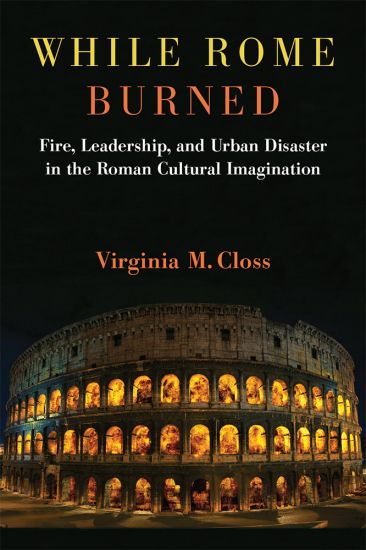
While Rome Burned

While Rome Burned

Virginia M. Closs

The University of Michigan Press
2020
sidottu
While Rome Burned attends to the intersection of fire, city, and emperor in ancient Rome, tracing the critical role that urban conflagration played as both reality and metaphor in the politics and literature of the early imperial period. Urban fires presented a consistent problem for emperors from Augustus to Hadrian, especially given the expectation that the princeps be both a protector and provider for Rome’s population. The problem manifested itself differently for each leader, and each sought to address it in distinctive ways. This history can be traced most precisely in Roman literature, as authors addressed successive moments of political crisis through dialectical engagement with prior incendiary catastrophes in Rome’s historical past and cultural repertoire. Working in the increasingly repressive environment of the early principate, Roman authors frequently employed “figured” speech and mythopoetic narratives to address politically risky topics. In response to shifting political and social realities, the literature of the early imperial period reimagines and reanimates not just historical fires, but also archetypal and mythic representations of conflagration. Throughout, the author engages critically with the growing subfield of disaster studies, as well as with theoretical approaches to language, allusion, and cultural memory.
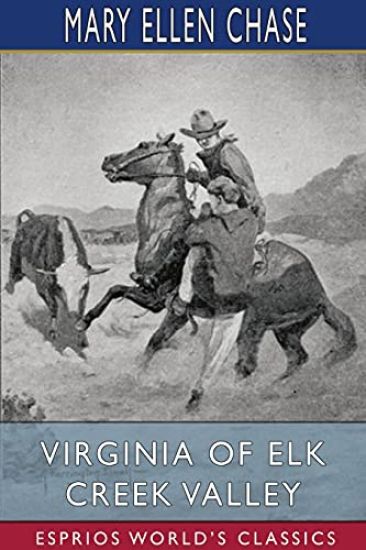
Virginia of Elk Creek Valley (Esprios Classics)
Mary Ellen Chase (24 February 1887 - 28 July 1973) was an American educator, teacher, scholar, and author. She is regarded as one of the most important regional New England literary figures of the early twentieth century. Chase earned a bachelor's degree from the University of Maine in 1909, then both a master's and Ph. D. in English from the University of Minnesota. During this time, she also taught at schools in Buck's Harbor, Maine, Chicago, and Montana, before serving as an assistant professor at the University of Minnesota from 1922 to 1926. While a student, she was a member of Alpha Omicron Pi. She taught at Smith College starting in 1926 until her retirement in 1955.
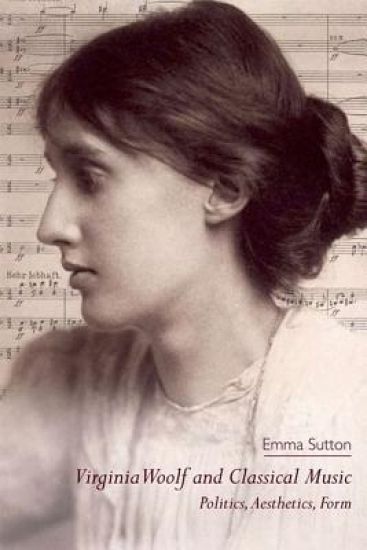
Virginia Woolf and Classical Music

Virginia Woolf and Classical Music

Emma Sutton

Edinburgh University Press
2013
sidottu
Virginia Woolf, by her own admission, spent her 'youth' in Covent Garden Opera House, as an adult listened almost daily to recordings and broadcasts of classical music, and stated, in 1940, that 'I think of all my books as music before I write them,' This groundbreaking study explores the formative influence of classical music on Woolf's writing, illustrating the importance of music to Woolf's domestic, social and creative lives. Discussing all the novels as well as selected essays and short fiction, Emma Sutton offers detailed commentaries on Woolf's numerous allusions to classical repertoire and to composers including Bach, Mozart, Beethoven and Wagner. Sutton explores Woolf's interest in the politics of music, illustrating Woolf's attention to nationalism, class, anti-Semitism and gender in her portraits of musical performance and consumption. The study also examines Woolf's responses to musical aesthetics, exploring the way in which genres including Romantic opera and the string quartet influenced the structure and formal qualities of Woolf's prose. The analysis of music's role in Woolf's aesthetics and fiction is complemented by critical discussion of her musical education, her extensive consumption of music at public performances and at home, and her friendships and acquaintance with musicians including Ethel Smyth, Nadia Boulanger, Ralph Vaughan Williams and Bruno Walter. In addition, Woolf's enduring, protean interest in music is contextualised within the aesthetic experiments of the Bloomsbury group and her Modernist contemporaries. Key Features *The first book-length study on Woolf and (classical) music, incorporating groundbreaking research *Innovative close readings of all Woolf's novels, and of selected essays and short fiction; unprecedented extended readings of the musical allusions and sub-texts *Places the fiction in fresh biographical, aesthetic and socio-political contexts (eg explores relations between the novels, pre-war musicology and nationalism) *Accessibly written: aimed at advanced undergraduates as well as postgraduates and the scholarly community
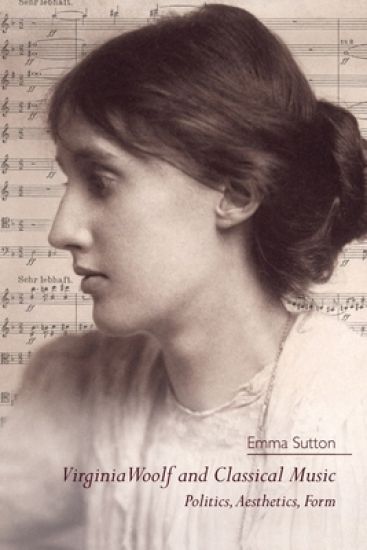
Virginia Woolf and Classical Music

Virginia Woolf and Classical Music

Emma Sutton

Edinburgh University Press
2015
nidottu
This study is a groundbreaking investigation into the formative influence of music on Virginia Woolf's writing. In this unique study Emma Sutton discusses all of Woolf's novels as well as selected essays and short fiction, offering detailed commentaries on Woolf's numerous allusions to classical repertoire and to composers including Bach, Mozart, Beethoven and Wagner. Sutton explores Woolf's interest in the contested relationship between politics and music, placing her work in a matrix of ideas about music and national identity, class, anti Semitism, pacifism, sexuality and gender. The study also considers the formal influence of music - from fugue to Romantic opera - on Woolf's prose and narrative techniques. The analysis of music's role in Woolf's aesthetics and fiction is contextualized in accounts of her musical education, activities as a listener, and friendships with musicians; and the study outlines the relationship between her 'musicalized' work and that of contemporaries including Joyce, Lawrence, Forster, Mansfield and Eliot. It analysis of music, national identity and war in The Voyage Out, Jacobs Room and Mrs Dalloway. It offers a close reading of Wagner's influence on the plot and narrative techniques of The Voyage Out. It analysis of music and philo and anti Semitism in The Years. It offers innovative reading of the 'fugal' structure of Mrs Dalloway.
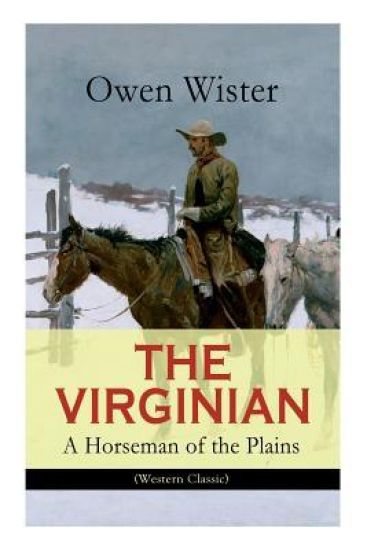
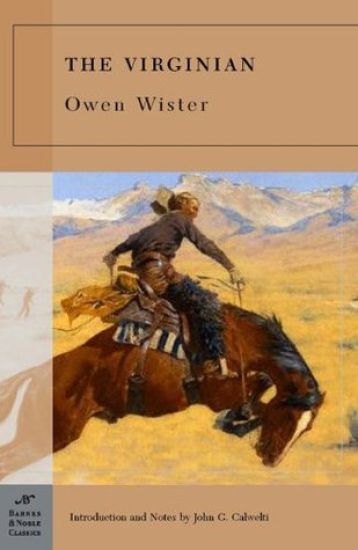
The Virginian - A Horseman of the Plains (Western Classic)
This classic describes the life of a cowboy who is a natural aristocrat, set against a highly mythologized version of the Johnson County War and taking the side of the large land owners. The Virginian paved the way for many more westerns by such authors as Zane Grey, Louis L'Amour, and several others. Owen Wister (1860-1938) was an American writer and "father" of western fiction. When he started writing, he naturally inclined towards fiction set on the western frontier. Wister's most famous work remains the novel The Virginian.
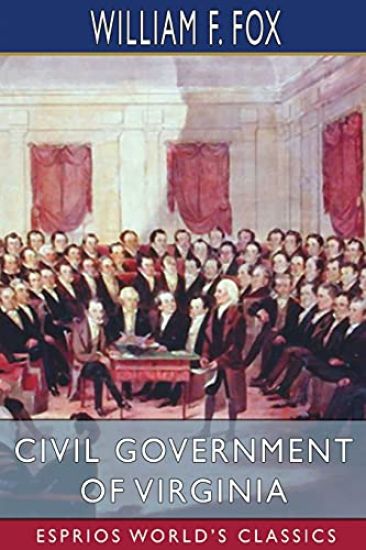
Civil Government of Virginia (Esprios Classics)
"The word GOVERNMENT means guidance or direction or management. It means also the person or persons who rule or control any establishment or institution. Wherever any number of people live together in one house, or one town, or city, or country, there must be government of some kind. In the family the parents are the government. They guide and manage the affairs of the house. They give orders to their children as to what they must do and what they must not do, and they see that their orders are obeyed. This is government, and it is for the benefit of the family. If the children were to do as they please, there would be no peace or happiness in the home."
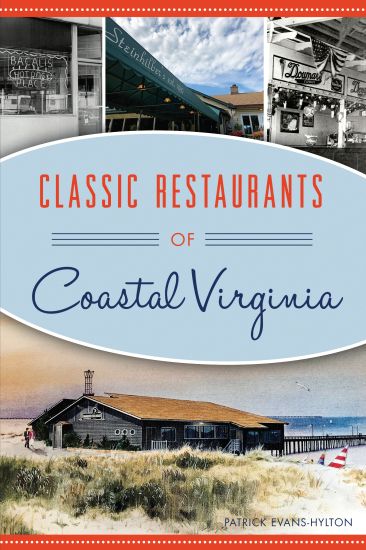
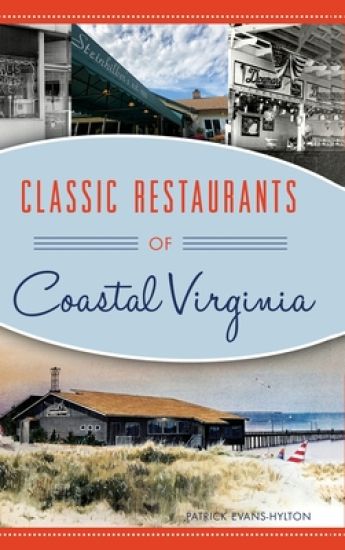
Classic Restaurants of Coastal Virginia

Classic Restaurants of Coastal Virginia

Patrick Evans-Hylton

History Press Library Editions
2019
sidottu
The history of dining in Virginia goes back to 1607. Dairy lunches and tearooms dominated the early twentieth-century dining scene. Local favorite Doumar's--famous for inventing the ice cream cone--became the rage at the 1907 Jamestown Exposition, and palatial seaside resorts like the Cavalier attracted patrons to their luxurious dining rooms in the Roaring Twenties. In the 1930s, Bacalis' Hot Dog Place invented the Norfolk Dog, a tradition that's carried on today. Steinhilber's has catered to family nights out for decades, keeping pace as the local food scene has grown and changed. Join local chef and food writer Patrick Evans-Hylton as he recalls the history of Coastal Virginia's restaurants and the personalities that made them unforgettable.
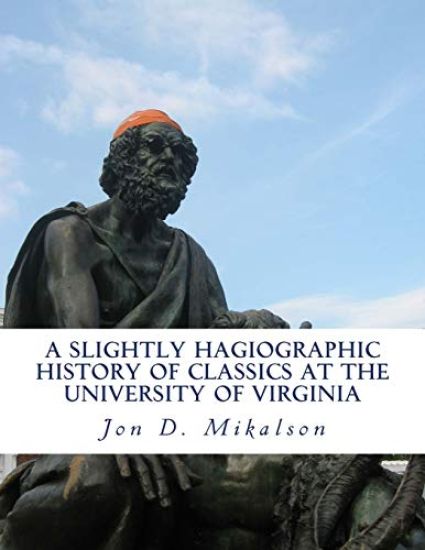
A Slightly Hagiographic History of Classics at the University of Virginia: From 1825 to 1970
This brief account traces the history of Classics at the University of Virginia largely through biographies of the faculty from the University's first session in 1825 to 1970. 1970 was chosen as the terminus because the author joined the Department of Classics that year, and he prefers to write of the past, as Herodotus did, not of the present, as Thucydides. He also prefers the rambling, somewhat disorganized, anecdotal, and picaresque character of Herodotus' Histories. He has chosen not to follow Professor Ward Briggs who, in his 1986 essay on Gildersleeve and the University, sternly notes that "information is available, but much of the biographical rubbish that finds its way into self-serving university histories and old-boy memoirs must be judged severely." The author has not only not avoided such "biographical rubbish" but has embraced it warmly. Classicists, if any readers, should appreciate the charm and power of mythology, ancient or modern. Caveat Lector. Like Herodotus the author seldom gives or attempts seriously to verify his sources. Some may be found in the bibliography, but many are scrounged from nooks and crannies of the Internet and the University of Virginia Special Collections Library. The author hopes, however, that like Herodotus' Histories, much more of this "history" will be found to be "true" than not, and that this "history" will at least provide an enjoyable read for the University of Virginia's classicists of the past, present, and future.
Classica Et Beneventana: Essays Presented to Virginia Brown on the Occasion of Her 65th Birthday
The Festschrift volume Classica et Beneventana, presented to Virginia Brown on the occasion of her 65th birthday, brings together twenty-one insightful new essays by leading scholars devoted to the fields of classical reception and Latin palaeography. The authors investigate a wide-range of topics such as the development and application of the Beneventan script, comparative codicology, uses of early liturgical manuscripts, medieval artes and biblical texts and their readers, and the reception and dissemination of classical texts during the Italian Renaissance. Since 1970, Virginia Brown has been a Senior Research Fellow at the Pontifical Institute of Mediaeval Studies. She is recognized as one of the world's leading authorities in classical reception and Latin palaeography. Her numerous publications on the Beneventan script have dramatically altered our knowledge of the dissemination of this southern Italian book hand from 800 to 1600. Her editorial work for the Catalogus translationum et commentariorum, as a member of the Editorial Board and since 1985 as Editor-in-Chief, has resulted in several learned volumes tracing the fortuna and study of classical authors from antiquity to the year 1600. As editor of Mediaeval Studies from 1974 to 1988, she single-handedly produced tomes noted for their scholarly rigor and acumen. This collection of essays serves as a fitting tribute to a scholar who, via her scholarly research and editorial work, has done so much to advance the fields of palaeography, codicology, and the history of classical scholarship.