Colleagues interested in the process of play therapy...will find much to enjoy and stimulate their thinking in this book. It is easy to read without being simplistic, and offers a comprehensive analysis of the challenges and delights of working with troubled children.'- Clinical Child Psychology and PsychiatryThe seven case studies in this book provide a detailed and absorbing account of play therapy undertaken with children and an adolescent, all of whom experienced emotional problems and/or varying forms of abuse. Through the narrative form of the individual case studies, details of the children's therapeutic progress are given, which are then used to inform discussion of wider practical and theoretical issues. These issues include communicating with young children, working with silent children, restoring a child's normal developmental trajectory within play therapy, and the roles of race, gender and power in play therapy.Balancing practice and theory, Case Studies in Non-directive Play Therapy will be of interest to experienced practitioners and students alike.
This highly readable book provides a comprehensive theoretical and practical guide to non-directive play therapy, which is an effective and ethically sound method of helping troubled children and adolescents with their emotional difficulties. It draws extensively on case material to guide practitioners through the intricacies of establishing and practising this therapeutic approach. Principles and background to the development of non-directive play therapy as a therapeutic method An updated theoretical framework for this approach, including symbolic play and its role in therapy Essential assessment, planning and practice issues and skills Working with children and their families systematically Play therapy in statutory settings Presenting therapeutic material in court proceedings This second edition has been thoroughly revised and updated to incorporate recent theory, research and practice developments. New issues addressed include: additional considerations when working with children in statutory settings, the integration of attachment theory within the book's Piagetian framework, using drawing, structured exercises and role play within a non-directive approach, and working with a wide variety of children's and adolescents' concerns.
In Group Filial Therapy (GFT), therapists train parents to conduct play sessions with their own children to help meet children's therapeutic needs, and to transfer appropriate skills to family life. Based on parents' application of Child-Centred Play Therapy, taught and supervised by filial therapists, this evidence-based method is highly effective for working with families from diverse backgrounds and locations. This book provides an accessible guide to the theory and practice of GFT, and for the first time offers step-by-step guidelines for implementing the GFT program developed by Dr Guerney, the co-creator of Filial Therapy. Important practical considerations are addressed by Dr Guerney and Dr Ryan, such as how to determine the composition of groups and the duration of programs, and how to conduct Filial Therapy intakes. The facilitative attitudes and skills needed to be an effective Filial Therapy group leader are also described, and comprehensive instructions for implementing Dr Guerney's 20-week model of GFT are provided. The book closes with examples of how the program may be adapted to meet the needs of special groups. Replete with examples and dialogues bringing to life the group process, this definitive guide will enable therapists already familiar with the method, as well as those wishing to learn it, to maximise the fulfilment of therapeutic goals for participating families. Practitioners in mental health, social services and counselling, as well as parenting experts, play and filial therapists and therapists in training will find that this book expands and enriches the services they can offer their clients.
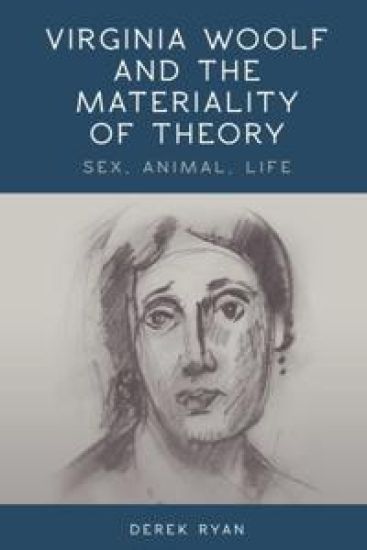
Explores Woolf's writing alongside Deleuze's philosophy and new materialist theories of 'sex', 'animal', and 'life' How does Virginia Woolf conceptualise the material world? In what ways has Woolf's modernism affected understandings of materiality, and what new perspectives does she offer contemporary theoretical debates? Derek Ryan demonstrates how materiality is theorised in Woolf's writings by focusing on the connections she makes between culture and nature, embodiment and environment, human and nonhuman, life and matter. Through close readings of texts including To the Lighthouse, Orlando, A Room of One's Own, The Waves, Flush, and 'Sketch of the Past', he details the fresh insights Woolf provides into issues concerning the natural world, sexual difference, sexuality, animality, and life itself. Ryan opens up Woolf studies to new theoretical paradigms by placing Woolf in dialogue with Gilles Deleuze - who cites her modernist aesthetics as exemplary of some of his most important philosophical concepts - as well as eminent contemporary theorists including Rosi Braidotti, Donna Haraway, Karen Barad, and Jane Bennett, all of whom have influenced the recent critical turn towards new materialisms. Locating theory within Woolf's writing as well as locating Woolf within theory, Virginia Woolf and the Materiality of Theory: Sex, Animal, Life brings her modernism firmly into to the foreground of current debates in literary studies, feminist philosophy, queer theory, animal studies and posthumanities.
This book explores Woolf's writing alongside Deleuzian philosophy and new materialist theories of sexuality, animality, and posthuman life. How does Virginia Woolf conceptualise the material world? In what ways has Woolf's modernism affected understandings of materiality, and what new perspectives does she offer contemporary theoretical debates? Derek Ryan demonstrates how materiality is theorised in Woolf's writings by focusing on the connections she makes between culture and nature, embodiment and environment, human and nonhuman, life and matter. Through close readings of texts including To the Lighthouse, Orlando, A Room of One's Own, The Waves, Flush, and 'Sketch of the Past', he details the fresh insights Woolf provides into issues concerning the natural world, sexual difference, sexuality, animality, and life itself. Ryan opens up Woolf studies to new theoretical paradigms by placing Woolf in dialogue with Gilles Deleuze - who cites her modernist aesthetics as exemplary of some of his most important philosophical concepts - as well as eminent contemporary theorists including Rosi Braidotti, Donna Haraway, Karen Barad, and Jane Bennett, all of whom have influenced the recent critical turn towards new materialisms. Locating theory within Woolf's writing as well as locating Woolf within theory, Virginia Woolf and the Materiality of Theory: Sex, Animal, Life brings her modernism firmly into to the foreground of current debates in literary studies, feminist philosophy, queer theory, animal studies and posthumanities.
Virginia Real Estate Postlicensing for Salespersons is 30-hour review and applied principles coursebook for newly-licensed salespersons beginning their real estate careers in Virginia. It is designed to satisfy your one-time postlicense requirement as a salesperson actively practicing real estate in Virginia. Virginia Real Estate Postlicensing for Salespersons is used with approved salesperson postlicensing courses throughout Virginia.Table of Contents: Unit 1: Real Estate Law and RegulationsUnit 2: Agency LawUnit 3: Escrow RequirementsUnit 4: Real Estate FinanceUnit 5: Fair Housing, ADA and Civil RightsUnit 6: Ethics and Standards of ConductUnit 7: Risk ManagementUnit 8: Contract WritingUnit 9: Current Industry Issues and Trends
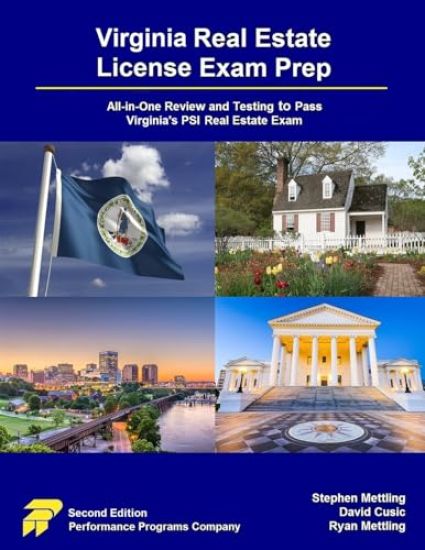
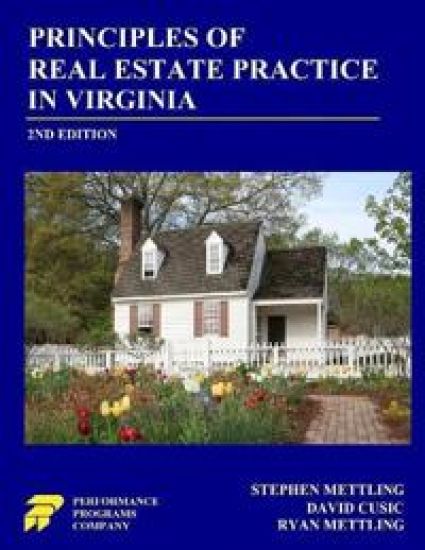
Features of Performance Programs Company's Virginia Real Estate License Exam Prep (VA-RELEP): National Principles & Law Key Point Review (60 pages)Real Estate Math Key Formula Review & Practice (20 pages)Virginia-Specific Laws and Practices (36 pages)National Practice Tests (500 questions)Virginia Practice Tests (125 questions)Virginia Sample Exam (100 questions)We know the real estate licensing exam can be tough, and very nerve-wracking to prepare for. That's why we created Virginia Real Estate License Exam Prep (VA-RELEP) the way we did. Since we have been managing real estate schools and developing curriculum for forty years, we know how all this works - or fails to work.VA-RELEP is comprehensive in that it contains both key content review and testing practice. And the text review is Virginia-specific - not just simplistic national content, but terse, relevant and accurate Virginia laws and regulations presented as a well-organized set of state 'key point reviews' ideal for pre-test memorization. But let's not dismiss the importance of the national content either. VA-RELEP's national key point reviews are a succinct compression of tested national principles and practices that comprise the national portion of state license exams from coast to coast. Our content is drawn from our own national textbook, Principles of Real Estate Practice - one of the most widely used principles textbooks in the country. Finally, our national content, as well as our question selection, is further tailored to the state testing outline promulgated by PSI for Virginia. Thus the breadth and depth of the law reviews and test questions reflect the topic emphasis of your state's testing service and your Virginia license exam.A word about the test questions... VA-RELEP's testing practice section consists of ten national practice tests, five state practice tests, and one state exam sample test. The practice tests are roughly 50 questions in length and the sample test is 100 questions. The test questions are designed to cover the content covered by the law reviews - which reinforces your learning of the total body of information tested by your state exam. The questions are direct, to the point, and designed to test your understanding. When you have completed a given test, you can check your answers against the answer key in the appendix. You may also note that each question's answer is accompanied by a brief explanation, or "rationale" to further reinforce your understanding.In the end, as you know, it's all up to you. Unlike other publications, we are not going to tell you that using this book will guarantee that you pass your state exam. It still takes hard work and study to pass. But we have done our best here to get you ready. Following that, the most we can do is wish you the best of success in taking and passing your Virginia real estate exam. So good luck For students looking for a more comprehensive Virginia principles textbook, we publish Principles of Real Estate Practice in Virginia.
The 27 Stories fiction anthology features the winning entries from the Winter 2018 Owl Canyon Press Short Story Hackathon challenge. The collection contains 27 stories chosen from over 950 entries, a mix of both seasoned and emerging writers whose astonishing and entertaining works span the wide ranging landcape of emotions from happiness to grief.
Trisha Ping; Isabel Albiston; Mark Baker; Amy C Balfour; Robert Balkovich; Ray Bartlett; Greg Benchwick; Andrew Bender; Alison Bing; Celeste Brash; Jade Bremner; Gregor Clark; Michael Grosberg; Anthony Ham; Ashley Harrell; John Hecht; Adam Karlin; Brian Kluepfel; Ali Lemer; Vesna Maric; Virginia Maxwell; Hugh McNaughtan; MaSovaida Morgan; Becky Ohlsen; Lorna Parkes; Christopher Pitts; Kevin Raub; Charles Rawlings-Way; Simon Richmond; Andrea Schulte-Peevers; Regis St Louis; Ryan Ver Berkmoes; Mara Vorhees; Benedict Walker
Lonely Planet’s USA is your passport to the most relevant, up-to-date advice on what to see and skip, and what hidden discoveries await you. Catch a Broadway show in New York, marvel at the Grand Canyon, and drive the Pacific Coast Highway; all with your trusted travel companion. Get to the heart of the USA and begin your journey now!Inside Lonely Planet’s USA Travel Guide: Up-to-date information - all businesses were rechecked before publication to ensure they are still open after 2020’s COVID-19 outbreakNEW top experiences feature - a visually inspiring collection of the USA’s best experiences and where to have themWhat's NEW feature taps into cultural trends and helps you find fresh ideas and cool new areasPull-out, passport-size 'Just Landed' card with wi-fi, ATM and transport info - all you need for a smooth journey from airport to hotelAccommodation feature gathers all the information you need to plan your accommodationImproved planning tools for family travelers - where to go, how to save money, plus fun stuff just for kidsColor maps and images throughoutHighlights and itineraries help you tailor your trip to your personal needs and interestsInsider tips to save time and money and get around like a local, avoiding crowds and trouble spotsEssential info at your fingertips - hours of operation, websites, transit tips, pricesHonest reviews for all budgets - eating, sleeping, sightseeing, going out, shopping, hidden gems that most guidebooks missCultural insights give you a richer, more rewarding travel experience - history, people, music, landscapes, wildlife, cuisine, politicsOver 100 maps Covers New York, New Jersey, Pennsylvania, New England, Washington, DC, The South, Florida, Great Lakes, Great Plains, Texas, Rocky Mountains, California, Pacific Northwest, Alaska, HawaiiThe Perfect Choice: Lonely Planet’s USA, our most comprehensive guide to the USA, is perfect for both exploring top sights and taking roads less traveled. Looking for just the highlights? Check out Pocket New York City, a handy-sized guide focused on the can't-miss sights for a quick trip.About Lonely Planet: Lonely Planet is a leading travel media company, providing both inspiring and trustworthy information for every kind of traveler since 1973. Over the past four decades, we've printed over 145 million guidebooks and phrasebooks for 120 languages, and grown a dedicated, passionate global community of travelers. You'll also find our content online, and in mobile apps, videos, 14 languages, armchair and lifestyle books, ebooks, and more, enabling you to explore every day. 'Lonely Planet guides are, quite simply, like no other.' – New York Times'Lonely Planet. It's on everyone's bookshelves; it's in every traveler's hands. It's on mobile phones. It's on the Internet. It's everywhere, and it's telling entire generations of people how to travel the world.' – Fairfax Media (Australia)
From the beginning, Virginians have styled their government a conservative commonwealth, seeking stability amid change and often fashioning change to fit their concept of what Virginia—and America—should be like. In the eighteenth century Golden Age, Virginia was a world of broad acres and country gentlemen. To preserve the world, Virginians led a revolution and helped to found a government that they believed would secure their children’s future. In the name of old and tried principles, Virginians in 1861 seceded from the Union to defend a way of life that to them seemed worth fighting for. In the twentieth century, they “paid as they went,” convinced that debt meant the end of good government.
During the Great Depression of the 1930s thousands of writers were hired by the Works Project Administration to create hundreds of guidebooks on all of the states in the U.S. These volumes that were produced became known as the American Guide Series. This series has been described as the biggest, fastest and most original research job in the history of the world. No library collection in Virginia would be complete without a copy of Virginia: A Guide To The Old Dominion.