

Kirjahaku
Etsi kirjoja tekijän nimen, kirjan nimen tai ISBN:n perusteella.
24 tulosta hakusanalla Vjekoslav Klaic

Bribirski Knezovi Od Plemena S Ubic Do God. 1347. Sa Jednom Rodoslovnom Tablicom.
Vjekoslav Klaic
British Library, Historical Print Editions
2012
pokkari

Geschichte Bosniens von den ältesten Zeiten bis zum Verfalle des Königreiches
Vjekoslav Klai¿; Ivan von Bojni¿i¿ Kninski
Antigonos Verlag
2025
nidottu
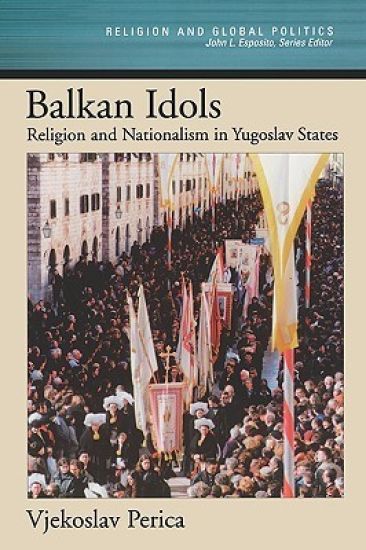
Reporting from the heartland of Yugoslavia in the 1970s, Washington Post correspondent Dusko Doder described "a landscape of Gothic spires, Islamic mosques, and Byzantine domes." A quarter century later, this landscape lay in ruins. In addition to claiming tens of thousands of lives, the former Yugoslavia's four wars ravaged over a thousand religious buildings, many purposefully destroyed by Serbs, Albanians, and Croats alike, providing an apt architectural metaphor for the region's recent history. Rarely has the human impulse toward monocausality--the need for a single explanation--been in greater evidence than in Western attempts to make sense of the country's bloody dissolution. From Robert Kaplan's controversial Balkan Ghosts, which identified entrenched ethnic hatreds as the driving force behind Yugoslavia's demise to NATO's dogged pursuit and arrest of Slobodan Milosevic, the quest for easy answers has frequently served to obscure the Balkans' complex history. Perhaps most surprisingly, no book has focused explicitly on the role religion has played in the conflicts that continue to torment southeastern Europe. Based on a wide range of South Slav sources and previously unpublished, often confidential documents from communist state archives, as well as on the author's own on-the-ground experience, Balkan Idols explores the political role and 1nfluence of Serbian Orthodox, Croatian Catholic, and Yugoslav Muslim religious organizations over the course of the last century. Vjekoslav Perica emphatically rejects the notion that a "clash of civilizations" has played a central role in fomenting aggression. He finds no compelling evidence of an upsurge in religious fervor among the general population. Rather, he concludes, the primary religious players in the conflicts have been activist clergy. This activism, Perica argues, allowed the clergy to assume political power without the accountablity faced by democratically-elected officials. What emerges from Perica's account is a deeply nuanced understanding of the history and troubled future of one of Europes most volatile regions.
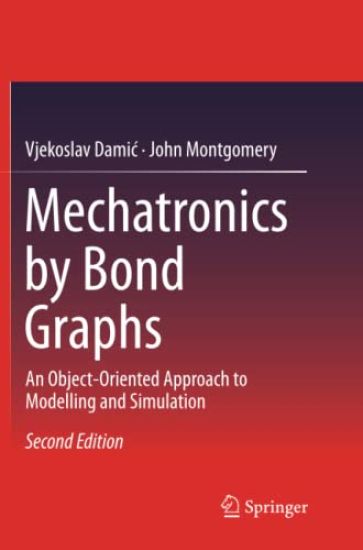
Mechatronics by Bond Graphs
Vjekoslav Damic; John Montgomery
Springer-Verlag Berlin and Heidelberg GmbH Co. K
2016
sidottu
This book presents a computer-aided approach to the design of mechatronic systems. Its subject is an integrated modeling and simulation in a visual computer environment. Since the first edition, the simulation software changed enormously, became more user-friendly and easier to use. Therefore, a second edition became necessary taking these improvements into account.The modeling is based on system top-down and bottom-up approach. The mathematical models are generated in a form of differential-algebraic equations and solved using numerical and symbolic algebra methods. The integrated approach developed is applied to mechanical, electrical and control systems, multibody dynamics, and continuous systems.
Mechatronics by Bond Graphs
Vjekoslav Damic; John Montgomery
Springer-Verlag Berlin and Heidelberg GmbH Co. K
2018
nidottu
This book presents a computer-aided approach to the design of mechatronic systems. Its subject is an integrated modeling and simulation in a visual computer environment. Since the first edition, the simulation software changed enormously, became more user-friendly and easier to use. Therefore, a second edition became necessary taking these improvements into account.The modeling is based on system top-down and bottom-up approach. The mathematical models are generated in a form of differential-algebraic equations and solved using numerical and symbolic algebra methods. The integrated approach developed is applied to mechanical, electrical and control systems, multibody dynamics, and continuous systems.


Mechanochemical Organic Synthesis
Davor Margetic; Vjekoslav Štrukil
Elsevier Science Publishing Co Inc
2016
sidottu
Mechanochemical Organic Synthesis is a comprehensive reference that not only synthesizes the current literature but also offers practical protocols that industrial and academic scientists can immediately put to use in their daily work. Increasing interest in green chemistry has led to the development of numerous environmentally-friendly methodologies for the synthesis of organic molecules of interest. Amongst the green methodologies drawing attention, mechanochemistry is emerging as a promising method to circumvent the use of toxic solvents and reagents as well as to increase energy efficiency. The development of synthetic strategies that require less, or the minimal, amount of energy to carry out a specific reaction with optimum productivity is of vital importance for large-scale industrial production. Experimental procedures at room temperature are the mildest reaction conditions (essentially required for many temperature-sensitive organic substrates as a key step in multi-step sequence reactions) and are the core of mechanochemical organic synthesis. This green synthetic method is now emerging in a very progressive manner and until now, there is no book that reviews the recent developments in this area.
Stone siblings
Danijela Doblanovic Suran; Marijan Bradanovic; Vjekoslav Gasparovic
Praksa
2022
pokkari
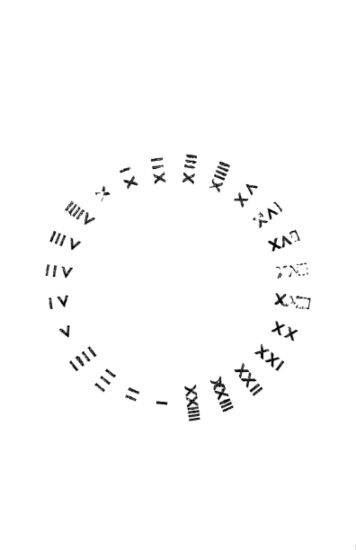
"The research process that Gasparovic has applied here is a good combination of the methods of technical and historical sciences. The comparison itself of the stone decorative sculpture of the castle and the church in Savičenta with the fragments of the reliefs from Dvigrad is an excellent example of the use of Morellian analysis, that common tool of art historians. This dedication to the phenomenon of Savičenta in the Early Modern Age, reveals and reinterprets a series of data that help us in the broader view of the cultural landscape of Istria and the Northern Adriatic in the Early Modern Age." - Marijan Bradanovic"Alongside with, in art historian circles, the very famous picturesque and harmonious Renaissance square, Savičenta also owns another, unjustly neglected gem. This is the clock in the square tower of the castle, which in these years is very likely celebrating a monumental 500 years of existence. It and its unique value as the only clock of its kind in Istria were "discovered" and recognised as one of the few in the former Serenissima by the architect who worked on the restoration of Savičenta castle, Vjekoslav Gasparovic. With a rarely seen exploratory passion, a talent for detecting details and connecting historical facts, he approached the discovery of the history of this silent witness to the half-millennial events in Savičenta and uncovered a really interesting story. In searching for data about the clock, he discovered that a clock with the same characteristics and from the same time existed in neighbouring Dvigrad." - Danijela Doblanovic Suran
Vekoslav Babukic's GrundzÃ1/4ge der ilirischen grammatik, durchaus mit der neuen orthographie
Hutson Street Press
2025
sidottu