Kirjojen hintavertailu. Mukana 11 244 527 kirjaa ja 12 kauppaa.

Kirjahaku

Etsi kirjoja tekijän nimen, kirjan nimen tai ISBN:n perusteella.

405 tulosta hakusanalla Vlad Kravtsov

Norm Diffusion and HIV/AIDS Governance in Putin's Russia and Mbeki's South Africa
Although adopting global norms often improves domestic systems of governance, domestic obstacles to norm diffusion are frequent. States that decide to reinvent their political authority simultaneously evaluate which current global norms are desirable and to what extent. In this study, Vlad Kravtsov argues that recent debates about the nature of authority in Putin’s Russia and Mbeki’s South Africa have resulted in a set of unique ideas on the cardinal goals of the state. This is the first book to explore how these consensual ideas have shaped health governance and impinged on norm diffusion processes.Detailed comparisons of HIV/AIDS governance systems in Russia and South Africa illustrate the argument. The Kremlin’s dislike of international recommendations stemmed from the rapidly maturing statism and great power syndrome. Pretoria’s responses to global AIDS norms were consistent with the ideas of the African Renaissance, which highlighted indigenousness, market-based empowerment, and moral leadership in global affairs. This book explains how and why the governments under investigation framed the nature of the epidemic, provided evidence-based prevention services, increased universal access to proven lifesaving medicines, and interacted with other participants in social practice.
Norm Diffusion and HIV/AIDS Governance in Putin's Russia and Mbeki's South Africa
Although adopting global norms often improves domestic systems of governance, domestic obstacles to norm diffusion are frequent. States that decide to reinvent their political authority simultaneously evaluate which current global norms are desirable and to what extent. In this study, Vlad Kravtsov argues that recent debates about the nature of authority in Putin’s Russia and Mbeki’s South Africa have resulted in a set of unique ideas on the cardinal goals of the state. This is the first book to explore how these consensual ideas have shaped health governance and impinged on norm diffusion processes.Detailed comparisons of HIV/AIDS governance systems in Russia and South Africa illustrate the argument. The Kremlin’s dislike of international recommendations stemmed from the rapidly maturing statism and great power syndrome. Pretoria’s responses to global AIDS norms were consistent with the ideas of the African Renaissance, which highlighted indigenousness, market-based empowerment, and moral leadership in global affairs. This book explains how and why the governments under investigation framed the nature of the epidemic, provided evidence-based prevention services, increased universal access to proven lifesaving medicines, and interacted with other participants in social practice.
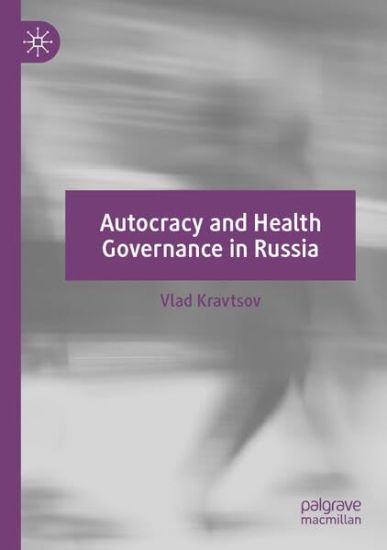
Autocracy and Health Governance in Russia

Autocracy and Health Governance in Russia

Vlad Kravtsov

Springer International Publishing AG
2022
sidottu
The book is the first attempt to investigate how and to what extent authoritarian (personalistic) regimes fail to provide fundamental goods and services. For two decades, Russian authorities spent much effort and money to improve health administration, but most success stories are borderline fake. The failure is by design; because personalistic regimes rely on personalized exchanges and bargains instead of impersonal rules and permanent organizations, all actors put self-interest ahead of patients’ needs. It is a severe problem because authoritarian principals proclaim social betterment as their central goal -- and many Russians take such claims at face value -- but incentivize their agents to imitate progress and tolerate slipshod performance. The benefits of this investigation are three-fold. First, the book provides an analytical framework of bad governance rooted in the rational institutionalist tradition and connected to competence-control theory. Second, it gives a general readership interested in how Russia works a sense of the key political players’ mindset and the regime-induced constraints under which elites operate. Third, although the book investigates health governance exclusively, its analytical framework is portable to other issue areas and could be applied to explain how and why Russia evolved into an ineffective, coercive, and predatory state under Putin’s leadership.
Autocracy and Health Governance in Russia

Autocracy and Health Governance in Russia

Vlad Kravtsov

Springer International Publishing AG
2023
nidottu
The book is the first attempt to investigate how and to what extent authoritarian (personalistic) regimes fail to provide fundamental goods and services. For two decades, Russian authorities spent much effort and money to improve health administration, but most success stories are borderline fake. The failure is by design; because personalistic regimes rely on personalized exchanges and bargains instead of impersonal rules and permanent organizations, all actors put self-interest ahead of patients’ needs. It is a severe problem because authoritarian principals proclaim social betterment as their central goal -- and many Russians take such claims at face value -- but incentivize their agents to imitate progress and tolerate slipshod performance. The benefits of this investigation are three-fold. First, the book provides an analytical framework of bad governance rooted in the rational institutionalist tradition and connected to competence-control theory. Second, it gives a general readership interested in how Russia works a sense of the key political players’ mindset and the regime-induced constraints under which elites operate. Third, although the book investigates health governance exclusively, its analytical framework is portable to other issue areas and could be applied to explain how and why Russia evolved into an ineffective, coercive, and predatory state under Putin’s leadership.
Vlad

Vlad

Carlos Fuentes

Dalkey Archive Press
2012
sidottu
Where, Carlos Fuentes asks, is a modern-day vampire to roost? Why not Mexico City, populated by ten million blood sausages (that is, people), and a police force who won't mind a few disappearances? "Vlad" is Vlad the Impaler, of course, whose mythic cruelty was an inspiration for Bram Stoker's Dracula. In this sly sequel, Vlad really is undead: dispossessed after centuries of mayhem by Eastern European wars and rampant blood shortages. More than a postmodern riff on "the vampire craze," Vlad is also an anatomy of the Mexican bourgeoisie, as well as our culture's ways of dealing with death. For--as in Dracula--Vlad has need of both a lawyer and a real-estate agent in order to establish his new kingdom, and Yves Navarro and his wife Asunci?n fit the bill nicely. Having recently lost a son, might they not welcome the chance to see their remaining child live forever? More importantly, are the pleasures of middle-class life enough to keep one from joining the legions of the damned?
Vlad

Vlad

Colin Martin

AuthorHouse UK
2021
pokkari
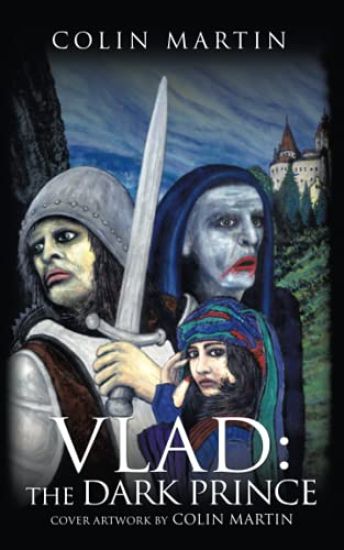
For years, Vlad had fought enemies to defend his realm, his people and his religion. And to honour his father and keep the Order of the Dragon, he had battled through extreme bloodshed, his cunning and defiance prevailing. But the Turks were advancing in increased numbers. With only his family, a depleted army and a group of travellers to entrust, would he be defeated, captured and tortured; or had he a darker option?
Vlad

Vlad

Stacey Rourke

Independently Published
2018
nidottu
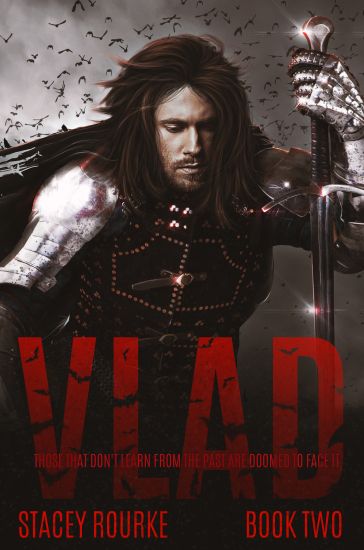
History believes me to be a merciless savage. A terror upon the Earth known as The Impaler. Archaic lore whispers I am the first of the vampire lineage. These claims ... are all painted in bloody truth. Now, while the world watches in fear, a war is brewing. Humans are targeting vampires in merciless attacks to force us back into the shadows. They woke me to be their weapon. They know not my loathing for my own kind. Even I cannot say for certain whose side I'm on. I have bowed before the alter of darkness rooted in the Nosferatu bloodline. Been forced to drink of its bitter sacrament. They refer to me as The Son of The Dragon, and I laugh. For I, alone, know that malevolent essence is one no man could ever tame. "Vlad is a dark paranormal with plenty of humor and smoking hot romance With so much on the line, the Nosferatu are looking for a savior, and they just might find one in someone they least expect. If you love vampires, this is a must-read series " -Award Winning Author Casey L. Bond
Vlad

Vlad

Charlotte Da Silva

Books on Demand
2019
pokkari
Was geschieht, wenn die Seele weder Himmel noch H lle verdient? 1462: Das Osmanische Reich ist unter Sultan Mehmed II. auf dem Vormarsch. Der f r seine Grausamkeit bekannte F rst der Walachei, Vlad Draculea, stellt sich den T rken mit all seiner Macht entgegen. Doch auch er droht zu scheitern, als ein Verb ndeter des Sultans eine Schwachstelle des gef rchteten Herrschers ausnutzt. Um die drohende Niederlage abzuwenden, trifft Vlad eine folgenschwere Entscheidung ...
Vlad

Vlad

Flavia Z. Drago

Turbine
2023
sidottu
Vampyren Vlad har en hemmelighed, som han skjuler bag sin sorte kappe.Men en dag beslutter han sig for at vise verden, hvem han virkelig er.Hvis han da tør...
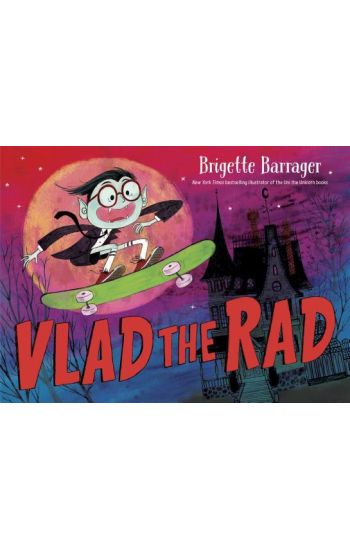
Vlad the Rad

Vlad the Rad

Brigette Barrager

Random House Books for Young Readers
2019
sidottu
NEW from the bestselling illustrator of Uni the Unicorn! A new mythical--and totally rad--character to laugh with and love.Vlad is always getting in trouble at Miss Fussbucket's School for Aspiring Spooks. Unlike the other little vampires, witches, mummies, and ghosts, Vlad isn't very interested in learning spookiness. That's because...Vlad loves to skateboard! How can he possibly think about being a good spook when all he wants to do is practice his latest gnarly trick? Maybe Vlad can find a way to do both!Brigette Barrager's debut author-illustrator project is full of energy, fun, and sweet tricks! Passionate kids will identify with Vlad, and will take heart from the way he combines his love of skateboarding with his schoolwork. A perfect Halloween read-aloud for the classroom!
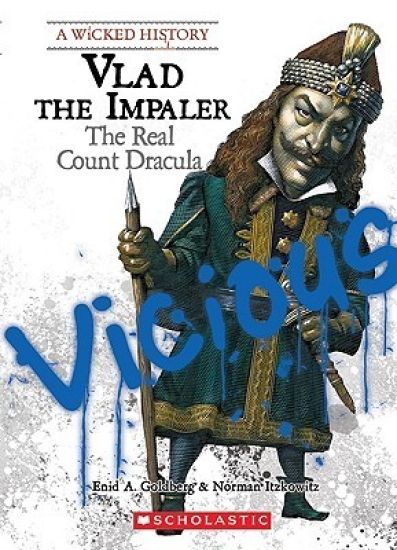
Vlad the Impaler: The Real Count Dracula (a Wicked History)

Vlad the Impaler: The Real Count Dracula (a Wicked History)

Enid A. Goldberg; Norman Itzkowitz

Franklin Watts
2008
nidottu
Explore the life of Vlad "the Impaler" Dracula, the fifteenth-century Romanian prince who served as a model for Bram Stoker's infamous vampire.The wicked ways of some of the most ruthless rulers to walk the earth are revealed in these thrilling biographies (A Wicked History) about men and women so monstrous, they make Frankenstein look like a sweetheart.
Vlad the Impaler

Vlad the Impaler

M. J. Trow

Sutton Publishing Ltd
2003
sidottu
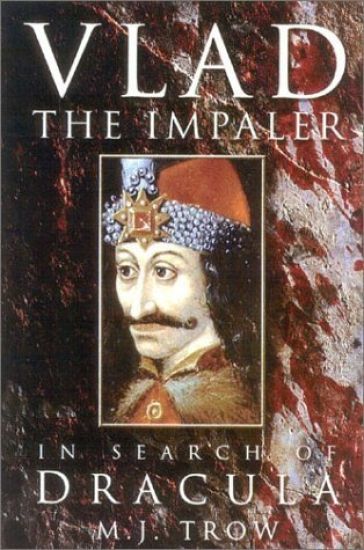
For many, Vlad the Impaler is the bloodsucking torturer recreated in Hollywood's "Interview with the Vampire" and the real character so vitally realized in Bram Stoker's "Dracula", the man recreated on screen by screen legends Bela Lugosi, Christopher Lee or Gary Oldman, or the vampire stalking through the pages of Ann Rice's novels. Later interpretations see him as a potent symbol of Nazi aggression in World War II, fired partly by Murnau's "Nosferatu" of the 1920s and the blood rites of the Aryans. But who was the real man who inspired the Dracula legend? Was he as gruesome as legend depicts, or, as some Romanians, refuting the popular image, suggest, an heroic 15th-century warrior and freedom fighter? Or is his reputation as a bloodthirsty mass-murderer, who sadistically impaled his victims, justified? In this title, the author peels back the layers of myth and history to reveal the 15th-century figure who was the real Vlad the Impaler.
Vlad the Impaler

Vlad the Impaler

M. J. Trow

Sutton Publishing Ltd
2007
pokkari
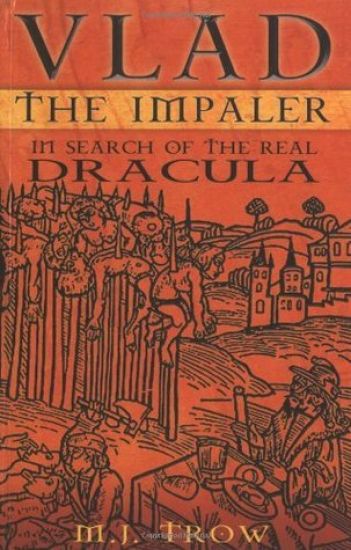
For many, Vlad the Impaler is the bloodsucking torturer recreated in Hollywood's Interview with the Vampire and the real character so vitally realised in Bram Stoker's Dracula, the man recreated on screen by screen legends Bela Lugosi, Christopher Lee or Gary Oldman, or the vampire stalking through the pages of Ann Rice's novels. Later interpretations see him as a potent symbol of Nazi aggression in WWII, fired partly by Murnau's Nosferatu of the 1920s and the blood rites of the Aryans. But who was the real man who inspired the Dracula legend? Was he as gruesome as legend depicts, or, as some Romanians, refuting the popular image, suggest, an heroic 15th century warrior and freedom fighter? Or is his reputation as a bloodthirsty mass-murderer, who sadistically impaled his victims, justified? In this new book, by acclaimed true crime historian Mei Trow, the author peels back the layers of myth and history to unravel to reveal the 15th century figure who was the real Vlad the Impaler.
Vlad Moranski: A Piece of Work

Vlad Moranski: A Piece of Work

Ken Samanski

Willowbrook Press
2016
nidottu
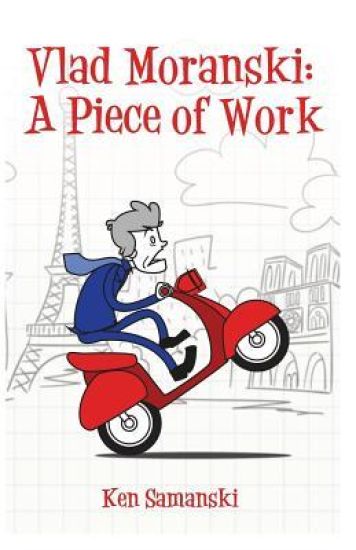
Death threats, jail time, and a history of distrustfulness aside, can Vlad Moranski --- a quick-witted, over-confident gentleman thief --- control his destiny? Or is he doomed to forever relive his past? "Vlad Moranski: A Piece of Work" takes a comedic look at how much control we truly have over our lives. A few excerpts from "Vlad Moranski: A Piece of Work": "BJ Williams bookstore was buzzing with Brits and frantic with Frenchies, a perfect cover for an unpublished writer to sneak in and check the status of eight white books with a hot-looking woman adorning the cover. Assuming my books were still on display in the back corner, I had no choice but to pass within a metre of the cashiers. I covered the left side of my head with my hand as I zipped by the same cashier I had sweet-talked two days before. Why the paranoia? Even if they'd spotted me and my illegal books, I knew I wouldn't have been sent to a Parisian slammer. Nevertheless, I wanted to avoid a potentially embarrassing situation over which I would have little control." "Kneeling beside the bush, her hulkish body making the laws of leverage a non-issue, she continued to pin me down with one elbow. I felt like a monarch butterfly mounted in a natural science museum exhibit."
Vlad and the First World War

Vlad and the First World War

Kate Cunningham

Reading Riddle
2017
nidottu
During the First World War carrier pigeons were essential for communicating at a time when telephones were unreliable. This is the tale of one pigeon and his essential role in saving lives. Vlad the flea narrates the story of his adventures with Crisp VC the carrier pigeon. The action is set on 25th March 1918 as they return from occupied Belgium with a secret message for the allies. Vlad explains how Crisp VC received his name from the Skipper of an armed smack in the North Sea, who died after engaging a German u-boat. During their flight to Britain Vlad and Crisp VC become caught up in a dog fight with the Red Baron, Fly over Second Lietenant Walter Tull in his trench, and land in a field hospital where Dr Phoebe Chapple tends to Crisp's injury. Finally Vlad and Crisp VC fly over the Indian Cavalry and cross the channel back to Britain to deliver their message.This account of their adventure is based on historically accurate information with a map, glossary and fact file included to explain the context. As a fully illustrated picture book the story is accessible to primary school children, but also celebrates a range of important people and emphasises the diversity of nationalities embroiled in the conflict. As a text it gives young children the opportunity to discuss who is remembered, how they are commemorated and if we could do more to celebrate the achievements of heroes who broke boundaries in the course of difficult and dangerous times.