A special mathematical apparatus of monomial matrices, is applied to the simulation of programmed transfer and rotation of a high-speed vehicle in space. Programmed transfer is described by a vector-hodograph in the class of spiral-helix trajectories. A method for constructing the hodograph of programmed motion is proposed. The kinetics of the programmed motion of a transport vehicle is considered in the forms of the Newton equations, Euler equations, Euler-Lagrange differential equations and is represented by quaternion matrices. The principle of kinetostatics is applied to the determination the resultant vector of driving forces and the resultant moment of force providing programmed transfer and rotation. A cascade method has been developed for the equivalent distribution of the resultant vector of driving forces and the resultant moment of force over the reference points, establishing the necessary reactivity of the constraint. The obtained analytical results are informative, adapted to computer technologies, intended for use in computational experiments to solve engineering problems of dynamic design of high-speed carriages of transport.
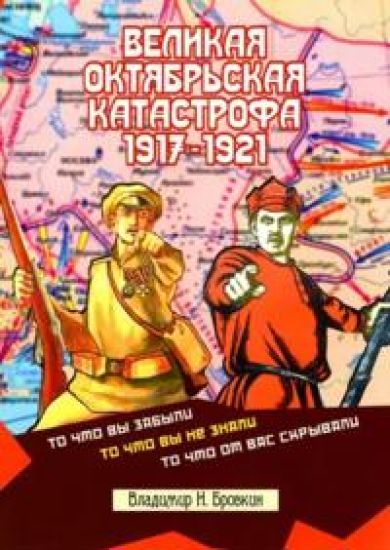
Eta kniga - o tom, kak russkaja revoljutsija 1917 goda pererosla v Grazhdanskuju vojn u 1917-1922 godov, okhvativshuju vse sloi naselenija. Izuchajutsja i analizirujutsja prichiny i posledstvija Oktjabrskogo perevorota 1917 goda. Po-novomu osmysljaetsja borba politicheskikh partij v 1917 godu, slabost novoj vlasti i skatyvanie ee metodov upravlenija ot khaosa k terroru. Grazhdanskaja vojn a rassmatrivaetsja i kak vzlet i padenie belogo dvizhenija, i kak voj na bolshevikov protiv krestjanskikh povstantsev - "zelenykh", privedshikh k Kronshtadtskomu i Tambovskomu vosstanijam. Osvescheno bolshoe kolichestvo faktov, iskazhennykh ili zabytykh blagodarja usilijam Lenina i ego partii, s tsitatami i ssylkami na neizvestnye dokumenty iz arkhivov mnogikh stran. Kniga pokazyvaet, pochemu Oktjabr 1917 goda sleduet otsenivat kak velikuju katastrofu dlja rossijskogo obschestva.
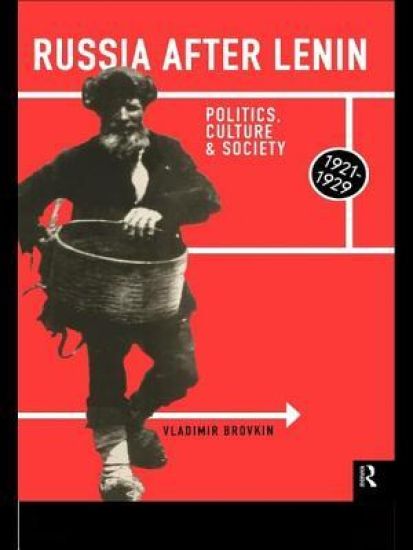
Following the Russian Revolution, the cultural and political landscape of Russia was strewn with contradictions. The dictatorship, censorship and repression of the Communist party existed alongside private enterprise, the black market and open debates on Socialism. In Russian Society and politics 1921-1929 Vladimir Brovkin offers a comprehensive cultural, political, economic and social history of developments in Russia in the 1920's. By examining the contrast between Bolshevik propaganda claims and social reality, the author explains how Communist representations were variously received and resisted by workers, peasants, students, women, teachers and party officials. He presents a picture of cultural diversity and rejection of Communist constraints through many means including unauthorised protest, religion, jazz music and poetry. In Russian Society and Politics 1921-1929 Vladimir Brovkin argues that these trends, if left unchecked, endangered the Communist Party's monopoly on political power. The Stalinist revolution can thus be seen as a pre-emptive strike against this independent and vibrant society as well as a product of Stalin's personality and communist ideology.
Following the Russian Revolution, the cultural and political landscape of Russia was strewn with contradictions. The dictatorship, censorship and repression of the Communist party existed alongside private enterprise, the black market and open debates on Socialism. In Russian Society and politics 1921-1929 Vladimir Brovkin offers a comprehensive cultural, political, economic and social history of developments in Russia in the 1920's. By examining the contrast between Bolshevik propaganda claims and social reality, the author explains how Communist representations were variously received and resisted by workers, peasants, students, women, teachers and party officials. He presents a picture of cultural diversity and rejection of Communist constraints through many means including unauthorised protest, religion, jazz music and poetry. In Russian Society and Politics 1921-1929 Vladimir Brovkin argues that these trends, if left unchecked, endangered the Communist Party's monopoly on political power. The Stalinist revolution can thus be seen as a pre-emptive strike against this independent and vibrant society as well as a product of Stalin's personality and communist ideology.
In this major contribution to our understanding of the Russian Revolution, Vladimir Brovkin provides the fullest account to date of the Menshevik party during the first year of Soviet rule. Focusing on the period from October 1917 through October 1918—months when the Soviet political system still permitted a degree of electoral competition among political parties—he explores the moderate socialists' opposition to the Bolsheviks. Why, he asks, did the competition between the Bolsheviks and their socialist opponents lead to a violent confrontation? And how did their struggle shape the increasingly repressive political system that emerged during this period? Brovkin examines several major aspects of Menshevik party history in an effort to discover the organization's place in the revolutionary upheavals that rocked Russian society. He analyzes the debates within the party over the best policy for opposing the Bolsheviks and describes the Mensheviks' attempt to undermine their rivals by winning the support of the working class. He depicts too the struggle for party leadership and the changing composition of the membership. Finally, Brovkin explores the Mensheviks' interactions with their sometime ally the Socialist Revolutionary (SR) party and other opposition groups and traces the increasingly confrontational competition between the moderate socialists and the Bolsheviks, concluding his account with the onslaught of the Red Terror and the first stage of the civil war. Drawing on an impressive array of primary sources, Brovkin convincingly shows that as the political struggle progressed, the Mensheviks, together with the SRs, were seen as a serious challenge to the Bolsheviks. He argues, further, that the Bolsheviks' determination to counter this perceived threat led them to undertake the repressive actions that both crushed their opposition and transformed the Soviet government into a dictatorship.
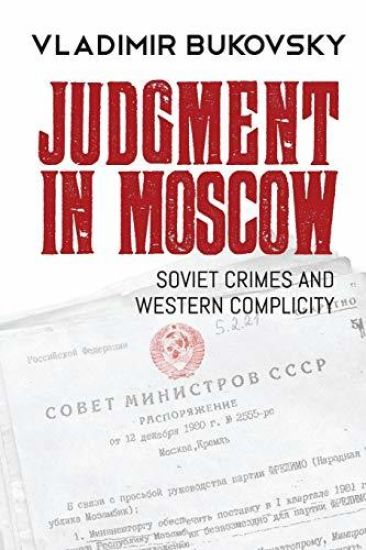
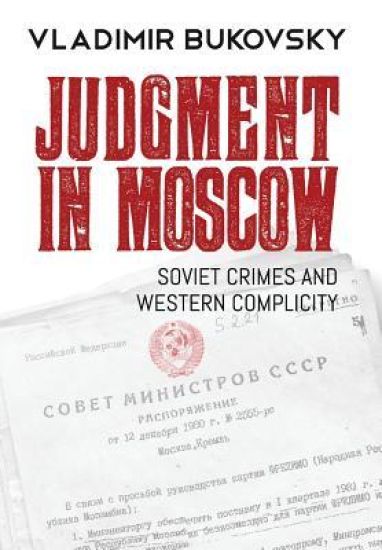
Secret Communist Party of the Soviet Union documents stolen by the author, a famous dissident, reveal decades of Soviet infiltration of Western politics and confidential collaboration by Western leaders. Contains translated excerpts from the Communist Party archives, and 400 fact-checked footnotes on events affected.
Secret Communist Party of the Soviet Union documents stolen by the author, a famous dissident, reveal decades of Soviet infiltration of Western politics and confidential collaboration by Western leaders.
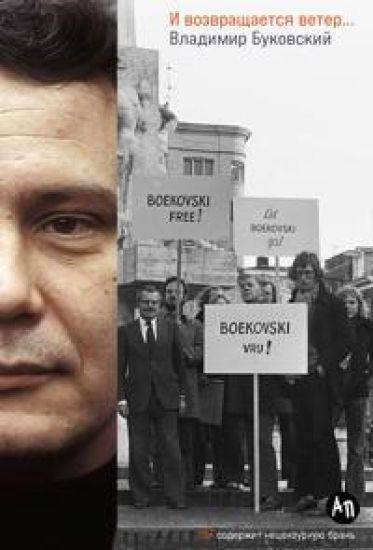
Kuulsa dissidendi Vladimir Bukovski (1942-2019) autobiograafiline raamat "Ja naaseb tuul...", mis on tõlgitud kümnetesse keeltesse, põhineb tema kogemustel võitluses nõukogude totalitarismi vastu.Raamat kirjeldab kahtteist aastat, mis autor veetis vanglates ja laagrites, põrandaalustest poliitilistest ühendustest ja avalikest protestidest, luulelugemistest Majakovski monumendi juures ja meeleavaldustest süüdimõistetute kaitseks, jälitustegevusest ja vandenõust.1976. aastal vahetasid Nõukogude võimud Bukovski välja Tshiili kommunistliku poliitiku Luis Corvalani vastu ning alates sellest ajast kuni oma elu lõpuni elas ta Inglismaal Cambridge'is.2008. aasta valimistel kandideeris Vladimir Bukovski Venemaa presidendiks.
Any organisational system seeks to improve (optimise) the efficiency of its activities in terms of achieving the goals it faces. Sometimes this optimisation is conducted by the intrinsic forces of the system itself (self organisation; however, sometimes it is conducted by external forces interested in improving the efficiency of its functioning, and sometimes it is conducted by both intrinsic and external forces. The scientific book "Systemic Regularities and Sytemic Optimization" (I Prangishvili, V Burkov, I Gorgidze, G Javakhadze, R Khurodze) describes effective approaches to solve the tasks of systemic optimixation. The authors state that the process of improving efficiently of an organisation can be in less detail shown as consisting of the three stages. For each stage, special methods and informational technologies are applied. The first stage comprises the elaboration of the development (improvement) strategy for the organisation. At the second stage according to the strategy elaborated at the previous stage the authors observe the change (optimisation) of the structure and parameters of the organisational system, which determine its functioning (i.e. specify the range of possible trajectories of its development). At last, at the third stage a specific trajectory (plan) of its development is determined. All three stages together are called systemic optimixation, "Systemic Regularities and Systemic Optimization" is recommended to management specialists, and, also, can be used for teaching, professional reference, etc.
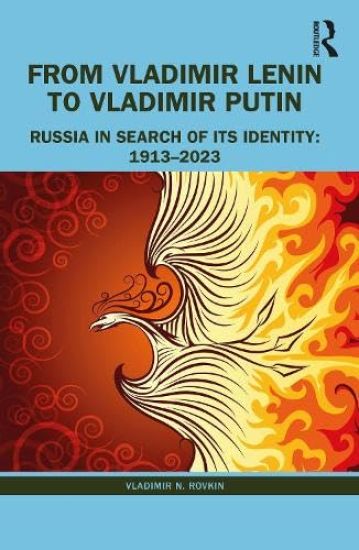
This book integrates Soviet and post-Soviet Russian history into a coherent whole by focusing on the culture, role models, habits and behavior patterns that provide continuity between various political regimes, systems, and rulers from Vladimir Lenin to Vladimir Putin.The unifying theme of all these periods is the central question of identity – how the Russians have defined themselves, their country, and their values. Why did the Bolsheviks try to erase any trace of Old Russia and with what did they try to replace it? Why did Stalin wipe out the kulaks and the old Bolsheviks? What were the political consequences of the Great Patriotic War on the Russians as people? When post-Stalin Russia slowly weakened and gave way to the humanism and Westernization that led to the collapse of the Soviet system, why did the 1990s generate a resurgence of anti-western nationalism? And how to explain the slow and steady break with the West under President Putin?This will be a core textbook for undergraduate and graduate students of Russian and European history, and a valuable text for all those interested in how the Russian past influenced and shaped current politics, and in the international East–West divide in particular.For YouTube discussions of the book, see:https://www.youtube.com/watch?v=lvG1G1cax-k https://www.youtube.com/watch?v=0W3V6nb3h18&t=3s