Kirjojen hintavertailu. Mukana 11 244 527 kirjaa ja 12 kauppaa.

Kirjahaku

Etsi kirjoja tekijän nimen, kirjan nimen tai ISBN:n perusteella.

1000 tulosta hakusanalla Vladimir Marko

Vladimir Markov and Russian Primitivism

Vladimir Markov and Russian Primitivism

Jeremy Howard; Irena Bužinska; Z.S. Strother

Routledge
2020
nidottu
Hailed as a brilliant theoretician, Voldemars Matvejs (best known by his pen name Vladimir Markov) was a Latvian artist who spearheaded the Union of Youth, a dynamic group championing artistic change in Russia, 1910-14. His work had a formative impact on Malevich, Tatlin, and the Constructivists before it was censored during the era of Soviet realism. This volume introduces Markov as an innovative and pioneering art photographer and assembles, for the first time, five of his most important essays. The translations of these hard-to-find texts are fresh, unabridged, and authentically poetic. Critical essays by Jeremy Howard and Irena Buzinska situate his work in the larger phenomenon of Russian ’primitivism’, i.e. the search for the primal. This book challenges hardening narratives of primitivism by reexamining the enthusiasm for world art in the early modern period from the perspective of Russia rather than Western Europe. Markov composed what may be the first book on African art and Z.S. Strother analyzes both the text and its photographs for their unique interpretation of West African sculpture as a Kantian ’play of masses and weights’. The book will appeal to students of modernism, orientalism, ’primitivism’, historiography, African art, and the history of the photography of sculpture.
Vladimir Markov and Russian Primitivism

Vladimir Markov and Russian Primitivism

Jeremy Howard; Irena Bužinska; Z.S. Strother

Routledge
2016
sidottu
Hailed as a brilliant theoretician, Voldemars Matvejs (best known by his pen name Vladimir Markov) was a Latvian artist who spearheaded the Union of Youth, a dynamic group championing artistic change in Russia, 1910-14. His work had a formative impact on Malevich, Tatlin, and the Constructivists before it was censored during the era of Soviet realism. This volume introduces Markov as an innovative and pioneering art photographer and assembles, for the first time, five of his most important essays. The translations of these hard-to-find texts are fresh, unabridged, and authentically poetic. Critical essays by Jeremy Howard and Irena Buzinska situate his work in the larger phenomenon of Russian ’primitivism’, i.e. the search for the primal. This book challenges hardening narratives of primitivism by reexamining the enthusiasm for world art in the early modern period from the perspective of Russia rather than Western Europe. Markov composed what may be the first book on African art and Z.S. Strother analyzes both the text and its photographs for their unique interpretation of West African sculpture as a Kantian ’play of masses and weights’. The book will appeal to students of modernism, orientalism, ’primitivism’, historiography, African art, and the history of the photography of sculpture.

From Aspirin to Viagra

From Aspirin to Viagra

Vladimir Marko

Springer Nature Switzerland AG
2020
nidottu
From Aspirin to Viagra, insulin to penicillin, and vaccines to vitamin supplements, drugs have become part of our everyday lives. This staggering global industry wasn’t born overnight; advancements in pharmaceutical science have been happening for a long while, over the course of decades and even centuries.This book tells the history of ten prominent substances and how they came to be common household names. It shows how the creation of such influential drugs often began with the right person at the exactly right—or wrong!— time. The chapters tell the stories of geniuses and charlatans; scholars and amateurs; advances won through hard work or pure luck; and ultimately, the handful of resounding successes that revolutionized a global industry.Beyond the pioneers of the most famous drugs in our culture, the book analyzes how our perspective on medical treatment has shifted over the decades. Modern standards for testing and administering substances have created a new set of advantages, setbacks, and stigmas, all of which are discussed herein.
Quasiconformal Maps and Teichmüller Theory

Quasiconformal Maps and Teichmüller Theory

Alastair Fletcher; Vladimir Markovic

Oxford University Press
2006
sidottu
Based on a series of graduate lectures given by Vladimir Markovic at the University of Warwick in spring 2003, this book is accessible to those with a grounding in complex analysis looking for an introduction to the theory of quasiconformal maps and Teichmüller theory. Assuming some familiarity with Riemann surfaces and hyperbolic geometry, topics covered include the Grötzch argument, analytical properties of quasiconformal maps, the Beltrami differential equation, holomorphic motions and Teichmüller spaces. Where proofs are omitted, references to where they may be found are always given, and the text is clearly illustrated throughout with diagrams, examples, and exercises for the reader.
Semi-Markov Random Evolutions

Semi-Markov Random Evolutions

Vladimir S. Korolyuk; Anatoly Swishchuk

Springer
1994
sidottu
The evolution of systems in random media is a broad and fruitful field for the applica­ tions of different mathematical methods and theories. This evolution can be character­ ized by a semigroup property. In the abstract form, this property is given by a semigroup of operators in a normed vector (Banach) space. In the practically boundless variety of mathematical models of the evolutionary systems, we have chosen the semi-Markov ran­ dom evolutions as an object of our consideration. The definition of the evolutions of this type is based on rather simple initial assumptions. The random medium is described by the Markov renewal processes or by the semi­ Markov processes. The local characteristics of the system depend on the state of the ran­ dom medium. At the same time, the evolution of the system does not affect the medium. Hence, the semi-Markov random evolutions are described by two processes, namely, by the switching Markov renewal process, which describes the changes of the state of the external random medium, and by the switched process, i.e., by the semigroup of oper­ ators describing the evolution of the system in the semi-Markov random medium.
Semi-Markov Random Evolutions

Semi-Markov Random Evolutions

Vladimir S. Korolyuk; Anatoly Swishchuk

Springer
2012
nidottu
The evolution of systems in random media is a broad and fruitful field for the applica­ tions of different mathematical methods and theories. This evolution can be character­ ized by a semigroup property. In the abstract form, this property is given by a semigroup of operators in a normed vector (Banach) space. In the practically boundless variety of mathematical models of the evolutionary systems, we have chosen the semi-Markov ran­ dom evolutions as an object of our consideration. The definition of the evolutions of this type is based on rather simple initial assumptions. The random medium is described by the Markov renewal processes or by the semi­ Markov processes. The local characteristics of the system depend on the state of the ran­ dom medium. At the same time, the evolution of the system does not affect the medium. Hence, the semi-Markov random evolutions are described by two processes, namely, by the switching Markov renewal process, which describes the changes of the state of the external random medium, and by the switched process, i.e., by the semigroup of oper­ ators describing the evolution of the system in the semi-Markov random medium.
Zhizn Dmitrija Markova

Zhizn Dmitrija Markova

Vladimir Sevrinovskij

Freedom Letters
2026
nidottu
Vydajuschijsja sovremennyj fotograf Dmitrij Markov ne fiksiroval rossijskuju realnost so storony - on zhil v samoj gusche epokhi. "Likhie devjanostye", podjom volontjorskogo dvizhenija, mitingi v podderzhku Pussy Riot i Alekseja Navalnogo, razoblachenie uchastija rossijskoj armii v vojne na Donbasse v 2014 godu - vsjo eto bylo chastju ego biografii. Polnomasshtabnoe vtorzhenie v Ukrainu raskololo ego auditoriju i uskorilo gibel Dmitrija. Kniga o Markove - ne tolko rasskaz o fotografe, no i popytka zapechatlet vremja, v kotorom lichnaja sudba neotdelima ot sudby strany.
Hamiltonian Cycle Problem and Markov Chains

Hamiltonian Cycle Problem and Markov Chains

Vivek S. Borkar; Vladimir Ejov; Jerzy A. Filar; Giang T. Nguyen

Springer-Verlag New York Inc.
2012
sidottu
This research monograph summarizes a line of research that maps certain classical problems of discrete mathematics and operations research - such as the Hamiltonian Cycle and the Travelling Salesman Problems - into convex domains where continuum analysis can be carried out. Arguably, the inherent difficulty of these, now classical, problems stems precisely from the discrete nature of domains in which these problems are posed. The convexification of domains underpinning these results is achieved by assigning probabilistic interpretation to key elements of the original deterministic problems. In particular, the approaches summarized here build on a technique that embeds Hamiltonian Cycle and Travelling Salesman Problems in a structured singularly perturbed Markov decision process. The unifying idea is to interpret subgraphs traced out by deterministic policies (including Hamiltonian cycles, if any) as extreme points of a convex polyhedron in a space filled with randomized policies.The above innovative approach has now evolved to the point where there are many, both theoretical and algorithmic, results that exploit the nexus between graph theoretic structures and both probabilistic and algebraic entities of related Markov chains. The latter include moments of first return times, limiting frequencies of visits to nodes, or the spectra of certain matrices traditionally associated with the analysis of Markov chains. However, these results and algorithms are dispersed over many research papers appearing in journals catering to disparate audiences. As a result, the published manuscripts are often written in a very terse manner and use disparate notation, thereby making it difficult for new researchers to make use of the many reported advances.Hence the main purpose of this book is to present a concise and yet easily accessible synthesis of the majority of the theoretical and algorithmicresults obtained so far. In addition, the book discusses numerous open questions and problems that arise from this body of work and which are yet to be fully solved. The approach casts the Hamiltonian Cycle Problem in a mathematical framework that permits analytical concepts and techniques, not used hitherto in this context, to be brought to bear to further clarify both the underlying difficulty of NP-completeness of this problem and the relative exceptionality of truly difficult instances. Finally, the material is arranged in such a manner that the introductory chapters require very little mathematical background and discuss instances of graphs with interesting structures that motivated a lot of the research in this topic. More difficult results are introduced later and are illustrated with numerous examples.
Hamiltonian Cycle Problem and Markov Chains

Hamiltonian Cycle Problem and Markov Chains

Vivek S. Borkar; Vladimir Ejov; Jerzy A. Filar; Giang T. Nguyen

Springer-Verlag New York Inc.
2014
nidottu
This research monograph summarizes a line of research that maps certain classical problems of discrete mathematics and operations research - such as the Hamiltonian Cycle and the Travelling Salesman Problems - into convex domains where continuum analysis can be carried out. Arguably, the inherent difficulty of these, now classical, problems stems precisely from the discrete nature of domains in which these problems are posed. The convexification of domains underpinning these results is achieved by assigning probabilistic interpretation to key elements of the original deterministic problems. In particular, the approaches summarized here build on a technique that embeds Hamiltonian Cycle and Travelling Salesman Problems in a structured singularly perturbed Markov decision process. The unifying idea is to interpret subgraphs traced out by deterministic policies (including Hamiltonian cycles, if any) as extreme points of a convex polyhedron in a space filled with randomized policies.The above innovative approach has now evolved to the point where there are many, both theoretical and algorithmic, results that exploit the nexus between graph theoretic structures and both probabilistic and algebraic entities of related Markov chains. The latter include moments of first return times, limiting frequencies of visits to nodes, or the spectra of certain matrices traditionally associated with the analysis of Markov chains. However, these results and algorithms are dispersed over many research papers appearing in journals catering to disparate audiences. As a result, the published manuscripts are often written in a very terse manner and use disparate notation, thereby making it difficult for new researchers to make use of the many reported advances.Hence the main purpose of this book is to present a concise and yet easily accessible synthesis of the majority of the theoretical and algorithmicresults obtained so far. In addition, the book discusses numerous open questions and problems that arise from this body of work and which are yet to be fully solved. The approach casts the Hamiltonian Cycle Problem in a mathematical framework that permits analytical concepts and techniques, not used hitherto in this context, to be brought to bear to further clarify both the underlying difficulty of NP-completeness of this problem and the relative exceptionality of truly difficult instances. Finally, the material is arranged in such a manner that the introductory chapters require very little mathematical background and discuss instances of graphs with interesting structures that motivated a lot of the research in this topic. More difficult results are introduced later and are illustrated with numerous examples.
Religion and Law in Serbia

Religion and Law in Serbia

Marko Nikolic; Vladimir Davidovic+; Darko Tanaskovic

Kluwer Law International
2024
pokkari
Derived from the renowned multi-volume International Encyclopaedia of Laws, this convenient resource provides systematic information on how Serbia deals with the role religion plays or can play in society, the legal status of religious communities and institutions, and the legal interaction among religion, culture, education, and media. After a general introduction describing the social and historical background, the book goes on to explain the legal framework in which religion is approached. Coverage proceeds from the principle of religious freedom through the rights and contractual obligations of religious communities; international, transnational, and regional law effects; and the legal parameters affecting the influence of religion in politics and public life. Also covered are legal positions on religion in such specific fields as church financing, labour and employment, and matrimonial and family law. A clear and comprehensive overview of relevant legislation and legal doctrine make the book an invaluable reference source and very useful guide. Succinct and practical, this book will prove to be of great value to practitioners in the myriad instances where a law-related religious interest arises in Serbia. Academics and researchers will appreciate its value as a thorough but concise treatment of the legal aspects of diversity and multiculturalism in which religion plays such an important part.
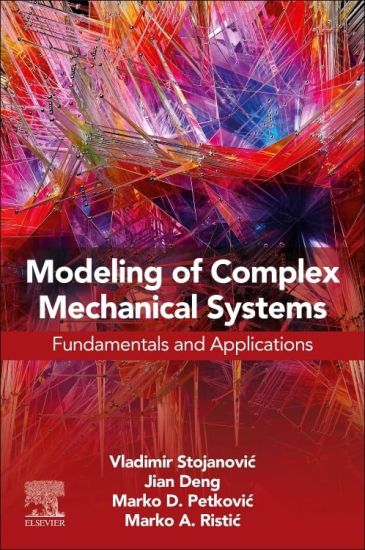
Modeling of Complex Dynamic Systems

Modeling of Complex Dynamic Systems

Vladimir Stojanovic; Jian Deng; Marko D. Petkovic; Marko A. Ristic

Elsevier - Health Sciences Division
2025
nidottu
Motion is the essence of any mechanical system. Analyzing a system’s dynamical response to distinct motion parameters allows for increased understanding of its performance thresholds and can in turn provide clear data to inform improved system designs. Modeling of Complex Dynamic Systems: Fundamentals and Applications equips readers with significant insights into nonlinear vibration phenomenology through a combination of advanced mathematical fundamentals and worked-through modeling experiments. To guide them in determining novel stabilization characteristics for complex moving objects, coupled structures, as well as the stochastic stability of mechanical systems, the technical and methodological analysis is accompanied by industry-relevant practical examples, contributing much sought-after applicable knowledge. The book is intended for use by postgraduate students, academic researchers, and professional engineers alike.
Healthier Food: Design and development of foods with improved functional and nutritional properties

Healthier Food: Design and development of foods with improved functional and nutritional properties

Vladimir S. Kurcubic; Nemanja M. Miletic; Slaviša B. Stajic; Marko M. Petkovic

Springer International Publishing AG
2025
sidottu
Food reformulation is a modern strategy aimed at developing healthier or functional foods, with proven positive effects on human health. Minimal food processing using innovative food preservation methods (with thermal processing at more moderate temperature regimes) allows for maximum preservation of the biological value of foods, especially those that are enriched or fortified, usually with phytochemicals, a combination of processes or in some other way. The use of secondary/waste products from the food industry has found its place in the monograph, due to the topicality of the circular economy and environmental protection, as the latest area in the reformulation and creation of sustainable production of healthier foods. The most promising innovative solutions in this area are not sufficiently known to the wider scientific, professional and consumer public. Healthier Food: Design and development of foods with improved functional and nutritional properties covers the design of innovative reformulated or enriched animal products (meat and milk) and products obtained by processing plant raw materials (bakery products). The chapters provide a clear insight into the challenges in the process of developing new, modified products and food technology and hygiene and the science of ingredients that make up the architecture of added-value food, initiating effective reformulation strategies. The book will be a useful reference for food engineers and scientists, policy makers and students interested in safe and quality food and the preservation and improvement of health through incorporation of functional components in food.