Kirjojen hintavertailu. Mukana 11 244 527 kirjaa ja 12 kauppaa.

Kirjahaku

Etsi kirjoja tekijän nimen, kirjan nimen tai ISBN:n perusteella.

1000 tulosta hakusanalla Volker Martin

Kali Darad - Königin der Arena

Kali Darad - Königin der Arena

Volker Martin

Createspace Independent Publishing Platform
2016
pokkari
Blutr nstig und unberechenbar ist Kali Darad die gr te Attraktion der Arena von Ballamar. Ein Wesen, geboren um zut ten. Nur dem gesuchten Barden Taros Goll gelingt es, hinter ihre grausameFassade zu schauen und das Wesen dahinter zu erkennen. Gemeinsam fliehensie vor den J gern des Kolosseums vonLarrad und was anfangs von Argwohn undVorurteilen durchzogen ist, entwickeltsich zu etwas einzigartigem.
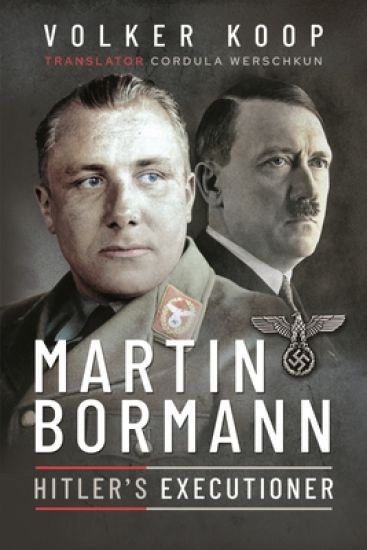
Martin Bormann

Martin Bormann

Volker Koop

Frontline Books
2020
sidottu
Born on 17 June 1900, Martin Ludwig Bormann became one of the most powerful and most feared men in the Third Reich. An obsessive bureaucrat, it was Bormann who helped steer Hitler's apparatus of terror so effectively that he became the clandestine ruler of Nazi Germany. After joining the Nazi Party in 1927 Bormann rose through its ranks. Indeed, by July 1933 Bormann had manoeuvered himself into the position where he became the Chief of Cabinet in the Office of the Deputy F hrer, Rudolf Hess. In this role Bormann gradually consolidated his power base, so that when Hess carried out his infamous flight to the United Kingdom in 1941, Bormann stepped into his shoes. As the head of the Party Chancellery, Bormann duly took control of the Nazi Party. By the end of 1942, he was in effect Hitler's deputy and his closest collaborator. With the F hrer increasingly preoccupied with military matters, Hitler came to rely more and more on Bormann to handle Germany's domestic affairs. On 12 April 1943, Bormann was appointed Personal Secretary to the F hrer. Feared by ministers, Gauleiters, civil servants, judges and generals alike, Bormann identified strongly with Hitler's ideas on racial politics, destruction of the Jews and forced labour and made himself indispensable as the F hrer's executioner. Cold as ice, he decided the fate of millions of people. In January 1945, with the Third Reich collapsing, Bormann returned to the F hrerbunker with Hitler. Following Hitler's suicide on 30 April, Bormann was named as Party Minister, thus officially confirming his rise to the top of the Party. Late the following day he fled from the bunker in an attempt to escape the encircling Red Army; his fate remaining a mystery for many years. In October 1946 he was found guilty in absentia by the International Military Tribunal at Nuremberg and sentenced to death. Drawing heavily on recently declassified documents and files, the historian and journalist Volker Koop reveals the full story of the most faithful member of Hitler's inner circle, an individual who, whilst little known to the German people, became the second most powerful man in the Third Reich.
Martin Bormann

Martin Bormann

Volker Koop

PEN SWORD BOOKS LTD
2024
nidottu
Born on 17 June 1900, Martin Ludwig Bormann became one of the most powerful and most feared men in the Third Reich. An obsessive bureaucrat, it was Bormann who helped steer Hitler's apparatus of terror so effectively that he became the clandestine ruler of Nazi Germany. After joining the Nazi Party in 1927 Bormann rose through its ranks. Indeed, by July 1933 Bormann had manoeuvered himself into the position where he became the Chief of Cabinet in the Office of the Deputy Fuhrer, Rudolf Hess. In this role Bormann gradually consolidated his power base, so that when Hess carried out his infamous flight to the United Kingdom in 1941, Bormann stepped into his shoes. As the head of the Party Chancellery, Bormann duly took control of the Nazi Party. By the end of 1942, he was in effect Hitler's deputy and his closest collaborator. With the Fuhrer increasingly preoccupied with military matters, Hitler came to rely more and more on Bormann to handle Germany's domestic affairs. On 12 April 1943, Bormann was appointed Personal Secretary to the Fuhrer. Feared by ministers, Gauleiters, civil servants, judges and generals alike, Bormann identified strongly with Hitler's ideas on racial politics, destruction of the Jews and forced labour and made himself indispensable as the Fuhrer's executioner. Cold as ice, he decided the fate of millions of people. In January 1945, with the Third Reich collapsing, Bormann returned to the Fuhrerbunker with Hitler. Following Hitler's suicide on 30 April, Bormann was named as Party Minister, thus officially confirming his rise to the top of the Party. Late the following day he fled from the bunker in an attempt to escape the encircling Red Army; his fate remaining a mystery for many years. In October 1946 he was found guilty in absentia by the International Military Tribunal at Nuremberg and sentenced to death. Drawing heavily on recently declassified documents and files, the historian and journalist Volker Koop reveals the full story of the most faithful member of Hitler's inner circle, an individual who, whilst little known to the German people, became the second most powerful man in the Third Reich.
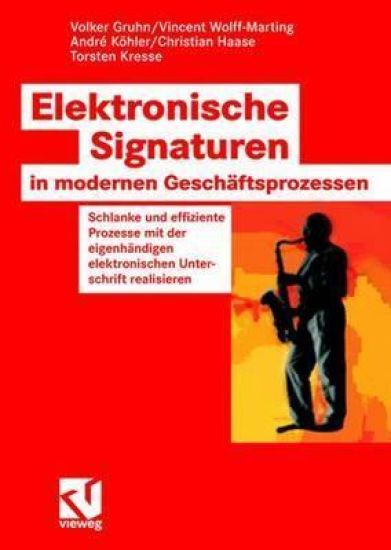
Elektronische Signaturen in modernen Geschäftsprozessen

Elektronische Signaturen in modernen Geschäftsprozessen

Volker Gruhn; Vincent Wolff-Marting; Andre Köhler; Christian Haase; Torsten Kresse

Vieweg+teubner Verlag
2007
nidottu
Kostensenkungen, E?zienzsteigerungen und die Erhöhung der Flexibilität hinsichtlich zukünftiger Anforderungen ist ein allgegenwärtiges und wich- ges Thema bei der Gestaltung und Verbesserung von Geschäftsprozessen. Um diese Ziele zu erreichen, sind viele verschiedene Maßnahmen denkbar, die in Abhängigkeit von der jeweiligen Bescha?enheit des Unternehmens und der Situation in den relevanten Märkten ausgewählt und gestaltet werden können. Die Vermeidung von Papierdokumenten in geschäftlichen Abläufen kann - zu einen wichtigen Beitrag leisten. Dies wird vielfach schon erfolgreich dur- geführt. Jedoch müssen bestimmte Dokumente aus rechtlichen oder organi- torischen Gründen mit Unterschriften versehen sein. In diesen Fällen ist die Verwendung eines elektronischen Äquivalents nicht ohne weiteres möglich. Für den Druck, die Bereitstellung, den Transport, die Auswertung und die Archivierung solcher Dokumente entstehen oft erhebliche Kosten. Die Pot- ziale moderner Informationstechnologie können in solchen Fällen nicht oder nur sehr begrenzt genutzt werden. Um solche unterschriftsbehafteten Dokumente, statt in Papierform, in el- tronischer Form zu verwenden, sind vier wesentliche Komponenten nötig. Es werden zunächst ausreichende rechtliche Grundlagen für eine solche Subs- tution benötigt, es werden technische Voraussetzungen zur Realisierung der Substitution gebraucht, es müssen organisatorische Veränderungen in den - schäftsprozessen statt?nden und es muss sichergestellt werden, dass die bet- ligten Personen die gescha?ene technische Lösung akzeptieren und benutzen.
Brandschutz im Hochbau

Brandschutz im Hochbau

Martin Homann; Volker Nees; Marion Meinert M.Sc.

Springer Fachmedien Wiesbaden
2023
sidottu
Ein umfassender Leitfaden zum Brandschutz, der alle relevanten planerischen und konstruktiven Aspekte behandelt sowie Ingenieurmethoden aufzeigt. Beginnend mit den erforderlichen Grundlagen, von den Regelwerken über das Brandverhalten von Baustoffen, bis hin zur Klassifizierung von Baustoffen und Bauteilen, folgt der 2. Abschnitt mit der Thematik des vorbeugenden Brandschutzes im Planungsprozess unter Berücksichtigung von Sonderbauten und Bestandsgebäuden. Der 3. Teil behandelt Modellierungen und Simulationen (Ingenieurmethoden) des Brandschutzes.