Kirjojen hintavertailu. Mukana 12 363 633 kirjaa ja 12 kauppaa.

Kirjahaku

Etsi kirjoja tekijän nimen, kirjan nimen tai ISBN:n perusteella.

1000 tulosta hakusanalla Volker Ziemann

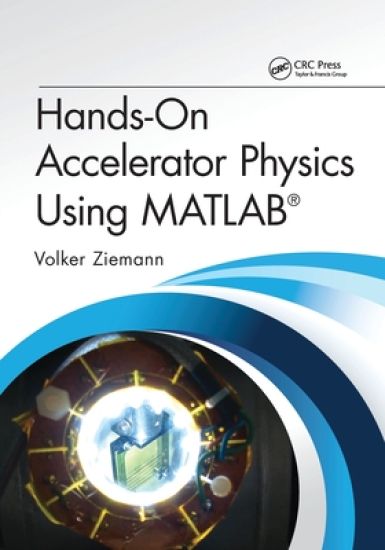
Hands-On Accelerator Physics Using MATLAB®
Awarded one of BookAuthority's best new Particle Physics books in 2019!Hands-On Accelerator Physics Using MATLAB® provides an introduction into the design and operational issues of a wide range of particle accelerators, from ion-implanters to the Large Hadron Collider at CERN. Many aspects from the design of beam optical systems and magnets, to the subsystems for acceleration, beam diagnostics, and vacuum are covered. Beam dynamics topics ranging from the beam-beam interaction to free-electron lasers are discussed. Theoretical concepts and the design of key components are explained with the help of MATLAB® code. Practical topics, such as beam size measurements, magnet construction and measurements, and radio-frequency measurements are explored in student labs without requiring access to an accelerator. This unique approach provides a look at what goes on 'under the hood' inside modern accelerators and presents readers with the tools to perform their independent investigations on the computer or in student labs. This book will be of interest to graduate students, postgraduate researchers studying accelerator physics, as well as engineers entering the field.Features: Provides insights into both synchrotron light sources and collidersDiscusses technical subsystems, including magnets, radio-frequency engineering, instrumentation and diagnostics, correction of imperfections, control, and cryogenicsAccompanied by MATLAB® code, including a 3D-modeler to visualize the accelerators, and additional appendices which are available on the CRC Press website
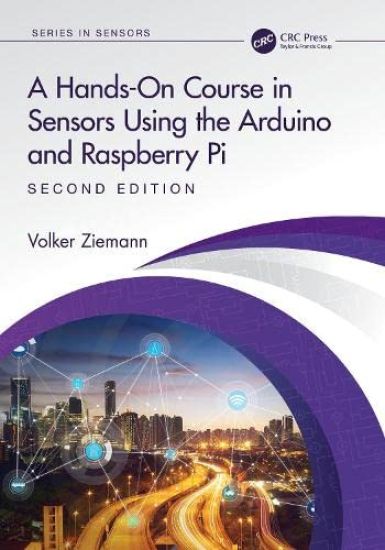
A Hands-On Course in Sensors Using the Arduino and Raspberry Pi
A Hands-On Course in Sensors Using the Arduino and Raspberry Pi is the first book to give a practical and wide-ranging account of how to interface sensors and actuators with micro-controllers, Raspberry Pi and other control systems. The author describes the progression of raw signals through conditioning stages, digitization, data storage and presentation.The collection, processing, and understanding of sensor data plays a central role in industrial and scientific activities. This book builds simplified models of large industrial or scientific installations that contain hardware and other building blocks, including services for databases, web servers, control systems, and messaging brokers. A range of case studies are included within the book, including a weather station, ground-vibration measurements, impedance measurements, interfacing medical sensors to web browsers, the profile of a laser beam, and a remote-controlled and fire-seeking robot.This second edition has been updated throughout to reflect new hardware and software releases since the book was first published. Newly added features include the ESP32 microcontroller, several environmental and medical sensors, actuators for signal generation, as well as a chapter on web sockets; all illustrated in new case studies.This book is suitable for advanced undergraduate and graduate students taking hands-on laboratory courses in physics and engineering. Hobbyists in robotics clubs and other enthusiasts will also find this book of interest.Features:Includes practical, hands-on exercises that can be conducted in student labs, or even at homeCovers the latest software and hardware, and all code featured in examples is discussed in detailAll steps are illustrated with practical examples and case studies to enhance learninghttps://github.com/volkziem/HandsOnSensors2ed
A Hands-On Course in Sensors Using the Arduino and Raspberry Pi
A Hands-On Course in Sensors Using the Arduino and Raspberry Pi is the first book to give a practical and wide-ranging account of how to interface sensors and actuators with micro-controllers, Raspberry Pi and other control systems. The author describes the progression of raw signals through conditioning stages, digitization, data storage and presentation.The collection, processing, and understanding of sensor data plays a central role in industrial and scientific activities. This book builds simplified models of large industrial or scientific installations that contain hardware and other building blocks, including services for databases, web servers, control systems, and messaging brokers. A range of case studies are included within the book, including a weather station, ground-vibration measurements, impedance measurements, interfacing medical sensors to web browsers, the profile of a laser beam, and a remote-controlled and fire-seeking robot.This second edition has been updated throughout to reflect new hardware and software releases since the book was first published. Newly added features include the ESP32 microcontroller, several environmental and medical sensors, actuators for signal generation, as well as a chapter on web sockets; all illustrated in new case studies.This book is suitable for advanced undergraduate and graduate students taking hands-on laboratory courses in physics and engineering. Hobbyists in robotics clubs and other enthusiasts will also find this book of interest.Features:Includes practical, hands-on exercises that can be conducted in student labs, or even at homeCovers the latest software and hardware, and all code featured in examples is discussed in detailAll steps are illustrated with practical examples and case studies to enhance learninghttps://github.com/volkziem/HandsOnSensors2ed
Hands-On Accelerator Physics Using MATLAB®

Hands-On Accelerator Physics Using MATLAB®

Volker Ziemann

TAYLOR FRANCIS LTD
2025
sidottu
Hands-On Accelerator Physics Using MATLAB®, Second Edition, provides a broad introduction into the physics and the technology of particle accelerators from synchrotron light sources to high-energy colliders. It covers the design of beam optics, magnets, and radio-frequency systems, followed by a discussion of beam instrumentation and correction algorithms. Later chapters deal with the interaction of beams with targets, the emission of synchrotron radiation, and intensity limitations. Chapters discussing running and future accelerators round up the presentation. Theoretical concepts and the design of key components are explained with the help of MATLAB code. Practical topics, such as beam size measurements, magnet construction and measurements, and radio-frequency measurements are explored in student labs that do not require access to an accelerator. This unique approach provides a look at what goes on "under the hood" inside modern accelerators and presents readers with the tools to perform their independent investigations on the computer or in student labs. This book will be of interest to graduate students, post-graduate researchers studying accelerator physics, as well as engineers entering the field.The second edition features a new chapter on future accelerators and several new sections on polarization, neutrino beams, testing of superconducting cavities, and matching in longitudinal phase space, among others.The MATLAB code was updated to be consistent with the recent release of R2024a. All code is available from the book’s GitHub site at https://github.com/volkziem/HandsOnAccelerators2nd.Key features:Provides a broad introduction into physics of particle accelerators from synchrotron light sources to high-energy colliders. Discusses technical subsystems, including magnets, radio-frequency engineering, instrumentation and diagnostics, correction of imperfections, control, vacuum, and cryogenics.Illustrates key concepts with sample code in MATLAB.
Hands-On Accelerator Physics Using MATLAB®
Awarded one of BookAuthority's best new Particle Physics books in 2019!Hands-On Accelerator Physics Using MATLAB® provides an introduction into the design and operational issues of a wide range of particle accelerators, from ion-implanters to the Large Hadron Collider at CERN. Many aspects from the design of beam optical systems and magnets, to the subsystems for acceleration, beam diagnostics, and vacuum are covered. Beam dynamics topics ranging from the beam-beam interaction to free-electron lasers are discussed. Theoretical concepts and the design of key components are explained with the help of MATLAB® code. Practical topics, such as beam size measurements, magnet construction and measurements, and radio-frequency measurements are explored in student labs without requiring access to an accelerator.This unique approach provides a look at what goes on 'under the hood' inside modern accelerators and presents readers with the tools to perform their independent investigations on the computer or in student labs. This book will be of interest to graduate students, postgraduate researchers studying accelerator physics, as well as engineers entering the field.Features:Provides insights into both synchrotron light sources and collidersDiscusses technical subsystems, including magnets, radio-frequency engineering, instrumentation and diagnostics, correction of imperfections, control, and cryogenicsAccompanied by MATLAB® code, including a 3D-modeler to visualize the accelerators, and additional appendices which are available on the CRC Press websiteMATLAB live-scripts to accompany the book can be found here: https://ziemann.web.cern.ch/ziemann/mybooks/mlx/
Physics and Finance

Physics and Finance

Volker Ziemann

Springer Nature Switzerland AG
2021
sidottu
This book introduces physics students to concepts and methods of finance. Despite being perceived as quite distant from physics, finance shares a number of common methods and ideas, usually related to noise and uncertainties. Juxtaposing the key methods to applications in both physics and finance articulates both differences and common features, this gives students a deeper understanding of the underlying ideas. Moreover, they acquire a number of useful mathematical and computational tools, such as stochastic differential equations, path integrals, Monte-Carlo methods, and basic cryptology. Each chapter ends with a set of carefully designed exercises enabling readers to test their comprehension.
Physics and Finance

Physics and Finance

Volker Ziemann

Springer Nature Switzerland AG
2022
nidottu
This book introduces physics students to concepts and methods of finance. Despite being perceived as quite distant from physics, finance shares a number of common methods and ideas, usually related to noise and uncertainties. Juxtaposing the key methods to applications in both physics and finance articulates both differences and common features, this gives students a deeper understanding of the underlying ideas. Moreover, they acquire a number of useful mathematical and computational tools, such as stochastic differential equations, path integrals, Monte-Carlo methods, and basic cryptology. Each chapter ends with a set of carefully designed exercises enabling readers to test their comprehension.
Physik und Finanzen

Physik und Finanzen

Volker Ziemann

Springer International Publishing AG
2023
nidottu
Dieses Buch führt Physikstudenten in die Konzepte und Methoden der Finanzwissenschaft ein. Obwohl die Finanzwissenschaft als recht weit von der Physik entfernt wahrgenommen wird, teilt sie eine Reihe gemeinsamer Methoden und Ideen, die in der Regel mit Rauschen und Unsicherheiten zu tun haben. Durch die Gegenüberstellung der wichtigsten Methoden mit Anwendungen in der Physik und im Finanzwesen werden sowohl die Unterschiede als auch die Gemeinsamkeiten deutlich, was den Studierenden ein tieferes Verständnis der zugrunde liegenden Ideen vermittelt. Darüber hinaus lernen sie eine Reihe nützlicher mathematischer und rechnerischer Werkzeuge kennen, wie stochastische Differentialgleichungen, Pfadintegrale, Monte-Carlo-Methoden und grundlegende Kryptologie. Jedes Kapitel endet mit einer Reihe sorgfältig ausgearbeiteter Übungen, mit denen die Leser ihr Verständnis überprüfen können.
Beams

Beams

Volker Ziemann

Springer International Publishing AG
2024
nidottu
This book describes and explains the world of particle accelerators and the physics they study. The presentation is non-technical (E=mc2 is the only equation!) and the prose accessible. By following the co-evolution of particle accelerators and particle physics, readers will learn why the accelerators are built, how they work, and what "results" they produce. The book highlights the great ideas (e.g. synchrotron) and technological advances (superconducting magnets) that boosted the potential of accelerators and led to new discoveries, eventually resulting in the standard model of particle physics. Many concepts are illustrated with figures derived from three-dimensional models; these include theaccelerators, detectors, and particles. Background information about the main protagonists, along with pointers to further reading, e.g. from "Scientific American," are provided in endnotes.
Teilchenbeschleuniger

Teilchenbeschleuniger

Volker Ziemann

Springer International Publishing AG
2025
nidottu
Dieses Buch beschreibt und erklärt die Welt der Teilchenbeschleuniger und die Physik, die sie erforschen. Die Darstellung ist nicht technisch (E=mc² ist die einzige Gleichung!) und die Prosa ist leicht zugänglich. Durch das Verfolgen der gemeinsamen Evolution von Teilchenbeschleunigern und Teilchenphysik werden die Leser erfahren, warum Beschleuniger gebaut werden, wie sie funktionieren und welche „Ergebnisse” sie produzieren. Das Buch hebt die großartigen Ideen (z.B. das Synchrotron) und technologischen Fortschritte (supraleitende Magnete) hervor, die das Potenzial der Beschleuniger erhöhten und zu neuen Entdeckungen führten, die schließlich im Standardmodell der Teilchenphysik gipfelten. Viele Konzepte werden mit Abbildungen dargestellt, die aus dreidimensionalen Modellen abgeleitet sind; dazu gehören die Beschleuniger, Detektoren und Teilchen. Hintergrundinformationen über die Hauptakteure sowie Hinweise auf weiterführende Literatur, z.B. aus "Scientific American", werden in Endnoten bereitgestellt. Ein zusätzlicher Beitrag „Deutsche Beschleuniger” ist als Zusatzmaterial zu diesem Buch frei verfügbar.
Volker Schlondorff's Cinema

Volker Schlondorff's Cinema

Hans Moeller; George Lellis

Southern Illinois University Press
2012
nidottu
Examines the work of major postwar German director Volker Schlöndorff in historical, economic, and artistic contexts. Incorporating a film-by-film, twenty-eight chapter study, Hans-Bernhard Moeller and George Lellis reveal a complexity and formal ambitiousness of Schlöndorff’s work that are comparable to the work of Wenders, Herzog, and Fassbinder.
Volker Hermes: Hidden Portraits

Volker Hermes: Hidden Portraits

Volker Hermes

ACC Art Books
2024
sidottu
Volker Hermes: Hidden Portraits gathers the essential works by one of the most beguiling artists of the present era, in a very modern reinterpretation of historical privilege. Using only elements of the original paintings, Volker Hermes masterfully alters photos of historical portraits to mask the faces of their subjects. With each figure concealed under their own ceremonial attire, these one-time elites quickly lose their individuality in a plume of decorations and accessories. In this official collection, Hermes delivers his wry commentary on wealth, fame and social status with taut imagery, intense focus and a suitably shrewd sense of humour. His immaculately reproduced artworks are accompanied by the thoughts of German art historian Till-Holger Borchert and Professor Francesca Raimondi of Berlin’s Institute for Philosophy, as well as the artist himself. A must-have revision of classical portraiture from a celebrated digital creator. "Hermes’s meticulously described collages pay homage to their sources while gently ribbing the social pretensions and ambitions of the courtly classes." – Christopher Alessandrini, metmuseum.org
Völker- und Europarechtsfreundlichkeit als Verfassungsgrundsätze
Völker- und Europarechtsfreundlichkeit sind anerkannte ungeschriebene Verfassungsgrundsätze. Sie haben die Aufgabe, bei Regelungskonflikten im Mehrebenenrechtssystem normative Lösungen zu formulieren, um den Mangel an positiv-rechtlichen Konflikt- und Kollisionsnormen zu überwinden. Wesentlicher Baustein ist die "Offene Staatlichkeit" des deutschen Verfassungsstaates, die die überstaatliche Rechtsintegration erlaubt und damit die Offenheit gegenüber dem Einfluss überstaatlichen Rechts auf das nationale Recht formuliert. Dabei gehen die Völkerrechtsfreundlichkeit und die Europarechtsfreundlichkeit über ein rein deskriptives Verständnis hinaus. Sie entfalten konkrete Rechtsfolgen im prozeduralen und materiellen Sinn. Als ungeschriebene Rechtsgrundsätze sind sie an das geschriebene Verfassungsrecht und an die Grenzen des Art. 79 Abs.3 GG gebunden.
Volker Tschuschke Kurzgruppenpsychotherapie Theorie und Praxis
Die Möglichkeit der Inanspruchnahme von Psychotherapie wird zunehmend von ökonomischen Zwängen eingeschränkt. Die begrenzten Ressourcen erfordern immer mehr, neue Behandlungskonzepte zu entwickeln, um unterschiedlichste psychische, psychiatrische, psychosomatische und somatische Erkrankungen in kürzerer Zeit zu behandeln. Ausgehend vom Zeitbegriff der Moderne werden umfassend Sinnhaftigkeit und Möglichkeiten zeitbegrenzter Psychotherapie – speziell in therapeutischen Gruppen – reflektiert und diskutiert. Die therapeutische Kurzzeitgruppe bietet die ökonomischste Form psychotherapeutischer Hilfe überhaupt an und steht den Wirkungen von Einzeltherapien in nichts nach. Therapeutische Kurzzeitgruppen sind in den vielfältigsten stationären Behandlungssettings Standard und können genauso im ambulanten Bereich genutzt werden. Das Buch behandelt erstmals umfassend den Bereich therapeutischer Gruppen im Kurzzeitformat.