Vyvyan's Vicarage is a place where the life forces of the past exert a terrible influence over those of the present. It sits empty and waiting - waiting for a new family to step into the tangled web of its tragic past.Viv and Pete Parsons, uncomfortably crammed into a tiny house with their two daughters, are overjoyed when they manage to find the ideal home. The vicarage seems to have everything their growing family needs; it is spacious, affordable and well appointed.However, shortly after moving in, strange unexplainable things start to happen. Looking back into the past for an explanation, Viv attempts to piece together the lives of the previous occupants of the house and finds disturbing similarities between her own family and the last family to occupy the house as a home. Slowly but surely the echoes of the past reach out to overwhelm Viv's family as she fights desperately to save them all from oblivion.
Charlotte Parsons knew that the tragic events which unfolded at Vyvyan's Vicarage would continue to haunt her for the rest of her life unless she faced up to her fears and her loss.When the chance of a job brings her once again to the village of Purseley, she discovers that the urge to find out what happened to her parents and sister far outweighs her reluctance to return to live there. Against the wishes of her surviving family she accepts the new job but soon finds that the dark forces which haunt the vicarage are only too eager to resume the vendetta.She is torn between her loyalties to the two boys she is employed to look after and her own desire for self-preservation but knows that she can never rest until she knows the truth. With the aid of her dead mother's diary and research notes, she determinedly sets out to uncover just why she is being targeted and battles desperately to bring peace to the house and its inhabitants, both living and dead.
This work has been selected by scholars as being culturally important, and is part of the knowledge base of civilization as we know it. This work was reproduced from the original artifact, and remains as true to the original work as possible. Therefore, you will see the original copyright references, library stamps (as most of these works have been housed in our most important libraries around the world), and other notations in the work.This work is in the public domain in the United States of America, and possibly other nations. Within the United States, you may freely copy and distribute this work, as no entity (individual or corporate) has a copyright on the body of the work.As a reproduction of a historical artifact, this work may contain missing or blurred pages, poor pictures, errant marks, etc. Scholars believe, and we concur, that this work is important enough to be preserved, reproduced, and made generally available to the public. We appreciate your support of the preservation process, and thank you for being an important part of keeping this knowledge alive and relevant.
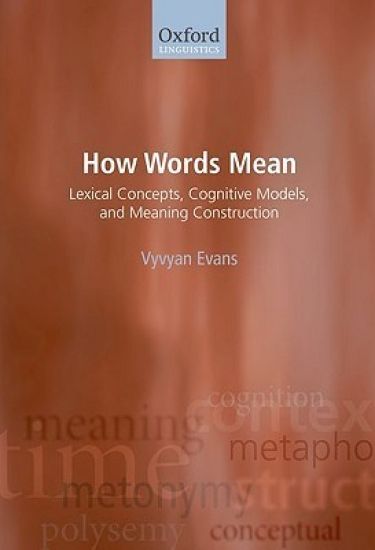
How Words Mean introduces a new approach to the role of words and other linguistic units in the construction of meaning. It does so by addressing the interaction between non-linguistic concepts and the meanings encoded in language. It develops an account of how words are understood when we produce and hear language in situated contexts of use. It proposes two theoretical constructs, the lexical concept and the cognitive model. These are central to the accounts of lexical representation and meaning construction developed, giving rise to the Theory of Lexical Concepts and Cognitive Models (or LCCM Theory). Vyvyan Evans integrates and advances recent developments in cognitive science, particularly in cognitive linguistics and cognitive psychology. He builds a framework for the understanding and analysis of meaning that is at once descriptively adequate and psychologically plausible. In so doing he also addresses current issues in lexical semantics and semantic compositionality, polysemy, figurative language, and the semantics of time and space, and writes in a way that will be accessible to students of linguistics and cognitive science at advanced undergraduate level and above.
How Words Mean introduces a new approach to the role of words and other linguistic units in the construction of meaning. It does so by addressing the interaction between non-linguistic concepts and the meanings encoded in language. It develops an account of how words are understood when we produce and hear language in situated contexts of use. It proposes two theoretical constructs, the lexical concept and the cognitive model. These are central to the accounts of lexical representation and meaning construction developed, giving rise to the Theory of Lexical Concepts and Cognitive Models (or LCCM Theory). Vyvyan Evans integrates and advances recent developments in cognitive science, particularly in cognitive linguistics and cognitive psychology. He builds a framework for the understanding and analysis of meaning that is at once descriptively adequate and psychologically plausible. In so doing he also addresses current issues in lexical semantics and semantic compositionality, polysemy, figurative language, and the semantics of time and space, and writes in a way that will be accessible to students of linguistics and cognitive science at advanced undergraduate level and above.
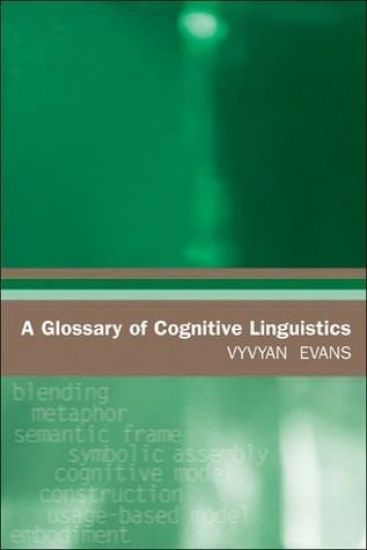
Cognitive linguistics is one of the most rapidly expanding schools in linguistics with, by now, an impressive and complex technical vocabulary. This alphabetic guide gives an up-to-date introduction to the key terms in cognitive linguistics, covering all the major theories, approaches, ideas and many of the relevant theoretical constructs. The Glossary also features a brief introduction to cognitive linguistics, a detailed annotated reading list and a listing of some of the key researchers in cognitive linguistics. The Glossary can be used as a companion volume to Cognitive Linguistics, by Vyvyan Evans and Melanie Green, or as a stand-alone introduction to cognitive linguistics and its two hitherto best developed sub-branches: cognitive semantics, and cognitive approaches to grammar. Key features: * A handy and easily understandable pocket guide for anyone embarking on courses in cognitive linguistics, and language and mind. * Supplies numerous cross-references to related terms. * Includes coverage of newer areas such as Radical Construction Grammar, Embodied Construction Grammar, Primary MetaphorTheory and Principled Polysemy.
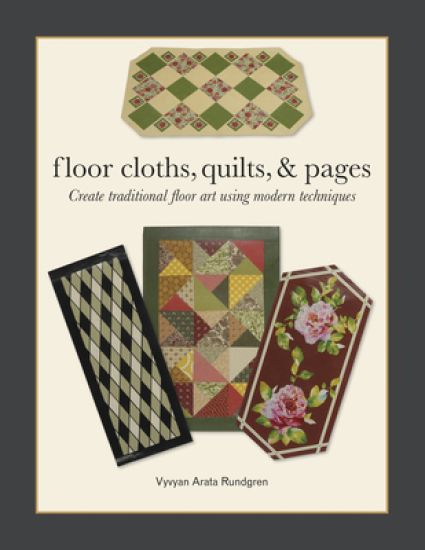
Learn the traditional American craft of creating painted floor cloths and then experiment with fabrics and papers to create beautiful floor quilts and floor pages. These colorful, painted canvases were developed in Europe in the early 1400s, used as alternatives to carpets and for table coverings in homes and churches. Durable and decorative, they were used widely throughout the 1700s and 1800s until they were replaced by linoleum in the late 19th century. Today, homeowners enjoy them for their handcrafted, artisan appeal. With more than 200 color images, this book includes step-by-step instructions for making floor cloths, floor quilts, and floor pages, as well as a gallery of inspiring finished pieces in a wide range of styles. Employing modern techniques and materials, these projects are easy enough for beginners but will also appeal to crafters who want to expand their repertoire.
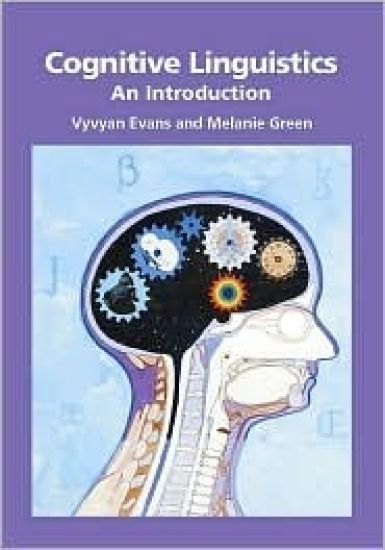
A general introduction to the area of theoretical linguistics known as cognitive linguistics, this textbook provides up-to-date coverage of all areas of the field, including recent developments within cognitive semantics (such as Primary Metaphor Theory, Conceptual Blending Theory, and Principled Polysemy), and cognitive approaches to grammar (such as Radical Construction Grammar and Embodied Construction Grammar). The authors offer clear, critical evaluations of competing formal approaches within theoretical linguistics. For example, cognitive linguistics is compared to Generative Grammar and Relevance Theory. In the selection of material and in the presentations, the authors have aimed for a balanced perspective.Part II, Cognitive Semantics, and Part III, Cognitive Approaches to Grammar, have been created to be read independently. The authors have kept in mind that different instructors and readers will need to use the book in different ways tailored to their own goals. The coverage is suitable for a number of courses.While all topics are presented in terms accessible to both undergraduate and graduate students of linguistics, cognitive linguistics, psycholinguistics, cognitive science, and modern languages, this work is sufficiently comprehensive and detailed to serve as a reference work for scholars who wish to gain a better understanding of cognitive linguistics.
Using language and thought to fix events in time is one of the most complex computational feats that humans perform. In the first book-length taxonomy of temporal frames of reference, Vyvyan Evans provides an overview of the role of space in structuring human representations of time. Challenging the assumption that time is straightforwardly structured in terms of space, he shows that while space is important for temporal representation, time is nevertheless separate and distinguishable from it. Evans argues for three distinct temporal frames of reference in language and cognition and evaluates the nature of temporal reference from a cross-linguistic perspective. His central thesis is that the hallmark of temporal reference is transience, a property unique to the domain of time. This important study has implications not only for the relationship between space and time, but also for that between language and figurative thought, and the nature of linguistically-mediated meaning construction.
Language is central to our lives, the cultural tool that arguably sets us apart from other species. Some scientists have argued that language is innate, a type of unique human 'instinct' pre-programmed in us from birth. In this book, Vyvyan Evans argues that this received wisdom is, in fact, a myth. Debunking the notion of a language 'instinct', Evans demonstrates that language is related to other animal forms of communication; that languages exhibit staggering diversity; that we learn our mother tongue drawing on general properties and abilities of the human mind, rather than an inborn 'universal' grammar; that language is not autonomous but is closely related to other aspects of our mental lives; and that, ultimately, language and the mind reflect and draw upon the way we interact with others in the world. Compellingly written and drawing on cutting-edge research, The Language Myth sets out a forceful alternative to the received wisdom, showing how language and the mind really work.
From the barbed, childish taunt on the school playground, to the eloquent sophistry of a lawyer prising open a legal loophole in a court of law, meaning arises each time we use language to communicate with one another. How we use language - to convey ideas, make requests, ask a favour, and express anger, love or dismay - is of the utmost importance; indeed, linguistic meaning can be a matter of life and death. In The Crucible of Language, Vyvyan Evans explains what we know, and what we do, when we communicate using language; he shows how linguistic meaning arises, where it comes from, and the way language enables us to convey the meanings that can move us to tears, bore us to death, or make us dizzy with delight. Meaning is, he argues, one of the final frontiers in the mapping of the human mind.
From the barbed, childish taunt on the school playground, to the eloquent sophistry of a lawyer prising open a legal loophole in a court of law, meaning arises each time we use language to communicate with one another. How we use language - to convey ideas, make requests, ask a favour, and express anger, love or dismay - is of the utmost importance; indeed, linguistic meaning can be a matter of life and death. In The Crucible of Language, Vyvyan Evans explains what we know, and what we do, when we communicate using language; he shows how linguistic meaning arises, where it comes from, and the way language enables us to convey the meanings that can move us to tears, bore us to death, or make us dizzy with delight. Meaning is, he argues, one of the final frontiers in the mapping of the human mind.








![Precis of Information Concerning the British Central Africa Protectorate. with Notes on Adjoining Territories. Compiled in the Intelligence Division, War Office, by Major C. B. Vyvyan ... Feb. 1899. [With Two Maps.] - War College Series](/covers/9781296477196.jpg)