Kirjojen hintavertailu. Mukana 11 244 527 kirjaa ja 12 kauppaa.

Kirjahaku

Etsi kirjoja tekijän nimen, kirjan nimen tai ISBN:n perusteella.

1000 tulosta hakusanalla W B Sprague

Visual Centers in the Brain

Visual Centers in the Brain

G. Berlucchi; G. S. Brindley; B. Brooks; O. D. Creutzfeldt; E. Dodt; R. W. Doty; H.-J. Freund; C. G. Gross; D. A. Jeffreys; R. Jung; U. Kuhnt; D. M. MacKay; E. Marg; N. Negrão; G. Rizzolatti; J. M. Sprague; G. Székely; J. Szentágothai; D. Whitteridge
Springer-Verlag Berlin and Heidelberg GmbH Co. K
2011
nidottu
W.B. Yeats and the Muses

W.B. Yeats and the Muses

Joseph M. Hassett

Oxford University Press
2015
nidottu
W.B. Yeats and the Muses explores how nine fascinating women inspired much of W.B. Yeats's poetry. These women are particularly important because Yeats perceived them in terms of beliefs about poetic inspiration akin to the Greek notion that a great poet is inspired and possessed by the feminine voices of the Muses. Influenced by the Pre-Raphaelite idea of woman as 'romantic and mysterious, still the priestess of her shrine', Yeats found his Muses in living women. His extraordinarily long and fruitful poetic career was fuelled by passionate relationships with women to and about whom he wrote some of his most compelling poetry. The book summarizes the different Muse traditions that were congenial to Yeats and shows how his perception of these women as Muses underlies his poetry. Newly available letters and manuscripts are used to explore the creative process and interpret the poems. Because Yeats believed that lyric poetry 'is no rootless flower, but the speech of a man,' exploring the relationship between poem and Muse brings new coherence to the poetry, illuminates the process of its creation, and unlocks the 'second beauty' to which Yeats referred when he claimed that 'works of lyric genius, when the circumstances of their origin is known, gain a second a beauty, passing as it were out of literature and becoming life.' As life emerges from the literature, the Muses are shown to be vibrant, multi-faceted personalities who shatter the idea of the Muse as a passive stereotype and take their proper place as begetters of timeless poetry.
W.B. Yeats and the Muses

W.B. Yeats and the Muses

Joseph M. Hassett

Oxford University Press
2010
sidottu
W.B. Yeats and the Muses explores how nine fascinating women inspired much of W.B. Yeats's poetry. These women are particularly important because Yeats perceived them in terms of beliefs about poetic inspiration akin to the Greek notion that a great poet is inspired and possessed by the feminine voices of the Muses. Influenced by the Pre-Raphaelite idea of woman as 'romantic and mysterious, still the priestess of her shrine', Yeats found his Muses in living women. His extraordinarily long and fruitful poetic career was fuelled by passionate relationships with women to and about whom he wrote some of his most compelling poetry. The book summarizes the different Muse traditions that were congenial to Yeats and shows how his perception of these women as Muses underlies his poetry. Newly available letters and manuscripts are used to explore the creative process and interpret the poems. Because Yeats believed that lyric poetry 'is no rootless flower, but the speech of a man,' exploring the relationship between poem and Muse brings new coherence to the poetry, illuminates the process of its creation, and unlocks the 'second beauty' to which Yeats referred when he claimed that 'works of lyric genius, when the circumstances of their origin is known, gain a second a beauty, passing as it were out of literature and becoming life.' As life emerges from the literature, the Muses are shown to be vibrant, multi-faceted personalities who shatter the idea of the Muse as a passive stereotype and take their proper place as begetters of timeless poetry.
W.B. Yeats, the Abbey Theatre, Censorship, and the Irish State
W.B. Yeats, the Abbey Theatre, Censorship, and the Irish State: Adding the Half-pence to the Pence utilizes new source material to reconstruct the current understanding of the relationship between the productions of the Abbey Theatre and the politics of the Irish state. This study begins in 1916, at the start of the Irish Revolution and in the midst of the theatre's financial crisis, and it ends with the death of the Abbey Theatre's last surviving founder, W.B. Yeats. To date, histories of the Abbey Theatre have repeated Yeats's assertion that there was no censorship of the theatre in Ireland. However, this study incorporates financial records, government correspondence, Dáil debates, and minutes from the Abbey's directors' meetings to produce surprising conclusions: censorship of the theatre did occur, but it occurred internally rather than by external means. Yeats and his fellow directors privately self-censored plays when there was potential for financial gain, such as in the Abbey's campaign for a state-sponsored reconstruction scheme - the details of which have never been explored prior to this study. Any attempts by the state to directly interfere in the theatre's programme were unsuccessful but were manipulated by the press-savvy Yeats in order to create profitable controversies. Despite Yeats's vocal campaign against censorship, his organisation of the Irish Academy of Letters, and his famous speeches from the Abbey stage decrying the censorship of the 'mob', he was willing to sacrifice the freedom of the artist when he foresaw an opportunity to ensure the longevity of his theatrical enterprise.
W.B. Yeats

W.B. Yeats

NA NA

Palgrave Macmillan
1996
nidottu
One of the most influential figures of the twentieth century, William Butler Yeats (1865-1939) is among the greatest poets to have written in the English language. He was a multi-talented writer, fascinated by the occult, an important dramatist, critic and autobiographer, with a career extending over more than fifty years. Professor Jeffares investigates the relationship between Yeats's life and his work. He considers the crucial moments as well as the famous relationships that changed Yeats's destiny. A founder of the Abbey Theatre, Dublin, Yeats was also a Senator of the Irish Free State. His life has provided a remarkably rich and varied canvas for this timeless biography.
W.B. Yeats

W.B. Yeats

Alasdair D.F. Macrae

PALGRAVE MACMILLAN
1994
nidottu
This is not a straightforward biography but rather an attempt to describe and examine Yeats as a phenomenon, partly shaped by forces and movements around him and partly shaping the public events of his time. His position in literary, political and cultural matters is detailed and the book offers, through the study of Yeats, an introduction to the fashions of ideas between the late nineteenth and early twentieth centuries.
The Secret Rose, Stories by W. B. Yeats: A Variorum Edition
This is a reissue of a much-admired variorum edition of Yeats's stories. 'This edition, which includes previously unpublished texts, gives a text history, which establishes once and for all the extent to which Yeats's work was modified by editors. Truly definitive. Indispensible for any major collection, including public libraries.' Library Journal
W.B. Yeats and World Literature

W.B. Yeats and World Literature

Barry Sheils

Routledge
2019
nidottu
Arguing for a reconsideration of William Butler Yeats’s work in the light of contemporary studies of world literature, Barry Sheils shows how reading Yeats enables a fuller understanding of the relationship between the extensive map of world literary production and the intensities of poetic practice. Yeats’s appropriation of Japanese Noh theatre, his promotion of translations of Rabindranath Tagore and Shri Purohit Swãmi, and his repeated ventures into American culture signalled his commitment to moving beyond Europe for his literary reference points. Sheils suggests that a reexamination of the transnational character of Yeats's work provides an opportunity to reflect critically on the cosmopolitan assumptions of world literature, as well as on the politics of modernist translation. Through a series of close and contextual readings, the book demonstrates how continuing global debates around the crises of economic liberalism and democracy, fanaticism, asymmetric violence, and bioethics were reflected in the poet's formal and linguistic concerns. Challenging orthodox readings of Yeats as a late-romantic nationalist, W.B. Yeats and World Literature: The Subject of Poetry makes a compelling case for reading Yeats’s work in the context of its global modernity.
W.B. Yeats

W.B. Yeats

Routledge
1997
sidottu
This set comprises of 40 volumes covering nineteenth and twentieth century European and American authors. These volumes will be available as a complete set, mini boxed sets (by theme) or as individual volumes. This second set compliments the first 68 volume set of Critical Heritage published by Routledge in October 1995.
W.B. Yeats

W.B. Yeats

Routledge
2010
nidottu
This set comprises of 40 volumes covering nineteenth and twentieth century European and American authors. These volumes will be available as a complete set, mini boxed sets (by theme) or as individual volumes. This second set compliments the first 68 volume set of Critical Heritage published by Routledge in October 1995.
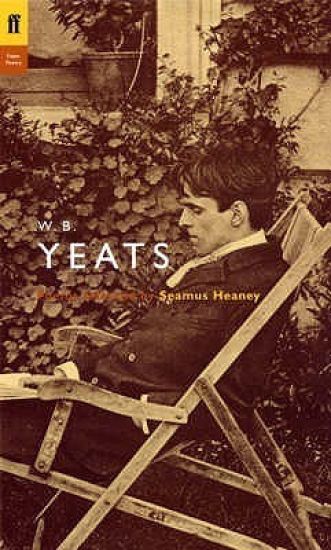
W. B. Yeats

W. B. Yeats

W.B. Yeats

Faber Faber
2004
nidottu
In this series, a contemporary poet selects and introduces a poet of the past. By their choice of poems and by the personal and critical reactions they express in their prefaces, the editors offer insights into their own work as well as providing an accessible and passionate introduction to some of the greatest poets in our literature.W. B. Yeats (1865-1939) was born in Dublin, and was educated in Ireland and England. He was instrumental in the development of a national Irish theatre - and in particular, the founding of the Abbey Theatre. He was awarded the Nobel Prize for Literature in 1923.
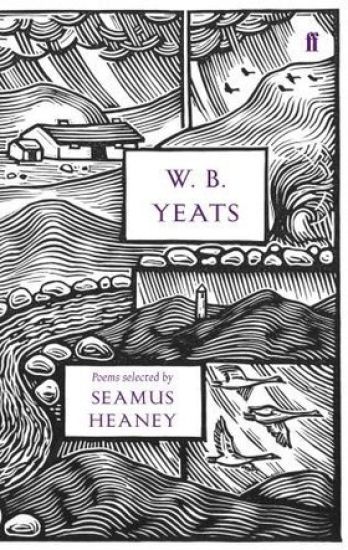
W. B. Yeats

W. B. Yeats

W.B. Yeats

Faber Faber
2009
sidottu
W. B. Yeats (1865-1939) was not only Ireland's greatest poet but one of the most influential voices in world literature in the twentieth century. His extraordinary work, in the words of this volume's editor Seamus Heaney, encourages us 'to be more resolutely and abundantly alive, whatever the conditions.'Other volumes in this series: Auden, Betjemen, Eliot, Hughes and Plath
W.B. Yeats

W.B. Yeats

A. Norman Jeffares

Continuum International Publishing Group Ltd.
2001
nidottu
This volume, a reissue of the 1990 edition of Jeffares's biography of Yeats, with a new introduction and bibliography, is an account of Yeats's life and work. It features a collection of previously unpublished letters, photographs and poetry.
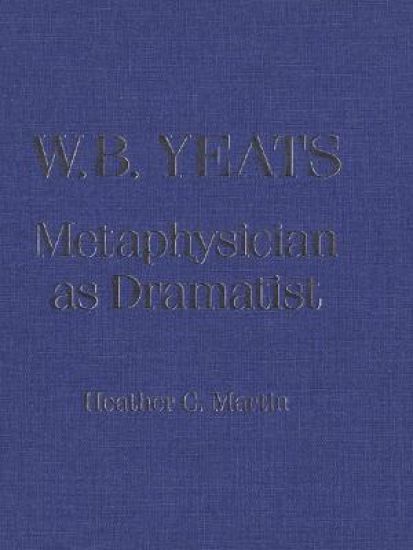
W.B. Yeats

W.B. Yeats

Martin Heather C.

WILFRID LAURIER UNIVERSITY PRESS
1986
sidottu
W. B. Yeats spent a great deal of his life immersing himself in magical, mystical, and philosophic studies in order, as he claimed, to devise a personal system of thought "that would leave [his] ... imagination free to create as it chose and yet make all that it created, or could create, part of the one history, and that the soul's." He succeeded in developing a cohesive metaphysics, and one which is surprisingly original. While he set it down in a series of philosophical treatises culminating in A Vision, it is most clearly elaborated in his plays, which breathe life and meaning into the rather obscure statements of the treatises. In this book, the author traces "the history of the soul" as it is developed in Yeats's plays. She elucidates the underlying system of thought in the drama and establishes its importance to the aim and execution of the plays by drawing attention to a few of the central themes, metaphors, and symbols through which it is developed. The manuscript and the earliest published versions of the plays are indispensable to this study as they retain much of the abstract thought which Yeats eliminated from the later versions. Martin traces the development of the metaphors and images which gradually replaced Yeats's abstractions. In the process, she is able to uncover new meaning in the plays, as many subtle and obscure passages become clearly understandable.