Kirjojen hintavertailu. Mukana 11 244 527 kirjaa ja 12 kauppaa.

Kirjahaku

Etsi kirjoja tekijän nimen, kirjan nimen tai ISBN:n perusteella.

1000 tulosta hakusanalla W. E. B. Du Bois; Arnold Rampersad

The Souls of Black Folk (The Oxford W. E. B. Du Bois)

The Souls of Black Folk (The Oxford W. E. B. Du Bois)

W. E. B. Du Bois; Arnold Rampersad

Oxford University Press Inc
2014
nidottu
W. E. B. Du Bois was a public intellectual, sociologist, and activist on behalf of the African American community. He profoundly shaped black political culture in the United States through his founding role in the NAACP, as well as internationally through the Pan-African movement. Du Bois's sociological and historical research on African-American communities and culture broke ground in many areas, including the history of the post-Civil War Reconstruction period. Du Bois was also a prolific author of novels, autobiographical accounts, innumerable editorials and journalistic pieces, and several works of history. "Herein lie buried many things which if read with patience may show the strange meaning of being black here in the dawning of the Twentieth Century." More than one hundred years after its first publication in 1903, The Souls of Black Folk remains possibly the most important book ever penned by a black American. This collection of previously published essays and one short story, on topics varying from history to sociology to music to religion, expounds on the African American condition and life behind the "Veil," the world outside of the white experience in America. This important collection holds a mirror up to the face of black America, revealing its complete form, slavery, Jim Crow, and all. With a series introduction by editor Henry Louis Gates, Jr., and an introduction by Arnold Rampersad, this edition is essential for anyone interested in African American history.
The Souls of Black Folk: Introduction by Arnold Rampersad
The Souls of Black Folk isboth a groundbreaking work of sociology and an influential cornerstone of African-American literature. From the moment it was published in 1903, this unique and stirring blend of history, essay, fiction, and memoir set the terms of the conversation about race in America and established W. E. B. Du Bois's enduring reputation as poet, prophet, and scholar. Du Bois famously named "the problem of the color line" that still haunts us today and diagnosed the "double consciousness" of a people forced to live behind a veil. In raising that veil, his book makes an impassioned claim for the power and potential of black culture, the accomplishments of its art, the depths of its spirituality, and its capacity for grandeur in thought and expression. With the lyricism of his prose and the ease with which he moves from the immediacy of journalism and sociology to the permanence of literature, Du Bois transforms a profound historical dilemma into the matter of art. But more importantly, by tracing the tragic past that led to the inequities of the present, he outlined the way forward in the struggle for freedom. It is a testament to his prescience that after more than a century his masterpiece retains its relevance and uncompromising power.
Black Folk Then and Now (The Oxford W.E.B. Du Bois)

Black Folk Then and Now (The Oxford W.E.B. Du Bois)

W. E. B. Du Bois; Wilson J. Moses

Oxford University Press Inc
2014
nidottu
W. E. B. Du Bois was a public intellectual, sociologist, and activist on behalf of the African American community. He profoundly shaped black political culture in the United States through his founding role in the NAACP, as well as internationally through the Pan-African movement. Du Bois's sociological and historical research on African-American communities and culture broke ground in many areas, including the history of the post-Civil War Reconstruction period. Du Bois was also a prolific author of novels, autobiographical accounts, innumerable editorials and journalistic pieces, and several works of history. In Black Folk Then and Now, W. E. B. Du Bois embarks on a mission to correct the omissions, misinterpretations, and deliberate lies he detected in previous depictions of black history. An exemplary revisionist exploration of history and sociology, this essay reflects Du Bois's lifelong mission to bring to light the truths of Black history and expose the African peoples' noble heritage. W. E. B. Du Bois writes extensively about the color line, which he believed at the time of publication to be the defining problem of the twentieth century. In 1946, following the Holocaust, Du Bois revised his arguments, reshaping them into the narrative we find in The World and Africa. With a series introduction by editor Henry Louis Gates, Jr., and an introduction by Wilson Moses, this edition is essential for anyone interested in African American history.
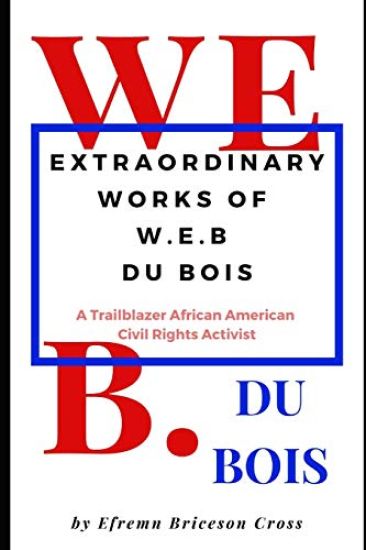
Extraordinary Works of W. E. B Du Bois: A Trailblazer African American Civil Rights Activist
Explore in-depth discovery for the extraordinary works of W. E. B. Du Bois, a trailblazer destine to be proclaimed as one of the greatest African American Civil Rights activists in history.A complete real-time review through his eyes as an African American civil rights activist, sociologist, historian, writer, editor, poet, freemason, and scholar.
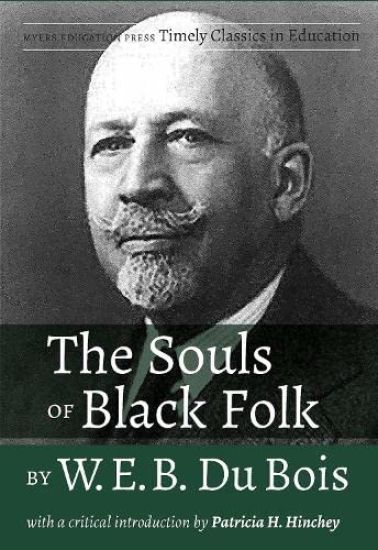
The Souls of Black Folk by W.E.B. Du Bois

The Souls of Black Folk by W.E.B. Du Bois

Patricia H. Hinchey

Stylus Publishing
2018
nidottu
W. E. B. Du Bois’s seminal work, The Souls of Black Folk, not only captures the experience of African Americans in the years following the Civil War but also speaks to contemporary conditions. At a time when American public schools are increasingly re-segregating, are increasingly underfunded, and are perhaps nearly as separate and unequal as they were in earlier decades, this classic can help readers grasp links between a slavery past and a dismal present for too many young people of color. Disagreeing with Booker T. Washington, Du Bois analyzes the restrictiveness of education as a simple tool to prepare for work in pursuit of wealth (a trend still very much alive and well, especially in schools serving economically disadvantaged students). He also, however, demonstrates the challenges racism presents to individuals who embrace education as a tool for liberation. Du Bois’s accounts of how racism affected specific individuals allow readers to see philosophical issues in human terms. It can also help them think deeply about what kind of moral, social, educational and economic changes are necessary to provide all of America’s young people the equal opportunity promised to them inside and outside of schools.
Education Is Power: A Snippet of the Life of W.E.B. Du Bois
Education Is Power is a picture book about civil rights activist W.E.B. Du Bois and it shows the heights that children can go through utilizing the power of their mind. This power, found through education, led Du Bois to become a leader, an author, a humanitarian, an activist, and an influential figure who made an impact in the world. As the seventh installment of Melanin Origins' Black History Series, Education is Power encourages children that they can accomplish what they put their mind to through the power of education.
Das Problem Der Color-Line Aus Der Sicht Von W.E.B. Du Bois
Studienarbeit aus dem Jahr 2009 im Fachbereich Politik - Internationale Politik - Region: USA, Note: 1,3, Christian-Albrechts-Universit t Kiel (Sozialwissenschaften), Veranstaltung: American Political Thought, Sprache: Deutsch, Abstract: "The The Problem of the 20th century is the problem of the Color-line" . Dieses ist die These die W.E.B. Du Bois in seinem Buch "The Souls of the Black Folks" aufstellt. Besonders in der Zeit der Emanzipation war die Beziehung der Afroamerikaner zu den wei en Amerikanern, die zuvor durch die Besitzverh ltnisse der Sklaverei geregelt worden war, von besonderer Bedeutung und Brisanz. Genau zu dieser Zeit lebte der afroamerikanische Schriftsteller, Soziologe und B rgerrechtler William Edward Burghardt Du Bois, der sich prinzipiell mit der Situation der Farbigen in den Vereinigten Staaten von Amerika besch ftigte. In seinem Hauptwerk geht er genau auf diesen Konflikt ein, untersucht dessen Ursachen und zeigt m gliche L sungsans tze auf. In dieser Arbeit wird erl utert, wie Du Bois die These des Problems der Rassentrennung entwickelte und auf deren folgende Probleme eingegangen. Au erdem wird aufgezeigt, welche L sungsans tze Du Bois zur Bew ltigung des Problems bef rwortete. Diese L sungsans tze f hrten zu dem Konflikt mit dem anderen m chtigen Afroamerikaner Booker T. Washington. Um die unterschiedlichen Standpunkte dieser beiden prominenten Vertreter der farbigen Amerikaner verstehen zu k nnen, ist es wichtig sich die unterschiedlichen Lebenswege dieser beiden M nner bewusst zu machen, die ich aus diesem Grund kurz skizziert werden. Au erdem wird darauf eingegangen welche Bedeutung Du Bois' Ideen und Konzepte auch heute noch haben.
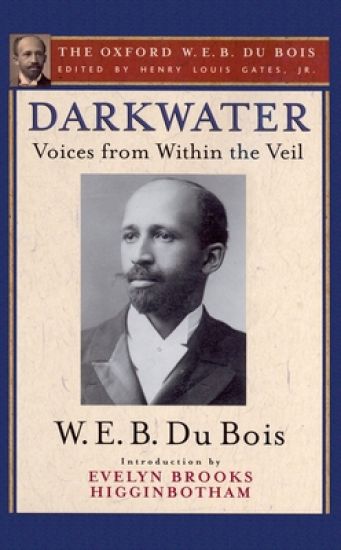
Darkwater (The Oxford W. E. B. Du Bois)

Darkwater (The Oxford W. E. B. Du Bois)

W. E. B. Du Bois

Oxford University Press Inc
2016
sidottu
W. E. B. Du Bois was a public intellectual, sociologist, and activist on behalf of the African American community. He profoundly shaped black political culture in the United States through his founding role in the NAACP, as well as internationally through the Pan-African movement. Du Bois's sociological and historical research on African-American communities and culture broke ground in many areas, including the history of the post-Civil War Reconstruction period. Du Bois was also a prolific author of novels, autobiographical accounts, innumerable editorials and journalistic pieces, and several works of history. Considered a sequel to Du Bois's wildly popular The Souls of Black Folks, Darkwater revisits many of the same themes with a more militant edge, even revising previously published essays and poems to include in this newer volume. Published in 1920, Darkwater focuses on the political climate following World War I. In ten carefully crafted chapters, Du Bois explores the important issues of that period- labor, capital, politics, gender, education, and international relations-in tandem with an overarching theme of race. Blending lyrical autobiography with political thoughts and even poetry, Du Bois makes a powerful, forceful argument regarding race and the color line. With a series introduction by editor Henry Louis Gates, Jr., and an introduction by Evelyn Brooks Higginbotham, this edition is essential for anyone interested in African American history.

The Gift of Black Folk (The Oxford W. E. B. Du Bois)

The Gift of Black Folk (The Oxford W. E. B. Du Bois)

W. E. B. Du Bois

Oxford University Press Inc
2016
sidottu
W. E. B. Du Bois was a public intellectual, sociologist, and activist on behalf of the African American community. He profoundly shaped black political culture in the United States through his founding role in the NAACP, as well as internationally through the Pan-African movement. Du Bois's sociological and historical research on African-American communities and culture broke ground in many areas, including the history of the post-Civil War Reconstruction period. Du Bois was also a prolific author of novels, autobiographical accounts, innumerable editorials and journalistic pieces, and several works of history. Published in 1924 in response to growing racial tensions, W. E. B. Du Bois's The Gift of Black Folk explores the contributions African Americans have made to American society, detailing the importance of racial diversity to the United States. Writing for a general audience, Du Bois employs a sweeping scope for his argument, covering the European discovery of America to the twentieth century. In doing so he works to prove that through African Americans' struggle for freedom and equality, they have most fully realized the goal of democracy. With a series introduction by editor Henry Louis Gates, Jr., and an introduction by Glenda Carpio, this edition is essential for anyone interested in African American history.

The Autobiography of W. E. B. Du Bois (The Oxford W. E. B. Du Bois)
W. E. B. Du Bois was a public intellectual, sociologist, and activist on behalf of the African American community. He profoundly shaped black political culture in the United States through his founding role in the NAACP, as well as internationally through the Pan-African movement. Du Bois's sociological and historical research on African-American communities and culture broke ground in many areas, including the history of the post-Civil War Reconstruction period. Du Bois was also a prolific author of novels, autobiographical accounts, innumerable editorials and journalistic pieces, and several works of history. Published posthumously in 1968, The Autobiography of W. E. B. Du Bois is his last and most complete autobiography. Covering his life over almost a century of living in America, it's the closest thing we have to a true autobiography of this important scholar and activist. The book, broken up into three parts, delves into the 90-year-old Du Bois's thoughts on everything from his relationship with sex to his storied association with the NAACP to his political persecution during the Cold War years to his many travels abroad. As Du Bois writes, he takes the reader on a journey to "view my life as frankly and fully as I can." With a series introduction by editor Henry Louis Gates, Jr., and an introduction by Werner Sollors, this edition is essential for anyone interested in African American history.
W. E. B. Du Bois: Selections from His Writings

W. E. B. Du Bois: Selections from His Writings

W.E.B. Du Bois

Dover Publications Inc.
2014
nidottu
These essays by the prolific historian and civil rights activist W. E. B. Du Bois focus on some of the African-American author's lesser-known writings. They include "Strivings of the Negro People," "A Negro Schoolmaster in the New South," "The Talented Tenth," "Address to the Nation: The Niagara Movement Speech," "Evolution of the Race Problem," and more.
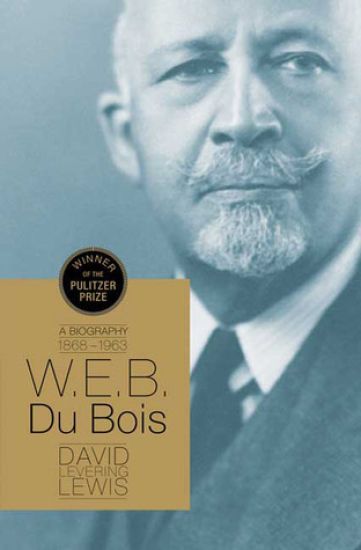
W. E. B. Du Bois

W. E. B. Du Bois

David L. Lewis

Henry Holt Company Inc
2009
pokkari
William Edward Burghardt Du Bois - the premier architect of the civil rights movement in America - was a towering and controversial personality, a fiercely proud individual blessed with the language of the poet and the impatience of the agitator. Now, David Levering Lewis has carved one volume out of his superlative two-volume biography of this monumental figure that set the standard for historical scholarship on this era. In his magisterial prose, Lewis chronicles Du Bois' long and storied career, detailing his monumental contributions the US character that echo still today.
W. E. B. Du Bois

W. E. B. Du Bois

Elliott M. Rudwick

University of Pennsylvania Press
1968
sidottu
This book is a volume in the Penn Press Anniversary Collection. To mark its 125th anniversary in 2015, the University of Pennsylvania Press rereleased more than 1,100 titles from Penn Press's distinguished backlist from 1899-1999 that had fallen out of print. Spanning an entire century, the Anniversary Collection offers peer-reviewed scholarship in a wide range of subject areas.
W. E. B. Du Bois: International Thought

W. E. B. Du Bois: International Thought

W. E. B. Du Bois

Cambridge University Press
2022
sidottu
W. E. B. Du Bois was one of the most significant American political thinkers of the twentieth century. This volume collects 24 of his essays and speeches on international themes, spanning the years 1900-1956. These key texts reveal Du Bois's distinctive approach to the problem of empire and demonstrate his continued importance in our current global context. The volume charts the development of Du Bois's anti-imperial thought, drawing attention to his persistent concern with the relationship between democracy and empire and illustrating the divergent inflections of this theme in the context of a shifting geopolitical terrain; unprecedented political crises, especially during the two world wars; and new opportunities for transnational solidarity. With a critical introduction and extensive editorial notes, W.E.B. Du Bois: International Thought conveys both the coherence and continuity of Du Bois's international thought across his long life and the tremendous range and variety of his preoccupations, intellectual sources, and interlocutors.
W. E. B. Du Bois: International Thought

W. E. B. Du Bois: International Thought

W. E. B. Du Bois

Cambridge University Press
2022
pokkari
W. E. B. Du Bois was one of the most significant American political thinkers of the twentieth century. This volume collects 24 of his essays and speeches on international themes, spanning the years 1900-1956. These key texts reveal Du Bois's distinctive approach to the problem of empire and demonstrate his continued importance in our current global context. The volume charts the development of Du Bois's anti-imperial thought, drawing attention to his persistent concern with the relationship between democracy and empire and illustrating the divergent inflections of this theme in the context of a shifting geopolitical terrain; unprecedented political crises, especially during the two world wars; and new opportunities for transnational solidarity. With a critical introduction and extensive editorial notes, W.E.B. Du Bois: International Thought conveys both the coherence and continuity of Du Bois's international thought across his long life and the tremendous range and variety of his preoccupations, intellectual sources, and interlocutors.