Kirjahaku
Etsi kirjoja tekijän nimen, kirjan nimen tai ISBN:n perusteella.
1000 tulosta hakusanalla W. G. SIBLEY
Leo Taxil's Remarkable Books About Murder, the Devil, Women and the Black Mass in the High Degrees of Masonry
W. G. Sibley
Kessinger Pub
2005
pokkari
The Origin and Structure of the York and Scottish Rites and Their Relations
W. G. Sibley
Kessinger Pub
2005
pokkari
The Fundamental Principles and Moral and Religious Teachings of Freemasonry
W. G. Sibley
Kessinger Pub
2005
pokkari

The Landmarks of Masonry Defined and Its Universality As a Secret Fraternity
W. G. Sibley
Kessinger Pub
2005
pokkari

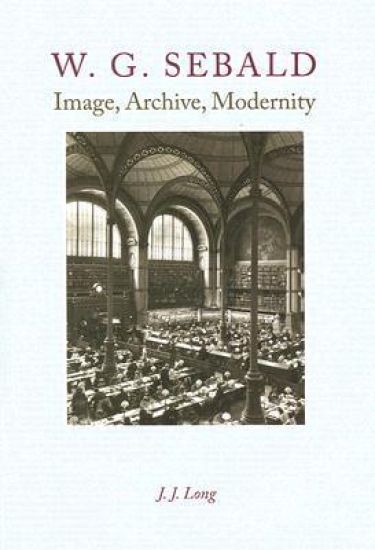
The contemporary German author W. G. Sebald was a master of the fiction of recollection and observation, often exploring the reverberations of World War II on the personal and collective memories of Germans and Jews. His rich body of work earned him legions of fans across the globe, but in the wake of his death in 2001, Sebald also became the subject of extensive critical study. Literary scholars have identified a number of subjects that frequently appear in Sebald's novels: the Holocaust, trauma and memory, melancholy, photography, travel, intertextuality, and the nature and meaning of home, but they have yet to locate an overarching narrative that ties these topics to the broader historical trajectories with which Sebald's work is also fundamentally concerned. In W. G. Sebald: Image, Archive, Modernity, J. J. Long identifies a wider "meta-problem" in Sebald's work--the problem of modernity. The numerous archival institutions and processes that lie at the heart of modernity are repeatedly explored in Sebald's novels. Photography, museums, libraries, and other institutions for producing and preserving knowledge are among Sebald's main obsessions. Following Foucault, these systems are seen as central to the exercise of power and the constitution of subjectivity, themes embodied in Sebald's melancholy search for autonomous selfhood in an increasingly impersonal and bureaucratized age. Considering the evocation of wonder in the prose narratives of Vertigo, family albums in The Emigrants, the ambulatory narrative in The Rings of Saturn, and the archival subject in Austerlitz, Long advances a highly original interpretation of the author's oeuvre, arguing that Sebald's project needs to be understood as a response not merely to post-Holocaust trauma but to the longer history of modernity.
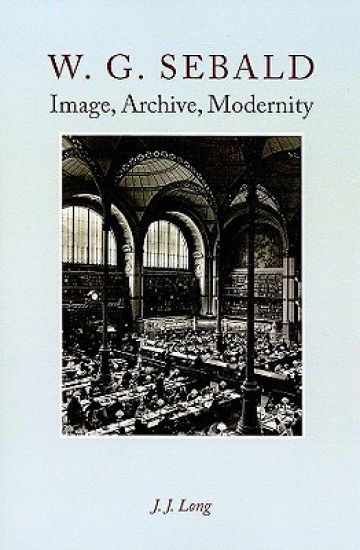
The contemporary German author W. G. Sebald was a master of the fiction of recollection and observation, often exploring the reverberations of World War II on the personal and collective memories of Germans and Jews. His rich body of work earned him legions of fans across the globe, but in the wake of his death in 2001, Sebald also became the subject of extensive critical study. Literary scholars have identified a number of subjects that frequently appear in Sebald's novels: the Holocaust, trauma and memory, melancholy, photography, travel, intertextuality, and the nature and meaning of home, but they have yet to locate an overarching narrative that ties these topics to the broader historical trajectories with which Sebald's work is also fundamentally concerned. In W. G. Sebald: Image, Archive, Modernity, J. J. Long identifies a wider "meta-problem" in Sebald's work--the problem of modernity. The numerous archival institutions and processes that lie at the heart of modernity are repeatedly explored in Sebald's novels. Photography, museums, libraries, and other institutions for producing and preserving knowledge are among Sebald's main obsessions. Following Foucault, these systems are seen as central to the exercise of power and the constitution of subjectivity, themes embodied in Sebald's melancholy search for autonomous selfhood in an increasingly impersonal and bureaucratized age. Considering the evocation of wonder in the prose narratives of Vertigo, family albums in The Emigrants, the ambulatory narrative in The Rings of Saturn, and the archival subject in Austerlitz, Long advances a highly original interpretation of the author's oeuvre, arguing that Sebald's project needs to be understood as a response not merely to post-Holocaust trauma but to the longer history of modernity.
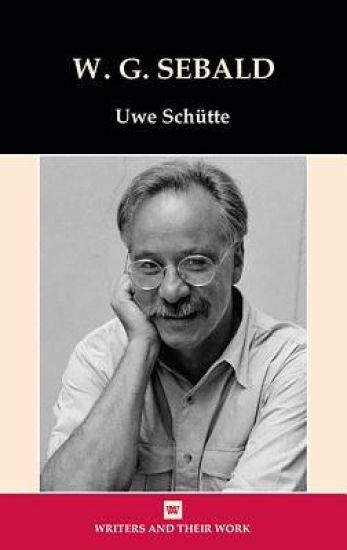
W. G. Sebald was a literary phenomenon: a German literary scholar working in England, who took up creative writing out of dissatisfaction with German post-war letters. Within only a few years, his unique prose books made him one of the most celebrated authors of the late twentieth-century. Sebald died prematurely, aged 57, after the publication of his most celebrated prose fiction Austerlitz. This accessible critical introduction, written by a leading expert, highlights Sebald’s double role as writer and academic. It discusses his oeuvre in the order in which his works were published in German in order to offer a deeper understanding of the original development of his literary writings. In addition to concise but incisive interpretations of the main publications, Schütte demonstrates how Sebald’s critical writings (most of which still await translation) fed into his literary texts and concludes his study with a perceptive assessment of Sebald as a cult author.

W. G. Sebald was a literary phenomenon: a German literary scholar working in England, who took up creative writing out of dissatisfaction with German post-war letters. Within only a few years, his unique prose books made him one of the most celebrated authors of the late twentieth-century. Sebald died prematurely, aged 57, after the publication of his most celebrated prose fiction Austerlitz. This accessible critical introduction, written by a leading expert, highlights Sebald’s double role as writer and academic. It discusses his oeuvre in the order in which his works were published in German in order to offer a deeper understanding of the original development of his literary writings. In addition to concise but incisive interpretations of the main publications, Schütte demonstrates how Sebald’s critical writings (most of which still await translation) fed into his literary texts and concludes his study with a perceptive assessment of Sebald as a cult author.

W. G. Sebald - A Critical Companion
Edinburgh University Press
2004
sidottu
International scholars offer interdisciplinary perspectives on W.G. Sebald's work, providing a thorough assessment of his achievement. The text focuses on the key areas of travel, intertextuality, nature, and memory. Introductory chapters situate Sebald's work within the European literary tradition and within contemporary critical discourse. Individual chapters then draw on approaches from cultural and literary studies, including ecocriticism, trauma theory, and text-image studies. A comprehensive bibliography of primary and secondary sources rounds off the volume, which should satisfy a growing need for a high-quality and up-to-date guide to Sebald's work.
W. G. Sebald - A Critical Companion
Edinburgh University Press
2006
nidottu
Likened to Proust, to Gunter Grass and Virginia Woolf, W. G. Sebald (1944-2001) is one of the most important writers of our time, combining a wide readership with universal critical acclaim. Now available in paperback, this first collection to appear in English provides a thorough assessment of his achievement through newly commissioned essays by leading international scholars, offering interdisciplinary perspectives on Sebald's work. Features * The first full-length critical book on Sebald to appear in English. * All new essays by leading international scholars. * Covers a range of topics that interested Sebald - such as landscape, nature, travel, haunting and memory. * Presents interdisciplinary perspectives on Sebald's work.
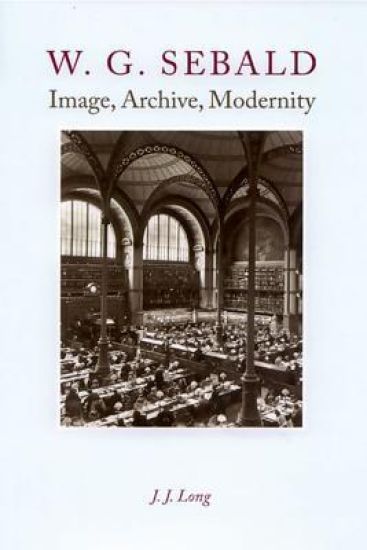
W. G. Sebald is widely acknowledged as one of the most significant writers to have emerged onto the global literary scene in recent decades, and is frequently mentioned in the same breath as Nabokov, Kafka, Borges, Calvino, Proust, and Primo Levi. W. G. Sebald - Image, Archive, Modernity offers a unique and original reading of Sebald's dazzling oeuvre, arguing that his work is concerned first and foremost with the problem of modernity. It focuses in particular on the numerous archival institutions and processes that lie at the very heart of modernity and are repeatedly thematised throughout Sebald's work. Adopting a broad definition of the archive to encompass a wide range of material practices, the book analyses the function of photography, museums, libraries, and other systems of knowledge to which Sebald's texts obsessively return. Following Foucault, such systems are seen as central to the exercise of power and the constitution of subjectivity in modernity. By undertaking a differentiated analysis that is attuned to the formal complexities of Sebald's texts, this book shows that Sebald's engagement with structures of power-knowledge is characterised by a melancholy struggle to assert autonomous selfhood in the face of the institutional and discursive determinants of subjectivity. Features * Original interdisciplinary approach * Written by an acknowledged Sebald specialist * Focus on modernity which expands the parameters of our understanding of Sebald * Fully up-to-date, taking account of all of the most recent research
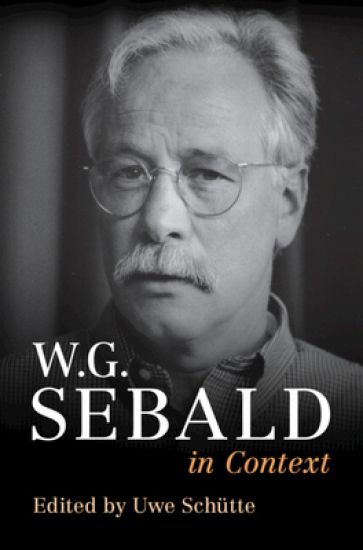
W. G. Sebald in Context
Cambridge University Press
2023
sidottu
The German academic and writer W. G. Sebald made an astounding ascent into the canon of world literature. In this volume, leading experts from both the English- and the German-speaking worlds explore his celebrated prose works published in the short span from 1996 to his premature death in 2001. Special attention is paid to Sebald's unpublished texts and books awaiting translation into English. The volume – illustrated with many unpublished archive images – scrutinizes the dual nature of Sebald's life and work, located between Germany and England, academic and literary writing, vilification and idolization. Through nearly forty essays on a broad range of topics, W. G. Sebald in Context achieves a revision of our understanding of Sebald, defying many clichés about him. Particular attention is paid to the manifold ways in which Sebald's writings exerted a legacy far beyond literature, especially in the areas of art, cinema, and popular music.

A collection of the Great Western Railway: Names, Numbers, Types and Classes book editions spanning the middle of the 20th century from the detailed work of W. G. Chapman.
W. G. SEBALD
Mandana Covindassamy; Sylvie Arlaud; Frédéric Teinturier
Editions L'Harmattan
2021
nidottu
W. G. Sebald
De Gruyter
2006
sidottu
The novelist, poet, and essayist W. G. Sebald (1944 – 2001) was perhaps the most original German writer of the last decade of the 20th century (“Die Ausgewanderten”, “Austerlitz”, “Luftkrieg und Literatur”). His writing is marked by a unique ‘hybridity’ that combines characteristics of travelogue, cultural criticism, crime story, historical essay, and dream diary, among other genres. He employs layers of literary and motion picture allusions that contribute to a sometimes enigmatic, sometimes intimately familiar mood; his dominant mode is melancholy. The contributions of this anthology examine W. G. Sebald as narrator and pensive observer of history. The book includes a previously unpublished interview with Sebald from 1998.