The Book of Revelation can be read in various ways. Where interpretation opts not to venture beyond Revelation or approach the book as a forecast of end-time events, it typically favours either going behind the text, in search of a socio-historical context of origin to which it might refer, or else standing in front of the text and investigating the book's reception history, or its present relevance and impact. Comparatively little interpretative work has been undertaken inside the text, exploring the mechanics of how Revelation 'works', still less how its complex parts might fit together into a meaningful whole. Gordon Campbell considers Revelation to be a coherent narrative composition that draws its hearer or reader into its text-world. In Reading Revelation: A Thematic Approach, Campbell gives an innovative account of Revelation's sophisticated thematic content. Mindful of Revelation's narrative verve, or its architecture en mouvement (as Jacques Ellul once put it), Campbell plots a series of thematic trajectories through the book. On this reading, parody and parallelism fundamentally shape the whole narrative. As a first-ever integrated account of Revelation's macro-themes, Reading Revelation makes an important contribution to Revelation scholarship. In its light, the book may justifiably be seen as the 'crowning achievement' of the Scriptures.
The Book of Revelation can be read in various ways. Where interpretation opts not to venture beyond Revelation or approach the book as a forecast of end-time events, it typically favours either going behind the text, in search of a socio-historical context of origin to which it might refer, or else standing in front of the text and investigating the book's reception history, or its present relevance and impact. Comparatively little interpretative work has been undertaken inside the text, exploring the mechanics of how Revelation 'works', still less how its complex parts might fit together into a meaningful whole. Gordon Campbell considers Revelation to be a coherent narrative composition that draws its hearer or reader into its text-world. In Reading Revelation: A Thematic Approach, Campbell gives an innovative account of Revelation's sophisticated thematic content. Mindful of Revelation's narrative verve, or its architecture en mouvement (as Jacques Ellul once put it), Campbell plots a series of thematic trajectories through the book. On this reading, parody and parallelism fundamentally shape the whole narrative. As a first-ever integrated account of Revelation's macro-themes, Reading Revelation makes an important contribution to Revelation scholarship. In its light, the book may justifiably be seen as the 'crowning achievement' of the Scriptures.
Martin Luther's 1522 September Testament marked a watershed in Bible translation, making Scripture available to ordinary German people in their own tongue and sparking similar efforts across Europe. Building on the nascent trend of vernacular Bible translations in the early sixteenth century, Luther's translation quickly became definitive linguistically, theologically and culturally, especially once the complete Bible was published in 1534, with production of New Testaments and Bibles in French, English and other languages keeping pace. Luther and his associates constantly revised and improved their methodology for translation and interpretation over a quarter-century of Bible publishing - efforts that helped shape Bible translation, reading and exegesis, for scholars and ordinary Christians alike, well beyond his lifetime. Martin Luther's Bible commemorates the September Testament, exploring the Wittenberg Bible project in its context and tracing aspects of its legacy in Europe and the wider world, from the sixteenth century to the present day. Essays from a range of leading experts draw upon the 2022 Martin Luther: Bible Translator, Illustrator and Publisher International Conference held at Union Theological College, Belfast. Together, they provide critical new insights into the linguistic, hermeneutical and theological history and influence of this landmark text.
Martin Luther's 1522 September Testament marked a watershed in Bible translation, making Scripture available to ordinary German people in their own tongue and sparking similar efforts across Europe. Building on the nascent trend of vernacular Bible translations in the early sixteenth century, Luther's translation quickly became definitive linguistically, theologically and culturally, especially once the complete Bible was published in 1534, with production of New Testaments and Bibles in French, English and other languages keeping pace. Luther and his associates constantly revised and improved their methodology for translation and interpretation over a quarter-century of Bible publishing - efforts that helped shape Bible translation, reading and exegesis, for scholars and ordinary Christians alike, well beyond his lifetime. Martin Luther's Bible commemorates the September Testament, exploring the Wittenberg Bible project in its context and tracing aspects of its legacy in Europe and the wider world, from the sixteenth century to the present day. Essays from a range of leading experts draw upon the 2022 Martin Luther: Bible Translator, Illustrator and Publisher International Conference held at Union Theological College, Belfast. Together, they provide critical new insights into the linguistic, hermeneutical and theological history and influence of this landmark text.
The initial volume in this new series focuses on the work of Edmund W. Gordon, the John M. Musser Professor of Psychology Emeritus at Yale University. Gordon had a tremendous influence on contemporary thinking in psychology, education and social policy and the implications of his work for the schooling of lower status youth and children of color, in America. For some, this volume will reacquaint them with Gordon and many of the young persons, now senior scholars themselves, who have learned from him. For others, this volume will simply inform them of the magnitude of the man and the legacy of researchers and research he has spawned. This important work challenges some of the basic assumptions under-pinning American social science research. Scholars from diverse fields of economics, anthropology, law, education, political science, sociology, psychology, and public health question traditional assumptions with respect to low status populations and persons of color, and analyze some of the intended and unintended consequences of those assumptions. The essays in this volume are well reasoned, provocative in the subject matter that they cover, and thoughtful in their conclusions. There is little doubt that the central focus of the book - the influence of Edmund W. Gordon and his liberatory scholarship - is a topic the examination of which is long overdue. The volume is divided into four sections: relevance of social divisions in research and development; population sensitive intervention; explanatory investigations; and, context responsibility. The final word in the volume, in the Epilogue, rightfully belongs to Edmund W. Gordon himself.
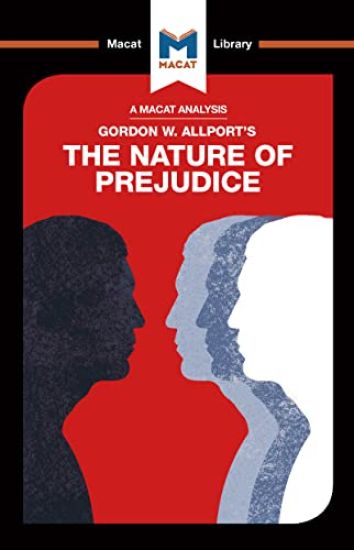
With his 1954 book The Nature of Prejudice, American psychologist Gordon Allport displays the crucial skill of reasoning, producing and organizing an argument that was persuasive enough to have a major impact not only in universities, but also on government policy. The question that Allport tackled was an old one: why are people so disposed to prejudice against those from other groups? Earlier psychologists had suggested a number of reasons, especially in the case of racial prejudice. Some had suggested that racism was a learned behaviour, conditioned by negative experiences of other races; others that there was an objective rationale to negative racial stereotypes. Allport, however, reasoned that prejudice is essentially a by-product of the necessary mental shortcuts the human brain uses to process the vast amount of information it takes in. Because our brains want to use as little effort as possible, they regularly fall back on simple stereotypes – which easily generate prejudice. Gathering strong evidence for this hypothesis, he reasoned, clearly and persuasively, that our natural cognitive approach is the most significant factor in accounting for prejudice. Going further still, Allport also reasoned that, once this was better understood, social scientists would be able to influence policy-makers to curb discrimination by law.
With his 1954 book The Nature of Prejudice, American psychologist Gordon Allport displays the crucial skill of reasoning, producing and organizing an argument that was persuasive enough to have a major impact not only in universities, but also on government policy. The question that Allport tackled was an old one: why are people so disposed to prejudice against those from other groups? Earlier psychologists had suggested a number of reasons, especially in the case of racial prejudice. Some had suggested that racism was a learned behaviour, conditioned by negative experiences of other races; others that there was an objective rationale to negative racial stereotypes. Allport, however, reasoned that prejudice is essentially a by-product of the necessary mental shortcuts the human brain uses to process the vast amount of information it takes in. Because our brains want to use as little effort as possible, they regularly fall back on simple stereotypes – which easily generate prejudice. Gathering strong evidence for this hypothesis, he reasoned, clearly and persuasively, that our natural cognitive approach is the most significant factor in accounting for prejudice. Going further still, Allport also reasoned that, once this was better understood, social scientists would be able to influence policy-makers to curb discrimination by law.
Twelve colleagues join to pay tribute to Gordon W. Lathrop - and to "prime the pump" of liturgical theological dialogue. The reader is invited into wide-ranging conversations with Edward Schillebeeckx, Herbert Anderson, Cynthia D. Moe-Lobeda, and many others. (Second edition)
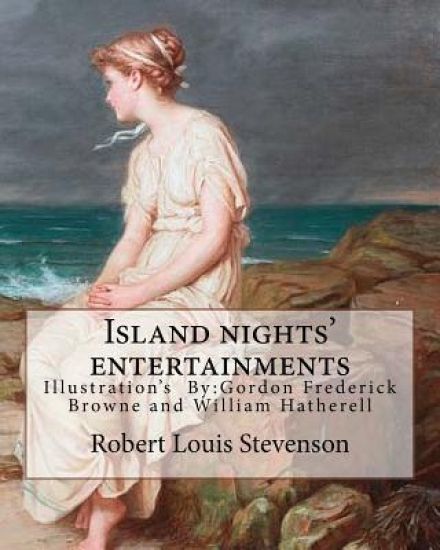
Robert Louis Balfour Stevenson (13 November 1850 - 3 December 1894) was a Scottish novelist, poet, essayist, and travel writer. His most famous works are Treasure Island, Kidnapped, Strange Case of Dr Jekyll and Mr Hyde, and A Child's Garden of Verses. A literary celebrity during his lifetime, Stevenson now ranks as the 26th most translated author in the world. His works have been admired by many other writers, including Jorge Luis Borges, Bertolt Brecht, Marcel Proust, Arthur Conan Doyle, Henry James, Cesare Pavese, Emilio Salgari, Ernest Hemingway, Rudyard Kipling, Jack London, Vladimir Nabokov, J. M. Barrie, and G. K. Chesterton, who said of him that he "seemed to pick the right word up on the point of his pen, like a man playing spillikins"............ Gordon Frederick Browne (15 April 1858 - 27 May 1932) was an English artist and children's book illustrator in the late 19th century and early 20th century. He was born in Banstead, the younger son of notable book illustrator Hablot Knight Browne (who as "Phiz" illustrated books by Charles Dickens). He studied art at the Heatherley School of Fine Art and South Kensington Schools and started to receive professional commissions while still at college. From the 1880s, Browne was one of Britain's most prolific illustrators, his work appearing in newspapers, magazines and many books by children's authors including Frederic William Farrar, G.A. Henty, Juliana Horatia Ewing, Andrew Lang, Talbot Baines Reed, L. T. Meade, Catherine Christian and E. Nesbit........ WILLIAM HATHERELL (1855-1928) William Hatherell was a Victorian era illustrator who worked for magazines such as The Graphic, Harpers, Scribner's and the Century. Today he is mostly remembered for crudely printed images such as these: he printing technology in Hatherell's day was pretty primitive. Combined with cheap paper stock, it stripped Hatherell's work of much of its sensitivity and expressiveness. Of course, like all resourceful artists Hatherell made the best of his limitations; he emphasized strong compositions and high contrasts that could survive the publication process.Hatherell might easily have used the disadvantages of his medium as an excuse for dashing off fast, limited work. Many artists did. In fact, his employers encouraged him to do so, in order to increase productivity and profits. Instead, Hatherell worked carefully and deliberately, crafting sensitive pictures with subtle features that were undetectable to his larger audience. As one contemporary noted, Hatherell stubbornly refused to lower his standards: Hatherell became noted for his refusal to be pressured into hasty work. For illustrating current events, for instance, he used models, often carefully posed in his backyard....