Title: When George the Third was King. By Sir Walter Besant.]Publisher: British Library, Historical Print EditionsThe British Library is the national library of the United Kingdom. It is one of the world's largest research libraries holding over 150 million items in all known languages and formats: books, journals, newspapers, sound recordings, patents, maps, stamps, prints and much more. Its collections include around 14 million books, along with substantial additional collections of manuscripts and historical items dating back as far as 300 BC.The FICTION & PROSE LITERATURE collection includes books from the British Library digitised by Microsoft. The collection provides readers with a perspective of the world from some of the 18th and 19th century's most talented writers. Written for a range of audiences, these works are a treasure for any curious reader looking to see the world through the eyes of ages past. Beyond the main body of works the collection also includes song-books, comedy, and works of satire. ++++The below data was compiled from various identification fields in the bibliographic record of this title. This data is provided as an additional tool in helping to insure edition identification: ++++ British Library George; Besant, Walter; 1872. 2 vol.; 8 . 12638.g.7.
Title: Twenty-one years' work in the Holy Land ... June 22, 1865-June 22, 1886. Published for the Committee of the Palestine Exploration Fund. By W. B. i.e. Walter Besant.]Publisher: British Library, Historical Print EditionsThe British Library is the national library of the United Kingdom. It is one of the world's largest research libraries holding over 150 million items in all known languages and formats: books, journals, newspapers, sound recordings, patents, maps, stamps, prints and much more. Its collections include around 14 million books, along with substantial additional collections of manuscripts and historical items dating back as far as 300 BC.The GENERAL HISTORICAL collection includes books from the British Library digitised by Microsoft. This varied collection includes material that gives readers a 19th century view of the world. Topics include health, education, economics, agriculture, environment, technology, culture, politics, labour and industry, mining, penal policy, and social order. ++++The below data was compiled from various identification fields in the bibliographic record of this title. This data is provided as an additional tool in helping to insure edition identification: ++++ British Library Anonymous; Besant, Walter; 1886. 232 p.; 8 . 010077.ee.26.
Autobiography of Sir Walter Besant (1902) is a posthumously published autobiography by Walter Besant. Although he is more widely known for his works of fiction and book-length studies of the city of London, Besant was also a gifted autobiographer whose unique sense of self and rich memories make for an entertaining, informative read. “I am supposing that [man] has the choice offered him, together with an outline of the future—not a future of fate laid down with Calvinistic rigour, but a future of possibility. And as time, past or future, does not exist in the other world, I am supposing that a man can be born in any age that he pleases.” The son of a merchant, Walter Besant would combine ambition with wit to become one of Victorian England’s leading intellectual figures. His autobiography is not just the portrait of a man, but a record of a century that saw empires rise and fall, industry outpace agriculture, and the life of humanity change forever, for better or worse. Unsatisfied with the success and fame he found in his literary work, Besant dedicated himself to social causes and was a true champion of the poor in London and around the world. With a beautifully designed cover and professionally typeset manuscript, this edition of Walter Besant’s Autobiography of Sir Walter Besant is a classic of English literature reimagined for modern readers.
Although he is largely unspoken of today, Walter Besant was one of the nineteenth century's greatest minds, a novelist, historian, mathematician, and diplomat who played an integral part in shaping Victorian England's cultural and political reality. In the posthumously published Autobiography of Sir Walter Besant, he reflects on his humble upbringings and the ambition that brought him success.
Autobiography of Sir Walter Besant (1902) is a posthumously published autobiography by Walter Besant. Although he is more widely known for his works of fiction and book-length studies of the city of London, Besant was also a gifted autobiographer whose unique sense of self and rich memories make for an entertaining, informative read. “I am supposing that [man] has the choice offered him, together with an outline of the future—not a future of fate laid down with Calvinistic rigour, but a future of possibility. And as time, past or future, does not exist in the other world, I am supposing that a man can be born in any age that he pleases.” The son of a merchant, Walter Besant would combine ambition with wit to become one of Victorian England’s leading intellectual figures. His autobiography is not just the portrait of a man, but a record of a century that saw empires rise and fall, industry outpace agriculture, and the life of humanity change forever, for better or worse. Unsatisfied with the success and fame he found in his literary work, Besant dedicated himself to social causes and was a true champion of the poor in London and around the world. With a beautifully designed cover and professionally typeset manuscript, this edition of Walter Besant’s Autobiography of Sir Walter Besant is a classic of English literature reimagined for modern readers.
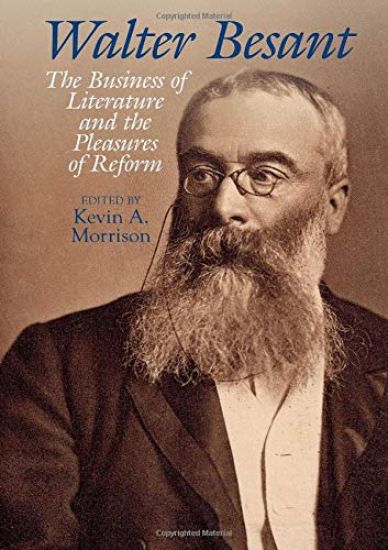
In the 1880s and 1890s, Walter Besant was one of Britain’s most lionized living novelists. Like many popular writers of the period, Besant suffered from years of critical neglect. Yet his centrality to Victorian society and culture all but ensured a revival of interest. While literary critics are now rediscovering the more than forty works of fiction that he penned or co-wrote, as part of a more general revaluation of Victorian popular literature, legal scholars have argued that Besant, by advocating for copyright reform, played a crucial role in consolidating a notion of literary property as the exclusive possession of the individuated intellect. For their part, historians have recently shown how Besant – as a prominent philanthropist who campaigned for the cultural vitalization of impoverished areas in east and south London – galvanized late Victorian social reform activities. The expanding corpus of work on Besant, however, has largely kept the domains of authorship and activism, which he perceived as interrelated, conceptually distinct. Analysing the mutually constitutive interplay in Besant’s career between philanthropy and the professionalization of authorship, Walter Besant: The Business of Literature and the Pleasures of Reform highlights their fundamental interconnectedness in this Victorian intellectual polymath’s life and work.
In the 1880s and 1890s, Walter Besant was one of Britain’s most lionized living novelists. Like many popular writers of the period, Besant suffered from years of critical neglect. Yet his centrality to Victorian society and culture all but ensured a revival of interest. While literary critics are now rediscovering the more than forty works of fiction that he penned or co-wrote, as part of a more general revaluation of Victorian popular literature, legal scholars have argued that Besant, by advocating for copyright reform, played a crucial role in consolidating a notion of literary property as the exclusive possession of the individuated intellect. For their part, historians have recently shown how Besant – as a prominent philanthropist who campaigned for the cultural vitalization of impoverished areas in east and south London – galvanized late Victorian social reform activities. The expanding corpus of work on Besant, however, has largely kept the domains of authorship and activism, which he perceived as interrelated, conceptually distinct. Analysing the mutually constitutive interplay in Besant’s career between philanthropy and the professionalization of authorship, Walter Besant: The Business of Literature and the Pleasures of Reform highlights their fundamental interconnectedness in this Victorian intellectual polymath’s life and work.
Title: The Golden Butterfly. A novel. By the authors of 'Ready-money Mortiboy' i.e. Sir Walter Besant and James Rice], etc.Publisher: British Library, Historical Print EditionsThe British Library is the national library of the United Kingdom. It is one of the world's largest research libraries holding over 150 million items in all known languages and formats: books, journals, newspapers, sound recordings, patents, maps, stamps, prints and much more. Its collections include around 14 million books, along with substantial additional collections of manuscripts and historical items dating back as far as 300 BC.The FICTION & PROSE LITERATURE collection includes books from the British Library digitised by Microsoft. The collection provides readers with a perspective of the world from some of the 18th and 19th century's most talented writers. Written for a range of audiences, these works are a treasure for any curious reader looking to see the world through the eyes of ages past. Beyond the main body of works the collection also includes song-books, comedy, and works of satire. ++++The below data was compiled from various identification fields in the bibliographic record of this title. This data is provided as an additional tool in helping to insure edition identification: ++++ British Library Besant, Walter; Rice, James; 1876. 3 vol.; 8 . 12636.m.11.
Title: The Golden Butterfly. A novel. By the authors of 'Ready-money Mortiboy' i.e. Sir Walter Besant and James Rice], etc.Publisher: British Library, Historical Print EditionsThe British Library is the national library of the United Kingdom. It is one of the world's largest research libraries holding over 150 million items in all known languages and formats: books, journals, newspapers, sound recordings, patents, maps, stamps, prints and much more. Its collections include around 14 million books, along with substantial additional collections of manuscripts and historical items dating back as far as 300 BC.The FICTION & PROSE LITERATURE collection includes books from the British Library digitised by Microsoft. The collection provides readers with a perspective of the world from some of the 18th and 19th century's most talented writers. Written for a range of audiences, these works are a treasure for any curious reader looking to see the world through the eyes of ages past. Beyond the main body of works the collection also includes song-books, comedy, and works of satire. ++++The below data was compiled from various identification fields in the bibliographic record of this title. This data is provided as an additional tool in helping to insure edition identification: ++++ British Library Besant, Walter; Rice, James; 1876. 3 vol.; 8 . 12636.m.11.
Title: Blind Love ... With a preface by Walter Besant who completed the work] and illustrations by A. Forestier.Publisher: British Library, Historical Print EditionsThe British Library is the national library of the United Kingdom. It is one of the world's largest research libraries holding over 150 million items in all known languages and formats: books, journals, newspapers, sound recordings, patents, maps, stamps, prints and much more. Its collections include around 14 million books, along with substantial additional collections of manuscripts and historical items dating back as far as 300 BC.The GENERAL HISTORICAL collection includes books from the British Library digitised by Microsoft. This varied collection includes material that gives readers a 19th century view of the world. Topics include health, education, economics, agriculture, environment, technology, culture, politics, labour and industry, mining, penal policy, and social order. ++++The below data was compiled from various identification fields in the bibliographic record of this title. This data is provided as an additional tool in helping to insure edition identification: ++++ British Library Collins, Wilkie; Besant, Walter; 1890. 3 vol.; 8 . 012639.k.4.
Title: Blind Love ... With a preface by Walter Besant who completed the work] and illustrations by A. Forestier.Publisher: British Library, Historical Print EditionsThe British Library is the national library of the United Kingdom. It is one of the world's largest research libraries holding over 150 million items in all known languages and formats: books, journals, newspapers, sound recordings, patents, maps, stamps, prints and much more. Its collections include around 14 million books, along with substantial additional collections of manuscripts and historical items dating back as far as 300 BC.The GENERAL HISTORICAL collection includes books from the British Library digitised by Microsoft. This varied collection includes material that gives readers a 19th century view of the world. Topics include health, education, economics, agriculture, environment, technology, culture, politics, labour and industry, mining, penal policy, and social order. ++++The below data was compiled from various identification fields in the bibliographic record of this title. This data is provided as an additional tool in helping to insure edition identification: ++++ British Library Collins, Wilkie; Besant, Walter; 1890. 3 vol.; 8 . 012639.k.4.


![When George the Third Was King. [By Sir Walter Besant.]](/covers/9781241483081.jpg)


![Twenty-One Years' Work in the Holy Land ... June 22, 1865-June 22, 1886. Published for the Committee of the Palestine Exploration Fund. [by W. B. i.e. Walter Besant.]](/covers/9781241491642.jpg)


![Golden Butterfly. a Novel. by the Authors of 'Ready-Money Mortiboy' [I.E. Sir Walter Besant and James Rice]](/covers/9781241479916.jpg)
![The Golden Butterfly. a Novel. by the Authors of 'Ready-Money Mortiboy' [I.E. Sir Walter Besant and James Rice].](/covers/9781241479947.jpg)
![Blind Love with a Preface by Walter Besant [Who Completed the Work] and Illustrations by A. Forestier.](/covers/9781240887422.jpg)

![Blind Love ... with a Preface by Walter Besant [Who Completed the Work] and Illustrations by A. Forestier. Vol. I.](/covers/9781241507190.jpg)
![Blind Love ... with a Preface by Walter Besant [Who Completed the Work] and Illustrations by A. Forestier.](/covers/9781241526115.jpg)