

Kirjahaku
Etsi kirjoja tekijän nimen, kirjan nimen tai ISBN:n perusteella.
1000 tulosta hakusanalla Walter Burkert

Mysterien des Dionysos und die Orphik bei Walter Burkert
Frederik A Behrens
Grin Publishing
2009
pokkari
Studienarbeit aus dem Jahr 2005 im Fachbereich Theologie - Historische Theologie, Kirchengeschichte, Note: 1,3, Freie Universit t Berlin (Institut f r Religionswissenschaft), Sprache: Deutsch, Abstract: Die Beziehung der dionysisch-bakchischen Mysterienkulte zu jenen Schriften, Gruppen und Personen, die man unter den Begriffen 'Orphik' und 'Orphiker' zusammenfa t (weil sie auf Orpheus, den mythischen S nger, zur ckgef hrt wurden), ist ein seit vielen Jahren sehr kontrovers diskutiertes Thema. In keinem anderen Bereich der Altertumswissenschaften, und insbesondere der antiken Religion, ist innerhalb der letzten Jahrzehnte durch Neufunde ein solcher Umschwung eingetreten wie im Bereich der Orphik. Es ging und geht in der rund 200-j hrigen Diskussion um Wesen, Begriff und Bedeutung der Orphik immer auch um die Frage, wie rational und 'klassisch' die klassische Antike denn gewesen sei.Es folgt ein kurzer berblick sowie eine kritische Beleuchtung der Darstellung der dionysisch-bakchischen Mysterien und deren Beziehung zur Orphik bei Walter Burkert.
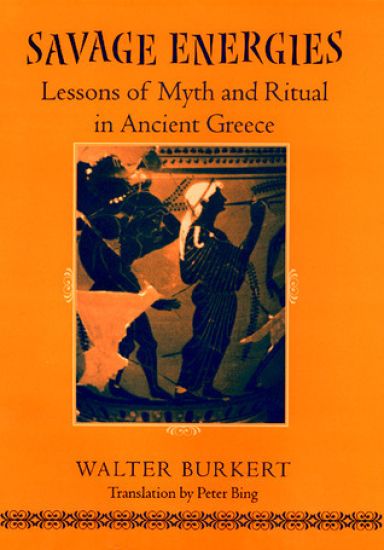
We often think of classical Greek society as a model of rationality and order. Yet as Walter Burkert demonstrates in these essays on the history of Greek religion, there were archaic, savage forces surging beneath the outwardly calm face of classical Greece, whose potentially violent and destructive energies, Burkert argues, were harnessed to constructive ends through the interlinked uses of myth and ritual. For example, in a much-cited essay on the Athenian religious festival of the Arrephoria, Burkert uncovers deep connections between this strange nocturnal ritual, in which two virgin girls carried sacred offerings into a cave and later returned with something given to them there, and tribal puberty initiations by linking the festival with the myth of the daughters of Kekrops. Other chapters explore the origins of tragedy in blood sacrifice; the role of myth in the ritual of the new fire on Lemnos; the ties between violence, the Athenian courts, and the annual purification of the divine image; and how failed political propaganda entered the realm of myth at the time of the Persian Wars.
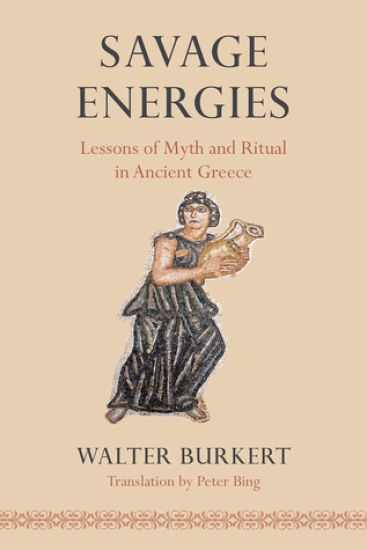
We often think of classical Greek society as a model of rationality and order. Yet as Walter Burkert demonstrates in these influential essays on the history of Greek religion, there were archaic, savage forces surging beneath the outwardly calm face of classical Greece, whose potentially violent and destructive energies, Burkert argues, were harnessed to constructive ends through the interlinked uses of myth and ritual. For example, in a much-cited essay on the Athenian religious festival of the Arrephoria, Burkert uncovers deep connections between this strange nocturnal ritual, in which two virgin girls carried sacred offerings into a cave and later returned with something given to them there, and tribal puberty initiations by linking the festival with the myth of the daughters of Kekrops. Other chapters explore the origins of tragedy in blood sacrifice; the role of myth in the ritual of the new fire on Lemnos; the ties between violence, the Athenian courts, and the annual purification of the divine image; and how failed political propaganda entered the realm of myth at the time of the Persian Wars.

Structure and History in Greek Mythology and Ritual
Walter Burkert
University of California Press
1982
pokkari
"Tantalizingly rich ...this is a splendid book."--Greece and Rome "Burken relegates his learned documentation to the notes and writes in a lively and fluent style. The book is recommended as a major contribution to the interpretation of ancient Greek myth and ritual. The breadth alone of Burkert's learning renders his book indispensable."--Classical Outlook "Impressive...founded on a striking knowledge of the complex evidence (literary, epigraphical, archaeological, comparative) for this extensive subject. Burkert offers a rare combination of exact scholarship with imagination and even humor. A brilliant book, in which ...the reader can see at every point what is going on in the author's mind--and that is never uninteresting, and rarely unimportant."--Times Literary Supplement "Burkert's work is of such magnitude and depth that it may even contribute to that most difficult of tasks, defining myth, ritual, and religion. . [He] locates his work in the context of culture and the historv of ideas, and he is not hesitant to draw on sociology and biology. Consequently his work is of significance for philosophers, historians, and even theologians, as well as for classicists and historians of Greek culture. His hypotheses are courageous and his conclusions are bold; both establish standards for methodology as well as results. "--Religious Studies Review
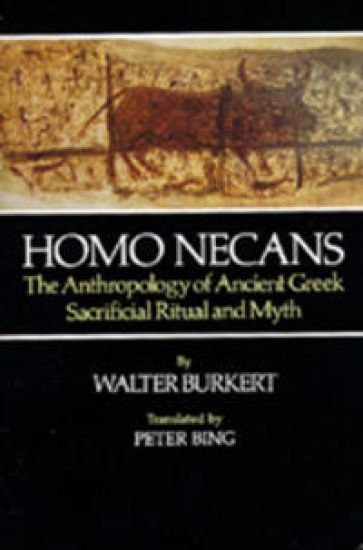
Blood sacrifice, the ritual slaughter of animals, has been basic to religion through history, so that it survives in spiritualized form even in Christianity. How did this violent phenomenon achieve the status of the sacred? This question is examined in Walter Burkert's famous study.
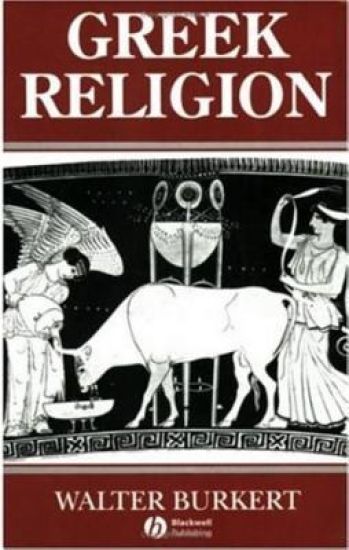
"Greek Religion . . . already has the standing of a classic, and the publication of an English version, which incorporates new material and is in effect a second edition, demands a toast . . . Anyone who pretends to survey Greek religion must be phenomenally learned. Burkert is. His book is a marvel of professional scholarship." ? London Review of Books "This book has established itself as a masterpiece, packed with learning but also rich in ideas and connections of every sort. Its appearance in a good English translation is an event not only for Hellenists but for all those interested in the study of religion . . . nobody else could have produced an account of the subject of comparable range and power. This will be the best history of Greek religion for this generation." ? New York Review of Books Cover illustration: detail from an Attic vase, 450 B.C., showing a victory sacrifice (The Mansell Collection).
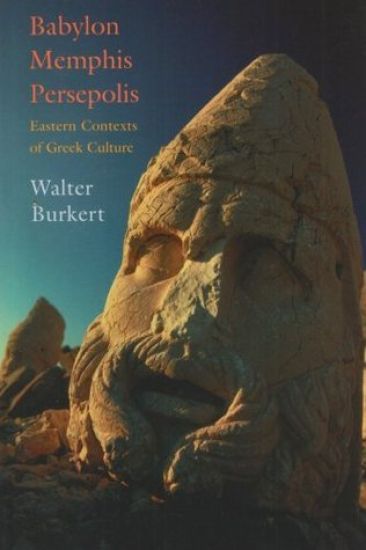
At the distant beginning of Western civilization, according to European tradition, Greece stands as an insular, isolated, near-miracle of burgeoning culture. This book traverses the ancient world’s three great centers of cultural exchange—Babylonian Nineveh, Egyptian Memphis, and Iranian Persepolis—to situate classical Greece in its proper historical place, at the Western margin of a more comprehensive Near Eastern–Aegean cultural community that emerged in the Bronze Age and expanded westward in the first millennium B.C.In concise and inviting fashion, Walter Burkert lays out the essential evidence for this ongoing reinterpretation of Greek culture. In particular, he points to the critical role of the development of writing in the ancient Near East, from the achievement of cuneiform in the Bronze Age to the rise of the alphabet after 1000 B.C. From the invention and diffusion of alphabetic writing, a series of cultural encounters between “Oriental” and Greek followed. Burkert details how the Assyrian influences of Phoenician and Anatolian intermediaries, the emerging fascination with Egypt, and the Persian conquests in Ionia make themselves felt in the poetry of Homer and his gods, in the mythic foundations of Greek cults, and in the first steps toward philosophy. A journey through the fluid borderlines of the Near East and Europe, with new and shifting perspectives on the cultural exchanges these produced, this book offers a clear view of the multicultural field upon which the Greek heritage that formed Western civilization first appeared.
The foremost historian of Greek religion provides the first comprehensive, comparative study of a little-known aspect of ancient religious beliefs and practices. Secret mystery cults flourished within the larger culture of the public religion of Greece and Rome for roughly a thousand years. This book is neither a history nor a survey but a comparative phenomenology, concentrating on five major cults. In defining the mysteries and describing their rituals, membership, organization, and dissemination, Walter Burkert displays the remarkable erudition we have come to expect of him; he also shows great sensitivity and sympathy in interpreting the experiences and motivations of the devotees.

Sacrifice—ranging from the sacrifice of virgins to circumcision to giving up what is most valued—is essential to all religions. Could there be a natural, even biological, reason for these practices? Something that might explain why religions of so many different cultures share so many rituals and concepts? In this extraordinary book, one of the world’s leading authorities on ancient religions explores the possibility of natural religion—a religious sense and practice naturally proceeding from biological imperatives.Because they lack later refinements, the earliest religions from the Near East, Israel, Greece, and Rome may tell us a great deal about the basic properties and dynamics of religion, and it is to these cultures that Walter Burkert looks for answers. His book takes us on an intellectual adventure that begins some 5,000 years ago and plunges us into a fascinating world of divine signs and omens, offerings and sacrifices, rituals and beliefs unmitigated by modern science and sophistication. Tracing parallels between animal behavior and human religious activity, Burkert suggests natural foundations for sacrifices and rituals of escape, for the concept of guilt and punishment, for the practice of gift exchange and the notion of a cosmic hierarchy, and for the development of a system of signs for negotiating with an uncertain environment. Again and again, he returns to the present to remind us that, for all our worldliness, we are not so far removed from the first Homo religiosus.A breathtaking journey, as entertaining as it is provocative, Creation of the Sacred brings rich new insight on religious thought past and present and raises serious questions about the ultimate reasons for, and the ultimate meaning of, human religiousness.
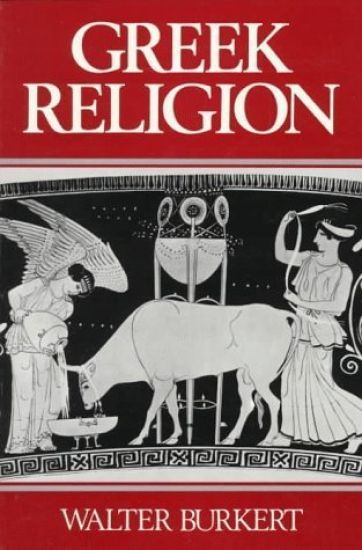
In this book Walter Burkert, the most eminent living historian of ancient Greek religion, has produced the standard work for our time on that subject. First published in German in 1977, it has now been translated into English with the assistance of the author himself. A clearly structured and readable survey for students and scholars, it will be welcomed as the best modern account of any polytheistic religious system. Burkert draws on archaeological discoveries, insights from other disciplines, and inscriptions in Linear B to reconstruct the practices and beliefs of the Minoan-Mycenaean age. The major part of his book is devoted to the archaic and classical epochs. He describes the various rituals of sacrifice and libation and explains Greek beliefs about purification. He investigates the inspiration behind the great temples at Olympia, Delphi, Delos, and the Acropolis--discussing the priesthood, sanctuary, and oracles. Considerable attention is given to the individual gods, the position of the heroes, and beliefs about the afterlife. The different festivals are used to illuminate the place of religion in the society of the city-state. The mystery cults, at Eleusis and among the followers of Bacchus and Orpheus, are also set in that context. The book concludes with an assessment of the great classical philosophers' attitudes to religion. Insofar as possible, Burkert lets the evidence--from literature and legend, vase paintings and archaeology--speak for itself; he elucidates the controversies surrounding its interpretation without glossing over the enigmas that remain. Throughout, the notes (updated for the English-language edition) afford a wealth of further references as the text builds up its coherent picture of what is known of the religion of ancient Greece.

For this first English edition of his distinguished study of Pythagoreanism, Weisheit und Wissenschajt: Studien zu Pythagoras, Philolaos, und Platon, Walter Burkert has carefully revised text and notes, taking account of additional literature on the subject which appeared between 1962 and 1969.By a thorough critical sifting of all the available evidence, the author lays a new foundation for the understanding of ancient Pythagoreanism and in particular of the relationship within it of “lore” and “science.” He shows that in the twilight zone when the Greeks were discovering the rational interpretation of the world and quantitative natural science, Pythagoras represented not the origin of the new, but the survival or revival of ancient, pre-scientific lore or wisdom, based on superhuman authority and expressed in ritual obligation.

The splendid culture of the ancient Greeks has often been described as emerging like a miracle from a genius of its own, owing practically nothing to its neighbors. Walter Burkert offers a decisive argument against that distorted view, pointing toward a balanced picture of the archaic period “in which, under the influence of the Semitic East—from writers, craftsmen, merchants, healers—Greek culture began its unique flowering, soon to assume cultural hegemony in the Mediterranean.”



Unter den Religionen des Altertums ist die griechische Religion mit am lebendigsten bezeugt. In Verbindung mit grossartiger Literatur und bildender Kunst hat sie auf die Entfaltung der abendlandischen Kultur immer wieder Einfluss genommen. Das vorliegende Buch stellt griechische Religion im Zeitraum 800-300 v. Chr. dar, von Homer bis Aristoteles, in ihren historischen und sozialen Bezugen sowie auf dem Hintergrund der minoisch-mykenischen und der orientalischen Hochkulturen. Es gibt die primaren Zeugnisse an die Hand und zeigt thematische Zusammenhange auf. Dabei bleibt es auch fur Laien lesbar. Die Neuauflage ist unter Einbezug der neueren Literatur durchgehend uberarbeitet und aktualisiert.


Der zehnte Band bildet den Abschluss der Publikation der Kleinen Schriften des eminenten Zurcher Grazisten und Religionswissenschaftlers Walter Burkert (1931-2015). Er erganzt die monumentale Reihe um Artikel zu Philologica, Lexikonbeitrage, Rezensionen, Nachrufe und um Gelegenheitsschriften, die u. a. auch die eindruckliche Offentlichkeitsarbeit Burkerts dokumentieren, ferner um Interviews mit Burkert und weitere Selbsteinschatzungen seines Werks. Der Band enthalt ausserdem die Nachrufe auf ihn sowie ein aktualisiertes Schriftenverzeichnis dieses Jahrhundertgelehrten.

English summary: This volume of Walter Burkert's Kleine Schriften, edited by Fritz Graf, collects his articles on Orphism and Pythagoreanism; it is the first of several volumes that focusses on Burkert's religious studies. German description: Walter Burkert ist einer der profiliertesten und bedeutendsten Forscher zur griechisch-romischen Antike der Gegenwart. Der vorliegende Band der Kleinen Schriften konzentriert sich auf Pythagoreismus und Orphik. 1962 hatte Burkert die Studien zum Pythagoreismus revolutioniert; zahlreiche Artikel aus jener Schaffensphase greifen einzelne Aspekte des Phanomens auf und sind bis zum heutigen Tag wegweisend geblieben. Die Arbeiten zur Orphik - einer religiosen Bewegung, die eng mit den Mysterien des Dionysus verbunden war - haben Burkert wahrend seiner gesamten Forschungslaufbahn beschaftigt, nicht zuletzt deswegen, weil in den letzten dreiaig Jahren immer wieder zentrale Texte publiziert worden sind, zu deren Verstandnis Burkert Entscheidendes beigetragen hat.