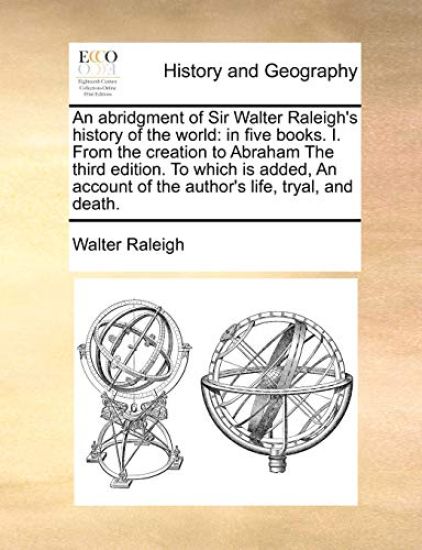
The 18th century was a wealth of knowledge, exploration and rapidly growing technology and expanding record-keeping made possible by advances in the printing press. In its determination to preserve the century of revolution, Gale initiated a revolution of its own: digitization of epic proportions to preserve these invaluable works in the largest archive of its kind. Now for the first time these high-quality digital copies of original 18th century manuscripts are available in print, making them highly accessible to libraries, undergraduate students, and independent scholars.This collection reveals the history of English common law and Empire law in a vastly changing world of British expansion. Dominating the legal field is the Commentaries of the Law of England by Sir William Blackstone, which first appeared in 1765. Reference works such as almanacs and catalogues continue to educate us by revealing the day-to-day workings of society.++++The below data was compiled from various identification fields in the bibliographic record of this title. This data is provided as an additional tool in helping to insure edition identification: ++++British LibraryT139079London: printed for S. Redmayne, and sold by W. Boreham, 1719. 50p.; 8
The 18th century was a wealth of knowledge, exploration and rapidly growing technology and expanding record-keeping made possible by advances in the printing press. In its determination to preserve the century of revolution, Gale initiated a revolution of its own: digitization of epic proportions to preserve these invaluable works in the largest archive of its kind. Now for the first time these high-quality digital copies of original 18th century manuscripts are available in print, making them highly accessible to libraries, undergraduate students, and independent scholars.Rich in titles on English life and social history, this collection spans the world as it was known to eighteenth-century historians and explorers. Titles include a wealth of travel accounts and diaries, histories of nations from throughout the world, and maps and charts of a world that was still being discovered. Students of the War of American Independence will find fascinating accounts from the British side of conflict. ++++The below data was compiled from various identification fields in the bibliographic record of this title. This data is provided as an additional tool in helping to insure edition identification: ++++Library of CongressN041957Sometimes also attributed to Walter Raleigh of Lincoln's Inn. This appears to be different from Raleigh's 'Breviary of the history of England'.Dublin: printed for W. Brien, 1753. 2v., plate: port; 12
The 18th century was a wealth of knowledge, exploration and rapidly growing technology and expanding record-keeping made possible by advances in the printing press. In its determination to preserve the century of revolution, Gale initiated a revolution of its own: digitization of epic proportions to preserve these invaluable works in the largest archive of its kind. Now for the first time these high-quality digital copies of original 18th century manuscripts are available in print, making them highly accessible to libraries, undergraduate students, and independent scholars.Rich in titles on English life and social history, this collection spans the world as it was known to eighteenth-century historians and explorers. Titles include a wealth of travel accounts and diaries, histories of nations from throughout the world, and maps and charts of a world that was still being discovered. Students of the War of American Independence will find fascinating accounts from the British side of conflict. ++++The below data was compiled from various identification fields in the bibliographic record of this title. This data is provided as an additional tool in helping to insure edition identification: ++++British LibraryT019013"Publisher's advertisement" signed: Laurence Echard, the compiler. With a final advertisement leaf.London: printed by W. Onley, for Ralph Smith, 1702. 32], xxii,363, 1],91, 1], xxx, 2]p., plate; 8
"... lev cette cole, il adora le succ s, et apprit l'enlever violemment plut t qu' le m riter. Souvent il joignit le charlatanisme la gloire. Ce qui tait saillie l g re et caprice fac tieux chez nos braves enfants du Midi, devint un grave calcul chez le fils des Saxons. Ces vives et p tulantes boutades qui tinc lent dans la causerie, qui donnent tant de relief la guerre et l'amour, et qui, dans la m l e sanglante, apparaissent comme les lueurs des glaives qui se heurtent, ont besoin, pour tre aim es ou pardonn es, d'une l g ret presque enfantine et d'une gr ce insouciante. Raleigh prit au s rieux l'humeur gasconne; il en fit le po me pique de sa vie. Dans les grandes entreprises, dans les sombres conjurations, dans les longues travers es et les colonisations p rilleuses, il fut Mascarille ou Scapin. Bariolant de traits sublimes ce charlatanisme gigantesque, nul homme (quoi qu'en ait dit la Revue d' dimbourg) n'a mieux menti, n'a plus souvent, n'a plus t m rairement menti. La France offrait alors une mauvaise discipline et un fatal exemple. Trois grandes qualit s lui restaient, l'audace, le courage et l'adresse. Mais, du reste, jamais esprits infernaux ne se sont d cha n s avec plus de folie, et n'ont m l plus de sang plus de d bauche..."
"... lev cette cole, il adora le succ s, et apprit l'enlever violemment plut t qu' le m riter. Souvent il joignit le charlatanisme la gloire. Ce qui tait saillie l g re et caprice fac tieux chez nos braves enfants du Midi, devint un grave calcul chez le fils des Saxons. Ces vives et p tulantes boutades qui tinc lent dans la causerie, qui donnent tant de relief la guerre et l'amour, et qui, dans la m l e sanglante, apparaissent comme les lueurs des glaives qui se heurtent, ont besoin, pour tre aim es ou pardonn es, d'une l g ret presque enfantine et d'une gr ce insouciante. Raleigh prit au s rieux l'humeur gasconne; il en fit le po me pique de sa vie. Dans les grandes entreprises, dans les sombres conjurations, dans les longues travers es et les colonisations p rilleuses, il fut Mascarille ou Scapin. Bariolant de traits sublimes ce charlatanisme gigantesque, nul homme (quoi qu'en ait dit la Revue d' dimbourg) n'a mieux menti, n'a plus souvent, n'a plus t m rairement menti..."
The Letters of Walter Raleigh, Volume 1: 1879-1922 is a collection of correspondence written by the famous English explorer, poet, and courtier Sir Walter Raleigh. Edited by Louis L. Martz, this book contains over 300 letters written by Raleigh to his family, friends, and colleagues during his lifetime. The letters cover a wide range of topics, including Raleigh's travels to the New World, his political and military career, his imprisonment in the Tower of London, and his relationships with notable figures such as Queen Elizabeth I and King James I. The book also includes an introduction by Martz that provides historical context and insight into Raleigh's life and career. Additionally, there are footnotes throughout the book that provide further clarification and context for the letters. Overall, The Letters of Walter Raleigh, Volume 1: 1879-1922 offers a fascinating glimpse into the life and times of one of England's most famous explorers and courtiers, as seen through his own words.This is a new release of the original 1926 edition.This scarce antiquarian book is a facsimile reprint of the old original and may contain some imperfections such as library marks and notations. Because we believe this work is culturally important, we have made it available as part of our commitment for protecting, preserving, and promoting the world's literature in affordable, high quality, modern editions, that are true to their original work.
Choice Passages from the Writings and Letters of Sir Walter Raleigh is an unchanged, high-quality reprint of the original edition of 1893. Hansebooks is editor of the literature on different topic areas such as research and science, travel and expeditions, cooking and nutrition, medicine, and other genres. As a publisher we focus on the preservation of historical literature. Many works of historical writers and scientists are available today as antiques only. Hansebooks newly publishes these books and contributes to the preservation of literature which has become rare and historical knowledge for the future.
This work has been selected by scholars as being culturally important and is part of the knowledge base of civilization as we know it.This work is in the public domain in the United States of America, and possibly other nations. Within the United States, you may freely copy and distribute this work, as no entity (individual or corporate) has a copyright on the body of the work.Scholars believe, and we concur, that this work is important enough to be preserved, reproduced, and made generally available to the public. To ensure a quality reading experience, this work has been proofread and republished using a format that seamlessly blends the original graphical elements with text in an easy-to-read typeface.We appreciate your support of the preservation process, and thank you for being an important part of keeping this knowledge alive and relevant.
This work has been selected by scholars as being culturally important and is part of the knowledge base of civilization as we know it.This work is in the public domain in the United States of America, and possibly other nations. Within the United States, you may freely copy and distribute this work, as no entity (individual or corporate) has a copyright on the body of the work.Scholars believe, and we concur, that this work is important enough to be preserved, reproduced, and made generally available to the public. To ensure a quality reading experience, this work has been proofread and republished using a format that seamlessly blends the original graphical elements with text in an easy-to-read typeface.We appreciate your support of the preservation process, and thank you for being an important part of keeping this knowledge alive and relevant.