Kirjojen hintavertailu. Mukana 11 244 527 kirjaa ja 12 kauppaa.

Kirjahaku

Etsi kirjoja tekijän nimen, kirjan nimen tai ISBN:n perusteella.

1000 tulosta hakusanalla Walter T. Welford

Useful Optics

Useful Optics

Walter T. Welford

University of Chicago Press
1991
sidottu
Students and professionals alike have long felt the need of a modern source of practical advice on the use of optical tools in scientific research. Walter T. Welford's Useful Optics meets this need. Welford offers a succinct review of principles basic to the construction and use of optics in physics. His lucid explanations and clear illustrations will particularly help those whose interests lie in other areas but who nevertheless must understand enough about optics to create the experimental apparatus necessary to their research. Consistently emphasizing applications and practical points of design, Welford covers a host of topics: mirrors and prisms, optical materials, aberration, the limits of image formation and resolution, illumination for image-forming systems, laser beams, interference and interferometry, detectors and light sources, holography, and more. The final chapter deals with putting together an experimental optics system. Many areas of the physical sciences and engineering increasingly demand an appreciation of optics. Welford's Useful Optics will prove indispensable to any researcher trying to develop and use effective optical apparatus. Walter T. Welford (1916-1990) was professor of physics at Imperial College of Science, Technology and Medicine from 1951 until his death. He was a Fellow of the Royal Society and of the Optical Society of America.
Useful Optics

Useful Optics

Walter T. Welford

University of Chicago Press
1991
nidottu
Students and professionals alike have long felt the need of a modern source of practical advice on the use of optical tools in scientific research. Walter T. Welford's Useful Optics meets this need. Welford offers a succinct review of principles basic to the construction and use of optics in physics. His lucid explanations and clear illustrations will particularly help those whose interests lie in other areas but who nevertheless must understand enough about optics to create the experimental apparatus necessary to their research. Consistently emphasizing applications and practical points of design, Welford covers a host of topics: mirrors and prisms, optical materials, aberration, the limits of image formation and resolution, illumination for image-forming systems, laser beams, interference and interferometry, detectors and light sources, holography, and more. The final chapter deals with putting together an experimental optics system. Many areas of the physical sciences and engineering increasingly demand an appreciation of optics. Welford's Useful Optics will prove indispensable to any researcher trying to develop and use effective optical apparatus. Walter T. Welford (1916-1990) was professor of physics at Imperial College of Science, Technology and Medicine from 1951 until his death. He was a Fellow of the Royal Society and of the Optical Society of America.
Intellectual Property Law in the Sports and Entertainment Industries

Intellectual Property Law in the Sports and Entertainment Industries

Walter T. Champion; Kirk D. Willis

Praeger Publishers Inc
2014
sidottu
In this detailed yet readable legal analysis, the authors thoroughly evaluate the connections between intellectual property and the sports and entertainment industries, covering everything from copyrights and patents to trademarked logos and marketing strategies.This complete survey of intellectual property law in the sports and entertainment industries evaluates the key connections between these arenas and provides an overview of trademark law for sports. The authors clearly explain the rights of publicity and privacy for entertainers and athletes, the ethical considerations involved in obtaining and using intellectual property, and how licensing agreements relate to intellectual property law. The detailed, up-to-date legal analyses are written by practitioners in the field for those without legal expertise, yet still contain useful information to the legal community. The book covers all forms of intellectual property, including copyright, patents, trademarks, trade dress, trade secrets, and the right of publicity. It will also discuss marketing, broadcasting, films and books, sports equipment, international considerations and trade issues, and intellectual property in cyberspace.
Variations on Split Plot and Split Block Experiment Designs

Variations on Split Plot and Split Block Experiment Designs

Walter T. Federer; Freedom King

John Wiley Sons Inc
2007
sidottu
A complete and up-to-date discussion of optimal split plot and split block designs Variations on Split Plot and Split Block Experiment Designs provides a comprehensive treatment of the design and analysis of two types of trials that are extremely popular in practice and play an integral part in the screening of applied experimental designs--split plot and split block experiments. Illustrated with numerous examples, this book presents a theoretical background and provides two and three error terms, a thorough review of the recent work in the area of split plot and split blocked experiments, and a number of significant results. Written by renowned specialists in the field, this book features: * Discussions of non-standard designs in addition to coverage of split block and split plot designs * Two chapters on combining split plot and split block designs and missing observations, which are unique to this book and to the field of study * SAS? commands spread throughout the book, which allow readers to bypass tedious computation and reveal startling observations * Detailed formulae and thorough remarks at the end of each chapter * Extensive data sets, which are posted on the book's FTP site The design and analysis approach advocated in Variations on Split Plot and Split Block Experiment Designs is essential in creating tailor-made experiments for applied statisticians from industry, medicine, agriculture, chemistry, and other fields of study.
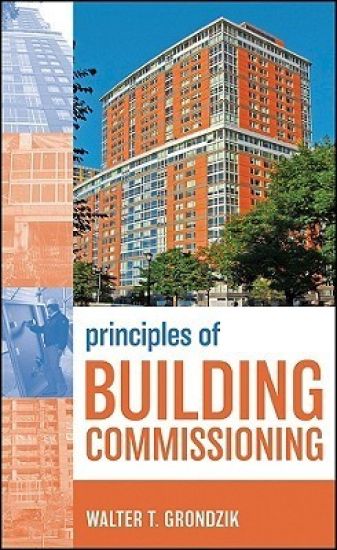
Principles of Building Commissioning

Principles of Building Commissioning

Walter T. Grondzik

John Wiley Sons Inc
2009
sidottu
Commissioning is coming of age. Savvy building owners have adopted commissioning as an effective way to improve the facility acquisition process. Green building initiatives have embraced commissioning as a way of assuring quality in the delivery of high-performance buildings. This long-established quality control process for building mechanical systems is emerging as a broader construction management tool improving nearly all aspects of a project. What exactly is this thing called commissioning? Principles of Building Commissioning answers this fundamental question with the first all-inclusive, practical guide to the application of the principles of commissioning. The book clarifies the underlying philosophy of commissioning: the why, what, when, and who of this process. Shaped by the ASHRAE Guideline 0 view of the world of commissioning, Building Commissioning: Maps out the territory of commissioning Outlines its defining characteristics Explains its flow of processes Demystifies its documentation Making the fundamentals of commissioning accessible to all parties—building owners and operators, architects and engineers, users and suppliers—who may be called upon to join the commissioning team for a particular project, Building Commissioning serves as the professional's road map to the commissioning process, from the predesign phase through occupancy.
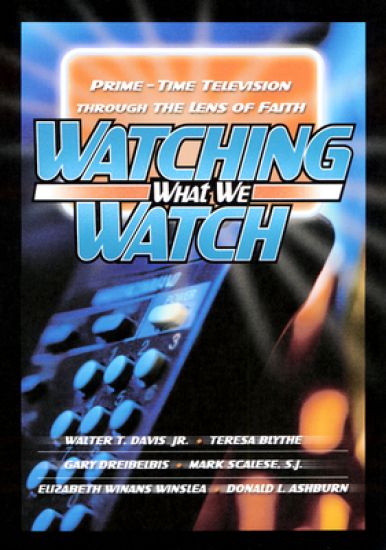
Watching What We Watch

Watching What We Watch

Walter T. Davis Jr.; Teresa Blythe; Gary Dreibelbis; Mark Scalese; Elizabeth Winslea

Westminster/John Knox Press,U.S.
2001
nidottu
Television has eclipsed the church and school as the most dominant storyteller in our culture. Watching What We Watch discusses the various aspects of "reading" television, helps us to understand how television creates meanings, and teaches us to assess the truth and value of those meanings. Watching What We Watch provides an accessible framework for analyzing television theologically and from the perspective of our values and beliefs. A team of experts uses examples from popular television shows to to explore the forces that drive television production and to challenge viewers to consider what things they should appreciate about television and what things they should call into question.