This work aims to provide a broad, integrated and reasonably comprehensive survey of political economic, cultural and social developments of the 17th and 18th centuries in the eastern and western worlds.
This book provides a broad, integrated, and reasonably comprehensive surveyóboth geographically and topicallyóof political, intellectual and cultural currents of the 17th and 18th centuries. Contents: Preface; Political and Economic Background; Emergence of a New World View: Forces in Contention; Baroque Cultural Currents, Politics, Economics, and Society; The 18th Century: Political, Economic, and Artistic Currents; 18th Century Music and Literature; Science and Humanism: The Rise of a New Deity; Historians and Colonies; The American Colonial Experience; Tension, Conflict and Freedom; A New Covenant Nation Under God; Cultural, Religious, and Intellectual Patterns in the New American Nation; Oriental Civilization and Western Expansion; The Rediscovery of China by the West; The Emergence of Russia; The Rise of Brandenburg-Prussia; Enlightenment Despotism in Flower; The "Radical Enlightenment"; Philosophies, Anti-Philosophes, Jansenists, Encyclopedists and Freemasons; The Crucible of Revolution; Napoleon and Europe; The Cultural Milieu of the Napoleonic Age; Pictures; Maps; Bibliography; Index.
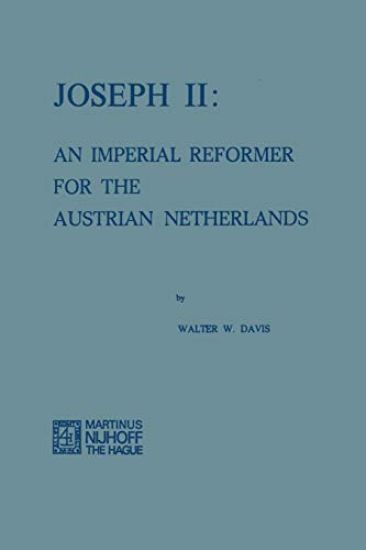
It has been said that never has a monarch so narrowly missed "greatness" as did the Holy Roman Emperor Joseph II. An idealistic, sincere, and hardworking monarch whose ultilitarian bent, humanitarian instincts, and ambitious programs of reform in every area of public concern have prompted historians to term him an "enlightened despot," "revolutionary Emperor," "philosopher on a throne," and a ruler ahead of his time, Joseph has also been condemned for being insensitive to the phobias and follies of his subjects, essentially unrealistic, almost utopian, in establishing his goals, and dogmatic and overly precipitous in trying to achieve them. Efforts to analyze and explain the actions of this complex and controversial personality have involved a number of savants in investigations of "Josephinism" (or as I prefer to call it, "Josephism"), dealing in great detail with the motiva tions, substance, and influence of his innovations. The roots of Josephism run deep, but can be observed emerging here and there from the intellectual and political soil that nourished them, before joining the central trunk of the system formulated during the latter years of Maria Theresa's reign to grow to an ephemeral and stunted maturity under Joseph II.
The people and places in Appalachia are as rich, multifaceted, and diverse as the region itself. When author Frank X Walker first coined the phrase "Affrilachia," he wanted to ensure that the voices, and accomplishments of African Americans in that region were recognized and exalted. A is for Affrilachia not only brings awareness of notable African Americans from this region, but this inspired children's alphabet book is also an exuberant celebration of the people, physical spaces, and historical events that may not be as well known in mainstream educational structures. Illustrated by acclaimed artist Ronald W. Davis, every image exudes with vibrancy, beauty, and whimsy as it depicts each of the alphabetized words alongside the appropriate letter. Featured are a range of musicians, artists, and activists, as well as mountain ranges, literary works, and coal mining implements. Famous names, such as playwright August Wilson, writer Nikki Giovanni, actor Chadwick Boseman, and singer Nina Simone are spotlighted, as well as lesser-known individuals, such as artist Romare Bearden and musician Amethyst Kiah. Particularly poignant are the letters representing the four girls – Addie Mae Collins, Denise McNair, Carole Robertson, and Cynthia Wesley – who were killed in the 16th Street Baptist Church bombing in Birmingham, Alabama in 1963. Equipped with a glossary to engage discussion regarding the importance of the individuals and places represented, this children's book is a unique and engaging ABC primer that offers a rich display of regional, racial, and cultural heritage through word and image.
Title: The Poetical Works of Thomas Chatterton. With an essay on the Rowley Poems by the Rev. Walter W. Skeat ... and a memoir by Edward Bell. The Rowley poems modernized.]Publisher: British Library, Historical Print EditionsThe British Library is the national library of the United Kingdom. It is one of the world's largest research libraries holding over 150 million items in all known languages and formats: books, journals, newspapers, sound recordings, patents, maps, stamps, prints and much more. Its collections include around 14 million books, along with substantial additional collections of manuscripts and historical items dating back as far as 300 BC.The POETRY & DRAMA collection includes books from the British Library digitised by Microsoft. The books reflect the complex and changing role of literature in society, ranging from Bardic poetry to Victorian verse. Containing many classic works from important dramatists and poets, this collection has something for every lover of the stage and verse. ++++The below data was compiled from various identification fields in the bibliographic record of this title. This data is provided as an additional tool in helping to insure edition identification: ++++ British Library Chatterton, Thomas; 1871. 2 vol.; 8 . 11613.f.6.
Title: The Poetical Works of Thomas Chatterton. With an essay on the Rowley Poems by the Rev. Walter W. Skeat ... and a memoir by Edward Bell. The Rowley poems modernized.]Publisher: British Library, Historical Print EditionsThe British Library is the national library of the United Kingdom. It is one of the world's largest research libraries holding over 150 million items in all known languages and formats: books, journals, newspapers, sound recordings, patents, maps, stamps, prints and much more. Its collections include around 14 million books, along with substantial additional collections of manuscripts and historical items dating back as far as 300 BC.The POETRY & DRAMA collection includes books from the British Library digitised by Microsoft. The books reflect the complex and changing role of literature in society, ranging from Bardic poetry to Victorian verse. Containing many classic works from important dramatists and poets, this collection has something for every lover of the stage and verse. ++++The below data was compiled from various identification fields in the bibliographic record of this title. This data is provided as an additional tool in helping to insure edition identification: ++++ British Library Chatterton, Thomas; 1871. 2 vol.; 8 . 11613.f.6.
In his appropriately titled my w(alter) ego, Walter Hoelbling brings a genuinely cosmopolitan sensibility to the analysis of his own diverse poetic selves, exploring his love of nature, his belief in social justice, the presence and absence of family, and the ghosts of history. Warmly recommended.-Susan Castillo StreetHarriet Beecher Stowe Professor Emerita of American StudiesKing's College LondonWalter Hoelbling's newest collection of poetry engages topics and themes ranging from Cold War tensions to the fall of the Berlin Wall, from global warming to the plight of refugees, from the heartbreak of a dying friend to the fleeting thrill of a woman's "delicate lace," from the beauty of falling rain to the wonder of being alive. Hoelbling is a humanist in the best and finest sense of that word, a man committed to human welfare, values, and dignity. These poems are simply delightful.-W. D. Ehrhart, Thank You for Your Service: Collected Poems The composition of poetry is no simple task. It requires a decided verbal dexterity which often defies the possibility of a skill simply acquired by tuition. It is miracle enough for one to be able to fashion poems in one's native tongue and in the contexts of one's own culture. All the more remarkable is a poet like Walter Hoelbling who can demonstrate such facility in two languages. To do so with such poignance and grace that the poems exceed the boundaries of language and culture and achieve a universality is a rare accomplishment, and the mark of a gifted poet. So yes, come listen. Hoelbling has things to say in these pages which should be heard.-Daniel Thomas Moran
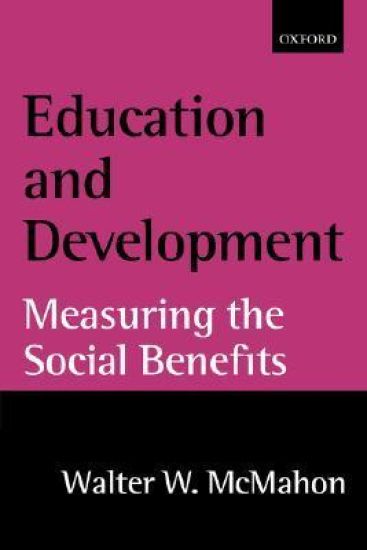
This book develops a new approach to measuring the total returns to human resource development through investment in education. Drawing on microanalytic foundations, it uses regional and worldwide data to estimate the net marginal contributions of education and new knowledge both to economic growth and to wider effects on democratization, human rights, political stability, health, net population growth rates, reduction of poverty, inequality in income distribution, crime, drug use, and the environment. The total impact of education policy changes on endogenous development is then estimated using an interactive model. This new approach is important to industrialized and developing countries alike. The diffusion of knowledge and the adaptation of new techniques has been identified as crucial to the growth process in the new endogenmous growth models, and is of increasing strategic importance in current knowledge-based globalizing economies. Similarly, the non-monetary returns from education are important in improving human welfare. Measurement of these non-market returns is a crucial but much neglected subject. It has proved frustrating, and existing microanalytic measures have proved piecemeal. The new approach developed here offers some comprehensive estimates and simulation techniques for finding more cost-effective policies, and also suggests new hypotheses for further microanalytic testing.
This book develops a new approach to measuring the total returns to human resource development through investment in education. Drawing on microanalytic foundations, it uses regional and worldwide data to estimate the net marginal contributions of education and new knowledge both to economic growth and to wider effects on democratization, human rights, political stability, health, longevity, net population growth rates, reduction of poverty, inequality in income distribution, crime, drug use, and the environment. Externalities including indirect and delayed effects are identified and measured for these market and non-market returns. The total impacts of education policy changes on endogenous development are then estimated for several East Asian, Latin American, African, and industrialized nations using an interactive model. This new approach is important to industrialized and developing countries alike. The diffusion of knowledge and the adaptation of new techniques has been identified as crucial to the growth process in the new endogenous growth models, and is of increasing strategic importance in current knowledge-based globalizing economies. Similarly, the non-monetary returns from education are important in improving human welfare. Measurement of these non-market returns is a crucial but much neglected subject. It has proved frustrating, and existing microanalytic measures have proved piecemeal. The new approach developed here offers some comprehensive estimates and simulation techniques for finding more cost-effective policies, and also suggests new hypotheses for further microanalytic testing.








![The Poetical Works of Thomas Chatterton. with an Essay on the Rowley Poems by the REV. Walter W. Skeat ... and a Memoir by Edward Bell. [The Rowley Poems Modernized.]](/covers/9781241567989.jpg)
![The Poetical Works of Thomas Chatterton. with an Essay on the Rowley Poems by the REV. Walter W. Skeat ... and a Memoir by Edward Bell. [The Rowley Poems Modernized.]](/covers/9781241568078.jpg)