

Kirjahaku
Etsi kirjoja tekijän nimen, kirjan nimen tai ISBN:n perusteella.
1000 tulosta hakusanalla Walter White; Allen Lewis


Drive East Until You Hit An Ocean
Richard Allen Waite; J. Walter Swartz
Createspace Independent Publishing Platform
2015
nidottu
You ask what it is about. About, you say? It's about: Arbitrary social constructs are not arbitrary social contracts. To get an epiphany to strike you must taunt it first. LITTLE KNOWN UNTRUE FACT #314: Dwight Eisenhower invented fried chicken. Before his innovation people only ate boiled chicken. You are what you eat... and that makes you a cannibal. What do you mean "How do you kill a man armed with only a tube sock and a spaghetti noodle?"? You shoot him in the head. 50% of people are under average intelligence. When you ask educators they say it is impossible to reduce that percentage. I'm sorry you feel that way. We'll send someone to surgically remove your feelings as soon as possible. I'm screaming on the inside... My neighbors are screaming "On the inside of what?"

ADVENTURE SPORTS An exhilarating dive into some of the world’s most extreme sports. Combining stunning photography with clear, simple text, this series will keep you turning the pages. ADVENTURE SPORTS From surfing big waves to racing down waterfalls, white water sports are some of the most extreme and dangerous sports in the world!
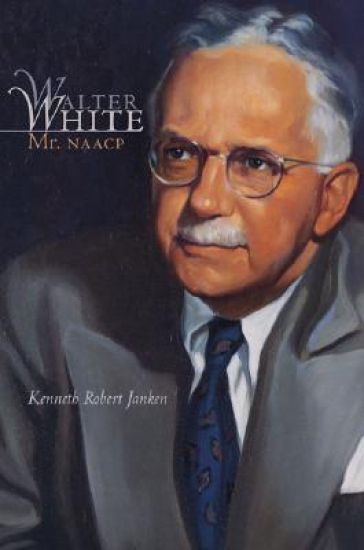
Walter White
The University of North Carolina Press
2006
nidottu
Walter White (1893-1955) was among the nation's preeminent champions of civil rights. With blond hair and blue eyes, he could ""pass"" as white even though he identified as African American, and his physical appearance allowed him to go undercover to investigate more than 40 lynchings and race riots in the years following World War I. As executive secretary of the NAACP from 1931 until his death in 1955, White promoted the Harlem Renaissance and led influential national campaigns against lynching, segregation in the military, and racism in Hollywood movies. In this first scholarly biography, Kenneth Robert Janken considers the man who embodied many contradictions. Walter White gained access to white elite culture, establishing friendships with Eleanor Roosevelt and numerous congressmen and Supreme Court justices, but he ultimately considered himself - and was considered by many - an organization man, ""Mr. NAACP.

The day Walter White was buried in 1955 the New York Times called him "the nearest approach to a national leader of American Negroes since Booker T. Washington." For more than two decades, White, as secretary of the NAACP, was perhaps the nation's most visible and most powerful African-American leader. He won passage of a federal anti-lynching law, hosted one of the premier salons of the Harlem Renaissance, created the legal strategy that led to Brown v. Board of Education, and initiated the campaign demanding that Hollywood give better roles to black actors. Driven by ambitions for himself and his people, he offered his entire life to the advancement of civil rights in America.

Walter White & Co. Die neuen Heldenfiguren in amerikanischen Fernsehserien
Kathi Gormász
Herbert von Halem Verlag
2017
sidottu
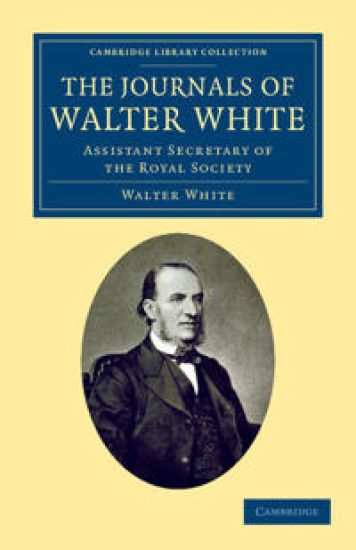
Although he left school at fourteen to work as an upholsterer and cabinet-maker, Walter White (1811–93) would spend forty years working in the library of the Royal Society. White was mostly self-taught, a voracious reader who also learnt German, French, and Latin, and a diligent attender at lectures and other events offering self-improvement. After a brief emigration to the United States, he returned to Britain in 1839, and was offered a post as 'attendant' in the Royal Society's library in 1844; this led to his cataloguing much of the collection, and in 1861 he was appointed Librarian. He became acquainted with many of the Society's members, including Thomas Carlyle, Charles Darwin, and Lord Tennyson. These journals, published posthumously by his brother in 1898, begin with a brief account of his early years before charting his intellectual progress and career, ending in the year he retired, 1884.
What Went Wrong with Walter White?
Richard N. D. Smartt
Createspace Independent Publishing Platform
2015
nidottu

Cooking Up A Storm: How Heisenberg Broke Walter White's Sons: A Master's Thesis on AMC's Breaking Bad
Lyndsey V. Kane
Independently Published
2018
nidottu
It has been said that the sins of the father can often fall on the son. When considering Walter "Mr Chips to Scarface" White and all his many misdeeds over the five seasons of AMC's Breaking Bad, this is most apparent. It is in this Master's Thesis, Lyndsey V. Kane aims to focus on how that transformation from meek chemistry teacher to drug kingpin affected two characters often overlooked in research - Walt's biological and surrogate-sons, Walt Jr and Jesse Pinkman. Cover Illustration by Orla Price
This work has been selected by scholars as being culturally important and is part of the knowledge base of civilization as we know it.This work is in the public domain in the United States of America, and possibly other nations. Within the United States, you may freely copy and distribute this work, as no entity (individual or corporate) has a copyright on the body of the work.Scholars believe, and we concur, that this work is important enough to be preserved, reproduced, and made generally available to the public. To ensure a quality reading experience, this work has been proofread and republished using a format that seamlessly blends the original graphical elements with text in an easy-to-read typeface.We appreciate your support of the preservation process, and thank you for being an important part of keeping this knowledge alive and relevant.
This work has been selected by scholars as being culturally important and is part of the knowledge base of civilization as we know it.This work is in the public domain in the United States of America, and possibly other nations. Within the United States, you may freely copy and distribute this work, as no entity (individual or corporate) has a copyright on the body of the work.Scholars believe, and we concur, that this work is important enough to be preserved, reproduced, and made generally available to the public. To ensure a quality reading experience, this work has been proofread and republished using a format that seamlessly blends the original graphical elements with text in an easy-to-read typeface.We appreciate your support of the preservation process, and thank you for being an important part of keeping this knowledge alive and relevant.
![My Ducats and My Daughter. [A Novel. by Hay Hunter and Walter White.]](/covers/9781240876754.jpg)
My Ducats and My Daughter. [A Novel. by Hay Hunter and Walter White.]
Peter Hay Whyte; Walter Whyte
British Library, Historical Print Editions
2011
pokkari
![My Ducats and My Daughter. [A Novel. by Hay Hunter and Walter White.] Vol. III](/covers/9781241480431.jpg)
My Ducats and My Daughter. [A Novel. by Hay Hunter and Walter White.] Vol. III
Peter Hay Whyte; Walter Whyte
British Library, Historical Print Editions
2011
pokkari
Title: My Ducats and my Daughter. A novel. By Hay Hunter and Walter White.]Publisher: British Library, Historical Print EditionsThe British Library is the national library of the United Kingdom. It is one of the world's largest research libraries holding over 150 million items in all known languages and formats: books, journals, newspapers, sound recordings, patents, maps, stamps, prints and much more. Its collections include around 14 million books, along with substantial additional collections of manuscripts and historical items dating back as far as 300 BC.The GENERAL HISTORICAL collection includes books from the British Library digitised by Microsoft. This varied collection includes material that gives readers a 19th century view of the world. Topics include health, education, economics, agriculture, environment, technology, culture, politics, labour and industry, mining, penal policy, and social order. ++++The below data was compiled from various identification fields in the bibliographic record of this title. This data is provided as an additional tool in helping to insure edition identification: ++++ British Library Whyte, Peter Hay; Whyte, Walter; 1884. 3 vol.; 8 . 12636.q.3.
![My Ducats and My Daughter. [A Novel. by Hay Hunter and Walter White.] Vol. II.](/covers/9781241480509.jpg)
My Ducats and My Daughter. [A Novel. by Hay Hunter and Walter White.] Vol. II.
Peter Hay Whyte; Walter Whyte
British Library, Historical Print Editions
2011
pokkari
Title: My Ducats and my Daughter. A novel. By Hay Hunter and Walter White.]Publisher: British Library, Historical Print EditionsThe British Library is the national library of the United Kingdom. It is one of the world's largest research libraries holding over 150 million items in all known languages and formats: books, journals, newspapers, sound recordings, patents, maps, stamps, prints and much more. Its collections include around 14 million books, along with substantial additional collections of manuscripts and historical items dating back as far as 300 BC.The GENERAL HISTORICAL collection includes books from the British Library digitised by Microsoft. This varied collection includes material that gives readers a 19th century view of the world. Topics include health, education, economics, agriculture, environment, technology, culture, politics, labour and industry, mining, penal policy, and social order. ++++The below data was compiled from various identification fields in the bibliographic record of this title. This data is provided as an additional tool in helping to insure edition identification: ++++ British Library Whyte, Peter Hay; Whyte, Walter; 1884. 3 vol.; 8 . 12636.q.3.
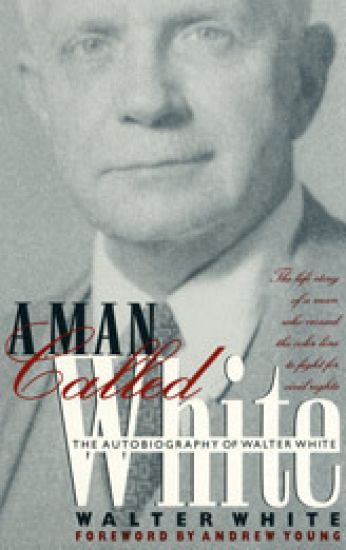
First published in 1948, A Man Called White is the autobiography of the famous civil rights activist Walter White during his first thirty years of service to the National Association for the Advancement of Colored People. White joined the NAACP in 1918 and served as its executive secretary from 1931 until his death in 1955. His recollections tell not only of his personal life, but amount to an insider's history of the association's first decades.Although an African American, White was fair-skinned, blond-haired, and blue-eyed. His ability to pass as a white man allowed him—at great personal risk—to gather important information regarding lynchings, disfranchisement, and discrimination. Much of A Man Called White recounts his infiltration of the country's white-racist power structure and the numerous legal battles fought by the NAACP that were aided by his daring efforts.Penetrating and detailed, this autobiography provides an important account of crucial events in the development of race relations before 1950—from the trial of the "Scottsboro Boys" to an investigation of the treatment of African American servicemen in World War II, from the struggle against the all-white primaries in the South to court decisions—at all levels—on equal education.
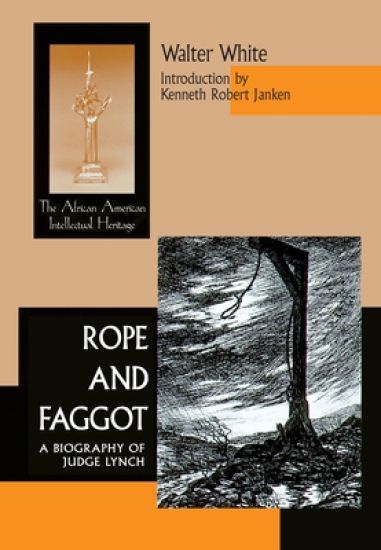
In 1926, Walter White, assistant secretary of the National Association for the Advancement of Colored People, broke the story of a horrific lynching in Aiken, South Carolina, in which three African Americans were murdered while more than one thousand spectators watched. Because of his light complexion, blonde hair, and blue eyes, White, an African American, was able to investigate first-hand more than forty lynchings and eight race riots. Following the lynchings in Aiken, White took a leave of absence from the NAACP and, with help from a Guggenheim grant, spent a year in France writing Rope and Faggot. Ironically subtitled "A Biography of Judge Lynch," Rope and Faggot is a compelling example of partisan scholarship and is based on White's first-hand investigations. It was first published in 1929. Rope and Faggot debunked the "big lie" that lynching punished black men for raping white women and it provided White with an opportunity to deliver a penetrating critique of the southern culture that nourished this form of blood sport. White marshaled statistics demonstrating that accusations of rape or attempted rape accounted for less than 30 percent of all lynchings. Despite the emphasis on sexual issues in instances of lynching, White insisted that the fury and sadism with which white mobs attacked their victims stemmed primarily from a desire to keep blacks in their place and control the black labor force. Some of the strongest sections of Rope and Faggot deal with White's analysis of the economic and cultural foundations of lynching. Walter White's powerful study of a shameful practice in modern American history is now back in print, with a new introduction by Kenneth Robert Janken.

In 1926, Walter White, assistant secretary of the National Association for the Advancement of Colored People, broke the story of a horrific lynching in Aiken, South Carolina, in which three African Americans were murdered while more than one thousand spectators watched. Because of his light complexion, blonde hair, and blue eyes, White, an African American, was able to investigate first-hand more than forty lynchings and eight race riots. Following the lynchings in Aiken, White took a leave of absence from the NAACP and, with help from a Guggenheim grant, spent a year in France writing Rope and Faggot. Ironically subtitled "A Biography of Judge Lynch," Rope and Faggot is a compelling example of partisan scholarship and is based on White's first-hand investigations. It was first published in 1929. Rope and Faggot debunked the "big lie" that lynching punished black men for raping white women and it provided White with an opportunity to deliver a penetrating critique of the southern culture that nourished this form of blood sport. White marshaled statistics demonstrating that accusations of rape or attempted rape accounted for less than 30 percent of all lynchings. Despite the emphasis on sexual issues in instances of lynching, White insisted that the fury and sadism with which white mobs attacked their victims stemmed primarily from a desire to keep blacks in their place and control the black labor force. Some of the strongest sections of Rope and Faggot deal with White's analysis of the economic and cultural foundations of lynching. Walter White's powerful study of a shameful practice in modern American history is now back in print, with a new introduction by Kenneth Robert Janken.