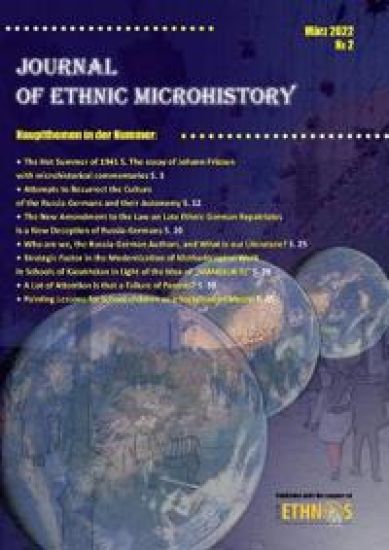
There are seven articles in issue 2, March 2022 of "Journal of Ethnic Microhistory". Johann Friesen describes his experiences in the first days of the Soviet-German War 1941-1945. He was twice wounded, but in July 1942 he was sent in a cattle wagon to a Siberian labour camp because of his German nationality. The publication of Hugo Wormsbecher is devoted to the state of education and culture of Russia-Germans after dismantling their autonomy in 1941 and their first legal steps for the resurrection of it. Andrei Triller deals with the problems of admission to Germany of Late Ethnic German Repatriates. Antonina Schneider-Stremjakowa tackles the problem of national affiliation of Russia-German writers. The essay "Strategic Factor in the Modernization of Methodological Work in Schools of Kazakhstan", written by Doctor of Pedagogical Sciences, Professor Ileskan Smanuly Smanov, Acting Associate Professor Gulmira Abdurasulovna Bachramova, and Acting Associate Professor Gaziza Ileskan Smanova emphasizes the importance of the implementation of the Concept of the 12-Year-School-Education in the Light of the Introduction of the Idea of the national idea MANGILIK EL. The paper "A Lot of Attention is that a Failure of the Parents" attributed to the anonymised author highlights the uneasy relations of parents with the German Youth Welfare Office. In the last article Professor Ileskan Smanuly Smanov investigates the influence of painting as the most impressive branch of visual arts on educational process of children.
From the point of view of a child, the classic of Russia-German literature Hugo Wormsbecher depicts the hopeless struggle for survival of a Volga-German family during the deprived years of the Second World War. The loss of the homeland on the Volga and the deportation of the family form the background of the novella "Our Courtyard", which becomes a parable for the fate of the Russia-Germans.
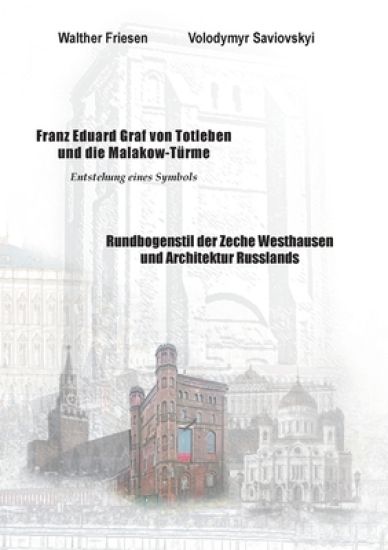
Die geschichtliche Abhandlung Franz Eduard Graf von Totleben und die Malakow-T rme widmet sich der Entstehung des Symbols Malakow, das zum integralen Bestandteil der Propaganda und Meinungsbildung nach dem Krimkrieg (1853-1856) geworden ist. Sowohl der Krieg selbst als auch die damit verbundene Propaganda-Kampagne haben sich auf das kulturelle, soziale, politische Leben und ffentliche Bewusstsein in den vom Konflikt betroffenen L ndern ausgewirkt. Im Aufsatz Rundbogenstil der Zeche Westhausen und Architektur Russlands werden die Architekturformen der weltbekanntesten Geb ude Russlands mit der Architektonik der bergm nnischen Bauwerke des Ruhrgebiets verglichen.
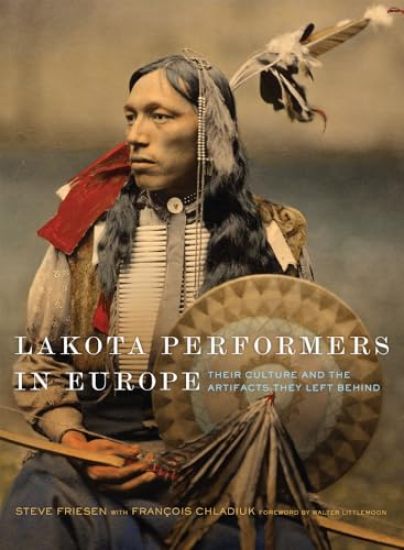
From April to November 1935 in Belgium, fifteen Lakotas enacted their culture on a world stage. Wearing beaded moccasins and eagle-feather headdresses, they set up tepees, danced, and demonstrated marksmanship and horse taming for the twenty million visitors to the Brussels International Exposition, a grand event similar to a world's fair. The performers then turned homeward, leaving behind 57 pieces of Lakota culture that they had used in the exposition, ranging from costumery to weaponry. In Lakota Performers in Europe, author Steve Friesen tells the story of these artifacts, forgotten until recently, and of the Lakota performers who used them. The 1935 exposition marked a culmination of more than a century of European travel by American Indian performers, and of Europeans' fascination with Native culture, fanned in part by William F. 'Buffalo Bill' Cody's Wild West from the late 1800s through 1913. Although European newspaper reports often stereotyped Native performers as 'savages,' American Indians were drawn to participate by the opportunity to practice traditional aspects of their culture, earn better wages, and see the world. When the organizers of the 1935 exposition wanted to include an American Indian village, Sam Lone Bear, Thomas and Sallie Stabber, Joe Little Moon, and other Lakotas were eager to participate. By doing this, they were able to preserve their culture and influence European attitudes toward it. Friesen narrates these Lakotas' experiences abroad. In the process, he also tells the tale of collector François Chladiuk, who acquired the Lakotas' artifacts in 2004. More than 300 color and black-and-white photographs document the collection of items used by the performers during the exposition. Friesen portrays a time when American Indians - who would not long after return to Europe as allies and liberators in military garb - appeared on the international stage as ambassadors of the American West. Lakota Performers in Europe offers a complex view of a vibrant culture practiced and preserved against tremendous odds.