Kirjojen hintavertailu. Mukana 11 244 527 kirjaa ja 12 kauppaa.

Kirjahaku

Etsi kirjoja tekijän nimen, kirjan nimen tai ISBN:n perusteella.

1000 tulosta hakusanalla Wang Huanlan

Luxury Villa Feast

Luxury Villa Feast

Wang Huanlan

Artpower International
2013
sidottu
'Luxury Villa Feast' is an inspirational collection of sumptuous colour photographs, depicting stunning villas from across the globe. Each project is illustrated with shots of the fabulous interiors, as well as images of the exterior, offering up the architectural details of the buildings themselves. This book is a fantastic resource for any student of design or architecture.
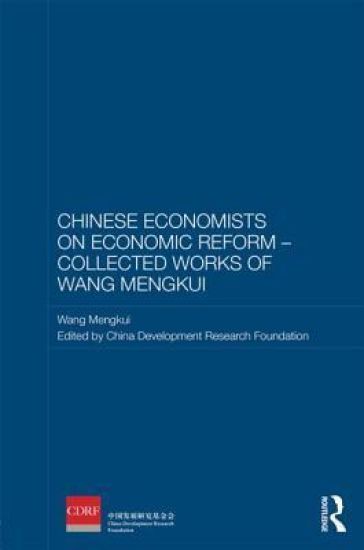
Chinese Economists on Economic Reform – Collected Works of Wang Mengkui
This book is part of a series which makes available to English-speaking audiences the work of the individual Chinese economists who were the architects of China’s economic reform. The series provides an inside view of China’s economic reform, revealing the thinking of the reformers themselves, unlike many other books on China’s economic reform which are written by outside observers. Wang Mengkui (1938-) has been Director of the Research Office under the State Council and was President of the State Council’s Development Research Centre from 1998 to 2007. A member of the Party since 1956, he has been responsible for drafting many key Chinese Communist Party documents, including Report on the Work of the Government, presented to the National People’s Congresses. The book is published in association with China Development Research Foundation, one of the leading economic and social think tanks in China, where many of the theoretical foundations and policy details of economic reform were formulated.
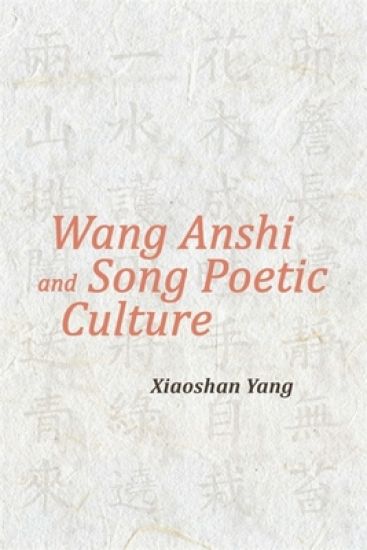
Wang Anshi and Song Poetic Culture

Wang Anshi and Song Poetic Culture

Xiaoshan Yang

Harvard University, Asia Center
2021
sidottu
A poetic culture consists of a body of shared values and conventions that shape the composition and interpretation of poetry in a given historical period. This book on Wang Anshi (1021–1086) and Song poetic culture—the first of its kind in any Western language—brings into focus a cluster of issues that are central to the understanding of both the poet and his cultural milieu. These issues include the motivations and consequences of poetic contrarianism and the pursuit of novelty, the relationship between anthology compilation and canon formation, the entanglement of poetry with partisan politics, Buddhist orientations in poetic language, and the development of the notion of late style.Though diverse in nature and scope, the issues all bear the stamp of the period as well as Wang Anshi’s distinct personality. Conceived of largely as a series of case studies, the book’s individual chapters may be read independently of each other, but together they form a varied, if only partial, mosaic of Wang Anshi’s work and its critical reception in the larger context of Song poetic culture.
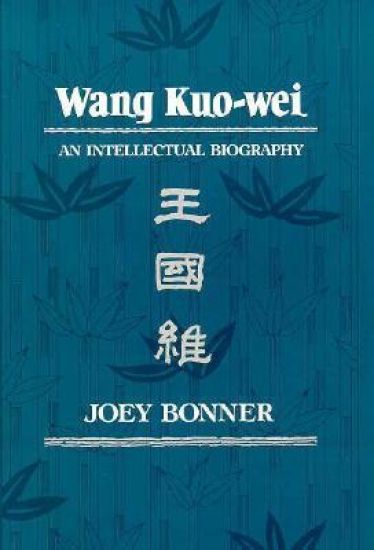
Wang Kuo-wei

Wang Kuo-wei

Joey Bonner

Harvard University Press
1986
sidottu
In this first full-fledged intellectual biography of the brilliant and multifaceted Chinese scholar Wang Kuo-wei (1877–1927), Joey Bonner throws important new light on the range and course of ideas in early twentieth-century China. Coincidentally, she illuminates the nature of Wang’s intimate, thirty-year personal and professional association with the well-known Chinese scholar Lo Chen-yü (1866–1940) and provides a most comprehensive and compelling account of her biographee’s posthumously controversial career in the years following the 1911 Revolution.Pursuing her subject across the whole spectrum of his many scholarly interests, Bonner critically examines Wang’s essays on German philosophy and philosophical aesthetics; his poetry, literary criticism, and aesthetic theory; and his works on ancient Chinese history, particularly of the Shang dynasty. Insightfully relating his strenuous intellectual search in the fields of philosophy, literature, and history to his very personal quest for truth, beauty, and virtue, Bonner shows in this finely crafted book how Wang’s unhappiness in later life as well as his suicide can be understood only within the context of his humanistic concerns in general and his extreme commitment in the postimperial period to the Confucian ethicoreligious tradition in particular. Without compromising the clearheaded critical detachment that characterizes her analysis of the intricacies of his thought, Bonner has produced a portrait of Wang Kuo-wei suffused with warmth and sympathetic respect.
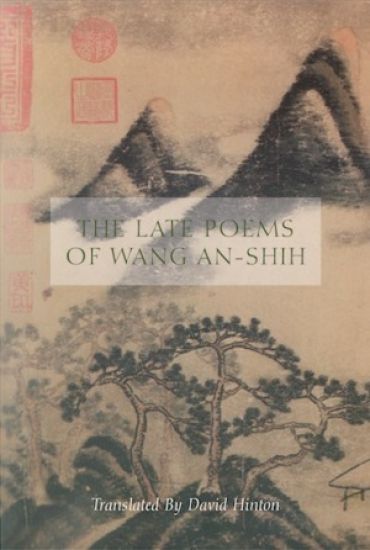
The Late Poems of Wang An-Shih

The Late Poems of Wang An-Shih

Wang An-Shih

New Directions Publishing Corporation
2015
nidottu
Wang An-shih (1021-1086 C.E.) was a remarkable figure—not only one of the great Sung Dynasty poets, but also the most influential and controversial statesman of his time. Although Wang had little interest in the grandeur of high office and political power, he took the responsibility of serving the people seriously. He rose to become prime minister, and in this position he instituted a controversial system of radically egalitarian social reforms to improve the lives of China’s peasants. Once those reforms were securely in place, Wang retired to a reclusive life of artistic and spiritual self-cultivation. It was after his retirement, practicing Ch'an (Zen) Buddhism and wandering the mountains around his home, that Wang An-shih wrote the poems that made his reputation. Short and plainspoken, these late poems contain profound multitudes–the passing of time, rivers and mountains, silence and Buddhist emptiness. They won him wide acclaim in China and beyond across the centuries. And in Hinton's breathtaking translations, Wang feels like a major contemporary poet with deep ecological insight and a questioning spirit.
Selected Poems: Wang Wei

Selected Poems: Wang Wei

Wang Wei

Anvil Press Poetry
2009
nidottu
Wang Wei (701-761 AD) is often spoken of, with his contemporaries Li Po and Tu Fu, as one of the three greatest poets in China's 3,000-year poetic history. He was the consummate master of the short imagistic landscape poem that came to typify classical Chinese poetry, with poems of resounding tranquillity whose style and substance can be traced to his practice of Ch'an (Zen) Buddhism. But in spite of this philosophical depth, Wang is not a difficult poet. He may in fact be the most immediately appealing of China's great poets, and in Hinton's masterful translations he sounds utterly contemporary.
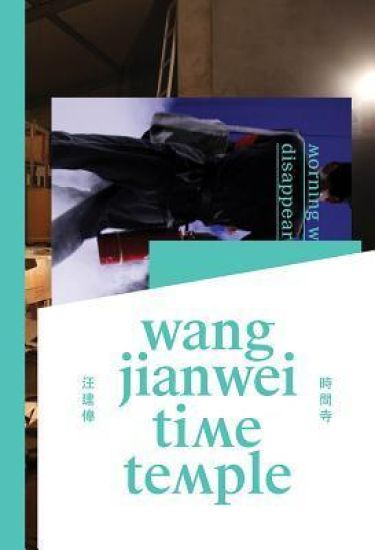
Wang Jianwei

Wang Jianwei

Wang Jianwei

Guggenheim Museum Publications,U.S.
2014
nidottu
The Robert H. N. Ho Family Foundation Chinese Art Initiative at the Guggenheim Museum, launched in early 2013, strives to advance the achievements of contemporary Chinese artists by commissioning major pieces that will be exhibited in the museum and enter its permanent collection. Selected for the first commission, Beijing-based artist Wang Jianwei is recognized throughout Asia and Europe for his bold experiments in new media, video, performance, conceptual and installation art. His highly innovative works consider space and time in elaborate ways, working from the notion that the production of artwork can be a continuous rehearsal. The exhibition comprises a multifaceted space that includes painting, installation, sculpture, film, and a theatrical production. The accompanying catalogue includes three texts in English and Chinese: a curatorial essay on Wang’s artistic practice; a look at the artist’s recent work by Gao Shiming; and a text by the artist on contemporary Chinese art. In addition, this volume includes a chronology of the artist’s oeuvre to date.
Wang Bing's Filmmaking of the China Dream

Wang Bing's Filmmaking of the China Dream

Elena Pollacchi

TAYLOR FRANCIS LTD
2025
nidottu
This volume offers an organic discussion of Wang Bing's filmmaking across China’s marginal spaces and against the backdrop of the state-sanctioned 'China Dream'. Wang Bing's cinema gives voice to the subaltern. Focusing on contemporary China, his work testifies to a set of issues dealing with inequality, labour, and migration. His internationally awarded documentaries are considered masterpieces with unique aesthetics that bear reference to global film masters. Therefore, this investigation goes beyond the divides between Western and non-Western film traditions and between fiction and documentary cinema. Each chapter takes a different articulation of space (spaces of labour, history, and memory) as its entry point, bringing together film and documentary studies, Chinese studies, and globalization studies. This volume benefits from the author's extensive conversations with Wang Bing and insider observations of film production and the film festival circuit.
Chinese Economists on Economic Reform – Collected Works of Wang Mengkui
This book is part of a series which makes available to English-speaking audiences the work of the individual Chinese economists who were the architects of China’s economic reform. The series provides an inside view of China’s economic reform, revealing the thinking of the reformers themselves, unlike many other books on China’s economic reform which are written by outside observers. Wang Mengkui (1938-) has been Director of the Research Office under the State Council and was President of the State Council’s Development Research Centre from 1998 to 2007. A member of the Party since 1956, he has been responsible for drafting many key Chinese Communist Party documents, including Report on the Work of the Government, presented to the National People’s Congresses. The book is published in association with China Development Research Foundation, one of the leading economic and social think tanks in China, where many of the theoretical foundations and policy details of economic reform were formulated.
Wang Wei: an Homage to

Wang Wei: an Homage to

Poet Laureate Ward

Lulu.com
2008
pokkari
Wang Wei: was a Chinese (Tang) Poet and Artist. This book is filled with over 300 poems in the original Chinese, Pinyon, Translations, and English; followed by the thoughts in poetic form by American, Poet Laureate, Jean Elizabeth Ward is inspired to write; third in a series, either paying an homage to, or inspired by. Alphabetized for an easy read. A delight for those desiring something different, yet easy to read, and understand. Not a Translation Manual.
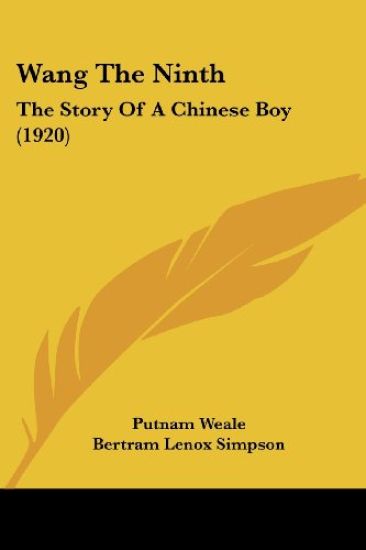
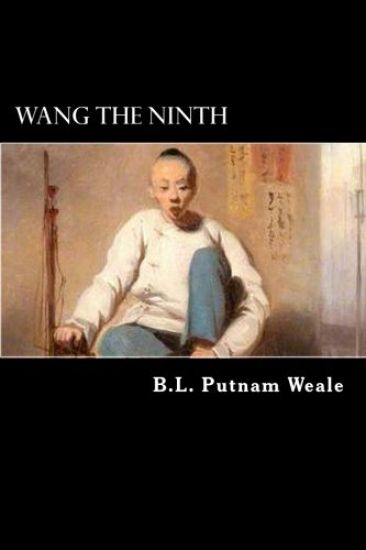
Wang the Ninth: The Story of a Chinese Boy

Wang the Ninth: The Story of a Chinese Boy

B. L. Putnam Weale

Createspace Independent Publishing Platform
2012
nidottu
"Wang the Ninth", first published in 1919, is a stylized account written by B.L. Putnam Weale of the Boxer Rebellion in China told through the experiences of a young Chinese boy, the eighth child - known as "Wang the Ninth". Bertram Lenox Simpson (1877-1930) was a British author who wrote about China under the pen name "B. L. Putnam Weale". Lenox-Simpson was the son of Clare Lenox-Simpson, who had been in the Chinese Maritime Customs Service since 1861; he had a brother, Evelyn, a mining engineer who worked in China, and a sister, Esme.His education was at Brighton College, after which he too joined the Service. He was in China during the Boxer Rebellion and during the siege of the legations. After this, he became Brigade Interpreter for the British Expeditionary Force (he spoke 5 languages).