Kirjojen hintavertailu. Mukana 11 244 527 kirjaa ja 12 kauppaa.

Kirjahaku

Etsi kirjoja tekijän nimen, kirjan nimen tai ISBN:n perusteella.

1000 tulosta hakusanalla Watt Ian

Conrad: Nostromo

Conrad: Nostromo

Watt Ian

Cambridge University Press
1988
pokkari
Conrad's great novel is a rich study not only of a typical South American country, but of the politics of any underdeveloped country, and for this reason it is permanently topical. Ian Watt addresses Conrad's concerns when writing the work, and provides an accessible introduction, taking account of background, history and politics, and reception and influence.
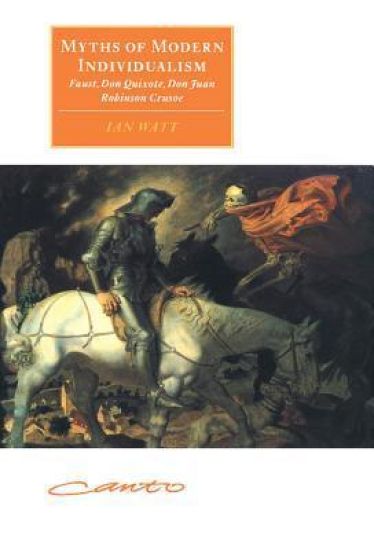
Myths of Modern Individualism

Myths of Modern Individualism

Watt Ian

Cambridge University Press
1997
pokkari
In their original versions, the ultimate fates of Faust, Don Quixote, and Don Juan reflect the anti-individuals of their time: Faust and Don Juan are punished in hellfire, and Don Quixote is mocked. A century later, Defoe’s Robinson Crusoe embodies a more favourable consideration of the individual. Ian Watt examines these four myths of the modern world, all created in the sixteenth to eighteenth centuries, as distinctive products of a historically new society.
Ian Watt

Ian Watt

Marina MacKay

Oxford University Press
2018
sidottu
Before his masterpiece The Rise of the Novel made him one of the most influential post-war British literary critics, Ian Watt was a soldier, a prisoner of war of the Japanese, and a forced labourer on the notorious Burma-Thailand Railway. Both an intellectual biography and an intellectual history of the mid-century, this book reconstructs Watt's wartime world: these were harrowing years of mass death, deprivation, and terror, but also ones in which communities and institutions were improvised under the starkest of emergency conditions. Ian Watt: The Novel and the Wartime Critic argues that many of our foundational stories about the novel—about the novel's origins and development, and about the social, moral, and psychological work that the novel accomplishes—can be traced to the crises of the Second World War and its aftermath.
The Rise of the Novel

The Rise of the Novel

Ian Watt

University of California Press
2001
pokkari
"The Rise of the Novel" is Ian Watt's classic description of the interworkings of social conditions, changing attitudes, and literary practices during the period when the novel emerged as the dominant literary form of the individualist era. In a new foreword, W.B. Carnochan accounts for the increasing interest in the English novel, including the contributions that Ian Watt's study made to literary studies: his introduction of sociology and philosophy to traditional criticism.
Myths of Modern Individualism

Myths of Modern Individualism

Ian Watt

Cambridge University Press
1996
sidottu
In this volume, Ian Watt examines the myths of Faust, Don Quixote, Don Juan and Robinson Crusoe, as the distinctive products of modern society. He traces the way the original versions of Faust, Don Quixote and Don Juan - all written within a forty-year period during the Counter Reformation - presented unflattering portrayals of the three figures, while the Romantic period two centuries later recreated them as admirable and even heroic. The twentieth century retained their prestige as mythical figures, but with a new note of criticism. Robinson Crusoe came much later than the other three, but his fate can be seen as representative of the new religious, economic and social attitudes which succeeded the Counter-Reformation. The four figures help to reveal problems of individualism in the modern period: solitude, narcissism, and the claims of the self versus the claims of society. They all pursue their own view of what they should be, raising strong questions about their heroes’ character and the societies whose ideals they reflect.
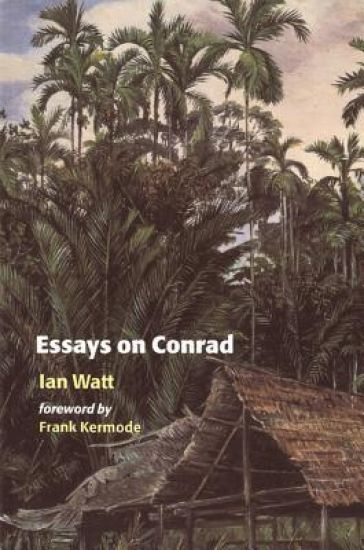
Essays on Conrad

Essays on Conrad

Ian Watt; Frank Kermode

Cambridge University Press
2000
sidottu
Ian Watt (1917–1999) has long been acknowledged as one of the finest of post-War literary critics. The Rise of the Novel (1957) is still the landmark account of the way in which realist fiction developed in the eighteenth century and Watt’s work on Conrad has been enormously influential. Conrad in the Nineteenth Century (1979) was to have been followed by a volume addressing Conrad’s later work, but the material for this long-awaited second volume remains in essay form. It is these essays, as Frank Kermode points out in his foreword, which form the nucleus of Essays on Conrad. Watt’s own worldview, as well as his insight into Conrad’s work, was shaped by his experiences as a prisoner of war on the River Kwai. His personal, and painfully moving, account of these experiences forms part of his famous essay ‘The Bridge over the River Kwai as Myth’ which completes this essential collection.
Essays on Conrad

Essays on Conrad

Ian Watt; Frank Kermode

Cambridge University Press
2000
pokkari
Ian Watt (1917–1999) has long been acknowledged as one of the finest of post-War literary critics. The Rise of the Novel (1957) is still the landmark account of the way in which realist fiction developed in the eighteenth century and Watt’s work on Conrad has been enormously influential. Conrad in the Nineteenth Century (1979) was to have been followed by a volume addressing Conrad’s later work, but the material for this long-awaited second volume remains in essay form. It is these essays, as Frank Kermode points out in his foreword, which form the nucleus of Essays on Conrad. Watt’s own worldview, as well as his insight into Conrad’s work, was shaped by his experiences as a prisoner of war on the River Kwai. His personal, and painfully moving, account of these experiences forms part of his famous essay ‘The Bridge over the River Kwai as Myth’ which completes this essential collection.
The Rise of the Novel: Studies in Defoe, Richardson and Fielding
The Rise of the Novel: Studies in Defoe, Richardson and Fielding by Ian Watt is a comprehensive study of the emergence and development of the novel as a literary genre in 18th century England. The book examines the works of three major novelists of the time - Daniel Defoe, Samuel Richardson, and Henry Fielding - and their contributions to the evolution of the novel form.Ian Watt explores how these writers used the novel to reflect the social, political, and cultural changes of their time, and how they created new narrative techniques and conventions that would shape the novel for centuries to come. The book also analyzes the themes and motifs that are common to these writers, such as the representation of the individual in society, the role of women, and the tension between reason and passion.The Rise of the Novel is a seminal work in the field of literary criticism and has become a classic of English literary studies. It offers a deep and insightful analysis of the historical, cultural, and literary context of the emergence of the novel as a genre, and sheds light on the enduring significance of the works of Defoe, Richardson, and Fielding.This is a new release of the original 1962 edition.This scarce antiquarian book is a facsimile reprint of the old original and may contain some imperfections such as library marks and notations. Because we believe this work is culturally important, we have made it available as part of our commitment for protecting, preserving, and promoting the world's literature in affordable, high quality, modern editions, that are true to their original work.
Rise Of The Novel

Rise Of The Novel

Ian Watt

Vintage Publishing
2015
pokkari
In the space of a single generation, three eighteenth-century writers - Daniel Defoe, Samuel Richardson and Henry Fielding - invented an entirely new genre of writing: the novel. This book explains why these authors wrote in the way that they did, and how the complex changes in society - the emergence of the middle-class and more.
The Principles and Practice of Electron Microscopy

The Principles and Practice of Electron Microscopy

Ian M. Watt

Cambridge University Press
1997
pokkari
The first edition of this book was widely praised as an excellent introduction to electron microscopy for materials scientists, physicists, earth and biological scientists. This completely revised new edition contains expanded coverage of existing topics and much new material. The author presents the subject of electron microscopy in a readable way, open both to those inexperienced in the technique, and also to practising electron microscopists. The coverage has been brought completely up to date, whilst retaining descriptions of early classic techniques. Currently live topics such as computer control of microscopes, energy-filtered imaging, cryo- and environmental microscopy, digital imaging, and high resolution scanning and transmission microscopy are all described. The highly praised case studies of the first edition have been expanded to include some interesting new examples. This indispensable guide to electron microscopy, written by an author with thirty years practical experience, will be invaluable to new and experienced electron microscopists in any area of science and technology.
The Rise of the Novel: Studies in Defoe, Richardson, and Fielding
This work has been selected by scholars as being culturally important and is part of the knowledge base of civilization as we know it.This work is in the public domain in the United States of America, and possibly other nations. Within the United States, you may freely copy and distribute this work, as no entity (individual or corporate) has a copyright on the body of the work.Scholars believe, and we concur, that this work is important enough to be preserved, reproduced, and made generally available to the public. To ensure a quality reading experience, this work has been proofread and republished using a format that seamlessly blends the original graphical elements with text in an easy-to-read typeface.We appreciate your support of the preservation process, and thank you for being an important part of keeping this knowledge alive and relevant.
The Rise of the Novel; Studies in Defoe, Richardson, and Fielding
This work has been selected by scholars as being culturally important and is part of the knowledge base of civilization as we know it.This work is in the public domain in the United States of America, and possibly other nations. Within the United States, you may freely copy and distribute this work, as no entity (individual or corporate) has a copyright on the body of the work.Scholars believe, and we concur, that this work is important enough to be preserved, reproduced, and made generally available to the public. To ensure a quality reading experience, this work has been proofread and republished using a format that seamlessly blends the original graphical elements with text in an easy-to-read typeface.We appreciate your support of the preservation process, and thank you for being an important part of keeping this knowledge alive and relevant.
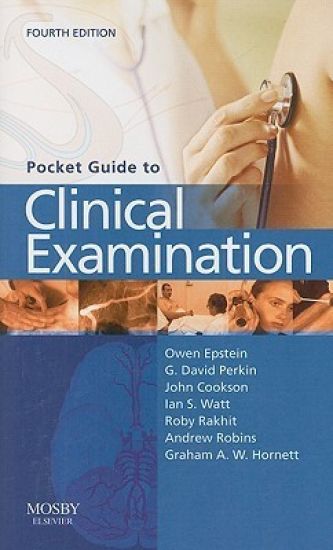
Pocket Guide to Clinical Examination

Pocket Guide to Clinical Examination

Owen Epstein; G. David Perkin; John Cookson; Ian S. Watt; Roby Rakhit; Andrew W. Robins; Graham A. W. Hornett

Mosby
2009
nidottu
This handy, well illustrated guide covers all aspects of patient examination. Carry this practical text with you so you can review the questions you should include as part of your history taking, the examination techniques you should use for different body systems and the presenting signs of common disorders. The new fourth edition includes over 130 colour illustrations as well as text boxes to aid revision and help in daily clinical duties. The history-taking and examination coverage will be invaluable to students faced with real-life patients for the first time by highlighting the most things to remember The signs & symptoms sections describe the most important diseases associated with each body system The various icon boxes highlight and summarise information on a range of issues relevant to history and examination: the elderly, emergency situations, Questions to Ask, etc Colour photographs depict the clinical manifestations as they present in real-life and 'real-life' examination techniques Colour diagrams clarify examination technique . Fully updated in line with the accompanying textbook Clinical Examination . Increased emphasis on patient communication, especially in the general practice setting . Two new authors join the team bringing additional expertise to the Pocket Guide
Watt

Watt

William Wraithe

Lulu.com
2010
pokkari
I had written a simple book explaining the techniques and methods for successful Astral Travel, OOBE, and Projection. It is an easy to follow step-by-step guide that will be a benefit to those who do not have the time or patience to read all the other complicated books out there. I know how frustrating it is to bust your butt and not achieve any results with the works out there to date. This is my gift to you all who wish to do it but never succeeded. Blessed Be, and have fun.
Watt

Watt

Samuel Beckett

Faber Faber
2009
pokkari
Written in Roussillon during World War Two, while Samuel Beckett was hiding from the Gestapo, Watt was first published in 1953. Beckett acknowledged that this comic novel unlike any other 'has its place in the series' - those masterpieces running from Murphy to the Trilogy, Waiting for Godot and beyond. It shares their sense of a world in crisis, their profound awareness of the paradoxes of being, and their distrust of the rational universe. Watt tells the tale of Mr Knott's servant and his attempts to get to know his master. Watt's mistake is to derive the essence of his master from the accidentals of his being, and his painstakingly logical attempts to 'know' ultimately consign him to the asylum. Itself a critique of error, Watt has previously appeared in editions that are littered with mistakes, both major and minor. The new Faber edition offers for the first time a corrected text based on a scholarly appraisal of the manuscripts and textual history.
Watt

Watt

Samuel Beckett

Grove Press / Atlantic Monthly Press
2009
nidottu
In prose possessed of the radically stripped-down beauty and ferocious wit that characterize his work, this early novel by Nobel Prize winner Samuel Beckett recounts the grotesque and improbable adventures of a fantastically logical Irish servant and his master. Watt is a beautifully executed black comedy that, at its core, is rooted in the powerful and terrifying vision that made Beckett one of the most influential writers of the twentieth century.