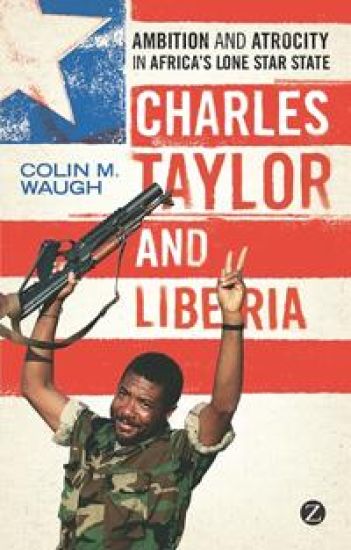
Campaigner, insurgent, fugitive, rebel commander, commodity kingpin, elected president, exile and finally prisoner, Charles Taylor sought to lead his country to change but instead ignited a conflict which destroyed Liberia in over a decade of violence, greed and personal ambition. Taylor's takeover threw much of the neigbouring region into turmoil, until he was finally brought to face justice in The Hague for his role in Sierra Leone's civil war. In this remarkable and eye-opening book, Colin Waugh draws on a variety of sources, testimonies and original interviews - including with Taylor himself - to recount the story of what really happened during these turbulent years. In doing so, he examines both the life of Charles Taylor, as well as the often self-interested efforts of the international community to first save Liberia from disaster, then, having failed to do so, to bring to justice the man it deems most to blame for its disintegration.
Campaigner, insurgent, fugitive, rebel commander, commodity kingpin, elected president, exile and finally prisoner, Charles Taylor sought to lead his country to change but instead ignited a conflict which destroyed Liberia in over a decade of violence, greed and personal ambition. Taylor's takeover threw much of the neigbouring region into turmoil, until he was finally brought to face justice in The Hague for his role in Sierra Leone's civil war. In this remarkable and eye-opening book, Colin Waugh draws on a variety of sources, testimonies and original interviews - including with Taylor himself - to recount the story of what really happened during these turbulent years. In doing so, he examines both the life of Charles Taylor, as well as the often self-interested efforts of the international community to first save Liberia from disaster, then, having failed to do so, to bring to justice the man it deems most to blame for its disintegration.
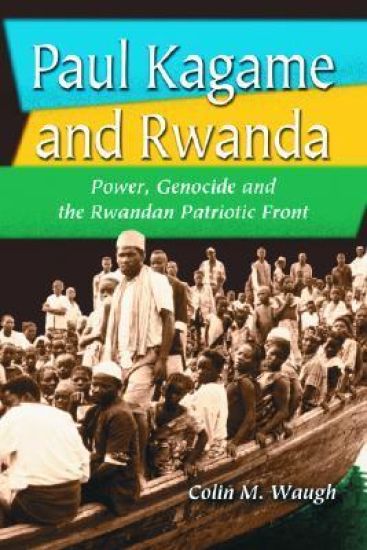
In 1994, ethnic conflict turned to genocide in Rwanda. When the world finally took notice, a million people lay dead, and the small African country lay in ruins. Rwanda returned from the brink guided by rulers determined to rebuild the country on their own terms, rather than those of a previously indifferent international community. Paul Kagame, Rwanda's first democratically elected president, embodies the new Rwandan political philosophy. Young, unconventional, not without flaws and critics--Kagame is key to understanding Rwanda's transition from a country that had known only fear, division and clan-based nepotism for many years to an exceptional African state built upon traditional order and values. Paul Kagame's life--from exiled child refugee, to guerilla warrior and rebel politician, to President of Rwanda--is traced in this exploration of the influences on Rwanda's struggle for change. Analyzing the conflicts and challenges of post-genocide Rwanda in comparison to modern parallels, the work invites reassessment of Kagame's leadership and government in an African context rather than measurement against Western standards, and critiques Western involvement in Rwanda since the early 1990s. Twenty-eight photographs and three maps supplement the text, as do a history of Rwanda's Banyarwanda people and a glossary of words in Kinyarwanda, their language. The work includes a bibliography and an index.
Now in its nineteenth edition, Terrell on the Law of Patents has been the authority on UK patent law for over 135 years. It provides the most detailed and authoritative commentary on law, practice, and procedure – comprehensively covering every stage from application to infringement. It includes advice on the fundamental aspects of patent law as well as more specialist issues such as FRAND, SPCs and licenses. The text is updated by a team of intellectual property specialists from Three New Square headed by Sir Colin Birss to provide you with dependable insight and expert analysis. This new edition includes: Reworked chapters on construction, novelty, obviousness, infringement, and threats. Analysis of the Supreme Court decisions in Lilly v Actavis (doctrine of equivalents); Warner-Lambert v Generics (plausibility and infringement of second medical use patents); and Actavis v Icos (obviousness) The FRAND chapter has been revised to consider Unwired Planet v Huawei, and Conversant v ZTE & Huawei The chapter on threats has new analysis of the Intellectual Property (Unjustified Threats) Act 2017 Additional commentary on the latest procedural rules in the Patents Court, IPEC, and the Shorter Trial Scheme Regularly cited in court, Terrell continues to set the standard by which others are compared and is an essential reference to help keep you up to date with the very latest patent law developments. Rigorous analysis of the most significant case law from all levels of the UK Courts, the European Patent Office, the UK Patent Office, and the Appeals Boards. Detailed explanations of the application process for UK national patents and European patents. Addresses the issue of entitlement and answers the key questions: who may apply for a patent and who may be granted a patent? Applying for a supplementary protection certificate, the conditions for granting SPCs, and their effects. FRAND licensing, undertakings, and the nature and scope of obligations. Outlines the grounds for revocation as defined by the Patents Act 1977. Different types of invalidity including lack of novelty, obviousness, and insufficiency. Clarifies the principles of patent infringement to ascertain whether or not there has been an infringement, as well as outlining statutory exceptions and other defences. Discusses actions for infringement and looks at the parties involved, claims forms, trial procedure, and remedies. Covers the procedural requirements and case management process in the Intellectual Property Enterprise Court. Analyses second medical use claims, human genome sciences, and central amendments to patents. Explains compulsory licenses and licenses of right. Includes relevant statutory material as well as sample precedents and pleadings.
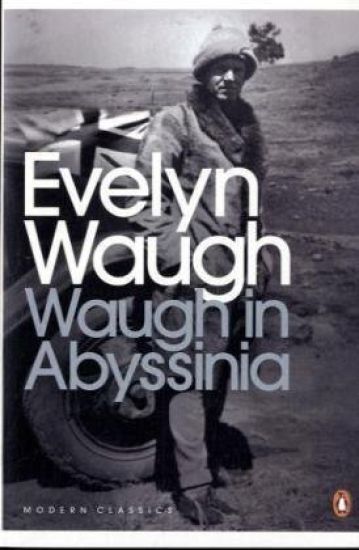
A witty account of Waugh's time in Abyssinia as a war correspondentIn 1935 Italy declared war on Abyssinia and Evelyn Waugh was sent to Addis Ababa to cover the conflict. His acerbic account of the intrigue and political machinations leading up to the crisis is coupled with amusing descriptions of the often bizarre and seldom straightforward life of a war correspondent rubbing shoulders with less-than-honest officials, Arab spies, pyjama-wearing radicals and disgruntled journalists. Witty, lucid and penetrating, Evelyn Waugh captures the dilemmas and complexities of a feudal society caught up in twentieth-century politics and confrontation.
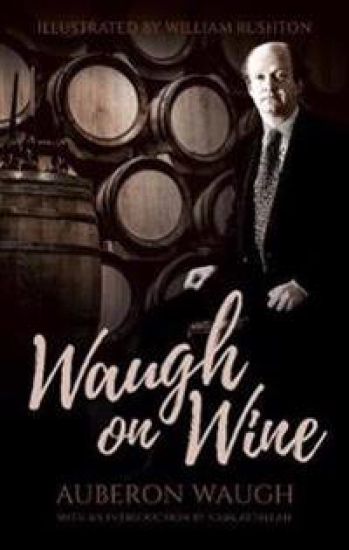
First published in 1987 and long out of print, this collection of Auberon Waugh's writings while wine correspondent at various times for Tatler, the Spectator and Harper's and Queen is now considered a classic text by a new generation of wine writers and connoisseurs. Waugh On Wine is riddled with his legendary wit: `...hosts that skimp on their wine should be exposed, ridiculed and humiliated'. On aperitifs he wrote, `The general effect of cocktails is to anesthetise the brain, drive out the worries and preoccupations of the day and prepare men and women for each other's company.' On smoking cannabis: `For those readers that are still old-fashioned enough to smoke pot, the only wine I ever found that went well with it was Deinhart's Hochheimer Konigin Victoria Beng Riesling Kabinett.' The best way to enjoy this cornucopia of delight is to settle into a comfy chair, pour a glass of your favourite vintage and enjoy a master stylist at the top of his game.
Scoop, Evelyn Waugh's bestselling comedy of England's newspaper business of the 1930s is the closest thing foreign correspondents have to a bible -- they swear by it. But few readers are acquainted with Waugh's memoir of his stint as a London Daily Mail correspondent in Abyssinia (now Ethiopia) during the Italian invasion in the 1930s. Waugh in Abyssinia is an entertaining account by a cantankerous and unenthusiastic war reporter that ""provides a fascinating short history of Mussolini's imperial adventure as well as a wickedly witty preview of the characters and follies that figure into Waugh's famous satire."" In the forward, veteran foreign correspondent John Maxwell Hamilton explores in how Waugh ended up in Abyssinia, which real-life events were fictionalised in Scoop, and how this memoir fits into Waugh's overall literary career, which includes the classic Brideshead Revisited. As Hamilton explains, Waugh was the right man (a misfit), in the right place (a largely unknown country that lent itself to farcical imagination), at the right time (when the correspondents themselves were more interesting than the scraps of news they could get.) The result, Waugh in Abyssinia, is a memoir like no other.
Compiled on the occasion of Evelyn Waugh's centenary in 2003, this collection of essays shows a renewed critical interest in the author extended by scholars from both sides of the Atlantic. The contributions go back to an international symposium held at La Rioja University, 15-17 May 2003. Apart from traditional debate over questions of fact and interpretation, the book contains innovative approaches to Waugh's "oeuvre, " some of which make use of theories of discourse and media studies and denote an increasingly sophisticated awareness of his religious, political, and social contexts. Beginning with those essays presenting overviews of Waugh's life and work, and continuing with discussions of particular books in chronological order, this volume deals with a wide variety of aspects that confirm Waugh's rising status as a major twentieth-century classic.
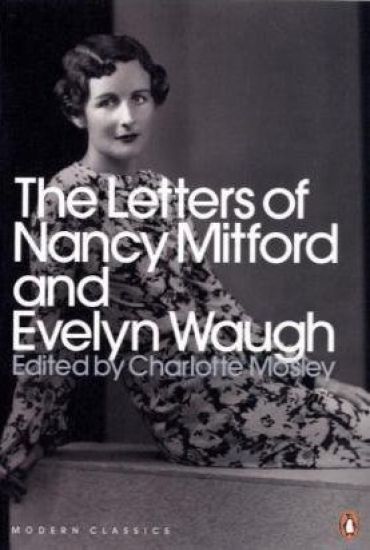
Nancy Mitford and Evelyn Waugh were two of the twentieth century's most amusing and gifted writers, who matched wits and traded literary advice in more than five hundred letters over twenty-two years. Dissecting their friends, criticizing each other's books and concealing their true feelings beneath a barrage of hilarious and knowing repartee, they found it far easier to conduct a friendship on paper than in person. This correspondence provides a colourful glimpse into the literary and social circles of London and Paris, during the Second World War and for twenty years after.
This volume is part of the Complete Works of Evelyn Waugh critical edition, which brings together all Waugh's published and previously unpublished writings for the first time with comprehensive introductions and annotation, and a full account of each text's manuscript development and textual variants. The edition's General Editor is Alexander Waugh, Evelyn Waugh's grandson and editor of the twelve-volume Personal Writings sequence. In a writing career populated with characters and situations drawn closely from life, A Little Learning is unique. It is Waugh's only finished, book-length work of autobiography, describing his ancestors and early childhood before arriving at boarding school in the South Downs and the Oxford University experiences that inspired his best-known work, Brideshead Revisited (1945). A Little Learning was intended to be the first of three autobiographical volumes, but Waugh died before more than a fragment of its successor, A Little Hope, was completed, making A Little Learning his last book. In this new critical edition, John Howard Wilson and Barbara Cooke lay out the complex literary and cultural inheritance of A Little Learning, and discuss the circumstances of its composition in a rapidly changing world from which Waugh felt increasingly isolated. For the first time, all the surviving fragments of A Little Hope are reproduced in full, and the volume brings together all Waugh's major radio, TV, and magazine interviews which span his thirty-year career.
Evelyn Waugh's A Handful of Dust (1934) is often thought to be among his best novels. It is a darkly bitter account of the end of a marriage, its causes and its effects. Waugh wrote the book with half an eye on his own recent experience of the break-up of his marriage to Evelyn Gardner. The care and trouble he took over the work are reflected in his successive revisions of its text in manuscript and print. These can be recovered from sources on both sides of the Atlantic, notably from the autograph and typescript manuscript in the Harry Ransom Center at Austin, Texas, a proof copy of the first edition at the Huntington Library in California, in the serialization in different versions of the first part of the novel in Harper's Bazaar, prepared for the UK and the US markets, and in four editions published in his lifetime in the UK and one in the US. All of these witnesses have been collated in this, the first fully edited and annotated edition of the novel. There is a substantial introduction describing the novel's composition and reception, as well as the literary influences on which Waugh drew—including Shakespeare, Dickens, Kipling, and Beatrix Potter. The edition seeks to show Waugh as a consummate craftsman, at work on a painful subject that he treats in comic, tragic, and satirical ways.
This volume is part of the Complete Works of Evelyn Waugh critical edition, which brings together all Waugh's published and previously unpublished writings for the first time with comprehensive introductions and annotation, and a full account of each text's manuscript development and textual variants. The edition's General Editor is Alexander Waugh, Evelyn Waugh's grandson and editor of the twelve-volume Personal Writings sequence. In winter 1954, Evelyn Waugh took a voyage to Sri Lanka to escape the English cold and recover his ailing health. Visibly unwell when he boarded ship, once at sea he began suffering auditory hallucinations that pursued him through his 'holiday' and back on to an early flight home. He then fictionalized his experiences as The Ordeal of Gilbert Pinfold. This curious novel has baffled and intrigued critics ever since its first publication in 1957 and is now presented in a full critical edition. This new volume charts the creation and publication of the novel and examines its cultural and literary significance, noting every textual change and revision from manuscript to the last edition to be published in Evelyn Waugh's lifetime. It has a comprehensive appendix of contextual notes and an extensive scholarly introduction covering all aspects of the history of this text and its place in cultural and literary history. It draws on newly discovered material, including Waugh's engagement diaries, to tell the story behind the narrative and explain how fantasy and painful reality intertwine in this highly biographical work of fiction.
This volume is part of the Complete Works of Evelyn Waugh critical edition, which brings together all Waugh's published and previously unpublished writings for the first time with comprehensive introductions and annotation, and a full account of each text's manuscript development and textual variants. The edition's General Editor is Alexander Waugh, Evelyn Waugh's grandson and editor of the twelve-volume Personal Writings sequence. This is the first fully annotated, critical edition of the travel book Ninety-Two Days (1934), Evelyn Waugh's account of an arduous journey through British Guiana and northern Brazil that provided crucial material for what many consider his finest novel, A Handful of Dust. A biographical and historical introduction places the work in the context of Waugh's life, and among other travel books written about the area; discusses how the text evolved from manuscript to print; and connects it with other literary works such as Arthur Conan Doyle's The Lost World, and with the persistent myth of the lost city of El Dorado.
This volume is part of the Complete Works of Evelyn Waugh critical edition, which brings together all Waugh's published and previously unpublished writings for the first time with comprehensive introductions and annotation, and a full account of each text's manuscript development and textual variants. The edition's General Editor is Alexander Waugh, Evelyn Waugh's grandson and editor of the twelve-volume Personal Writings sequence. 'A wicked book', one reviewer called it. Evelyn Waugh's eighth novel, The Loved One (1948), represents a return to the pungent satirical manner from which its predecessor Brideshead Revisited, three years earlier, had deviated. The prospect of Brideshead being turned into a film took its author to Los Angeles, where he became more interested in Forest Lawn Memorial-Park and its funeral rites than in Hollywood and its dreams of immortality. Or rather, 'obsessed' (his word) about the relations between them. Around these twin industries he spun a macabre fiction about an English poet and failed scriptwriter, an ingenuous young American beautician, and the master mortician for whom she works. A strong supporting cast features the English ex-patriate community and the Hollywood Cricket Club, the movie moguls and their henchmen, and the devotees serving the fictional 'Whispering Glades'. The resulting story is one of Waugh's funniest, yet it harbours an underlying gravity about the way the world (or the West) was going in the aftermath of global war. The Loved One is deeply coloured by memories of war. It may be concerned with the world of appearances to which Hollywood and Forest Lawn were dedicated, but this does not make it superficial. On the contrary. Waugh subtitled it 'An Anglo-American Tragedy', but it can be just as well understood as the most mordant of comedies, closer to the world of Samuel Beckett than of P. G. Wodehouse. Or better, an improbable combination of the two.
This volume is part of the Complete Works of Evelyn Waugh critical edition, which brings together all Waugh's published and previously unpublished writings for the first time with comprehensive introductions and annotation, and a full account of each text's manuscript development and textual variants. The edition's General Editor is Alexander Waugh, Evelyn Waugh's grandson and editor of the twelve-volume Personal Writings sequence. A Tourist in Africa was Evelyn Waugh's final travel book, and one of his most interesting. Restless and intolerant of the English winter, Waugh boards the Pendennis Castle for East Africa by way of Italy and Suez, going on to retrace the routes of journeys he took as a much younger man through Kenya, Tanganyika, the Rhodesias, and other East African countries. He embarks on his trip at the very moment when many of these countries are beginning to assert their independence after decades of British rule. As he travels, Waugh contemplates the changing face of an Africa he has known intimately as well as his own increasingly awkward fit in the modern world. Even as he contends with his own encroaching age and the unwelcome changes to international travel, his usual zest for adventure and discovery asserts itself at every turn. A much better sailor than flyer, Waugh laments the impending eclipse of sea travel as well as the declining appetite for danger and daring he witnesses in some of his companions. This edition provides hundreds of contextual notes to illuminate the historical, cultural, and biographical details of most interest to readers of Waugh, travel writing, and African history; a complete textual history which traces every change made to the text from Waugh's first drafts to the first published British and American editions; new and original illustrations; and a thorough but eminently readable introduction by Patrick R. Query.
This volume is part of the Complete Works of Evelyn Waugh critical edition, which brings together all Waugh's published and previously unpublished writings for the first time with comprehensive introductions and annotation, and a full account of each text's manuscript development and textual variants. The edition's General Editor is Alexander Waugh, Evelyn Waugh's grandson and editor of the twelve-volume Personal Writings sequence. Evelyn Waugh originally wrote his Edmund Campion to thank Martin D'Arcy, SJ, and to help with the building of Campion Hall, but his experience of Communist oppression in Mexico and Croatia transformed his understanding of Campion's life, revealing Campion less as an Elizabethan martyr than as part of 'the unending war' between the church and the totalitarian state. Waugh wrote a passionate new 'Preface' for the American edition of 1946 and made important changes to each of the three subsequent editions, culminating in the beautiful third edition of 1961. This new edition provides extensive biographical and contextual notes to help the reader unfamiliar with early modern history and records the many manuscript revisions and the book's reception both sides of the Atlantic. The introduction explores the personal impact of Waugh's friendship with the Asquith and Herbert families and examines the cultural context of a brief period of confidence for English Catholicism, energized by the canonization process (in which Waugh's own daughters were involved), which coincided with the publication of the five editions of the book from 1935 to 1961. Waugh received the Hawthornden Prize for the book just before he took part in the opening of Campion Hall; the book offered him a Jesuit hearth in the 'household of the faith' and gave a new theological direction to his writing, characterized by Brideshead Revisited, Helena, The Sword of Honour trilogy, and Ronald Knox. The book emerges as one of the best objets d'Arcy, which Waugh continued to give to friends till his death.
This volume is part of the Complete Works of Evelyn Waugh critical edition, which brings together all Waugh's published and previously unpublished writings for the first time with comprehensive introductions and annotation, and a full account of each text's manuscript development and textual variants. The edition's General Editor is Alexander Waugh, Evelyn Waugh's grandson and editor of the twelve-volume Personal Writings sequence. This is the first fully annotated critical edition of Waugh's book on Mexico, Robbery Under Law: The Mexican Object-Lesson (1939), based on three months' research by Waugh in the country in 1938 and rarely included in later reprints of Waugh's travel writings. Waugh insisted in its opening words: 'This is a political book'; it traced the expropriation of British and American oil interests in Mexico by its repressive Marxist government. It described the current political and social inequities suffered by both its Mexican citizens and foreign companies trading there and also provided a powerful account of the history of Catholic persecution in the country. Its narratives offered an implicit but potent warning about the barbarity of totalitarian regimes as war in Western Europe grew increasingly likely.