Kirjojen hintavertailu. Mukana 11 244 527 kirjaa ja 12 kauppaa.

Kirjahaku

Etsi kirjoja tekijän nimen, kirjan nimen tai ISBN:n perusteella.

1000 tulosta hakusanalla Waugh Thomas

The Right to Play Oneself

The Right to Play Oneself

Waugh Thomas

University of Minnesota Press
2011
sidottu
The Right to Play Oneself collects for the first time Thomas Waugh’s essays on the politics, history, and aesthetics of documentary film, written between 1974 and 2008. The title, inspired by Walter Benjamin’s and Joris Ivens’s manifestos of “committed” documentary from the 19 0s, reflects the book’s theme of the political potential of documentary for representing the democratic performance of citizens and artists.Waugh analyzes an eclectic international selection of films and issues from the 1920s to the present day. The essays provide a transcultural focus, moving from documentaries of the industrialized societies of North America and Europe to those of 1980s India and addressing such canonical directors as Dziga Vertov, Emile de Antonio, Barbara Hammer, Rosa von Praunheim, and Anand Patwardhan. Woven through the volume is the relationship of the documentary with the history of the Left, including discussions of LGBT documentary pioneers and the firebrand collectives that changed the history of documentary, such as Challenge for Change and ACT UP’s Women’s Collective. Together with the introduction by the author, Waugh’s essays advance a defiantly and persuasively personal point of view on the history and significance of documentary film.
Replies for Thomas Waugh, Writer in Jedburgh; To the Answers for Mrs Jean Ballantyne, Daughter of the Deceased Thomas Ballantyne, Esq; Of Holylee, Spouse of the Said Thomas Waugh.
The 18th century was a wealth of knowledge, exploration and rapidly growing technology and expanding record-keeping made possible by advances in the printing press. In its determination to preserve the century of revolution, Gale initiated a revolution of its own: digitization of epic proportions to preserve these invaluable works in the largest archive of its kind. Now for the first time these high-quality digital copies of original 18th century manuscripts are available in print, making them highly accessible to libraries, undergraduate students, and independent scholars.This collection reveals the history of English common law and Empire law in a vastly changing world of British expansion. Dominating the legal field is the Commentaries of the Law of England by Sir William Blackstone, which first appeared in 1765. Reference works such as almanacs and catalogues continue to educate us by revealing the day-to-day workings of society.++++The below data was compiled from various identification fields in the bibliographic record of this title. This data is provided as an additional tool in helping to insure edition identification: ++++National Library of ScotlandT229378Dated at head of the drop-head titlepage: July 11. 1800. Edinburgh, 1800]. 37, 1]p.; 4
Replies for Thomas Waugh, Writer in Jedburgh; to the Answers for Mrs Jean Ballantyne, Daughter of the Deceased Thomas Ballantyne, Esq; of Holylee, Spouse of the Said Thomas Waugh
The 18th century was a wealth of knowledge, exploration and rapidly growing technology and expanding record-keeping made possible by advances in the printing press. In its determination to preserve the century of revolution, Gale initiated a revolution of its own: digitization of epic proportions to preserve these invaluable works in the largest archive of its kind. Now for the first time these high-quality digital copies of original 18th century manuscripts are available in print, making them highly accessible to libraries, undergraduate students, and independent scholars.This collection reveals the history of English common law and Empire law in a vastly changing world of British expansion. Dominating the legal field is the Commentaries of the Law of England by Sir William Blackstone, which first appeared in 1765. Reference works such as almanacs and catalogues continue to educate us by revealing the day-to-day workings of society.++++The below data was compiled from various identification fields in the bibliographic record of this title. This data is provided as an additional tool in helping to insure edition identification: ++++National Library of ScotlandT229378Dated at head of the drop-head titlepage: July 11. 1800. Edinburgh, 1800]. 37, 1]p.; 4
Writing in the Flesh

Writing in the Flesh

Thomas Waugh

MCGILL-QUEEN'S UNIVERSITY PRESS
2026
nidottu
A confessional of the unrepentant, Writing in the Flesh caresses taboos, confronts sentimentality, and recasts memory. Thomas Waugh writes the body back into the intellectual autobiography, revealing the unsettling arguments and politics born from the tastes and desires of his own carnal vessel. Shaped by the arc of a life still in full flight – a preacher’s kid who grows up to be a porn teacher and, along the way, a New Left activist and expert in documentary, queer, and Canadian film – Writing in the Flesh confronts the struggle of writing the self. Against the backdrop of Montreal’s Plateau-Mont-Royal, New York City, and the Punjab, Waugh brings places and people to life in profound and unexpected ways. This is also a memoir about history, the archive, and ephemera: Waugh mines his personal annals for photographs, film stills, testimony, and correspondence to reconstitute the voices of blood and chosen families, to hedge against erratic memory, and to give sense to life. Indebted to the tradition of queer first-person rabble rousers, Waugh takes us on a journey through seven decades of queer relations: the erotic, the pedagogical, the familial, the romantic, the platonic, and, of course, the filmic. Sexy, cinematic, encyclopedic: this vivacious vita celebrates a life filled with family and chosen family, movies, and beefcake. At the same time these pages are, as the title declares, a writing in the flesh: the unveiling of the fraught, vulnerable, declining yet still robust and pleasured body at the very centre of it all.
Hard to Imagine

Hard to Imagine

Thomas Waugh

Columbia University Press
1996
sidottu
Spanning more than a century of photography and film, Hard to Imagine is the first visual chronicle of the evolution of gay male image culture, from the canonical works of "art" photography and cinema to the private and often highly explicit productions of amateurs. This comprehensive work explores a vast, eclectic tradition in its totality, analyzing the aesthetics of the visual imagery, its production, circulation, and consumption, and broad social and legal implications.
The Romance of Transgression in Canada

The Romance of Transgression in Canada

Thomas Waugh

McGill-Queen's University Press
2006
sidottu
From pornography to autobiography, from the Cold War to the sexual revolution, from rural roots and mythologies to the queer meccas of Vancouver, Toronto, and Montreal, The Romance of Transgression in Canada is a history of sexual representation on the large and small screen in English Canada and Quebec. Thomas Waugh identifies the queerness that has emerged at the centre of our national sex-obsessed cinema, filling a gap in the scholarly literature. In Part One he explores the explosive canon of artists such as Norman McLaren, Claude Jutra, Colin Campbell, Paul Wong, John Greyson, Patricia Rozema, Lea Pool, Bruce Labruce, Esther Valiquette, Marc Paradis, and Mirha-Soleil Ross. Part Two is an encyclopaedia of short essays covering 340 filmmakers, video artists, and institutions. The Romance of Transgression in Canada is both a scholarly account and a celebration of Canadian LGBTQ films - moving images that have scandalized conservative politicans, but are the envy of queer cultural festivals around the world.
The Romance of Transgression in Canada

The Romance of Transgression in Canada

Thomas Waugh

McGill-Queen's University Press
2006
nidottu
From pornography to autobiography, from the Cold War to the sexual revolution, from rural roots and mythologies to the queer meccas of Vancouver, Toronto, and Montreal, The Romance of Transgression in Canada is a history of sexual representation on the large and small screen in English Canada and Quebec. Thomas Waugh identifies the queerness that has emerged at the centre of our national sex-obsessed cinema, filling a gap in the scholarly literature. In Part One he explores the explosive canon of artists such as Norman McLaren, Claude Jutra, Colin Campbell, Paul Wong, John Greyson, Patricia Rozema, Lea Pool, Bruce Labruce, Esther Valiquette, Marc Paradis, and Mirha-Soleil Ross. Part Two is an encyclopaedia of short essays covering 340 filmmakers, video artists, and institutions. The Romance of Transgression in Canada is both a scholarly account and a celebration of Canadian LGBTQ films - moving images that have scandalized conservative politicans, but are the envy of queer cultural festivals around the world.
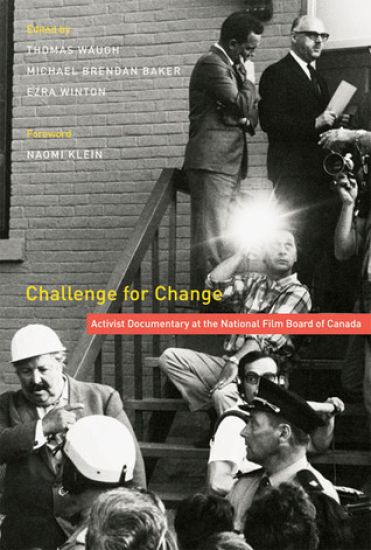
Challenge for Change

Challenge for Change

Thomas Waugh; Michael Brendan Baker; Ezra Winton

McGill-Queen's University Press
2010
sidottu
Pioneering participatory, social change-oriented media, the program had a national and international impact on documentary film-making, yet this is the first comprehensive history and analysis of its work. The volume's contributors study dozens of films produced by the program, their themes, aesthetics, and politics, and evaluate their legacy and the program's place in Canadian, Quebecois, and world cinema. An informative and nuanced look at a cinematic movement, Challenge for Change reemphasizes not just the importance of the NFB and its programs but also the role documentaries can play in improving the world.
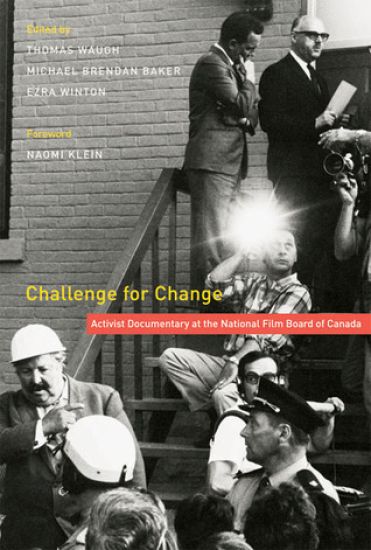
Challenge for Change

Challenge for Change

Thomas Waugh; Michael Brendan Baker; Ezra Winton

McGill-Queen's University Press
2010
nidottu
Pioneering participatory, social change-oriented media, the program had a national and international impact on documentary film-making, yet this is the first comprehensive history and analysis of its work. The volume's contributors study dozens of films produced by the program, their themes, aesthetics, and politics, and evaluate their legacy and the program's place in Canadian, Quebecois, and world cinema. An informative and nuanced look at a cinematic movement, Challenge for Change reemphasizes not just the importance of the NFB and its programs but also the role documentaries can play in improving the world.
The Right to Play Oneself

The Right to Play Oneself

Thomas Waugh

University of Minnesota Press
2011
nidottu
The Right to Play Oneself collects for the first time Thomas Waugh’s essays on the politics, history, and aesthetics of documentary film, written between 1974 and 2008. The title, inspired by Walter Benjamin’s and Joris Ivens’s manifestos of “committed” documentary from the 19 0s, reflects the book’s theme of the political potential of documentary for representing the democratic performance of citizens and artists.Waugh analyzes an eclectic international selection of films and issues from the 1920s to the present day. The essays provide a transcultural focus, moving from documentaries of the industrialized societies of North America and Europe to those of 1980s India and addressing such canonical directors as Dziga Vertov, Emile de Antonio, Barbara Hammer, Rosa von Praunheim, and Anand Patwardhan. Woven through the volume is the relationship of the documentary with the history of the Left, including discussions of LGBT documentary pioneers and the firebrand collectives that changed the history of documentary, such as Challenge for Change and ACT UP’s Women’s Collective. Together with the introduction by the author, Waugh’s essays advance a defiantly and persuasively personal point of view on the history and significance of documentary film.
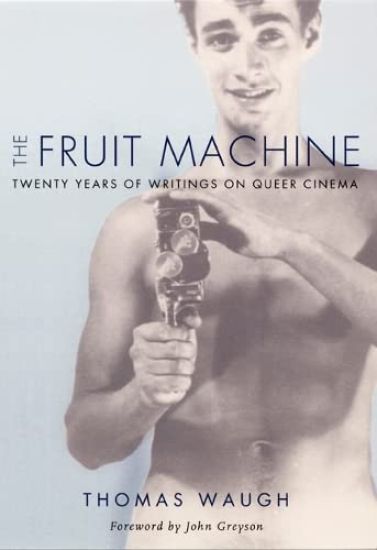
The Fruit Machine

The Fruit Machine

Thomas Waugh

Duke University Press
2000
sidottu
For more than twenty years, film critic, teacher, activist, and fan Thomas Waugh has been writing about queer movies. As a member of the Jump Cut collective and contributor to the Toronto-based gay newspaper the Body Politic, he emerged in the late 1970s as a pioneer in gay film theory and criticism, and over the next two decades solidified his reputation as one of the most important and influential gay film critics. The Fruit Machine-a collection of Waugh’s reviews and articles originally published in gay community tabloids, academic journals, and anthologies-charts the emergence and maturation of Waugh’s critical sensibilities while lending an important historical perspective to the growth of film theory and criticism as well as queer moviemaking.In this wide-ranging anthology Waugh touches on some of the great films of the gay canon, from Taxi zum Klo to Kiss of the Spider Woman. He also discusses obscure guilty pleasures like Born a Man . . . Let Me Die a Woman, unexpectedly rich movies like Porky’s and Caligula, filmmakers such as Fassbinder and Eisenstein, and film personalities from Montgomery Clift to Patty Duke. Emerging from the gay liberation movement of the 1970s, Waugh traverses crises from censorship to AIDS, tackling mainstream potboilers along with art movies, documentaries, and avant-garde erotic videos. In these personal perspectives on the evolving cinematic landscape, his words oscillate from anger and passion to wry wit and irony. With fifty-nine rare film stills and personal photographs and an introduction by celebrated gay filmmaker John Greyson, this volume demonstrates that the movie camera has been the fruit machine par excellence.
The Fruit Machine

The Fruit Machine

Thomas Waugh

Duke University Press
2000
pokkari
For more than twenty years, film critic, teacher, activist, and fan Thomas Waugh has been writing about queer movies. As a member of the Jump Cut collective and contributor to the Toronto-based gay newspaper the Body Politic, he emerged in the late 1970s as a pioneer in gay film theory and criticism, and over the next two decades solidified his reputation as one of the most important and influential gay film critics. The Fruit Machine-a collection of Waugh’s reviews and articles originally published in gay community tabloids, academic journals, and anthologies-charts the emergence and maturation of Waugh’s critical sensibilities while lending an important historical perspective to the growth of film theory and criticism as well as queer moviemaking.In this wide-ranging anthology Waugh touches on some of the great films of the gay canon, from Taxi zum Klo to Kiss of the Spider Woman. He also discusses obscure guilty pleasures like Born a Man . . . Let Me Die a Woman, unexpectedly rich movies like Porky’s and Caligula, filmmakers such as Fassbinder and Eisenstein, and film personalities from Montgomery Clift to Patty Duke. Emerging from the gay liberation movement of the 1970s, Waugh traverses crises from censorship to AIDS, tackling mainstream potboilers along with art movies, documentaries, and avant-garde erotic videos. In these personal perspectives on the evolving cinematic landscape, his words oscillate from anger and passion to wry wit and irony. With fifty-nine rare film stills and personal photographs and an introduction by celebrated gay filmmaker John Greyson, this volume demonstrates that the movie camera has been the fruit machine par excellence.
The Conscience of Cinema

The Conscience of Cinema

Thomas Waugh

TAYLOR FRANCIS LTD
2025
nidottu
This is the first book to survey the entire career of Joris Ivens, a prolific documentary filmmaker who worked on every continent over the course of seven decades. More than a biography of a leftist committed to changing the world through film, The Conscience of Cinema is also a microcosmic history of the documentary and its form, culture, and place within twentieth-century world cinema. Ivens worked in almost every genre, including the essay, compilation, hybrid dramatization, socialist realism, and more. Whether in his native Netherlands, the Soviet Union, the United States, Vietnam, or beyond, he left an indelible artistic and political mark that continues to resonate in the twenty-first century.
Enough is Enough

Enough is Enough

Thomas Waugh

Independently Published
2019
nidottu
"Dark and punchy. An enigmatic hero takes on the dangerous streets of London." Shaun Baines, author of PallbearerTwo Albanians, sitting in a car, are selling cocaine outside a school again.Enough is enough, James Marshal, an ex-Para, tells himself as he observes the drug dealers.Marshal assaults the Albanians. But it's just the start, rather than the end, of things.The ruthless gang, led by Luka Rugova and Viktor Baruti, demand retribution. The blood debt must be paid.To gain intelligence on the criminal organisation Marshal approaches the fixer, Oliver Porter.In return for providing Marshal with information, Porter asks a favour of his former associate. Marshal must drivethe fixer's niece around for a couple of days.But a lot can happen in a couple of days.When Marshal returns to London, the Albanians find him. The blood debt still needs to be paid.Marshal must end what he started, one way or another.Enough is Enough is the follow-up title to the acclaimed and bestselling novel Gun For Hire.Recommended for fans of Graham Greene, Lee Child and Stephen Leather.Thomas Waugh is the pseudonym of a bestselling historical novelist. He lives in London.Praise for Thomas Waugh.'A gripping thriller, elegantly told. A complex plot, deftly handled. And a narrative that puts the city of London, with its wealth and poverty, goodness and evil, at the heart of the story.' - Alison Joseph'Tense and atmospheric.' - Humphrey Hawksley'Engaging and enjoyable. A must read for soldiers and civilians.' - Damien Lewis
Nothing to Lose

Nothing to Lose

Thomas Waugh

Independently Published
2018
nidottu
'Engaging and enjoyable. A must read for soldiers and civilians.' - Damien Lewis. Killing comes easy to Michael Devlin, a soldier turned assassin. When he murders Martin Pound, a corrupt politician, he considers it to be just another job. His days are spent drinking, reading and visiting his late wife's grave. Devlin has nothing to live for. Then he meets Emma, "a good Catholic girl". Everyone deserves a second chance. But the hunter is about to become the hunted. The Parker brothers, the criminal family who put the hit out on the politician, want to tie-up loose ends. Devlin must kill or be killed. 'Nothing To Lose' is a literary thriller, set in South London. Thomas Waugh has created a hero (or anti-hero) who will seem human to some readers and inhuman to others. You decide. Praise for 'Nothing To Lose': 'Graham Greene meets David Baldacci... 'Nothing To Lose' is philosophical, satirical and, most importantly, gripping. For lovers of thriller writing and literary fiction alike.' Matt Lynn 'A gripping thriller, elegantly told. A complex plot, deftly handled. And a narrative that puts the city of London, with its wealth and poverty, goodness and evil, at the heart of the story.' - Alison Joseph. 'Tense and atmospheric.' - Humphrey Hawksley Thomas Waugh is the pseudonym of a bestselling historical novelist. (less)
Ready for Anything

Ready for Anything

Thomas Waugh

Independently Published
2019
nidottu
"A superior thriller - filled with twists, satire and human insight." Steven O'Brien, The London MagazineKilling isn't good for the soul...After the tragic shooting of a friend during his last job Michael Devlin promises to never draw his gun again.But he is tracked down and blackmailed by Mason Talbot, a CIA agent stationed in London, into planning a hit on a prominent UK politician.With the help of the fixer, Oliver Porter, Devlin must carry out the job - and somehow find a way to prevent himself from becoming one of Talbot's assets.The assassination goes ahead. But Talbot inhabits a world of smoke and mirrors. Not all goes according to plan.Devlin will end up confronting his most formidable enemy of all, his conscience.'Ready For Anything' is a smart and entertaining thriller. Thomas Waugh, in the character of Michael Devlin, has created an engaging hero, or anti-hero, for our time.Perfect for fans of Graham Greene, Lee Child and Vince Flynn.