Kirjojen hintavertailu. Mukana 11 244 527 kirjaa ja 12 kauppaa.

Kirjahaku

Etsi kirjoja tekijän nimen, kirjan nimen tai ISBN:n perusteella.

1000 tulosta hakusanalla Wayne A. Wiegand

Print Culture in a Diverse America

Print Culture in a Diverse America

Wayne A. Wiegand

University of Illinois Press
1998
nidottu
In the modern era, there arose a prolific and vibrant print culture-books, newspapers, and magazines issued by and for diverse, often marginalized, groups. This long-overdue collection offers a unique foray into the multicultural world of reading and readers in the United States. The contributors to this award-winning collection pen interdisciplinary essays that examine the many ways print culture functions within different groups. The essays link gender, class, and ethnicity to the uses and goals of a wide variety of publications and also explore the role print materials play in constructing historical events like the Titanic disaster. Contributors: Lynne M. Adrian, Steven Biel, James P. Danky, Elizabeth Davey, Michael Fultz, Jacqueline Goldsby, Norma Fay Green, Violet Johnson, Elizabeth McHenry, Christine Pawley, Yumei Sun, and Rudolph J. Vecoli
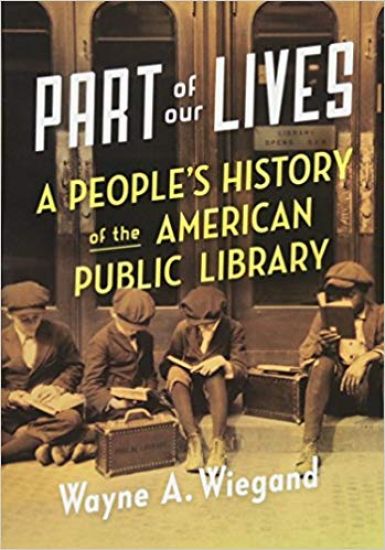
Part of Our Lives

Part of Our Lives

Wayne A. Wiegand

Oxford University Press Inc
2017
nidottu
Despite dire predictions in the late twentieth century that public libraries would not survive the turn of the millennium, their numbers have only increased. Two of three Americans frequent a public library at least once a year, and nearly that many are registered borrowers. Although library authorities have argued that the public library functions primarily as a civic institution necessary for maintaining democracy, generations of library patrons tell a different story. In Part of Our Lives, Wayne A. Wiegand delves into the heart of why Americans love their libraries. The book traces the history of the public library, featuring records and testimonies from as early as 1850. Rather than analyzing the words of library founders and managers, Wiegand listens to the voices of everyday patrons who cherished libraries. Drawing on newspaper articles, memoirs, and biographies, Part of Our Lives paints a clear and engaging picture of Americans who value libraries not only as civic institutions, but also as public places that promote and maintain community. Whether as a public space, a place for accessing information, or a home for reading material that helps patrons make sense of the world around them, the public library has a rich history of meaning for millions of Americans. From colonial times through the recent technological revolution, libraries have continuously adapted to better serve the needs of their communities. Wiegand demonstrates that, although cultural authorities (including some librarians) have often disparaged reading books considered not "serious," the commonplace reading materials users obtained from public libraries have had a transformative effect for many, including people such as Ronald Reagan, Bill Moyers, Edgwina Danticat, Philip Roth, Toni Morrison, Sonia Sotomayor, and Oprah Winfrey. A bold challenge to conventional thinking about the American public library, Part of Our Lives is an insightful look into of America's most beloved cultural institutions.
The Politics of an Emerging Profession

The Politics of an Emerging Profession

Wayne A. Wiegand

Praeger Publishers Inc
1986
sidottu
Wiegand examines the development of ALA from 1876 to 1917 in this masterful tale. He looks at the issues that existed during those years, the conflicts, and the changing characteristics of ALA's Executive Board, and succeeds in giving us a particularly revealing picture of the nature of the profession. He analyzes the three elements of Dewey's motto, `The best reading for the largest number at the least cost,' and how they characterized ALA's development as the leaders sought to accomplish those goals. Wiegand makes his points carefully in this story of a `struggle to accommodate shifting pressures and power groups within the world of librarianship. This is a perceptive, reliable recounting of our early history, and will stimulate a great deal of discussion. Wiegand's book deserves a wide audience. Wilson Library Bulletin
An Active Instrument for Propaganda

An Active Instrument for Propaganda

Wayne A. Wiegand

Praeger Publishers Inc
1989
sidottu
This study effectively addresses the question: What was the involvement of the American public library community in The Great War? A comprehensive introduction provides an overview of public library history prior to World War I, touching on such topics as the growth of the public library from the genteel, early nineteenth-century social libraries of New England and the Mid-Atlantic states and the founding of the American Library Association in 1876. The A.L.A. provided for an exchange of information and a means to address common problems encountered in librarianship. It facilitated the adoption of the Dewey classification system, pressed for the publication of periodical indexes, and began publishing its own collection guides. Wiegand details the socioeconomic characteristics of turn-of-the-century library professionals and their determination to address industrialization, urbanization, and immigration as these issues came within their sphere of influence. He identifies two perplexing problems of the period: the inability of public librarians to force Americans to actually use their libraries, and the challenges posed by new forces in the cultural, intellectual, and literary worlds. It is against this background that American public librarians and their institutions responded to the call for united action during World War I. Chapter 1 deals with the response to the Great European War before the United States entered on the allied side in 1917, while Chapters 2 and 3 analyze library-initiated wartime activities on both the local and national levels. The role of the public library in food conservation and the infrequently addressed issue of censorship and book burning are scrutinized in Chapters 4 and 5. Chapter 6 outlines programs for the Americanization of immigrants. A concluding chapter offers a synthesis of the volume. An essay on primary sources is included in the bibliography. An Active Instrument for Propaganda inaugurates the Beta Phi Mu's Monograph Series that, in the tradition of the International Library Science Honor Society's Chapbooks, will add significantly to the scholarly literature of the library profession. The book will be an important addition to collections dealing with World War I, and a valuable resource for historians of that period. Because wide coverage has been given to the wartime activities of hundreds of public libraries across the nation, many local public library collections will be enriched by this important volume.
Supplement to the Dictionary of American Library Biography

Supplement to the Dictionary of American Library Biography

Wayne A. Wiegand

Libraries Unlimited Inc
1990
sidottu
This work records the accomplishments of the leaders of library science with 51 thoroughly researched biographies of individuals whose contributions have profoundly influenced the profession's history. The biographical sketches, ranging in length from 1,400 to 4,000 words, were researched, written, and reviewed by noted authorities in the library and information science community.
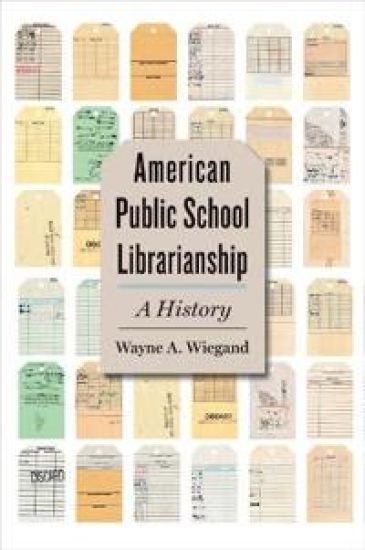
American Public School Librarianship

American Public School Librarianship

Wayne A. Wiegand

Johns Hopkins University Press
2021
sidottu
The first comprehensive history of American public school librarianship."Can I get a library pass?" Over the past 120 years, millions of American K–12 public school students have asked that question. Still, we know little about the history of public school libraries, which over the decades were pulled together and managed by hundreds of thousands of school librarians. In American Public School Librarianship, Wayne A. Wiegand recounts the unseen history of both school libraries and their librarians.Why, Wiegand asks, did school librarianship turn out the way it did? And what can its history tell us about limitations and opportunities in the coming decades of the twenty-first century? Addressing issues of race, social class, gender, and sexual orientation (among others) as they affected American public school librarianship throughout its history, Wiegand explores how libraries were transformed by the Great Depression, the civil rights era, Lyndon Johnson's Great Society programs, and more recent legislation like No Child Left Behind, Common Core, and the Every Student Succeeds Act. Wiegand touches on censorship, the impact of school segregation on school libraries, disparities in funding that fall along lines of race and class, the development of school librarianship as a profession, the history of organizations like the American Association for School Librarians, and how emerging technologies affected school librarianship.Wiegand clarifies the historical role of the school librarian as an opponent of censorship and defender of intellectual freedom. He also analyzes the politics of a female-dominated school library profession, identifies and evaluates the profession's major players and their battles (often against patriarchy), and challenges the priorities of librarianship's current agendas, particularly regarding the role of "reading" in the everyday lives of children and young adults. Filling a huge void in the history of education, American Public School Librarianship provides essential background information to members of the nation's school library and educational communities who are charged with supervising and managing America's 80,000 public school libraries.
In Silence or Indifference

In Silence or Indifference

Wayne A. Wiegand

UNIVERSITY PRESS OF MISSISSIPPI
2024
sidottu
Librarians around the country are currently on a battleground, defending their right to purchase and circulate books dealing with issues of race and systemic racism. Despite this work, the library community has often overlooked—even ignored—its own history of white supremacy and deliberate inaction on the part of white librarians and library leadership. Author Wayne A. Wiegand takes a crucial step to amend this historical record. In Silence or Indifference: Racism and Jim Crow Segregated Public School Libraries analyzes and critiques the world of professional librarianship between 1954 and 1974.Wiegand begins by identifying racism in the practice and customs of public school libraries in the years leading up to the Brown v. Board of Education decision. This culture permeated the next two decades, as subsequent Supreme Court decisions led to feeble and mostly unsuccessful attempts to integrate Jim Crow public schools and their libraries. During this same period, the profession was honing its national image as a defender of intellectual freedom, a proponent of the freedom to read, and an opponent of censorship. Still, the community did not take any unified action to support Brown or to visibly oppose racial segregation. As Black school librarians and their Black patrons suffered through the humiliations and hostility of the Jim Crow educational establishment, the American library community remained largely ambivalent and silent.The book brings to light a distressing history that continues to impact the library community, its students, and its patrons. Currently available school library literature skews the historical perspective that informs the present. In Silence or Indifference is the first attempt to establish historical accountability for the systemic racism contemporary school librarianship inherited in the twenty-first century.
In Silence or Indifference

In Silence or Indifference

Wayne A. Wiegand

UNIVERSITY PRESS OF MISSISSIPPI
2024
pokkari
Librarians around the country are currently on a battleground, defending their right to purchase and circulate books dealing with issues of race and systemic racism. Despite this work, the library community has often overlooked—even ignored—its own history of white supremacy and deliberate inaction on the part of white librarians and library leadership. Author Wayne A. Wiegand takes a crucial step to amend this historical record. In Silence or Indifference: Racism and Jim Crow Segregated Public School Libraries analyzes and critiques the world of professional librarianship between 1954 and 1974.Wiegand begins by identifying racism in the practice and customs of public school libraries in the years leading up to the Brown v. Board of Education decision. This culture permeated the next two decades, as subsequent Supreme Court decisions led to feeble and mostly unsuccessful attempts to integrate Jim Crow public schools and their libraries. During this same period, the profession was honing its national image as a defender of intellectual freedom, a proponent of the freedom to read, and an opponent of censorship. Still, the community did not take any unified action to support Brown or to visibly oppose racial segregation. As Black school librarians and their Black patrons suffered through the humiliations and hostility of the Jim Crow educational establishment, the American library community remained largely ambivalent and silent.The book brings to light a distressing history that continues to impact the library community, its students, and its patrons. Currently available school library literature skews the historical perspective that informs the present. In Silence or Indifference is the first attempt to establish historical accountability for the systemic racism contemporary school librarianship inherited in the twenty-first century.
Encyclopedia of Library History

Encyclopedia of Library History

Wayne A. Wiegand; Donald G. Jr. Davis

Garland Publishing Inc
1994
sidottu
First Published in 1994. This book focuses on the historical development of the library as an institution. Its contents assume no single theoretical foundation or philosophical perspective but instead reflect the richly diverse opinions of its many contributors. This text is intended to serve as a reference tool for undergraduate and graduate students interested in library history, for library school educators whose teaching requires knowledge of the historical development of library institutions, services, and user groups, and for practicing library professionals.
Books on Trial

Books on Trial

Shirley A. Wiegand; Wayne A. Wiegand

University of Oklahoma Press
2007
sidottu
How civil liberties triumphed over national insecurityBetween the two major red scares of the twentieth century, a police raid on a Communist Party bookstore in Oklahoma City marked an important lesson in the history of American freedom.In a raid on the Progressive Bookstore in 1940, local officials seized thousands of books and pamphlets and arrested twenty customers and proprietors. All were detained incommunicado and many were held for months on unreasonably high bail. Four were tried for violating Oklahoma's ""criminal syndicalism"" law, and their convictions and ten-year sentences caused a nationwide furor. After protests from labor unions, churches, publishers, academics, librarians, the American Civil Liberties Union, members of the literary world, and prominent individuals ranging from Woody Guthrie to Eleanor Roosevelt, the convictions were overturned on appeal.Shirley A. Wiegand and Wayne A. Wiegand share the compelling story of this important case for the first time. They reveal how state power - with support from local media and businesses - was used to trample individuals' civil rights during an era in which citizens were gripped by fear of foreign subversion.Richly detailed and colorfully told, Books on Trial is a sobering story of innocent people swept up in the hysteria of their times. It marks a fascinating and unnerving chapter in the history of Oklahoma and of the First Amendment. In today's climate of shadowy foreign threats - also full of unease about the way government curtails freedom in the name of protecting its citizens - the past speaks to the present.
Books on Trial

Books on Trial

Shirley A. Wiegand; Wayne A. Wiegand

UNIVERSITY OF OKLAHOMA PRESS
2022
nidottu
How civil liberties triumphed over national insecurityBetween the two major red scares of the twentieth century, a police raid on a Communist Party bookstore in Oklahoma City marked an important lesson in the history of American freedom.In a raid on the Progressive Bookstore in 1940, local officials seized thousands of books and pamphlets and arrested twenty customers and proprietors. All were detained incommunicado and many were held for months on unreasonably high bail. Four were tried for violating Oklahoma's "criminal syndicalism" law, and their convictions and ten-year sentences caused a nationwide furor. After protests from labor unions, churches, publishers, academics, librarians, the American Civil Liberties Union, members of the literary world, and prominent individuals ranging from Woody Guthrie to Eleanor Roosevelt, the convictions were overturned on appeal.Shirley A. Wiegand and Wayne A. Wiegand share the compelling story of this important case for the first time. They reveal how state power—with support from local media and businesses—was used to trample individuals' civil rights during an era in which citizens were gripped by fear of foreign subversion.Richly detailed and colorfully told, Books on Trial is a sobering story of innocent people swept up in the hysteria of their times. It marks a fascinating and unnerving chapter in the history of Oklahoma and of the First Amendment. In today's climate of shadowy foreign threats—also full of unease about the way government curtails freedom in the name of protecting its citizens—the past speaks to the present.
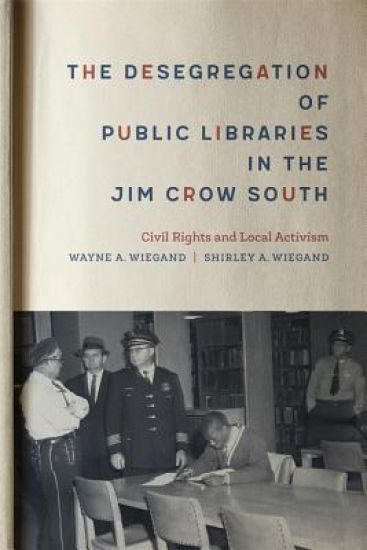
The Desegregation of Public Libraries in the Jim Crow South

The Desegregation of Public Libraries in the Jim Crow South

Shirley A. Wiegand; Wayne A. Wiegand

Louisiana State University Press
2018
sidottu
In The Desegregation of Public Libraries in the Jim Crow South, Wayne A. and Shirley A. Wiegand tell the comprehensive story of the integration of southern public libraries. As in other efforts to integrate civic institutions in the 1950s and 1960s, the determination of local activists won the battle against segregation in libraries. In particular, the willingness of young black community members to take part in organized protests and direct actions ensured that local libraries would become genuinely free to all citizens.The Wiegands trace the struggle for equal access to the years before the Supreme Court's Brown v. Board of Education decision, when black activists in the South focused their efforts on equalizing accommodations, rather than on the more daunting- and dangerous- task of undoing segregation. After the ruling, momentum for vigorously pursuing equality grew, and black organizations shifted to more direct challenges to the system, including public library sit-ins and lawsuits against library systems. Although local groups often took direction from larger civil rights organizations, the energy, courage, and determination of younger black community members ensured the eventual desegregation of Jim Crow public libraries. The Wiegands examine the library desegregation movement in several southern cities and states, revealing the ways that individual communities negotiated- mostly peacefully, sometimes violently- the integration of local public libraries.This study adds a new chapter to the history of civil rights activism in the mid-twentieth century and celebrates the resolve of community activists as it weaves the account of racial discrimination in public libraries through the national narrative of the civil rights movement.
Right Here I See My Own Books

Right Here I See My Own Books

Sarah Wadsworth; Wayne A. Wiegand

University of Massachusetts Press
2012
nidottu
On May 1, 1893, the World’s Columbian Exposition in Chicago opened its gates to an expectant public eager to experience firsthand its architectural beauty, technological marvels, and vast array of cultural treasures gathered from all over the world. Among the most popular of the fair’s attractions was the Woman’s Building, a monumental exhibit hall filled with the products of women’s labour—including more than 8,000 volumes of writing by women. Right Here I See My Own Books examines the progress, content, and significance of this historic first effort to assemble a comprehensive library of women’s texts. By weaving together the behind-the-scenes story of the library’s formation and the stories between the covers of books on display, Wadsworth and Wiegand firmly situate the Woman’s Building Library within the historical context of the 1890s. Interdisciplinary in approach, their book demonstrates how this landmark collection helped consolidate and institutionalize women’s writing in conjunction with the burgeoning women’s movement and the professionalization of librarianship in late nineteenth-century America.Americans in this period debated a wide range of topics, including women’s rights, gender identity, racial politics, nationalism, regionalism, imperialism, and modernity. These debates permeated the cultural climate of the Columbian Exposition. Wadsworth and Wiegand’s book illuminates the range and complexity of American women’s responses to these issues within a public sphere to which the Woman’s Building provided unprecedented access.
Shameless Wayne: A Romance of the last Feud of Wayne and Ratcliffe (Edition1)
Tramping Through Mexico, Guatemala and Honduras Being the Random Notes of an Incurable Vagabond, a classical book, was published more than a century ago and has been considered important throughout the human history, and so that this work is never forgotten we at Alpha Editions have made efforts in its preservation by republishing this book in a modern format for present and future generations. This whole book has been reformatted, retyped and designed. These books are not made of scanned copies of their original work and hence the text is clear and readable.