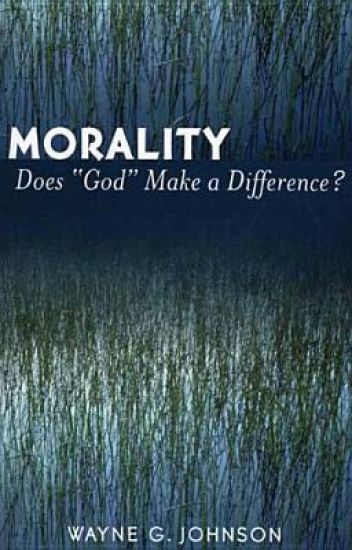
Author Wayne G. Johnson presents a fresh approach to moral theory by exploring how belief or non-belief in God shapes the content of morality. Neither supporting nor attacking religion-based morality, this work shows why belief in God makes a difference-for good or ill.
Author Wayne G. Johnson presents a fresh approach to moral theory by exploring how belief or non-belief in God shapes the content of morality. Neither supporting nor attacking religion-based morality, this work shows why belief in God makes a difference-for good or ill.
Few persons have had greater impact on history than Jesus of Nazareth. That he existed is generally conceded. Who he was remains a major issue. Since great religions claim to possess basic and unique truths about the human venture, the Christian message about Jesus challenges other great religions. Much of world history is marked by the responses of great religions to this Christian challenge. In gospel accounts, Jesus asks of his disciples, “Who do people say that I am?” This author explores how other world religions have responded to this question over the centuries. The first chapter explains how religions function as stories by which we live. Following chapters trace answers to Jesus’s question given by voices from major world religions: Christianity, Judaism, Islam, Hinduism, and Buddhism. The final chapter explores how the great religions view the ultimate fate of other believers.
A unique companion to The Lord of the Rings which relates the textual history of the Nationâ??s Favourite Read; with a previously unpublished Guide to the Names in The Lord of the Rings, written by Tolkien himself.
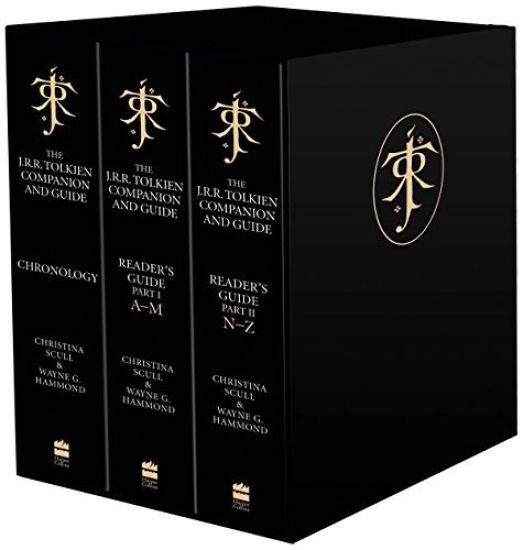
Stunning three-volume slipcased set containing the most comprehensive in-depth companion to Tolkienâ??s life and works ever published, including synopses of all his writings, and a Tolkien gazetteer, whoâ??s who and chronology.
J.R.R. Tolkien (1892-1973), renowned author of The Hobbit, The Lord of the Rings, and The Silmarillion, was an artist in pictures as well as in words. Though he often remarked that he had no talent for drawing, his art has charmed his readers and has been exhibited to large and appreciative audiences. In fact, his talent was far more than he admitted, and his sense of design was natural and keen. This book explores Tolkien's art at length, from his childhood paintings and drawings to his final sketches. At its heart are his illustrations for his books, especially his tales of Middle-earth. Also examined are the pictures Tolkien made for his children (notably in his 'Father Christmas' letters and for the story of Mr. Bliss), his expressive calligraphy, his love of decoration, and his contributions to the typography and design of his books. J.R.R. Tolkien, Artist and Illustrator includes 200 reproductions, many in colour and over half published for the first time.
A companion reference to the film trilogy and the book presents changes made by the author and his son Christopher to the original novel, references to various illustrations and maps, explanations of unique words, and a primer on Tolkien's invented languages.
In contemplating the contents of this book, one realizes the potential it contains to contribute to the reformation of attitudes on the job toward an environment of limiting if not eliminating physical harm in the workplace.Through the proposition of marrying behavior to attitude, feelings and skills in the workforce, safety in the organization can be lifted to its rightful place against the demanded outcomes of operational entities usually considered to be only financial success.This publication lifts the consideration of zero harm in the workplace to be not only of equal importance, but in fact to be the driver of success for the enterprise, not only economically but also of good corporate behavior.By patient demonstration this book will assist management to arrive at and set values compatible with the installation of processes to build skills, set attitudes, and encourage pride across the workforce to deliver superior outcomes with respect to safety.As demonstrated, a leadership focus extending from management through to individual team, and ultimately to total company commitment, can be put into practice to enable continuous improvement to occur through safety as a core value.Regulation and risk control is becoming a subject of heightened focus by government authorities, and management obligations continue to be raised with appropriate penalties extracted for non compliance.Procedures and processes to help the practitioner "continuously improve" his performance are laid out with clarity in this book, having been developed and tested thoroughly by professionals having had many years experience in building up procedures.This book is a must as a handbook and ready reference for all managers seeking continuous improvement in safety maturity and leadership.
This story seeks to provide entertaining characters while dealing with the multidimensional possibilities recently confirmed by physicists. FBI Agents, investigating phenomena, discover more than they are equipped to deal with. Teaming with others from alternate dimensions our heroes travel the multidimensional worlds to restore order. The relationships between species provide a light side to a heavy subject.
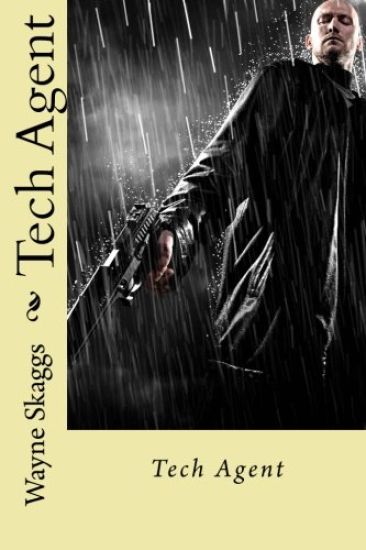
Set in the era of the 1990s, this book portrays an existing secret world, hidden in our technological evolution. Outright evil people and colorful characters were around and were, largely, unrecognized. Follow their journey in a prior time and ask yourself, "how much is true and how much is fiction?" Such characters did and do exist. There had been a new form of clandestine warfare waged ever since the close of World War II. Industrial espionage had been well out of the public eye. Only in the 1990s has the extent of covert activity been creeping into the news. U.S .News and World Report, the Wall St. Journal and others have begun to report on this industrial espionage. . American corporations had been stealing each other's secrets and technology for decades. Their intellectual gamesmanship was not prepared for more primitive assault. As the world emerged from WW11, non-violent activity graduated, on the international front, into a more dangerous and invasive activity. With U.S. firms reacting to the outflow of technology, the "Corporate Spy Wars" (U.S. News and World Report February 1998) were well under way. International corporate spying has even given birth to new breeds of computer hackers. One group in St. Petersburg Russia made off with ten million dollars from Citibank in 1994, without firing a shot. The problems are so pervasive; the Congress passed the 1996 Economic Espionage Act empowering the FBI to assist in protection of the national interest. The FBI established its office called the Computer Investigations and Infrastructure Assessment Center which began a partnership between government and corporate America. All of these measures have been described as too little, too late. In the 1990s alone, the value of stolen information is estimated to be as much as 300 Billion. The reaction has been predictable. It is said that there is an even uglier underside of this spy activity, a world that, given unlimited funds and access, is fighting this battle with weapons and lives.....a world with no Geneva Convention to protect the participants......the Tech Agents. This book attempts to portray their world.
This sequel to Tech Agent begins, as did the first novel, with an act of cruelty by Marina Dubroski. Marina is the emotionally disturbed and dangerous half sister of the ruthless French entrepreneur Jean Perriot. Marina, after giving birth to a girl child while in captivity by Perriot, brutally murders a priest and a nun supervising her care. The story follows this female personification of evil through France, Iraq and Iran of the 90s. Thwarting her maniacal attempts though to her attempt to attack her hated enemies, the American people. Here Marina escapes, kidnapping the baby as a hostage to protect herself from Perriot and his agents. Marina flees to Iran and Iraq, hiding her disfigurement with Muslim women's garb. She recruits the evil Arab Jamal, who had been punished and dismissed by Perriot. Funded by accumulations from her past activities and an alliance with Arab extremists, she hatches a plot to contaminate the water supplies of several world capitals with deadly organisms, deceiving the nations so they will blame each other and her enemies. There is to be a mega-million payoff from the Arab extremists if she succeeds. The heroes, the Tech Agents of the Walton Group, alerted by both Perriot and the contacts of agent Sloboda, act in concert with Perriot and four world governments to prevent this insane act, recovering stolen technology in the process. English, German, French and American pharmaceutical companies are finally persuaded by the near disaster to create an international industrial pact. These nations expect companies in other nations to join them lest they be economically disadvantaged. The self regulatory organization is expected to be much more effective than political treaties in controlling the use of the deadly agents and establishing cooperative regulatory enforcement. The aim is to eliminate industrial espionage where toxic agents are involved. The novel ends with the baby Nadia, named after Marina's dead twin sister, being recovered by Baxter. Baxter is the Walton Tech Agent who is the biological father of the child. This book, as with the first, ends with a plot twist involving Marina.