

Kirjahaku
Etsi kirjoja tekijän nimen, kirjan nimen tai ISBN:n perusteella.
1000 tulosta hakusanalla Wayne Lanter
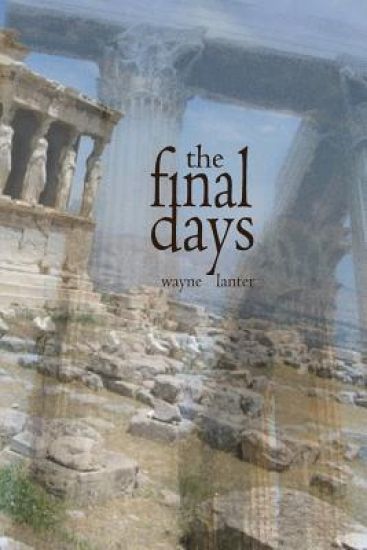
The Final Days is the story of philosophy Professor John Carter, who near the end of one fall semester becomes romantically entangled with a female student. At the time, the university is undergoing changes and faculty positions are threatened. In the ensuing weeks Carteras office-mate dies mysteriously and Carter is dragged through a particularly vicious dismissal. And although Carter is victimized for his indiscretions by the university administrators who want to turn the university into a profitable business, in the end Carter proves to be one of literatureas most American professors. He is no screwed-up Easterner with Old World baggage. He watches football games, owns a handgun, and eats fast food as he rambles through a story clearly and profoundly put forth in an academic setting, where American culture ought to be exempt from assaults on Virtue, Quality, Integrity, and where the McDonaldization of society hurts most.

Psyaint David: A Short But Reliable Narrative of Six Months of Fun and Mayhem in the City of the Gods
Wayne Lanter
Twiss Hill Press
2016
nidottu

Jack Landers, Sheriff: Jack Landers Novel 4
G. Wayne Tilman
Createspace Independent Publishing Platform
2017
nidottu
Only the Vengeance: A Jack Landers Novel
G. Wayne Tilman
Createspace Independent Publishing Platform
2016
nidottu
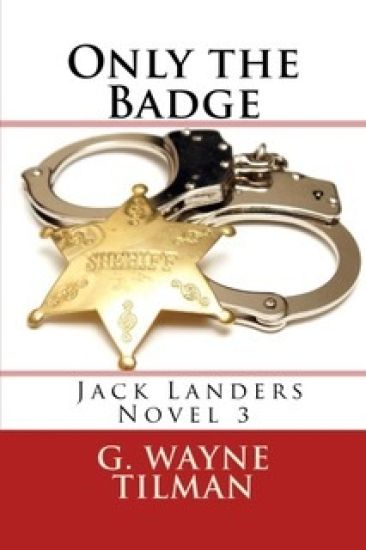
Only the Badge: A Jack Landers Novel
G. Wayne Tilman
Createspace Independent Publishing Platform
2016
nidottu
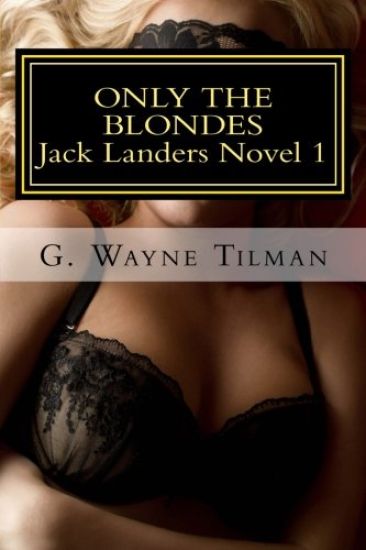
Only the Blondes: A Jack Landers Novel
G. Wayne Tilman
Createspace Independent Publishing Platform
2016
nidottu

Wayne
BOOKLOCKER.COM, INC.
2025
pokkari

â??My Decade in the Premier Leagueâ?? is Wayneâ??s first hand account of his 10 years playing at the highest level in English football â?? and for the biggest club in the world. This is his inside story of life on the pitch for Manchester Utd; the League titles, FA Cups, League Cups and Champions League adventures. A must for any Utd fan.

One of the most talked about stars in the world of soccer, Wayne Rooney now talks about . . . Wayne Rooney--no-holds-barred.Wayne Rooney is barely twenty-two years old, and he's already one of the finest soccer players in the world. Colorful and controversial, he plays--and lives--with an intensity that's unmatched on and off the field. With remarkable candor, he now tells the true story of his life. From his working-class upbringing on the back streets of Liverpool and his Premiership debut as a sixteen-year-old phenom to his ebullient entrance on the international scene in the 2004 European tournament and the raw drama of the 2006 World Cup, Wayne Rooney: My Story is an honest and inspiring account of a prodigiously gifted youngster and his meteoric rise to fame and fortune. It is a riveting tale of adversity and triumph, of champions and championships, of a private life that never could escape the headlines . . . and of a remarkable athlete whose destiny was forever altered when Manchester United came calling in the summer of 2004.

"Wayne of Gotham" is the story two men separated by a generation of tragedy: Thomas, the rebellious heir to the vast Wayne Empire and Bruce, his son whose life is forever altered by witnessing Thomas' death. The murder of Thomas and Martha Wayne is the torturous point on which Bruce turns to become the Batman. The Dark Knight's file on the case has long since been closed, the foundations of Bruce Wayne's secret life secure in the simple symmetry of a mugging gone horribly wrong. These foundations are shaken, however, when disturbing bits of information begin showing up in the Batman's path that question the accepted story. Batman reopens the case file - and discovers a father and mother that he never knew and the burden of a dark legacy he must now bear.

Wayne Booth wrote some of the most influential and engaging criticism of our time, most notably the 1961 classic "The Rhetoric of Fiction", a book that transformed literary criticism and became the standard reference point for advanced discussions of how fiction works, how authors make novels accessible, and how readers re-create texts. While Booth's work was formative to the study of literature, his essential writings have never been collected in a single volume - until now. Selected by Walter Jost in collaboration with Booth himself, the texts anthologized here present a picture of this indispensable critic's contributions to literary and rhetorical studies. The selections range from memorable readings of Macbeth, Jane Austen, George Eliot, and Henry James to engagements with Booth's intellectual heroes, such as Richard McKeon and Mikhail Bakhtin. But rhetoric, Booth's abiding concern as a critic and thinker, provides the organizing principle of the anthology. "The Essential Wayne Booth" illuminates the scope of Booth's rhetorical inquiry: the entire range of resources that human beings share for producing effects on one another. Whether about metaphors for our friendship with books or the two cultures of science and religion, the texts collected here always return to the techniques and ethics of our ways of communicating with each other - that is, to rhetoric. "The Essential Wayne Booth" is a capstone to Booth's long career and an eloquent reminder of the ways in which criticism can make us alive to the arts of writing, talking, and listening.
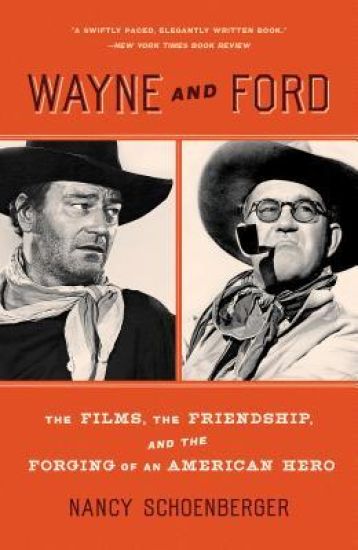
John Ford and John Wayne, two titans of classic film, made some of the most enduring movies of all time. The genre they defined--the Western--and the heroic archetype they built still matter today. For more than twenty years John Ford and John Wayne were a blockbuster Hollywood team, turning out many of the finest Western films ever made. Ford, known for his black eye patch and for his hard-drinking, brawling masculinity, was a son of Irish immigrants and was renowned as a director for both his craftsmanship and his brutality. John "Duke" Wayne was a mere stagehand and bit player in "B" Westerns, but he was strapping and handsome, and Ford saw his potential. In 1939 Ford made Wayne a star in Stagecoach, and from there the two men established a close, often turbulent relationship. Their most productive years saw the release of one iconic film after another: Rio Grande, The Quiet Man, The Searchers, She Wore a Yellow Ribbon, The Man Who Shot Liberty Valance. But by 1960 the bond of their friendship had frayed, and Wayne felt he could move beyond his mentor with his first solo project, The Alamo. Few of Wayne's subsequent films would have the brilliance or the cachet of a John Ford Western, but viewed together the careers of these two men changed moviemaking in ways that endure to this day. Despite the decline of the Western in contemporary cinema, its cultural legacy, particularly the type of hero codified by Ford and Wayne--tough, self-reliant, and unafraid to fight but also honorable, trustworthy, and kind--resonates in everything from Star Wars to today's superhero franchises. Drawing on previously untapped caches of letters and personal documents, Nancy Schoenberger dramatically narrates a complicated, poignant, and iconic friendship and the lasting legacy of that friendship on American culture.
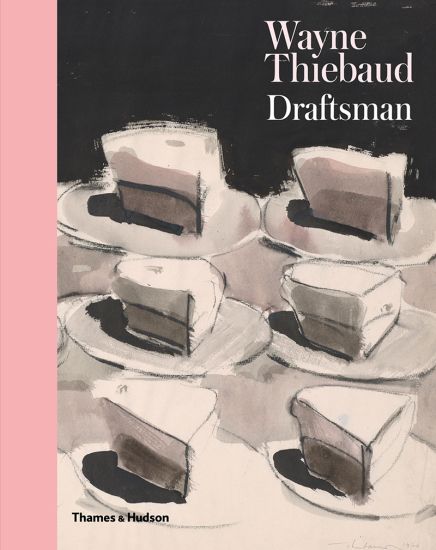
Wayne Thiebaud
Thames Hudson Ltd
2018
sidottu
Best known for his luscious paintings of pies and ice-cream cones, American artist Wayne Thiebaud (born 1920) has been an avid and prolific draftsman since he began his career in the 1940s as an illustrator and cartoonist. This book of about ninety drawings – compiled with the full cooperation of the artist to accompany a major new exhibition at the Morgan Library & Museum – explores the wide range of Thiebaud’s production on paper, including early sketches, luminous pastels and watercolours, and charcoal drawings made in connection with his teaching. In subjects ranging from deli counters and isolated figures to dramatic views of San Francisco’s plunging streets, Thiebaud’s drawings endow the most banal, everyday scenes with a sense of poetry and nostalgia. Fully illustrated and beautifully designed, with illuminating texts, including an extensive interview with the artist, Wayne Thiebaud: Draftsman is the first major publication devoted to his lifelong engagement with drawing.
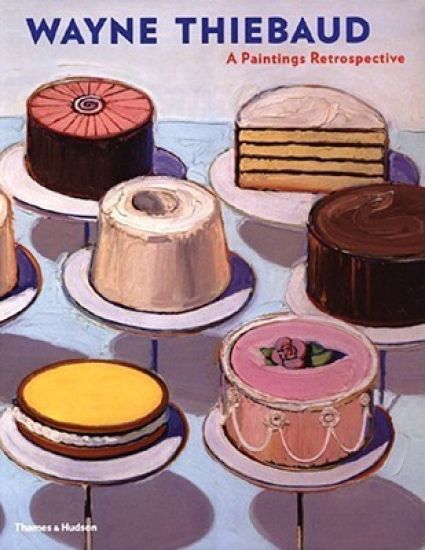
Wayne Thiebaud has long been recognized as one of America’s most prominent modern artists. Probably best known for his straightforward, deadpan, still-life paintings of the 1960s, Thiebaud is identified by his brilliant palette, his luscious handling of paint, and the intensity of light that lends a particularly ‘California’ flavour to his images. Originally published on the occasion of the artist’s eightieth birthday, this definitive retrospective brings together 120 of Thiebaud’s most important paintings, watercolours and pastels, while thoughtful essays by Steven A. Nash and Adam Gopnik trace the course of his career from the 1950s, when he first began to emerge as a significant artist of our times.

Wayne Thiebaud
University of California Press
2018
sidottu
Wayne Thiebaud: 1958-1968 examines Thiebaud's ongoing impact on contemporary art through in-depth analysis of the paintings and drawings made at the launch of his career, at a seminal moment when the art world was moving beyond Abstract Expressionism and redefining itself. By questioning Thiebaud's relationship to Pop art, his self-imposed distance from the movement, and the popular urge to affiliate him with it, Teagle explores the role of his painting in the traffic of images at the end of the twentieth century. Organized in close cooperation with the artist, this is the first study of the emergence of Thiebaud's mature style and the only museum exhibition to date to delve into a specific period of his production, a time that coincides with the start of his teaching career at University of California at Davis. Thiebaud's art, like that of the celebrated Pop artists with whom he shared early exhibitions, is ripe for critical reappraisal. The "soft" nature of Thiebaud's famous subjects, his creamy pies and dripping ice creams, positioned his art as fodder for social-political review on occasion, but rarely for serious historical analysis. Since the beginning of his career Thiebaud reminded critics of his formal interests and his deep affiliation with the history of painting. This exhibition takes as its starting point an understanding of Thiebaud's painterly language-its historical sources and contemporary affiliations. Shaped around the seminal exhibitions that marked Thiebaud's entrance onto the stage of contemporary art, it concludes with a close reading of the artists' expanded subject matter presented in a major traveling exhibition in 1968. Portraits and landscapes now joined the food that prevailed in early exhibitions, and all pictured in the artist's now signature style of objects deployed in neutral space, bounded by halated light and casting long shadows of saturated color. With contributions from Alexander Nemerov and Margaretta Lovell. Published in association with the Jan Shrem and Maria Manetti Shrem Museum of Art, University of California, Davis. Exhibition dates: Manetti Shrem Museum of Art, University of California, Davis: January 16-May 15, 2018

Wayne Thiebaud
University of California Press
2025
sidottu
"A beautifully produced, authoritative volume."—Kirkus Reviews Explores Wayne Thiebaud's career as a self-described "thief" who appropriated and reinterpreted old and new European and American artworks. Although artist Wayne Thiebaud (1920–2021) earned acclaim for his poetic renderings of the prosaic particulars of American life, he openly admitted that "it's hard for me to think of artists who weren't influential on me, because I'm such a blatant thief." Wayne Thiebaud: Art Comes from Art features the artist's virtuosic appropriations and reinterpretations of old and new European and American artworks, spanning from Andrea Mantegna to Édouard Manet, Henri Matisse to Richard Diebenkorn, offering crucial insights into his creative process. Thiebaud's exploration of art, artists, and art history—along with the practices of copying, appropriation, and reinterpretation—allowed him not only to see through the eyes of other artists but also to commune with them through their work, expanding his own vision. This career-long engagement with the concept of appropriation illustrates his perception of art history as an encyclopedic "bureau of standards"—a rich repository and resource that offers working artists community with their predecessors and communion with their artworks. Published in association with the Fine Arts Museums of San Francisco Exhibition dates: Legion of Honor: March 22–August 17, 2025
