Kirjojen hintavertailu. Mukana 11 342 296 kirjaa ja 12 kauppaa.

Kirjahaku

Etsi kirjoja tekijän nimen, kirjan nimen tai ISBN:n perusteella.

1000 tulosta hakusanalla Wendy C. Jorgensen

Stars on Ruby Mountain

Stars on Ruby Mountain

Wendy C. Jorgensen

Independently Published
2019
nidottu
A teenage girl recovers in a Sacramento hospital, the sole survivor of a terrible accident that killed her parents-parents she can't remember. All she knows for sure is she's in danger. For the girl, known only as Angie, staying put is not an option.After saving a friend from a vicious attack reveals she's no ordinary human, Angie races to find a safe place. A chance encounter with the intriguing Michael Winter leads her over the Sierras to Lake Tahoe, where she's nearly abducted. As she escapes to Colorado, she struggles to unravel who she is and where she came from; instead, the mystery of her identity deepens. Her only hope is to find the truth before it's too late.
Scattering Stars

Scattering Stars

Wendy C. Jorgensen

Createspace Independent Publishing Platform
2016
nidottu
Ridgway, Colorado is a small town with big secrets. Alien secrets. Ten years ago, Eve Hunter's mother disappeared in a Colorado canyon. Devastated, Eve and her father moved away to escape the painful memories. But the past hardly ever stays buried. When sixteen-year-old Eve returns to her childhood home, she meets a mesmerizing, intense boy, who knows more about what happened in the canyon than he's willing to share. After learning her grandfather leads a colony of mysterious scientists connected to her mother, she's more determined than ever to get answers. The problem is, no one's talking. As Eve discovers her true identity, she realizes her return to Ridgway is no accident. A key player in her grandfather's plan, she becomes entangled in a deadly game with time running out to master the rules. One wrong move could jeopardize the future of the planet.
Acceleration

Acceleration

Wendy C. Jorgensen

Createspace Independent Publishing Platform
2017
nidottu
Every year thousands of teens apply for neuroenhancement-or acceleration. A select few are chosen. With superhuman abilities to learn and analyze information, these accelerants are sought after by government and business leaders around the world. But there's a catch. Acceleration causes brain deterioration. Within twenty years, every one of them will be dead.Sixteen-year-old Ami Evans and three other military cadets are given a six-month assignment to monitor the newest accelerants in Boulder, Colorado. Their goal is to discover everything they can about the acceleration program, but when one of their subjects dies on the day they arrive, they're thrust into a deadly conspiracy. Who killed the accelerant? What's their motive? And more importantly, who's next?
The Sacred Monstrous

The Sacred Monstrous

Wendy C. Hamblet

Lexington Books
2003
sidottu
Wedding an analysis of relevant anthropological literature and philosophical theory, this important book re-positions violence—long trivialized by philosophers as an incidental or anomalous feature of humanity—as a central concern for ethical thought. Wendy Hamblet focuses on a fundamental paradox that emerges when well-meaning communities and individuals attempt to implement their ideals in our social, or socialized, world. Very often the unintended consequences of these individual or communal ideals run headlong into the brute fact of bloody human engagement. Through her investigation of violence-legitimization in myth and ancient tales, philosophical accounts (from Plato to Nietzsche), the concept of home as 'refuge,' and recent social scientific data, Hamblet takes up the charge that violence is steeped in our being—it pervades human history and is embedded in the ethos of our modern institutions—and gives us essential tools for better understanding how violence actually operates.
The Sacred Monstrous

The Sacred Monstrous

Wendy C. Hamblet

Lexington Books
2003
nidottu
Wedding an analysis of relevant anthropological literature and philosophical theory, this important book re-positions violence—long trivialized by philosophers as an incidental or anomalous feature of humanity—as a central concern for ethical thought. Wendy Hamblet focuses on a fundamental paradox that emerges when well-meaning communities and individuals attempt to implement their ideals in our social, or socialized, world. Very often the unintended consequences of these individual or communal ideals run headlong into the brute fact of bloody human engagement. Through her investigation of violence-legitimization in myth and ancient tales, philosophical accounts (from Plato to Nietzsche), the concept of home as 'refuge,' and recent social scientific data, Hamblet takes up the charge that violence is steeped in our being—it pervades human history and is embedded in the ethos of our modern institutions—and gives us essential tools for better understanding how violence actually operates.
Savage Constructions

Savage Constructions

Wendy C. Hamblet

Lexington Books
2008
sidottu
Savage Constructions composes a critical examination of the popular assumption that violence is an essential quality of certain ethnic or racial populations. Wendy Hamblet challenges the supposition, all too common in the West, that darker-skinned peoples are inherently violent. To challenge this myth, Savage Constructions offers a theory of subjectivity transformed by historical violence. It rethinks how African peoples, once living in simple neighborly communities more democratic and egalitarian than modern states, have come to the condition of abjection, misery, and fierce aggression, in which we find them today. This rethinking she argues that Western affluence is built upon slaughter, slavery, and colonial oppression, and suggests that prosperous nations of the West owe a great debt to the societies they trampled en route to their prosperity. This work is important because Nnewly independent nations of Africa are a primary example of a much vaster phenomenon. Western powers continue to sack poorer, weaker countries through covert intrigue, outright war, crippling debts, and unfair global labor and trade policies. The violences continue because many Westerners still harbor metaphysical assumptions about the supremacy of white Christians over less "civilized," darker-skinned peoples. These assumptions depress the possibilities of ethnic minorities within the West, continue to influence foreign policy and frustrate global relations, and ensure that the overwhelming collateral damage of modern wars is color conscious. Savage Constructions will appeal to all levels of scholars and students.
Savage Constructions

Savage Constructions

Wendy C. Hamblet

Lexington Books
2008
nidottu
Savage Constructions composes a critical examination of the popular assumption that violence is an essential quality of certain ethnic or racial populations. Wendy Hamblet challenges the supposition, all too common in the West, that darker-skinned peoples are inherently violent. To challenge this myth, Savage Constructions offers a theory of subjectivity transformed by historical violence. It rethinks how African peoples, once living in simple neighborly communities more democratic and egalitarian than modern states, have come to the condition of abjection, misery, and fierce aggression, in which we find them today. This rethinking she argues that Western affluence is built upon slaughter, slavery, and colonial oppression, and suggests that prosperous nations of the West owe a great debt to the societies they trampled en route to their prosperity. This work is important because Nnewly independent nations of Africa are a primary example of a much vaster phenomenon. Western powers continue to sack poorer, weaker countries through covert intrigue, outright war, crippling debts, and unfair global labor and trade policies. The violences continue because many Westerners still harbor metaphysical assumptions about the supremacy of white Christians over less 'civilized,' darker-skinned peoples. These assumptions depress the possibilities of ethnic minorities within the West, continue to influence foreign policy and frustrate global relations, and ensure that the overwhelming collateral damage of modern wars is color conscious. Savage Constructions will appeal to all levels of scholars and students.
The Lesser Good

The Lesser Good

Wendy C. Hamblet

Lexington Books
2009
sidottu
Western civilization is founded upon the assumption that there exists a "natural order" to the world, an embedded principle of justice with which human reason is aligned. The imagery is seductive. However, Emil Fackenheim raises a troubling fact in his To Mend the World when he names the Holocaust the "rupture that ruptures philosophy." The Holocaust and countless other horrors over thousands of years of eager philosophical pursuit could not order the troublesome human soul to that state of justice that the Plato claims to be the most natural and happy state of human beings, if they can simply know their best interests. The philosopher, physician to the human soul, has proven impotent in healing the open ethical wound of human inhumanity; worse, the grand ontological and epistemological structures that philosophers have constructed may be linked to the ethical failures of the planet, to colonial and imperial worldviews. The work of post-Holocaust phenomenologist, Emmanuel Levinas, is written under the somber backdrop of the Holocaust. Levinas, by his own admission, stages a return to Plato. He shares Plato's sense of ethical urgency in the philosophical task, but he sets course for a new Platonism that thinks the difference separating (rather than the unity gathering) being. Levinas, more than Plato, appreciates that the exigencies and labor of everyday life can eclipse the needs of others and waylay the ethical life. Levinas too holds out more hope than Plato that the worst human beings can simply forget themselves and their self-interested projects, and become their brothers' keepers. Levinas quests for the good beyond being as he challenges the tradition of Western thought and the post-Holocaust world to a new ethos: we must decide between the starry skies above (the ordered ontologies of the Western tradition) and the moral law within. The Lesser Good represents a timely consideration of the ethical exigencies of human life, politics, and justice, demonstrating that philosophy's fa
Punishment and Shame

Punishment and Shame

Wendy C. Hamblet

Lexington Books
2010
sidottu
Punishment is the imposition, by a legitimate authority, of a painful consequence upon one who has offended the social order by indulging in acts contrary to the social good. Punishment is understood to serve a primary objective in any society: it rehabilitates or reforms (re-forms or shapes anew) the psyches of social offenders to bring them in line with prevailing codes of behavior. Punishment thus is a highly conservative force, affirming simultaneously the codes of conduct deemed desirable within the society and the status quo of power relations that hold sway in the society. Punishment is a form of social teaching. One of the favorite forms of didactic pain to which legitimate authorities turn, in teaching conformity to social regulations, is the psychological pain of shame. Shame is a special favorite in the penology of societies of the Western world, whose governing logic is already grounded in the shame-based religions of Judaism and Christianity. Parents, school teachers, religious leaders, and state authorities readily employ shame as an effective method for teaching social lessons. Shame is a powerful force that reaches deep into the psyche of the offender and gnaws away at her sense of self-worth and identity, with longstanding and devastating existential effects. Shame has profound and enduring effects, because it has the capacity to transform an empirical fact (of having done something unacceptable) into an ontological reality (of being unacceptable as a human being). Shame dehumanizes. Shame is a powerfully effective tool for altering behavior, but because shame dehumanizes, it often fails to have the effect that the punisher is seeking to bring about. Shame sickens souls, rather than cures them. It sickens them to such a degree that shame more often acts as a promoter of criminality than as a teacher of the social good.
Punishment and Shame

Punishment and Shame

Wendy C. Hamblet

Lexington Books
2010
nidottu
Punishment is the imposition, by a legitimate authority, of a painful consequence upon one who has offended the social order by indulging in acts contrary to the social good. Punishment is understood to serve a primary objective in any society: it rehabilitates or reforms (re-forms or shapes anew) the psyches of social offenders to bring them in line with prevailing codes of behavior. Punishment thus is a highly conservative force, affirming simultaneously the codes of conduct deemed desirable within the society and the status quo of power relations that hold sway in the society. Punishment is a form of social teaching. One of the favorite forms of didactic pain to which legitimate authorities turn, in teaching conformity to social regulations, is the psychological pain of shame. Shame is a special favorite in the penology of societies of the Western world, whose governing logic is already grounded in the shame-based religions of Judaism and Christianity. Parents, school teachers, religious leaders, and state authorities readily employ shame as an effective method for teaching social lessons. Shame is a powerful force that reaches deep into the psyche of the offender and gnaws away at her sense of self-worth and identity, with longstanding and devastating existential effects. Shame has profound and enduring effects, because it has the capacity to transform an empirical fact (of having done something unacceptable) into an ontological reality (of being unacceptable as a human being). Shame dehumanizes. Shame is a powerfully effective tool for altering behavior, but because shame dehumanizes, it often fails to have the effect that the punisher is seeking to bring about. Shame sickens souls, rather than cures them. It sickens them to such a degree that shame more often acts as a promoter of criminality than as a teacher of the social good.
Bruja

Bruja

Wendy C. Ortiz

NORTHWESTERN UNIVERSITY PRESS
2025
nidottu
The dreamscape of a haunted and hopeful woman, back in print Dubbed a 'dreamoir,' Bruja is a bold and harrowing journey through the dream worlds of Wendy C. Ortiz. Sister memoir to Hollywood Notebook, it catalogs the happenings of the night: strange visions of the past warped by present-day inklings animals running loose, never where they should be familiar nature and architecture made malleable and new. Ortiz's subconscious is bared in full on these pages as the author interrogates her histories. We bravely adventure into new literary form, walking the parallel plane of Ortiz's waking life alongside her. Where the self is anchored in the deepest recesses of the mind, Ortiz invites us to push the boundaries of the subconscious and enter into the dreamoir.
Hollywood Notebook

Hollywood Notebook

Wendy C. Ortiz

NORTHWESTERN UNIVERSITY PRESS
2025
nidottu
A cartography of Hollywood and transformational wanderings, back in print A daylight traipse through early-aughts Los Angeles, Hollywood Notebook encapsulates the powerful feelings and hopeful futures of twentysomething Wendy C. Ortiz. In this boundary-defying sister memoir to Bruja, Ortiz navigates internal maps as she traverses external palm-treed streets, moving through her youthful twenties and into the pensiveness of her thirties. Peering at what lies ahead while dipping her toes into the past, Ortiz shows us that there is no place like Hollywood to unearth the joys of success and the blows of mistakes - both realized and denied. An innovative and bold examination of the daytime roaming mind, Hollywood Notebook is a cartography of love, loss, and transformation in the face of a brilliant psyche in a vibrant city.
Excavation

Excavation

Wendy C. Ortiz

NORTHWESTERN UNIVERSITY PRESS
2025
nidottu
The acclaimed and groundbreaking memoir from Wendy C. Ortiz A darkly vibrant and daring memoir, Wendy C. Ortiz's Excavation challenged the standard telling of abuse narratives when first published in 2014 over a decade later, it remains deeply prescient. Set in Los Angeles's San Fernando Valley in the late 1980s, the narrative follows the spiraling entanglement between Wendy and her eighth-grade English teacher as she becomes both victim to and participant in a simultaneously predatorial and impassioned relationship. Baited by initial praise and a false sense of control, Wendy tumbles into a dangerous dynamic that spans the duration of her teens. Artfully constructed from her own journals and decades of personal excavation, the story of this secret relationship has imprinted on Wendy and readers alike. A stunningly honest look at memory, agency, and power, Excavation will claim your whole heart.
Food Plants of the Sonoran Desert

Food Plants of the Sonoran Desert

Wendy C. Hodgson

University of Arizona Press
2015
nidottu
The seemingly inhospitable Sonoran Desert has provided sustenance to indigenous peoples for centuries. Although it is to all appearances a land bereft of useful plants, fully one-fifth of the desert's flora are edible. This volume presents information on nearly 540 edible plants used by people of more than fifty traditional cultures of the Sonoran Desert and peripheral areas. Drawing on thirty years of research, Wendy Hodgson has synthesized the widely scattered literature and added her own experiences to create an exhaustive catalog of desert plants and their many and varied uses. Food Plants of the Sonoran Desert includes not only plants such as gourds and legumes but also unexpected food sources such as palms, lilies, and cattails, all of which provided nutrition to desert peoples. Each species entry lists recorded names and describes indigenous uses, which often include nonfood therapeutic and commodity applications. The agave, for example, is cited for its use as food and for alcoholic and nonalcoholic beverages, syrup, fiber, cordage, clothing, sandals, nets, blankets, lances, fire hearths, musical instruments, hedgerows, soap, and medicine, and for ceremonial purposes. The agave entry includes information on harvesting, roasting, and consumption—and on distinguishing between edible and inedible varieties. No other source provides such a vast amount of information on traditional plant uses for this region. Written to be easily accessible to general readers, the book is an invaluable compendium for anyone interested in the desert's hidden bounty.
Living from the Unseen: Reflections from a Transformed Life

Living from the Unseen: Reflections from a Transformed Life

Wendy C. Backlund

Igniting Hope Ministries
2012
nidottu
We are first and foremost a spirit living in a natural body - learning to see, hear and access the spirit realm and its principles. Learning to live life through the eyes of the spirit is transforming and freeing. Living from the Unseen reveals that we can live life through the eyes of the spirit and with an awareness of the spiritual realities and principals that affect our everyday lives. This is a book that shares insights on how to obtain a transformed life through renewing the mind. Wendy's journey, and these insights, are meant for those Christians who intuitively know there is more to "walking in the Spirit" than traditionally understood by the Church. This book will also help Christians who are tired, discouraged, hopeless or hungering for their destiny and identity to be fully developed and released. This book will help identify beliefs that block the reception of God's blessings and hinder our ability to live out our destiny. You will learn that: * Believing differently, not trying harder, is the key to change. * You cannot do what you don't believe you are. * You can only receive what you think you are worth.* Rather than learning how to die - it is time to learn how to live.
Plan for Tomorrow, Live for Today

Plan for Tomorrow, Live for Today

Wendy C Campbell

Passionquest Technologies, LLC
2020
pokkari
Finding happiness, health, and companionship at age forty is one of the most vexing challenges women face today. We want to "have it all," but are we really prepared for those out-of-left-field events that cascade upon us as we enter and move through our fourth decade?In Plan for Tomorrow, Live for Today, Wendy Campbell leverages decades of experience spent coaching women and colleagues on how to achieve work-life balance, and provides a simple template that any woman can use to overcome the seemingly insurmountable challenges she may face at middle age.You'll discover how easy it is to: ** Avoid being your own worst enemy** Understand why each of us has significant untapped potential at this age** Integrate healthy practices that complement your nutritional needs** Start and maintain a healthy relationship at middle age** Appreciate the importance of love and commitmentAs a successful insurance and financial entrepreneur, author, and speaker, Wendy Campbell's ability to instantly identify her clients' root problems and create a plan of action and accountability that can be implemented quickly and easily is virtually unmatched. In Plan for Tomorrow, Live for Today, women will find a complete guide to every component of midlife's unplanned hardships.
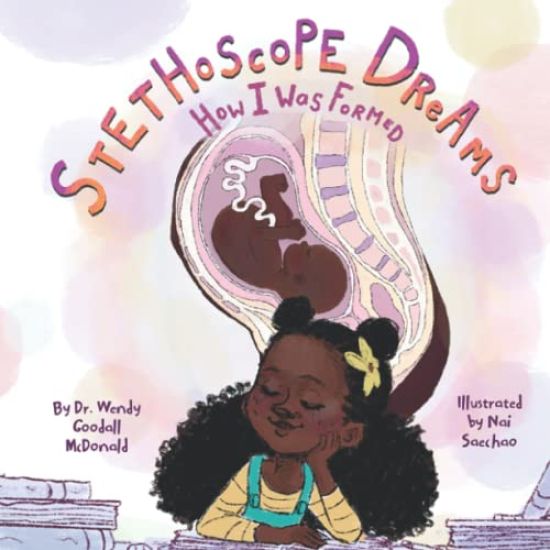
Stethoscope Dreams

Stethoscope Dreams

Wendy C Goodall McDonald

Natural Light
2020
sidottu
"Looking out the window to the city as it gleams, even though I'm wide awake, I'm having Stethoscope Dreams..." This is the story of Journei, a little girl from the inner city who desires to be a physician. She learns about all of the organ systems and dreams of one day healing the world. Go with her as she takes us on a lyrical journey of believing in herself. Follow Dr. Wendy at dreverywoman.com and stay tuned for an actual rap that brings the book to life.
Motherless Creations

Motherless Creations

Wendy C. Nielsen

TAYLOR FRANCIS LTD
2022
sidottu
This book explains the elimination of maternal characters in American, British, French, and German literature before 1890 by examining motherless creations: Pygmalion’s statue, Frankenstein’s creature, homunculi, automata, androids, golems, and steam men. These beings typify what is now called artificial life, living systems made through manufactured means. Fantasies about creating life ex-utero were built upon misconceptions about how life began, sustaining pseudoscientific beliefs about the birthing body. Physicians, inventors, and authors of literature imagined generating life without women to control the process of reproduction and generate perfect progeny. Thus, some speculative fiction before 1890 belongs to the literary genealogy of transhumanism, the belief that technology will someday transform some humans into superior, immortal beings. Female motherless creations tend to operate as sexual companions. Male ones often emerge as subaltern figures analogous to enslaved beings, illustrating that reproductive rights inform readers’ sense of who counts as human in fictions of artificial life.