This book is an exploration of the nature of power in early medieval Wales. Wendy Davies examines the distribution of power, territorial and social, and traces the ways in which contemporaries defined this fundamental concept. She confronts challenging questions relating to definitions and consequences of military control, alien settlement, landownership, and political domination. Professor Davies analyses the impact and nature of English, Irish, and Viking contacts with the Welsh, and argues their significance for the long-term development of Wales. This is a stimulating and scholarly study by one of the foremost historians of the Celtic world.
This text discusses the period 800-1100 AD, offering an integrated treatment of the whole of the British Isles. It offers a number of challenges to accepted orthodoxies about the nature and development of the separate areas of early medieval Britain.
Using archaeological, archaeobotanical, and written evidence, this book explores what gardens meant in northern Spain and northern Portugal in the early middle ages - a question asked here for the first time. Dealing with a vast area of the Iberian peninsula that lay beyond Muslim al-Andalus, with great geographical diversity and wide variation in climate, this books spans the sixth to tenth centuries, showing that gardens might lie beside houses or scattered among arable fields or grouped together in garden zones. Gardens are difficult to recognize archaeologically but excavation suggests that many were terraces, as it also suggests that indicators of intensive use - through fertilization or irrigation or characteristic weed species - may be more useful for identifying garden activity than looking for a distinctive shape. The strongest indications of garden produce are that fruit was always important and so were legumes; and some gardens, especially those owned by monasteries, may have grown herbs. The most striking trend across the tenth century is that peasants sold gardens to monasteries, although there are regional differences, Catalonia having a more diverse land market. Peasants sold in order to get food and monasteries bought partly to provide garden produce, including herbs, for expanding communities but partly to use and increase garden space for textile plants--flax, hemp, and dye plants--for commercial reasons, especially urban supply. Gardens were vital for the supply of clothes. By scrutinising the logistics of small- and medium-scale ownership, the relations of owners with large-scale land-holders, especially institutions, and the ins-and-outs of those economic and social interactions, this wide-ranging book adds a new dimension to the environmental history of western Europe, in addition to contributing to an understanding of the social, economic, and cultural history of the period more generally.
Acts of Giving examines the issues surrounding donation - the giving of property, usually landed property - in northern 'Christian' Spain in the tenth century, when written texts became very plentiful, allowing us to glimpse the working of local society. Wendy Davies explores who gives and who receives; what is given; reasons for giving; and the place of giving within the complex of social and economic relationships in society as a whole. People gave land for all kinds of reasons - because they were forced to do so, to meet debts or pay fines; because they wanted to gain material benefits in life, or to secure support in the short term or in old age. Giving pro anima, for the sake of the soul, was relatively limited; and gifts were made to lay persons as well as to the church. Family interests were strongly sustained across the tenth century and did not dwindle; family land was split and re-assembled, not fragmented. The gender and status of donors are key themes, along with commemoration: more men than women took steps to memorialize, in contrast to some parts of western Europe, and more aristocrats than peasants, which is less of a contrast. Donation as a type of transaction is also examined, as well as the insights into status afforded by the language and form of the records. Buying and selling, giving and receiving continued in the tenth-century as it had for centuries. However this period saw the volume of peasant donation to the church increasing enormously. It was this which set the conditions for substantial social and economic change.
A collection of papers in English by one of the foremost historians of the social and economic structure of medieval rural communities, who here examines local societies in rural northern Spain and Portugal in the early middle ages. Principal themes are scribal practice and the analysis of charter texts; gift, sale and wealth; justice and judicial procedures. Always with a concern for personal relationships and interactions, for mobility, for decision-making and for practice, a sense of land and landscape runs throughout. The Spanish and Portuguese experience has seemed irrelevant to the great debates of early medieval European history that occupy historians. But Spain and Portugal shared the late Roman heritage which influenced much of western Europe in the early middle ages, and by the tenth century records and practice in Christian Iberia still shared features with the Carolingian world. This book offers a substantial corpus of Iberian evidence to set beside Frankish, Italian, English and Scandinavian material and thereby makes it possible for northern Iberia to play a part in these great debates of medieval European history. (CS1084).
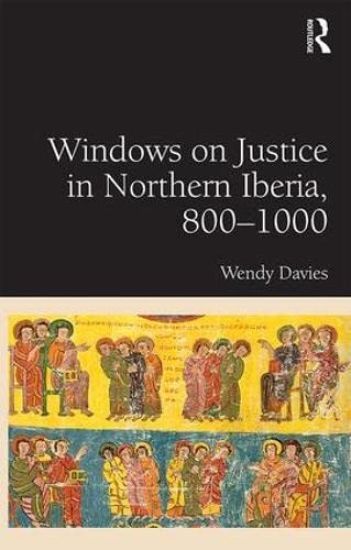
Although it has a rich historiography, and from the late ninth century is rich in textual evidence, northern Iberia has barely featured in the great debates of early medieval European history of recent generations. Lying beyond the Frankish world, in a peninsula more than half controlled by Muslims, Spanish and Portuguese experience has seemed irrelevant to the Carolingian Empire and the political fragmentation (or realignment) that followed it. But Spain and Portugal shared the late Roman heritage which influenced much of western Europe in the early middle ages and by the tenth century records and practice in the Christian north still shared features with parts farther east. What is interesting, in the wider European context, is that some of the so-called characteristics of the Carolingian world – the public court, collective judgment – are as characteristic of the Iberian world. The suggestion that they disappeared in the Frankish world, to be replaced by 'private' mechanisms, has played a major role in debates about the changing nature of power in the central middle ages: what happened in judicial courts has been central to the grand narratives of Duby and successive historians, for they are a powerful lens into the very real issues of politics and power. Looking at the practice of judicial courts in Europe west of Frankia allows us to think again about the nature of the public; identifying all the records of that practice allows us to adjust the balance between monastic and lay activity. What these show is that peasants, like other lay people, used the courts to seek redress and gain advantages. Records were not entirely framed nor practice entirely dominated by ecclesiastical interests.
This volume focuses on Wendy Davies's work on early medieval Breton texts and their implications. Beginning with core analyses of the Redon and Landévennec cartularies, it continues with papers that tease out some of the key social implications of the 9th-century Redon material - on the nature of political power, on rural communities, on the settlement of disputes, and on transmission of property. While the Redon charters have long been known as a source of fundamental importance for Breton history, the author's database (established in the 1980s) allowed much greater understanding of the role of individuals - at all social levels, and particularly peasant level - than had previously been possible. Attention to the detail of the east Breton past also includes papers on some of the results of her fieldwork, on building stone in particular. Early medieval Brittany is not merely interesting in itself (and it is certainly not some Celtic backwater): Breton evidence can usefully be differentiated from the evidence of other Celtic areas and has a significant role in wider issues of European history. As well as papers on the familiar themes of kingship, rulership, cult sites and cemeteries, the final section highlights the distinctive quality of the Breton evidence for the protection of sacred and personal space, for slavery and serfdom and for village-level courts.
This volume brings together Wendy Davies's pioneering early studies on the text of the Book of Llan Dâv alongside later pieces which explore the place of Wales in the wider world of the early middle ages. The Llandaff studies have provoked much subsequent comment: readers will find it helpful to reconsider what the author actually said about arguably the most significant surviving text for early medieval Welsh history - as opposed to the several published interpretations of what she is supposed to have said. The later work includes much-cited papers on the Latin charter tradition of the Celtic world and on 'Celtic' women; as well as studies of the so-called Celtic church and of the distinctiveness of Celtic saints - in all of which Welsh evidence makes a particularly important contribution. It also includes recent pieces on the environment and economy of early medieval Wales, which highlight some of the crucial new evidence provided by archaeology as well as historiographical issues that attract much current interest. Overall, the author has sought to make Welsh evidence accessible to scholars with interests in other parts of the middle ages and to ensure that Wales plays a part in broader surveys of early medieval Europe.
A collection of papers in English by one of the foremost historians of the social and economic structure of medieval rural communities, who here examines local societies in rural northern Spain and Portugal in the early middle ages. Principal themes are scribal practice and the analysis of charter texts; gift, sale and wealth; justice and judicial procedures. Always with a concern for personal relationships and interactions, for mobility, for decision-making and for practice, a sense of land and landscape runs throughout. The Spanish and Portuguese experience has seemed irrelevant to the great debates of early medieval European history that occupy historians. But Spain and Portugal shared the late Roman heritage which influenced much of western Europe in the early middle ages, and by the tenth century records and practice in Christian Iberia still shared features with the Carolingian world. This book offers a substantial corpus of Iberian evidence to set beside Frankish, Italian, English and Scandinavian material and thereby makes it possible for northern Iberia to play a part in these great debates of medieval European history. (CS1084).
This volume focuses on Wendy Davies's work on early medieval Breton texts and their implications. Beginning with core analyses of the Redon and Landévennec cartularies, it continues with papers that tease out some of the key social implications of the 9th-century Redon material - on the nature of political power, on rural communities, on the settlement of disputes, and on transmission of property. While the Redon charters have long been known as a source of fundamental importance for Breton history, the author's database (established in the 1980s) allowed much greater understanding of the role of individuals - at all social levels, and particularly peasant level - than had previously been possible. Attention to the detail of the east Breton past also includes papers on some of the results of her fieldwork, on building stone in particular. Early medieval Brittany is not merely interesting in itself (and it is certainly not some Celtic backwater): Breton evidence can usefully be differentiated from the evidence of other Celtic areas and has a significant role in wider issues of European history. As well as papers on the familiar themes of kingship, rulership, cult sites and cemeteries, the final section highlights the distinctive quality of the Breton evidence for the protection of sacred and personal space, for slavery and serfdom and for village-level courts.
Although it has a rich historiography, and from the late ninth century is rich in textual evidence, northern Iberia has barely featured in the great debates of early medieval European history of recent generations. Lying beyond the Frankish world, in a peninsula more than half controlled by Muslims, Spanish and Portuguese experience has seemed irrelevant to the Carolingian Empire and the political fragmentation (or realignment) that followed it. But Spain and Portugal shared the late Roman heritage which influenced much of western Europe in the early middle ages and by the tenth century records and practice in the Christian north still shared features with parts farther east. What is interesting, in the wider European context, is that some of the so-called characteristics of the Carolingian world – the public court, collective judgment – are as characteristic of the Iberian world. The suggestion that they disappeared in the Frankish world, to be replaced by 'private' mechanisms, has played a major role in debates about the changing nature of power in the central middle ages: what happened in judicial courts has been central to the grand narratives of Duby and successive historians, for they are a powerful lens into the very real issues of politics and power. Looking at the practice of judicial courts in Europe west of Frankia allows us to think again about the nature of the public; identifying all the records of that practice allows us to adjust the balance between monastic and lay activity. What these show is that peasants, like other lay people, used the courts to seek redress and gain advantages. Records were not entirely framed nor practice entirely dominated by ecclesiastical interests.
Book 2 supports� a wide range of popular optional units� from the Performance and Excellence, Coaching, Development and Fitness and the Outdoor and Adventure pathways.� Providing students with� learner-friendly, engaging and work-focused textbooks,� featuring expert� guidance on assessments and showing candidates how they can achieve their best possible grade.�
Bernhard Zeller; Charles West; Francesca Tinti; Marco Stoffella; Nicolas Schroeder; Carine van Rhijn; Steffen Patzold; Thomas Kohl; Wendy Davies; Miriam Czock
This book explores social cohesion in rural settlements in western Europe from 700–1050, asking to what extent settlements, or districts, constituted units of social organisation. It focuses on the interactions, interconnections and networks of people who lived side by side – neighbours. Drawing evidence from most of the current western European countries, the book plots and interrogates the very different practices of this wide range of regions in a systematically comparative framework. It considers the variety of local responses to the supra-local agents of landlords and rulers and the impact, such as it was, of those agents on the small-scale residential group. It also assesses the impact on local societies of the values, instructions and demands of the wider literate world of Christianity, as delivered by local priests.
Bernhard Zeller; Charles West; Francesca Tinti; Marco Stoffella; Nicolas Schroeder; Carine van Rhijn; Steffen Patzold; Thomas Kohl; Wendy Davies; Miriam Czock
This book explores social cohesion in rural settlements in western Europe from 700–1050, asking to what extent settlements, or districts, constituted units of social organisation. It focuses on the interactions, interconnections and networks of people who lived side by side – neighbours. Drawing evidence from most of the current western European countries, the book plots and interrogates the very different practices of this wide range of regions in a systematically comparative framework. Neighbours and strangers considers the variety of local responses to the supra-local agents of landlords and rulers and the impact, such as it was, of those agents on the small-scale residential group. It also assesses the impact on local societies of the values, instructions and demands of the wider literate world of Christianity, as delivered by local priests.
Terence Davies has made some of the most innovative, harrowing, and hauntingly lyrical films of the contemporary era. This is the first ever book-length study of his work, combining detailed analysis of all his films with a persuasive and stimulating investigation of key filmic issues of time and memory, identity and selfhood, and the nature of literary adaptation, as well as a previously unpublished interview with Davies himself.The book demonstrates that Davies's films successfully subvert traditional division between 'popular' culture and 'art-house' cinema. Gardner explores not only Davies's debt to social realism, the British Documentary movement, and Ealing comedies, but equally to the European auteur tradition and to the great Hollywood musicals and melodramas that continue to inspire him. It provides fresh insight into the centrality of music in Davies's work, and into his conviction that film itself is closer to music than to any other art form.
Providing a comprehensive assessment of Jeremy Gardiner's career to date, this monograph, the first of its kind, explains how this distinctive artist has taken the exploratory landscape vision of mid-century St Ives modernists like Ben Nicholson, Peter Lanyon and John Tunnard into a new post-millennial era. Gardiner's unique geological interpretation of landscape not only describes the current lie of the land but portrays it as a complex outcome of natural processes over vast periods of time. While indebted to British and American modernism, Gardiner's new conceptual rigour and technical repertoire is informed by science, geomorphology, new technologies and direct physical engagement with ancient landscapes. Following a distinguished international teaching career, based in Britain and the United States, Gardiner's landscape subjects have included geographically varied locations from the Jurassic Coast in his native Dorset and the rugged Atlantic seaboard of Cornwall, to the jagged volcanic topographies of the Brazilian oceanic islands and the Lake District. Including essays from leading art writers, this book provides an insight into the career of one of Britain's most innovative contemporary landscape artists.
Part of the Understanding Public Health series, this book offers students and practitioners an accessible exploration of the origins and development of health promotion. It highlights the philosophical, ethical and political debates that influence health promotion today while also explaining the theories, frameworks and methodologies that help us understand public health problems and develop effective health promotion responses. The book focuses on the practical application of theory and implementation of health promotion activities in a variety of contexts, making it suitable for readers from a range of backgrounds. Case studies and activities are drawn from a variety of international settings to offer a global perspective and insights as to what effective practice looks like.The new edition has been comprehensively updated as follows:Additional, new and more challenging activities for readers to try out as they readOffers more in-depth coverage of key determinants of health and how these interact with health promotionRevised structure to allow more depth of coverage of health promotion theoryUpdated material and case examples that reflect contemporary health promotion challengesHealth Promotion Theory, Second edition is an ideal resource for students of public health and health policy, public health practitioners and policy makers.Understanding Public Health is an innovative series published by Open University Press in collaboration with the London School of Hygiene & Tropical Medicine, where it is used as a key learning resource for postgraduate programmes. It provides self-directed learning covering the major issues in public health affecting low, middle and high income countries. Series Editors: Rosalind Plowman and Nicki Thorogood.Contributors: Franklin Apfel, Virginia Berridge, Sara Cooper, Liza Cragg, Maggie Davies, Nick Fahy, Adam Fletcher, Ford Hickson, Anis Kazi, Wendy Macdowall, Alex Mold, Antony Morgan, Don Nutbeam, Mark Petticrew, Morten Skovdal and Nicki Thorogood."Health Promotion Theory authoritatively guides the reader through the history of health promotion, its underlying politics, values and theoretical perspectives. New information is introduced in easily digestible chunks, before being reinforced with simple, effective learning activities. The book will make an excellent contribution to foundational learning and teaching in Health Promotion."Dr Graham Moore, Research Fellow, School of Social Sciences, Cardiff University, UK"A readable and engaging overview of health promotion theory and practice from a public health perspective. This book offers an excellent starting point for those wanting to develop their appreciation of what health promotion entails."Professor Peter Aggleton, Centre for Social Research in Health, The University of New South Wales, Australia
Post Registration Qualifications for Dental Care Professionals: Questions and Answers is a comprehensive revision aid for dental nurses seeking to gain post-registration certification for professional development. Chapters cover qualifications in special care dental nursing, oral health education, dental sedation nursing, dental implant nursing, dental radiography and orthodontic dental nursingQuestions are accompanied by clear explanations of the correct answers, reflecting the latest standards and practicesSupported by a companion website which features sample questions mirroring each exam formatAn essential resource for dental care professionals who are looking to further advance their careers