Kirjahaku
Etsi kirjoja tekijän nimen, kirjan nimen tai ISBN:n perusteella.
1000 tulosta hakusanalla Werner Dahlheim
Die Forschungen zur antiken Geschichte stapeln sich Jahr um Jahr zu un bersichtlichen Bergen. Um hier den berblick zu behalten, bedarf es eines trennscharfen Hilfsmittels. Werner Dahlheim hat daher f r die Neuauflage seiner "Geschichte der R mischen Kaiserzeit" die Teile II und III zu "Grundproblemen und Tendenzen der Forschung" und "Quellen und Literatur" g nzlich neu konzipiert. Dabei finden u.a. erstmals der Aufstieg des Christentums sowie die Rolle der Geistesgeschichte besondere Ber cksichtigung.
"ein ausgezeichneter Stilist" Die FAZ uber Werner Dahlheim Werner Dahlheim ist einer der bekanntesten Althistoriker nicht nur Deutschlands und ausgewiesener Kenner der Romischen Geschichte. Sein Buch uber die Romische Kaiserzeit ist wie immer exzellent geschrieben und ein Lesevergnugen. Ausgehend von der Usurpation Augustus entfaltet Dahlheim die politische, gesellschaftliche und wirtschaftliche Welt des Imperiums. Wie funktionierte die romische Monarchie? Welche Eliten hatten das Sagen? Wie lebten die romischen Burger? Dahlheim geht ausserdem ein auf die Rolle der Armee und die Ausgestaltung des Imperiums und schildert schliesslich das Christentum von seinen Anfangen, den Zeiten der harten Verfolgung bis zum Wandel zur Staatsreligion. Werner Dahlheims Buch ist ein Muss fur alle, die sich fur die Romische Geschichte von Kaiser Augustus bis zum Toleranz-Edikt des Galerius interessieren und mehr als eine Ereignisgeschichte erwarten."
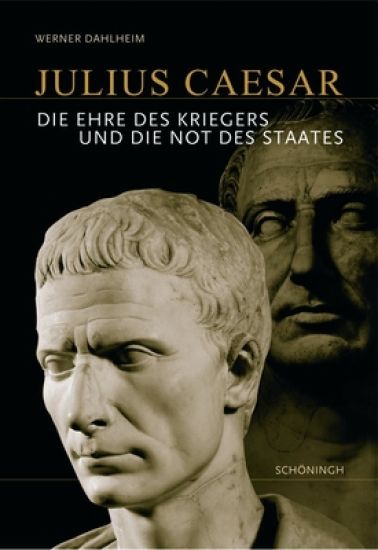
Julius Caesar: Die Ehre Des Kriegers Und Die Not Des Staates. 3. Auflage
Werner Dahlheim
Brill Schoningh
2011
nidottu
Eine der bedeutendsten Caesar-Biographien - um ein Nachwort erweitert - jetzt als broschierte Sonderausgabe Pressestimmen zur Erstauflage: Als ausgezeichneter Stilist versteht es Dahlheim, ...] die Quellen sprechen zu lassen, so da ein h chst lebendiges und facettenreiches Gem lde Caesars und der Republik entsteht ...] Frankfurter Allgemeine Zeitung Dahlheim versteht es hervorragend, sich aus der Enge einer Biographie zu l sen, den Blick auch von seinem Helden zu wen-den und die Voraussetzungen und Folgen seines weltgeschichtlichen Auftritts zu schildern ...]. Der Autor erkl rt, was zum Verst ndnis notwendig ist, wie beil ufig und ohne zu langweilen. Berliner Zeitung Werner Dahlheims vorz gliche Biografie des r mischen Feldherrn und Diktators Caesar beschreibt dessen spektakul ren Werdegang im Rahmen einer breit angelegten politisch-sozialen Analyse der sp ten Republik und ihrer meist versagenden Oberschicht. Praxis Geschichte




Wie schnell die Zeit vergeht - wer fragt sich das nicht mindestens einmal in seinem Leben? Auch Ellie sieht sich damit konfrontiert, als sie ihren im Sterben liegenden Gro vater Werner besucht. Zusammen begeben sie sich auf eine Reise in die gro en Themen des Lebens und des Todes, um zu verstehen, was war, nun enden wird und wie Zeit begriffen werden kann: damit wir nie wieder daran verzweifeln, wie schnell sie vergangen ist.

Werner Herzog's protean imagination has produced a filmography that is nothing less than a sustained meditation on the modern human condition. Though Herzog takes his topics from around the world, the Americas have provided the setting and subject matter for iconic works ranging from Aquirre, The Wrath of God and Fitzcarraldo to Grizzly Man. Joshua Lund offers the first systematic interpretation of Werner Herzog's Americas-themed works, illuminating the director's career as a political filmmaker-a label Herzog himself rejects. Lund draws on materialist and post-colonial approaches to argue that Herzog's American work confronts us with the circulation, distribution, accumulation, application, and negotiation of power that resides, quietly, at the center of his films. By operating beyond conventional ideological categories, Herzog renders political ideas in radically unfamiliar ways while fearlessly confronting his viewers with questions of world-historical significance. His maddeningly opaque viewpoint challenges us to rethink discovery and conquest, migration and exploitation, resource extraction, slavery, and other foundational traumas of the contemporary human condition.
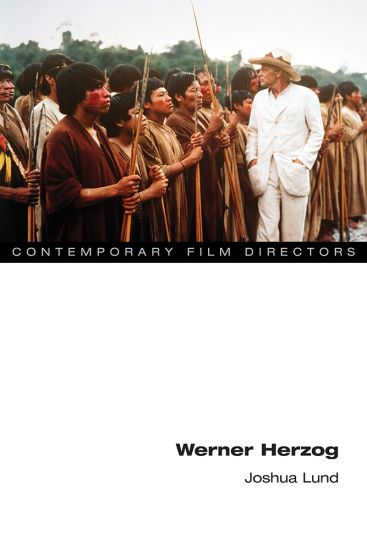
Werner Herzog's protean imagination has produced a filmography that is nothing less than a sustained meditation on the modern human condition. Though Herzog takes his topics from around the world, the Americas have provided the setting and subject matter for iconic works ranging from Aquirre, The Wrath of God and Fitzcarraldo to Grizzly Man. Joshua Lund offers the first systematic interpretation of Werner Herzog's Americas-themed works, illuminating the director's career as a political filmmaker-a label Herzog himself rejects. Lund draws on materialist and post-colonial approaches to argue that Herzog's American work confronts us with the circulation, distribution, accumulation, application, and negotiation of power that resides, quietly, at the center of his films. By operating beyond conventional ideological categories, Herzog renders political ideas in radically unfamiliar ways while fearlessly confronting his viewers with questions of world-historical significance. His maddeningly opaque viewpoint challenges us to rethink discovery and conquest, migration and exploitation, resource extraction, slavery, and other foundational traumas of the contemporary human condition.

Werner Hegemann and the Search for Universal Urbanism
Christiane Crasemann Collins
WW Norton Co
2005
sidottu
The foremost scholar on Hegemann, Collins examines the theoretical and ideological basis of his belief in an urban universality to benefit humanity and discusses the criticism he encountered to present a comprehensive analysis of a leader in a field just beginning to define itself.

Personal Recollections Of Werner Von Siemens
Werner Von Siemens; W. C. (TRN) Coupland
Kessinger Pub
2007
pokkari

First published in 1814, Werner's Nomenclature of Colours is a taxonomic guide to colour which been cherished by naturalists and anthropologists for over two centuries. In the late 1790's Abraham Gottlob Werner devised his own standardised colour scheme, which allowed the writer to describe even the subtlest of chromatic differences with consistent terminology. His scheme was then adapted by an Edinburgh flower painter, Patrick Syme, who traced the actual minerals described by Werner, and used them to create the colour charts found in the book. In the pre-photographic age, almost all visual details had to be captured using the written word, and scientific observers could not afford any ambiguity in their descriptions. These included Charles Darwin, for whom Werner's Nomenclature was an indispensable tool during his seminal voyage on the Beagle. Werner's Nomenclature of Colours is a charming artefact from the age of explorers, which continues to be treasured by artists and scientists alike.

Werner's Nomenclature of Colours: The Postcards
The Natural History Museum
2020
muu
First published in 1814, Werner’s Nomenclature of Colours is a taxonomic guide to colour which been cherished by naturalists and anthropologists for over two centuries – not least by Charles Darwin who found it an indispensable tool during his voyage on the HMS Beagle. Now these charming, handmade colour swatches have been recreated as a box of 50 postcards. Each card reproduces a colour swatch alongside its original poetic description and is matched with an animal, plant, and mineral example according to Werner's unique scheme. These curious keepsakes will be treasured by artists and scientists alike.

'One of the best things published about cinema.' Sight & SoundHerzog was once hailed by Francois Truffaut as the most important director alive. Famous for his frequent collaborations with mercurial actor Klaus Kinski - including the epics Aguirre, the Wrath of God and Fitzcarraldo, and the terrifying Nosferatu - and more recently with documentaries such as Grizzly Man, Cave of Forgotten Dreams and Into the Abyss, Herzog has built a body of work that is one of the most vital in post-war German cinema. Here, he reflects on his legendary and inspiring career.

Werner's Readings and Recitations No. 50. Girl Impersonations
Stanley Schell
Trieste Publishing
2018
nidottu
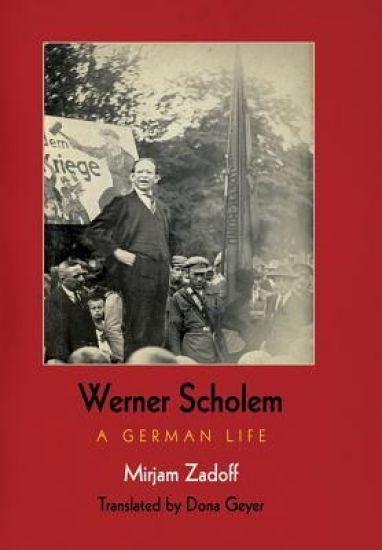
Werner Scholem never took the easy path. Born in 1895 into the Berlin Jewish middle class, he married a young non-Jewish woman of proletarian background. He was the youngest member of the Prussian Parliament in the 1920s, one of the leaders of the German Communist Party, and the editor of the influential journal The Red Flag. As an outspoken critic of Stalin, he was soon expelled from the party, only to take up a position at the head of a revolutionary Trotskyite faction in the years before 1933. Reviled by the National Socialists as a Communist and a Jew, he was among the first to be arrested when Hitler rose to power and, after a long incarceration, was murdered in Buchenwald. In Werner Scholem: A German Life Mirjam Zadoff has written a book that is at once a biography of an individual, a family chronicle, and the story of an entire era. It is an account of the ruptures within a society and of the growing insecurity in which German Jews lived between the two world wars—and especially of two brothers who chose opposing paths out of the shared conviction that there was no future for Jews in Germany after the First World War. While Werner pinned his hopes on a universal revolution he would never see, the younger Gerhard emigrated to Palestine where, as Gershom, he would choose revolutionary Zionism and the reanimation of ancient strains of Jewish mysticism.